
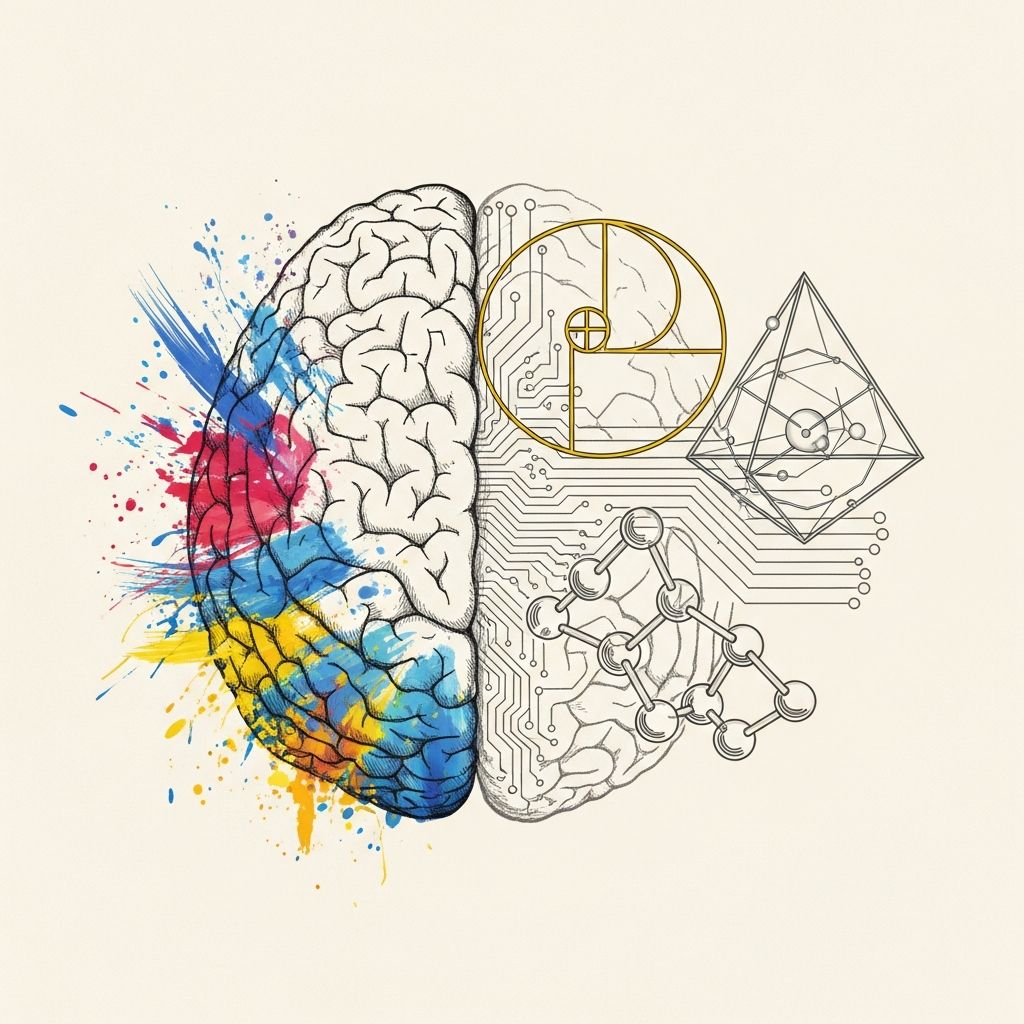
Educational paradigms continue to shift as institutions recognize that exceptional learning outcomes require more than traditional subject-specific instruction. The convergence of artistic disciplines with scientific and technical fields represents one of the most significant pedagogical developments of recent years. This integrated approach transforms how students engage with content, develop crucial competencies, and prepare themselves for complex professional environments where creativity and analytical thinking coexist.
Understanding the Convergence of Creative and Technical Disciplines
The modern educational framework that combines science, technology, engineering, mathematics, and the arts emerged from recognition that these disciplines are fundamentally interconnected rather than isolated knowledge domains. This integrated model differs substantially from traditional approaches that compartmentalize subjects into separate classrooms and curricula. When educators blend artistic expression with technical problem-solving, they create learning experiences that reflect authentic professional environments where innovations often require both creative thinking and analytical rigor.
The addition of arts to technical subjects represents an evolution rather than a replacement of existing frameworks. Visual arts, music, design, and performance disciplines bring unique cognitive demands that complement scientific inquiry and mathematical reasoning. Students working within this integrated model encounter content that feels relevant to real-world contexts, where engineers sketch designs, architects visualize spaces, and scientists communicate findings through visual media.
Core Components That Drive Integrated Learning
Successful integration rests on understanding how each discipline contributes distinctive value to student development:
- Scientific Investigation: Grounding learning in observation, hypothesis formation, and empirical testing
- Technological Application: Leveraging tools and systems to solve problems and create tangible outcomes
- Engineering Design: Applying systematic processes to construct solutions that address identified challenges
- Mathematical Reasoning: Using quantitative analysis and logical structures to understand patterns and relationships
- Artistic Expression: Exploring creative possibilities, developing aesthetic awareness, and communicating ideas through multiple modalities
Transforming Cognitive Development Through Integrated Approaches
Research demonstrates that when students engage with integrated curricula, they develop cognitive capabilities that extend far beyond content mastery. The simultaneous activation of analytical and creative mental processes strengthens neural pathways associated with both divergent and convergent thinking. Students learn to approach problems from multiple angles, recognizing that technical solutions often benefit from creative refinement and that artistic endeavors frequently require systematic planning.
The hands-on, experiential nature of integrated learning particularly enhances retention and understanding. Rather than passively absorbing information through lecture-based instruction, students actively construct knowledge through designing, building, testing, and refining. This constructivist approach aligns with cognitive science research showing that kinesthetic and multisensory learning strengthens memory formation and deepens conceptual understanding.
Developing Essential Professional Competencies
Beyond content knowledge, integrated educational experiences cultivate capabilities that employers consistently identify as critical for organizational success:
| Competency | How Integrated Learning Develops It |
|---|---|
| Critical Analysis | Students question assumptions, evaluate evidence, and consider multiple solution pathways through open-ended projects |
| Collaborative Problem-Solving | Multidisciplinary team projects require leveraging diverse expertise and perspectives to achieve shared objectives |
| Creative Innovation | Artistic inquiry encourages risk-taking and exploration of unconventional solutions alongside technical rigor |
| Communication Clarity | Students must explain complex ideas to teammates with different disciplinary backgrounds and interests |
| Adaptive Resilience | Trial-and-error processes and project iterations build confidence in facing unfamiliar challenges |
The Role of Artistic Disciplines in Enhancing Technical Learning
Artistic engagement produces specific cognitive benefits that directly strengthen scientific and mathematical thinking. Creative activities stimulate imagination and encourage exploration of multiple solution approaches, qualities that prove invaluable in engineering and technology fields. When students engage in design thinking, they practice visualization skills that later enable them to model complex systems, create effective technical drawings, and communicate engineering concepts to diverse audiences.
Artistic processes also develop emotional intelligence and cultural awareness. Students working across disciplines build appreciation for diverse perspectives and develop empathy through understanding how different people approach shared challenges. This interpersonal development proves increasingly important in globally distributed workplaces where cross-cultural collaboration drives innovation.
The aesthetic dimensions of artistic training enhance technical work. Engineers who understand principles of design create more elegant solutions. Computer programmers who appreciate visual composition write more intuitive user interfaces. Scientists who can visualize abstract concepts communicate their research more effectively to policymakers and the public.
Fostering Inquiry-Based Discovery and Experimentation
Integrated curricula naturally support inquiry-based pedagogies where students generate their own questions and design investigations to explore them. Rather than following predetermined lab procedures or solving textbook problems with predetermined answers, students encounter genuine ambiguity and multiple valid solution pathways. This authentic problem-solving develops the adaptive thinking increasingly essential in dynamic professional environments.
The experimental mindset cultivated through integrated learning emphasizes iteration and refinement rather than immediate perfection. Students learn that initial attempts frequently require revision, that failure provides valuable information, and that persistence through setbacks builds both competence and confidence. These metacognitive understandings prove crucial for navigating careers characterized by continuous change and emerging challenges.
Building Inclusive Learning Environments
Integrated approaches create educational spaces where students with diverse talents and learning preferences find meaningful entry points. A student who struggles with abstract mathematical notation might excel at spatial visualization and three-dimensional design. Another might demonstrate strength in written communication and narrative thinking while contributing substantially to technical projects. By valuing multiple forms of intelligence and expression, integrated curricula ensure broader student engagement and success.
This inclusive character particularly benefits students from underrepresented groups in technical fields. Research suggests that when artistic and design elements receive equal emphasis alongside technical content, more students from diverse backgrounds see themselves as capable contributors to innovation and problem-solving.
Real-World Application and Relevance
Perhaps the most powerful advantage of integrated learning emerges from its authentic relevance to professional contexts. Modern challenges—from sustainable infrastructure to public health communications to renewable energy systems—require teams of professionals who understand both technical principles and human-centered design. By experiencing multidisciplinary collaboration throughout their education, students develop realistic understanding of how expertise areas interact in practice.
Students working on integrated projects encounter genuine constraints and stakeholder considerations that mirror real project environments. Budget limitations, material availability, competing priorities, and the need to justify decisions to non-specialist audiences all feature in well-designed integrated learning experiences. This grounding in authentic context dramatically increases motivation and engagement.
Supporting Transitions to Higher Education and Careers
Students who complete integrated curricula arrive at higher education with substantial advantages. They demonstrate stronger preparation for both specialized technical programs and interdisciplinary degree options. Beyond academic readiness, they possess the collaborative and communication skills that distinguish successful college students from merely academically competent ones.
For career pathways, the benefits extend across virtually all professional sectors. Even students who ultimately pursue non-technical careers benefit from the analytical thinking, creative problem-solving, and collaborative capabilities developed through integrated learning. The framework proves valuable for future business professionals, healthcare workers, policymakers, and community leaders who must navigate complex challenges requiring both analytical and creative approaches.
Implementation Considerations for Educational Leaders
Successful integration requires thoughtful implementation rather than superficial combining of subject areas. Effective approaches typically involve:
- Teacher collaboration to identify genuine intersections between disciplines rather than forced connections
- Professional development supporting educators in facilitating interdisciplinary projects and assessment
- Flexible scheduling and resource allocation enabling extended project work and hands-on learning
- Assessment methods capturing growth in collaborative skills and creative problem-solving alongside content mastery
- Clear learning objectives articulating how each discipline contributes to student understanding
Addressing Common Questions About Integrated Learning
Frequently Asked Questions
Does integrated learning require equal emphasis on all five disciplines?
No. Effective integration acknowledges that different projects naturally emphasize different disciplines. The key is ensuring that students experience meaningful engagement across all areas throughout their educational experience, with specific projects highlighting those disciplines most relevant to particular learning goals.
Can integrated approaches work for all grade levels?
Research demonstrates benefits across elementary, middle, and secondary education. Implementation strategies appropriately match cognitive development stages, with younger students engaging in more concrete, exploratory activities and older students tackling increasingly complex, abstract challenges.
What about students pursuing specialized technical careers?
Students planning technical careers benefit substantially from artistic and design perspectives that enhance their professional capabilities. Engineers with design thinking skills create superior products. Computer scientists who understand human-centered design build more usable systems. The integration strengthens rather than dilutes technical expertise.
How does this approach differ from traditional art class or science class?
Traditional subject-specific instruction treats each discipline as autonomous, with separate curricula, teachers, and assessment. Integrated approaches deliberately create connections, with artistic and scientific thinking informing the same projects and problem-solving endeavors. Students work with educators from multiple disciplines or with individual teachers facilitating multidisciplinary thinking.
The Future of Education Through Integration
As economic and environmental challenges grow increasingly complex, educational systems must prepare students capable of working across traditional disciplinary boundaries. The integration of artistic and technical thinking represents not a trend but a fundamental realignment with how problems actually get solved in professional and civic contexts. Institutions embracing this approach position students to thrive in careers requiring both analytical capability and creative innovation.
The growing recognition of integrated learning’s benefits among educators, parents, administrators, and employers reflects emerging consensus that educational excellence requires developing the whole person. By valuing creative expression equally with technical competence and recognizing that innovation emerges from the intersection of these capabilities, modern education fulfills its promise of preparing students for meaningful, purposeful lives in an increasingly complex world.
References
- STEAM Empowers Teachers to Employ Project-Based Learning — University of San Diego Online Degrees. 2024. https://onlinedegrees.sandiego.edu/steam-education-in-schools/
- Research and Policy Implications of STEAM Education for Young Students — Education Commission of the States. 2020. https://www.ecs.org/wp-content/uploads/Research-and-Policy-Implications-of-STEAM-Education-for-Young-Students.pdf
- What Is STEAM Education and Why It Matters — Coding Education. 2024. https://codingeducation.us/what-is-steam-education/
- What is STEAM? And why is it important in education? — Harrow Hong Kong. 2024. https://www.harrowhongkong.hk/his/what-is-steam-and-why-is-it-important-in-education/
- Five Benefits of Teaching STEAM — Space Foundation. 2023. https://www.spacefoundation.org/2023/03/15/five-benefits-of-teaching-steam/
- What is STEAM Education? The Definitive Guide for K-12 Schools — Arts Integration. 2024. https://artsintegration.com/what-is-steam-education-in-k-12-schools/

Medha Deb is an editor with a master's degree in Applied Linguistics from the University of Hyderabad. She believes that her qualification has helped her develop a deep understanding of language and its application in various contexts. Medha specializes in the areas of beauty, health, sports, and wellness and is committed to ensuring that the content on the website is…