
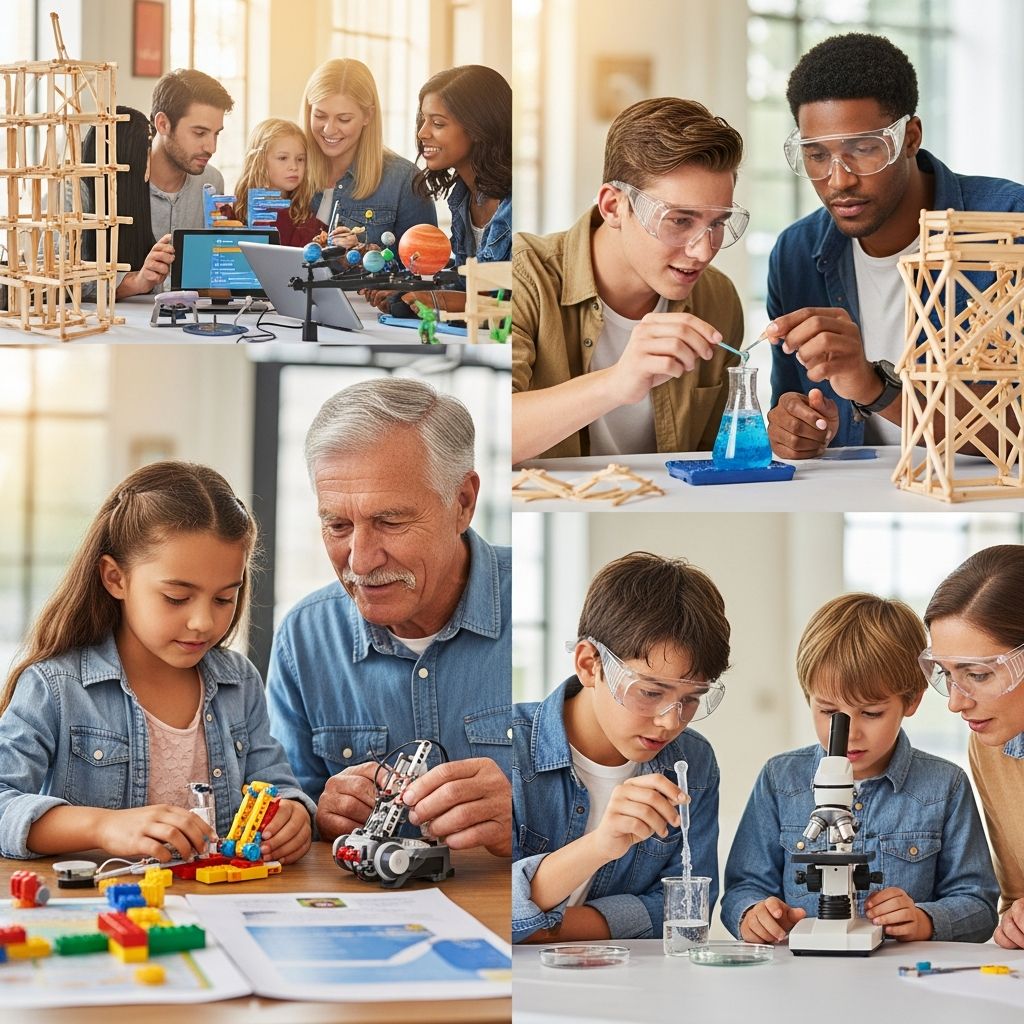
Science, technology, engineering, and mathematics—collectively known as STEM—form the foundation of modern innovation and problem-solving. Whether in the classroom or at home, educators and parents can leverage a wide array of activities to inspire students’ curiosity about these disciplines. By moving beyond traditional textbook learning, interactive and hands-on experiences help students develop critical thinking skills, creativity, and a genuine passion for discovery. This guide presents diverse STEM engagement strategies suitable for various age groups and learning environments.
The Foundation of Interactive Science Learning
Traditional classroom instruction, while valuable, often fails to capture the excitement that STEM subjects can generate. Students learn most effectively when they can see, touch, and experiment with concepts in real-world contexts. Research demonstrates that hands-on activities increase student retention and motivation compared to lecture-based approaches. By incorporating interactive experiences, educators create opportunities for students to develop deep conceptual understanding while maintaining engagement and enthusiasm for scientific inquiry.
The shift toward experiential learning reflects a broader educational philosophy recognizing that students possess diverse learning styles. Some learners thrive with visual demonstrations, while others excel through kinesthetic exploration or collaborative problem-solving. Well-designed STEM activities accommodate these variations, ensuring broader accessibility and inclusivity in science education.
Exploration-Based Learning Opportunities
Digital resources have democratized access to world-class scientific facilities and expertise. Virtual laboratory experiences allow students to conduct experiments safely while gaining exposure to professional research environments. These digital platforms simulate real laboratory conditions, enabling learners to test hypotheses, collect data, and draw conclusions without the constraints of physical space or equipment limitations.
Virtual museum tours represent another powerful exploration tool. Institutions worldwide have created immersive digital experiences showcasing scientific collections, historical computing equipment, and interactive exhibits. Students can examine artifacts from the history of technology, explore anatomical specimens, and investigate paleontological discoveries from their classrooms. Such experiences broaden horizons and demonstrate the breadth of scientific endeavor across disciplines.
Nature-based exploration remains equally valuable. Outdoor field experiences, whether actual trips or virtual nature walks, connect students with living ecosystems and environmental systems. These activities foster environmental literacy while grounding abstract biological concepts in observable reality. Students might observe plant growth, identify species diversity, or document seasonal changes, developing observational skills fundamental to scientific practice.
Creative Engineering and Building Projects
Engineering challenges engage students in design thinking and problem-solving. Activities utilizing everyday materials—such as marshmallow catapults, bridge-building with gumdrop structures, or marble mazes—teach fundamental engineering principles while remaining accessible and enjoyable. These projects require students to plan, test, iterate, and refine designs based on performance feedback, mirroring authentic engineering workflows.
Robotics and automation projects particularly captivate learners across age ranges. Building underwater remotely operated vehicles, constructing propeller-powered vehicles, or assembling mini robots introduces mechanical principles, programming logic, and systems thinking. SeaPerch programs, for instance, guide students through building and testing underwater robots while developing teamwork and technical competencies. These projects often culminate in competitions that provide meaningful motivation and real-world application contexts.
Construction-based activities need not require expensive technology. Building volcanoes, creating crystal sun catchers, or constructing structures from recycled materials teach scientific principles—such as crystallization, chemical reactions, or structural engineering—through tangible, memorable experiences. The flexibility of these projects accommodates different ability levels and resource availability.
Mathematics Integration Through Play
Mathematics often intimidates students, yet skillfully designed activities reveal mathematics as creative and playful. Cooking-related activities, such as measuring ingredients for pancakes, teach fundamental arithmetic concepts in authentic contexts. Students simultaneously learn mathematical skills and produce edible results, creating positive associations with quantitative thinking.
Games-based mathematical learning proves particularly effective. Balance scale activities teach weight comparison and equilibrium concepts. Number line games and marble race competitions incorporate mathematics into physical activity, combining kinesthetic engagement with numerical reasoning. Money-themed games introduce financial literacy alongside arithmetic skills, demonstrating practical applications of mathematical thinking.
Graphing and data analysis activities connect to biological inquiry. Biodiversity studies, where students quantify species variety in small land areas, develop statistical thinking while supporting environmental education. Students collect field data, organize findings, and interpret patterns—authentic data science experiences that preview high school and collegiate quantitative work.
Environmental and Sustainability-Focused Activities
Sustainability challenges address contemporary environmental concerns while teaching scientific principles. Zero energy tiny house projects require students to investigate insulation, renewable energy systems, and thermal dynamics. Such challenges demonstrate how engineering addresses real-world problems, motivating students through relevance and purpose.
Composting and decomposition studies make invisible biological processes visible and understandable. Students examine compost components and investigate breakdown mechanisms, learning about nutrient cycling and microbial ecology through observation and experimentation. Oil spill cleanup simulations introduce environmental science concepts while fostering ecological awareness and responsibility.
Plant propagation activities connect biology, environmental science, and sustainability. Regrowing vegetables from kitchen scraps teaches plant biology while reducing waste and food costs. Seed dispersal investigations, where students analyze how plants spread across landscapes, integrate botany with mathematics and engineering as learners model different dispersal mechanisms.
Climate and Earth Science Investigations
Understanding climate systems represents a critical educational priority. Heat wave investigations using statistical analysis help students comprehend why extreme weather events are intensifying and becoming more frequent. Sea level rise lessons introduce students to climate change evidence and consequences while encouraging solutions-oriented thinking. Solar energy modeling activities, guided by NASA resources, teach renewable energy concepts through hands-on investigation of solar inputs and cost-effectiveness analysis.
Citizen science programs connect student investigations to authentic research. The Chicago Botanic Garden’s Budburst Project invites students to contribute to climate change research by observing plant phenology throughout growing seasons. Such programs demonstrate how amateur scientists contribute to professional research, validating student work and connecting classroom learning to genuine scientific inquiry.
Technology and Computing Fundamentals
Computer science education need not require sophisticated equipment. Coding games and animations introduce programming logic through creative projects. Students learn conditional statements, loops, and functions while designing games they actually want to play—authentic motivation driving technical skill development.
Stop motion animation activities combine artistic expression with technological literacy. Creating simple animated videos teaches frame-by-frame thinking, planning, and digital media production. These projects naturally integrate with history, literature, or science curricula, demonstrating how technology serves creative expression.
Classic experiments like DIY can telephones teach sound wave physics while remaining engaging for young learners. Simple demonstrations reveal fundamental principles underlying modern telecommunications, bridging ancient technology with contemporary concepts.
Interdisciplinary and Integrated Approaches
STEAM education—incorporating arts into STEM—recognizes that creativity accelerates innovation. Nature sculpture projects, for instance, combine artistic expression with engineering as students design and build structures from natural materials, testing their durability and refinement through iteration.
Multidisciplinary units create rich learning experiences. The Amphibian Unit lesson plan, adaptable across PreK through high school, integrates biology, environmental science, and life skills across grade levels. Similarly, lessons on why the sky appears blue or why apples oxidize can incorporate physics, chemistry, and practical observations, creating conceptual depth.
Supporting Teacher Implementation
Educators benefit from curated resources and professional support. AI-powered teaching companions help instructors confidently deliver computer science curricula, providing lesson planning assistance and materials preparation. The National Inventors Hall of Fame STEM Handbook offers free, accessible activities for classroom or home use, spanning from vintage photography to smart city design to innovative transportation concepts.
Comprehensive activity collections provide starting points for educators seeking to diversify instruction. Resources listing dozens of vetted activities help teachers identify options matching their grade level, available materials, and learning objectives, reducing preparation burden while ensuring quality experiences.
Considerations for Different Age Groups
Preschool and early elementary learners benefit from sensory-rich, low-pressure activities. Magic aqua sand sculpting, apple oxidation observation, and magnetic object testing engage curiosity while teaching basic scientific concepts. At this stage, wonder and engagement matter more than sophisticated understanding.
Upper elementary students benefit from structured investigations with clear procedures and measurable outcomes. Rock sorting and classification, volcano building, and LEGO challenges provide concrete learning while developing organizational and analytical thinking. These students can follow multi-step procedures and understand cause-and-effect relationships.
Middle and high school students tackle increasingly sophisticated investigations. Forest ecosystem analysis, peppered moth simulations of natural selection, and zero-energy housing design challenges develop systems thinking and address contemporary issues. These learners benefit from projects connecting STEM to career pathways and real-world applications.
Overcoming Common Implementation Barriers
Budget constraints need not prevent engaging STEM instruction. Dollar store science activities provide 10 inexpensive experiments suitable for grades 3–6. Marshmallow catapults, crystal sun catchers, and vegetable regrowth projects require minimal materials while delivering meaningful learning. Recycled materials—plastic bottles, cardboard, string—suffice for numerous engineering and building projects.
Space limitations are surmountable through careful activity selection. Virtual experiences require only computer access, benefiting schools lacking laboratory facilities or outdoor space. Small-scale projects like DIY can telephones and squishy circuits develop engineering thinking within confined areas.
Time constraints challenge educators managing crowded curricula. Brief activities, such as apple browning demonstrations or magnet testing, deliver focused lessons without requiring extended blocks. These quick activities increase overall STEM exposure without wholesale curricular reorganization.
Assessment and Learning Outcomes
Well-designed STEM activities develop competencies beyond subject-matter knowledge. Critical thinking emerges as students predict outcomes, collect evidence, and revise hypotheses. Creativity flourishes through open-ended design challenges. Collaboration skills develop through team-based projects. Communication abilities strengthen as students explain findings and justify design choices.
Educators can assess learning through observation, project artifacts, and student reflection. How effectively did students plan and execute investigations? How thoroughly did they analyze data? How creatively did they approach design challenges? What evidence demonstrates conceptual understanding? Such assessment informs instruction while valuing diverse expressions of competency.
Building Long-Term Interest in STEM Careers
Exposure to diverse STEM career pathways helps students envision themselves in technical fields. Activities featuring inventor profiles, NASA missions, and professional scientist interactions broaden perceptions of possible futures. Students discover that STEM careers encompass far more than stereotypical roles, recognizing opportunities aligned with varied interests and strengths.
Mentorship connections and expert interactions—whether through guest speakers, virtual Q&A sessions, or online platforms—personalize STEM professions. Learning that actual scientists and engineers enjoy their work, face interesting challenges, and make meaningful contributions inspires aspiration more effectively than abstract career descriptions.
Conclusion
The universe of STEM learning activities extends far beyond traditional instruction, encompassing digital exploration, hands-on building, environmental investigation, and creative engineering challenges. By thoughtfully selecting and implementing diverse activities, educators and parents foster genuine curiosity, develop critical competencies, and inspire long-term interest in scientific and technical pursuits. Whether examining crystals, building robots, or investigating ecosystems, students discover that STEM learning is simultaneously rigorous and joyful—a discovery that transforms educational experiences and opens pathways to rewarding futures.
References
- National STEM Day 2025 Activities for Kids and Teachers — Create & Learn. 2025. https://www.create-learn.us/blog/national-stem-day-activities/
- 49 STEM Activities to Engage Your Students on National STEM Day — Waterford.org. 2025. https://www.waterford.org/resources/national-stem-day-activities/
- Celebrate National STEM/STEAM Day with Environmental Education — North American Association for Environmental Education. 2025. https://www.neefusa.org/story/environmental-education/celebrate-national-stemsteam-day-environmental-education
- National STEM Day — Brighter Futures Indiana. 2025. https://brighterfuturesindiana.org/blog/national-stem-day

Medha Deb is an editor with a master's degree in Applied Linguistics from the University of Hyderabad. She believes that her qualification has helped her develop a deep understanding of language and its application in various contexts. Medha specializes in the areas of beauty, health, sports, and wellness and is committed to ensuring that the content on the website is…