
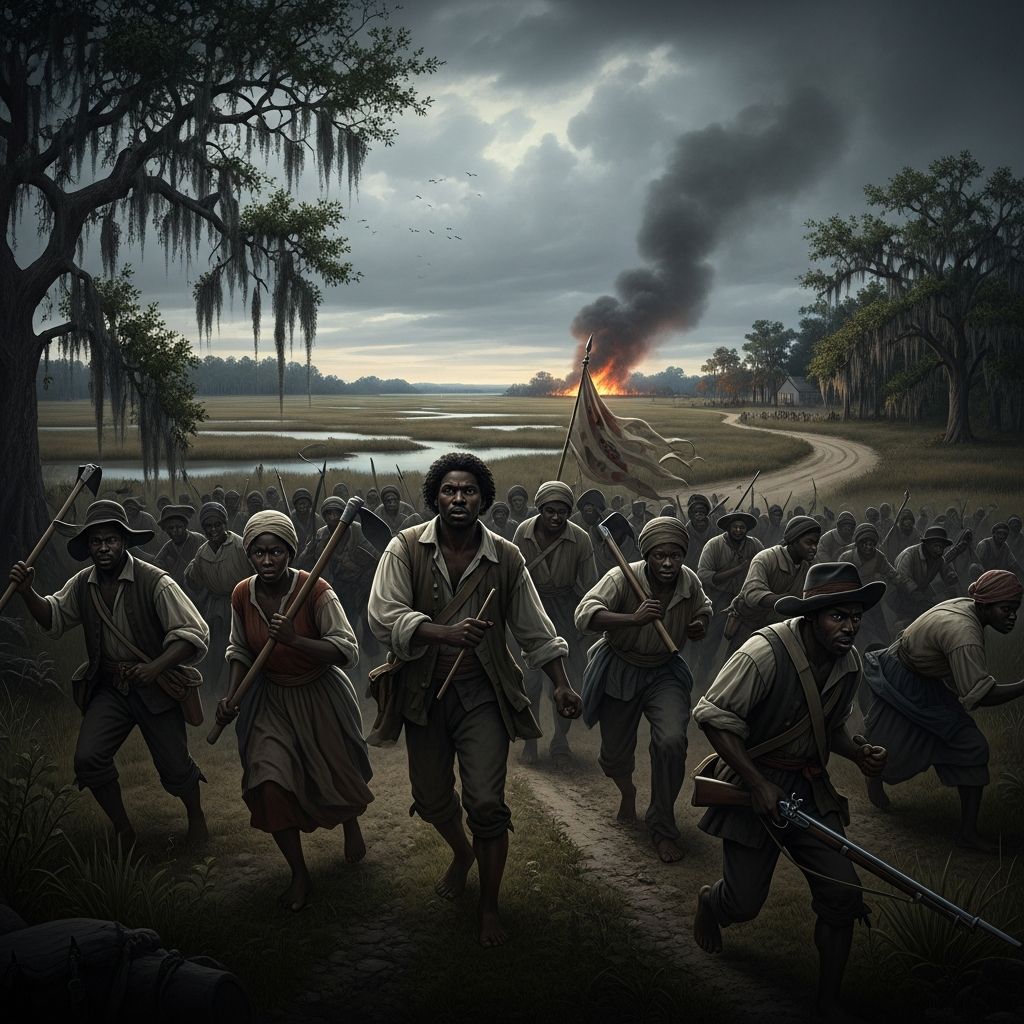
The Stono Rebellion stands as the most significant slave revolt in the British colonial South, erupting on September 9, 1739, along the Stono River in South Carolina. Led by an enslaved man named Jemmy, approximately 20 Africans initiated an armed march toward freedom in Spanish Florida, ultimately involving up to 100 participants and resulting in dozens of deaths on both sides.
Historical Context of Enslavement in Colonial South Carolina
In the early 18th century, South Carolina’s economy relied heavily on rice and indigo plantations, fueled by a growing population of enslaved Africans. By 1739, enslaved people outnumbered white colonists, creating a volatile demographic imbalance. Many recent arrivals from Angola and the Kingdom of Kongo brought military experience and cultural cohesion, including Catholicism, which contrasted sharply with the Protestant colonial society.
Harsh living conditions exacerbated tensions: slaves endured brutal punishments, limited mobility, and disease outbreaks like smallpox and yellow fever. The influx of new slaves, who had not been ‘seasoned’ to plantation life, heightened fears among whites of potential unrest. Moreover, Spanish Florida’s governors had issued proclamations promising liberty to escaped slaves who reached St. Augustine, converting to Catholicism and serving in the militia.
- Key Demographic Factors: Enslaved Africans comprised about 70% of the population in some areas.
- Recent Imports: Thousands arrived in the 1730s, many skilled warriors from Central Africa.
- Spanish Incentive: Freedom offers lured slaves southward, just 150 miles from Charleston.
These elements converged to make South Carolina a powder keg, with white colonists already drafting restrictive legislation before the uprising.
Planning and Ignition of the Revolt
The rebellion began early on a Sunday morning, a day when overseers were less vigilant due to church attendance. Jemmy, possibly literate and owned by the Cato family near the Stono River, assembled 20-22 Kongolese men—likely former soldiers—who shared his vision of escape. Their plan: raid a nearby store for arms, march south under a banner proclaiming “Liberty!”, beat drums, and recruit others en route to Florida.
At Hutchinson’s store by Stono River Bridge, the group killed the two storekeepers, seized guns, powder, and ammunition, and set off. This bold strike symbolized not just escape but open defiance, chanting “Liberty!” to inspire joins and terrorize whites.
| Time | Event | Location |
|---|---|---|
| Sunday Dawn, Sept 9 | Group assembles; raids Hutchinson’s store | Stono River Bridge |
| Morning | Kills storekeepers, arms selves | Near Wallace Creek |
| Mid-Morning | Marches south, recruits grow to 60+ | Along roadway to Edisto |
Symbolism was potent: the Nativity of Mary feast day the previous day may have invoked Catholic heritage, linking spiritual liberation to physical freedom.
Expansion and Violence Along the March
As the rebels advanced 10-15 miles toward the Edisto River, their numbers swelled to 60-100, including coerced participants. They targeted plantations, killing 20-25 whites—men, women, and children—while burning homes but sparing some who hid or begged mercy. This selective violence suggested strategic intent over mindless rage.
Lieutenant Governor William Bull encountered the group on horseback and escaped to rally militia. The rebels’ open march, with flags and drums, aimed to maximize recruitment and psychological impact, contrasting with stealthy runaways.
- Plantations Hit: At least six destroyed, overseers slain.
- Recruits: Both willing freedom-seekers and forced joiners.
- Casualties: 21-28 whites dead; rebels pressed on despite losses.
By afternoon, fatigue and alcohol from plundered stores slowed them near the Edisto.
Militia Response and Bloody Confrontation
Alerted planters formed a militia of 20-100 mounted men, confronting the rebels that afternoon. In the clash, 20-30 whites and 30-47 slaves died; the militia’s firepower and horses gave advantage. Survivors fled 30-50 miles further, some scattering into swamps, but were hunted down over a week.
Executions were gruesome: captured leaders beheaded, heads displayed on milestones as warnings. Forced joiners were sometimes released, others sold to West Indies plantations.
| Group | Deaths | Sources |
|---|---|---|
| Whites/Colonists | 21-28 | |
| Enslaved Rebels | 35-54 | |
| Total | 60-80 |
Remarkably, rebels inflicted proportionally higher white casualties than later revolts like Nat Turner’s.
Immediate Aftermath and the Negro Act of 1740
Panic gripped Charleston; militias patrolled, assemblies banned. The South Carolina Assembly rushed the Negro Act of 1740, codifying repression: no slave assemblies, no weapons, no earning money, literacy banned, food growing prohibited, heavier patrols mandated. Import moratorium lasted a decade.
Heads on posts lined roads, a macabre deterrent. Yet, the act acknowledged pre-rebellion lax enforcement, revealing systemic fears.
Long-Term Significance and Legacy
The Stono Rebellion alerted colonists to slavery’s instability, influencing slave codes across the South. It highlighted African agency, cultural resistance, and the international dimension—Spanish rivalry fueling unrest. Sites like the Stono Bridge are National Historic Landmarks.
Historians debate Jemmy’s origins (Angolan or Kongolese) and precise motives, but it underscored enslaved people’s quest for liberty amid transatlantic bondage.
- Policy Shifts: Uniform stricter codes; end to task system privileges.
- Cultural Impact: Reinforced racial hierarchies, suppressed African traditions.
- Modern Recognition: Memorials educate on resistance history.
Frequently Asked Questions (FAQs)
Who led the Stono Rebellion?
Jemmy, an enslaved Angolan or Kongolese man, possibly owned by the Cato family, led the initial group of 20 rebels.
Why did the rebels head to Spanish Florida?
Spanish governors promised freedom to escaped slaves who converted to Catholicism and joined the militia against Britain.
What laws resulted from the rebellion?
The Negro Act of 1740 banned slave education, assemblies, arms, and imposed curfews and patrols.
How many people died in the Stono Rebellion?
Approximately 25 whites and 35-50 slaves, with total deaths around 60-80.
Was the Stono Rebellion the largest colonial slave revolt?
Yes, it was the largest in the Southern colonies before the American Revolution.
References
- Stono Rebellion – Wikipedia — Wikipedia Contributors. 2023-09-09. https://en.wikipedia.org/wiki/Stono_Rebellion
- Stono Rebellion | History | Research Starters — EBSCO. 2023. https://www.ebsco.com/research-starters/history/stono-rebellion
- Stono Rebellion (1739) — BlackPast.org. 2023-09-09. https://blackpast.org/african-american-history/stono-rebellion-1739/
- Stono Rebellion Site — South Carolina Department of Archives and History (.gov). 1974-05-30. http://www.nationalregister.sc.gov/charleston/S10817710075/
- Sept. 9, 1739: The Stono Rebellion — Zinn Education Project. 2023-09-09. https://www.zinnedproject.org/news/tdih/stono-rebellion/
- Stono rebellion | Definition, History, Significance, & Facts — Encyclopædia Britannica. 2023. https://www.britannica.com/event/Stono-rebellion

Medha Deb is an editor with a master's degree in Applied Linguistics from the University of Hyderabad. She believes that her qualification has helped her develop a deep understanding of language and its application in various contexts. Medha specializes in the areas of beauty, health, sports, and wellness and is committed to ensuring that the content on the website is…