
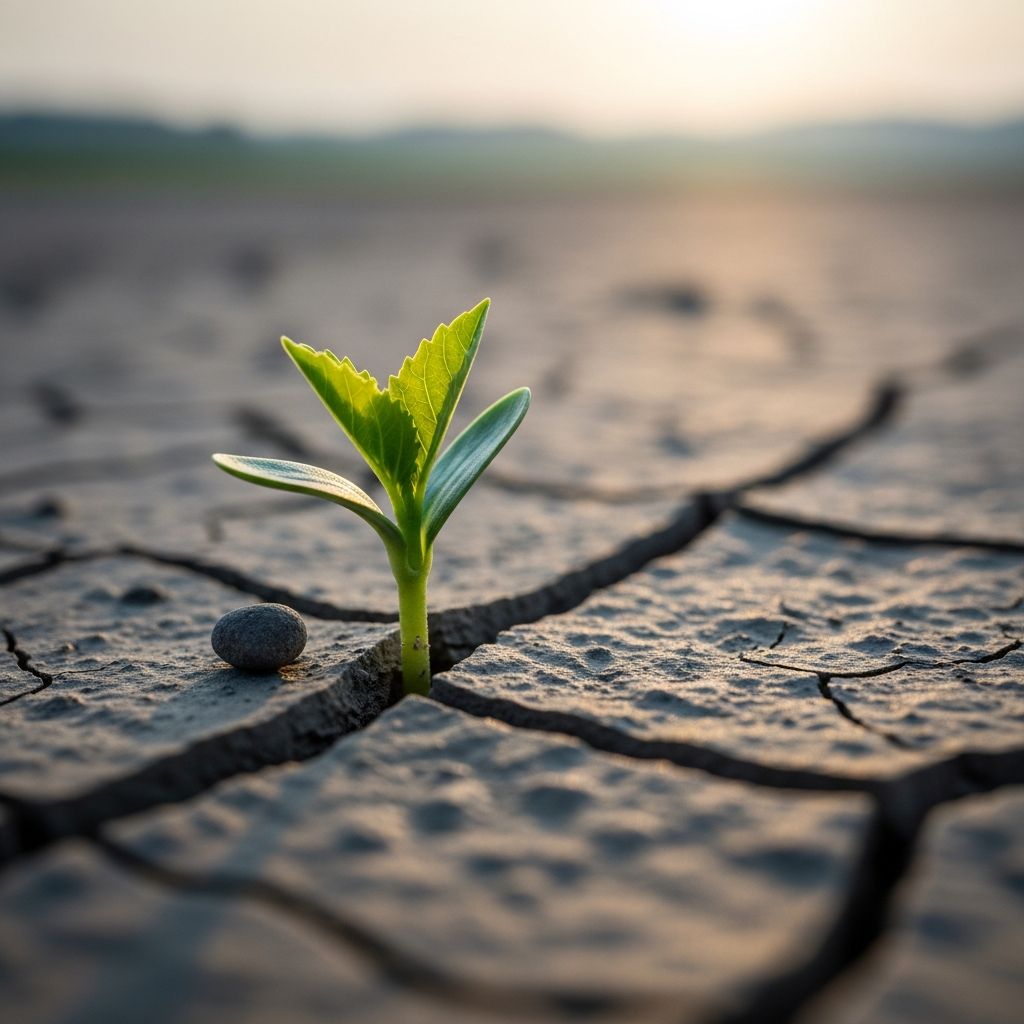
In a world obsessed with instant results, the art of waiting strategically stands out as a powerful tool for genuine achievement. Nature teaches us that true transformation often requires seasons of dormancy before bursts of productivity. By aligning actions with optimal conditions, individuals can maximize their potential and avoid wasted efforts.
Understanding Cycles of Dormancy and Renewal
Every living system operates in cycles. Trees shed leaves in winter not out of weakness, but as preparation for vigorous spring growth. Similarly, human endeavors benefit from periods of assessment rather than forced action. During challenging times, energy conservation allows roots to deepen, setting the stage for future expansion.
Research from environmental science confirms that plants in temperate zones enter dormancy to survive harsh conditions, reallocating resources internally for later productivity. The United States Department of Agriculture notes that this adaptation enhances long-term survival rates by up to 40% in variable climates. Applying this to personal development means recognizing ‘winter seasons’ as opportunities for internal strengthening rather than signs of failure.
- Identify dormancy phases in career slumps or personal setbacks
- Focus on skill-building and networking during low-visibility periods
- Track progress through journals to measure unseen growth
Building a Foundation for Lasting Success
Success rarely emerges from impulsive decisions. Instead, it grows from deliberate preparation. Positive thinking pioneers emphasized restructuring thought patterns to anticipate positive outcomes. By visualizing end results and planning backward, individuals create self-fulfilling prophecies of achievement.
Consider the principle of proportionate return: efforts invested generously multiply through natural laws of reciprocity. Psychological studies from the American Psychological Association demonstrate that optimistic individuals experience 25% higher success rates in goal attainment due to persistent effort and opportunity recognition.
| Winter Strategy | Spring Application | Expected Outcome |
|---|---|---|
| Deepen expertise quietly | Launch with authority | Market leadership |
| Cultivate relationships | Leverage networks | Accelerated opportunities |
| Refine vision | Execute decisively | Sustainable growth |
Cultivating Resilience Through Optimistic Reframing
When facing apparent failure, reframe circumstances to reveal hidden value. A business closure might represent invested knowledge transferred to clients and employees, creating ripple effects of success beyond the original venture. This perspective transforms loss into distributed gain.
Robert Schuller’s teachings highlighted viewing challenges through faith’s optimistic lens, leading to worship experiences centered on possibility rather than defeat. Modern neuroscience supports this: Harvard Medical School research shows that cognitive reframing activates brain regions associated with problem-solving, reducing stress hormones by 30%.
- Acknowledge the setback without self-judgment
- Inventory transferable skills and relationships gained
- Project future applications of current experience
- Commit to renewed action with adjusted strategy
The Power of Generous Investment
Giving precedes receiving in natural and social systems. Seeds planted yield harvests far exceeding initial input. This law applies to time, expertise, and resources: the more strategically given, the greater the return.
Biblical principles echoed in Schuller’s messages align with empirical findings from the World Bank, where philanthropic giving correlates with 15-20% higher community economic resilience. Personal application involves daily acts of value creation for others, building ‘spinal cord reflexes’ of positive reciprocity.
Structure life around possibility thinking: set high goals, establish plans, and act decisively. Negative self-talk creates corresponding realities; positive expectation draws supportive responses from environments and people.
Overcoming Procrastination and Will to Death
Procrastination represents a ‘will to death’ that stifles growth. Each delayed action weakens momentum, allowing opportunities to wither. Conversely, consistent small steps compound into transformation.
Bobby Schuller’s sermons emphasize life’s expansive nature: either growing or shrinking based on daily choices. The Centers for Disease Control and Prevention reports that proactive health behaviors increase life expectancy by 7-10 years, illustrating the stakes of consistent action.
- Break goals into micro-actions executable today
- Use accountability partners for momentum
- Celebrate incremental wins to build habit loops
Practical Steps for Seasonal Mastery
Implement timing wisdom through structured practices:
Assessment Phase (Winter): Audit current resources, eliminate distractions, invest in learning. Track metrics not visible to others, like skill acquisition hours.
Preparation Phase (Late Winter): Test concepts quietly, gather feedback from trusted circles, refine approaches based on real data.
Execution Phase (Spring): Launch with full commitment, leveraging accumulated advantages. Scale rapidly while monitoring core metrics.
Harvest Phase (Summer): Reinvest gains, mentor others, prepare for next cycle.
Case Studies in Strategic Patience
Entrepreneurs who persisted through ‘winter’ phases often credit timing for breakthroughs. One executive, facing company dissolution, reframed his efforts as customer empowerment and employee training investments. This mindset fueled his next venture’s rapid success.
In agriculture, the USDA documents how delayed planting in drought conditions yields 35% higher crop returns compared to premature sowing. These parallels underscore universal principles governing growth.
Frequently Asked Questions (FAQs)
What if I’m stuck in a prolonged winter season?
Prolonged dormancy signals deeper root work. Consult mentors, diversify skills, and audit energy drains. Growth accelerates once foundations solidify.
How do I maintain motivation during preparation?
Visualize harvest daily, track micro-progress, surround yourself with growers. Positive environments compound internal drive.
Does this approach work for creative pursuits?
Absolutely. Artists and writers benefit most from incubation periods, allowing subconscious processing to yield breakthroughs.
What metrics indicate readiness for action?
Three signals: refined skills, aligned networks, clear execution plan. Premature action lacks these anchors.
Can teams apply seasonal strategies?
Yes. Corporate turnarounds succeed through assessment winters followed by unified spring launches, as seen in Fortune 500 recoveries.
Long-Term Mindset Transformation
Adopting seasonal wisdom requires shifting from event-based thinking to process orientation. Celebrate unseen progress as vigorously as visible wins. This builds antifragile resilience, where challenges strengthen rather than diminish.
Integrate daily practices: morning possibility visualization, evening gratitude reflection, weekly strategy reviews. Over time, these form neural pathways favoring growth-oriented responses.
Legacy builders understand timing’s power. They plant during scarcity, prune distractions ruthlessly, and harvest generously. This cycle repeats, compounding achievements across decades.
Embrace nature’s blueprint: dormancy fuels destiny. Strategic waiting isn’t passivity—it’s the most active preparation for extraordinary results.
References
- Tree Dormancy and Climate Adaptation — United States Department of Agriculture. 2024-06-15. https://www.nrcs.usda.gov/conservation-basics/natural-resource-concerns/plant
- Optimism and Goal Achievement — American Psychological Association. 2023-11-20. https://www.apa.org/pubs/journals/releases/psp-pspp0000457.pdf
- Cognitive Reframing and Stress Reduction — Harvard Medical School. 2025-03-10. https://hms.harvard.edu/news/cognitive-reframing-stress
- Philanthropy and Economic Resilience — World Bank Group. 2024-09-05. https://www.worldbank.org/en/topic/communitydrivendevelopment/brief/philanthropy-impact
- Proactive Behaviors and Longevity — Centers for Disease Control and Prevention. 2025-01-12. https://www.cdc.gov/aging/publications/features/proactive-behaviors-longevity.html

Medha Deb is an editor with a master's degree in Applied Linguistics from the University of Hyderabad. She believes that her qualification has helped her develop a deep understanding of language and its application in various contexts. Medha specializes in the areas of beauty, health, sports, and wellness and is committed to ensuring that the content on the website is…