
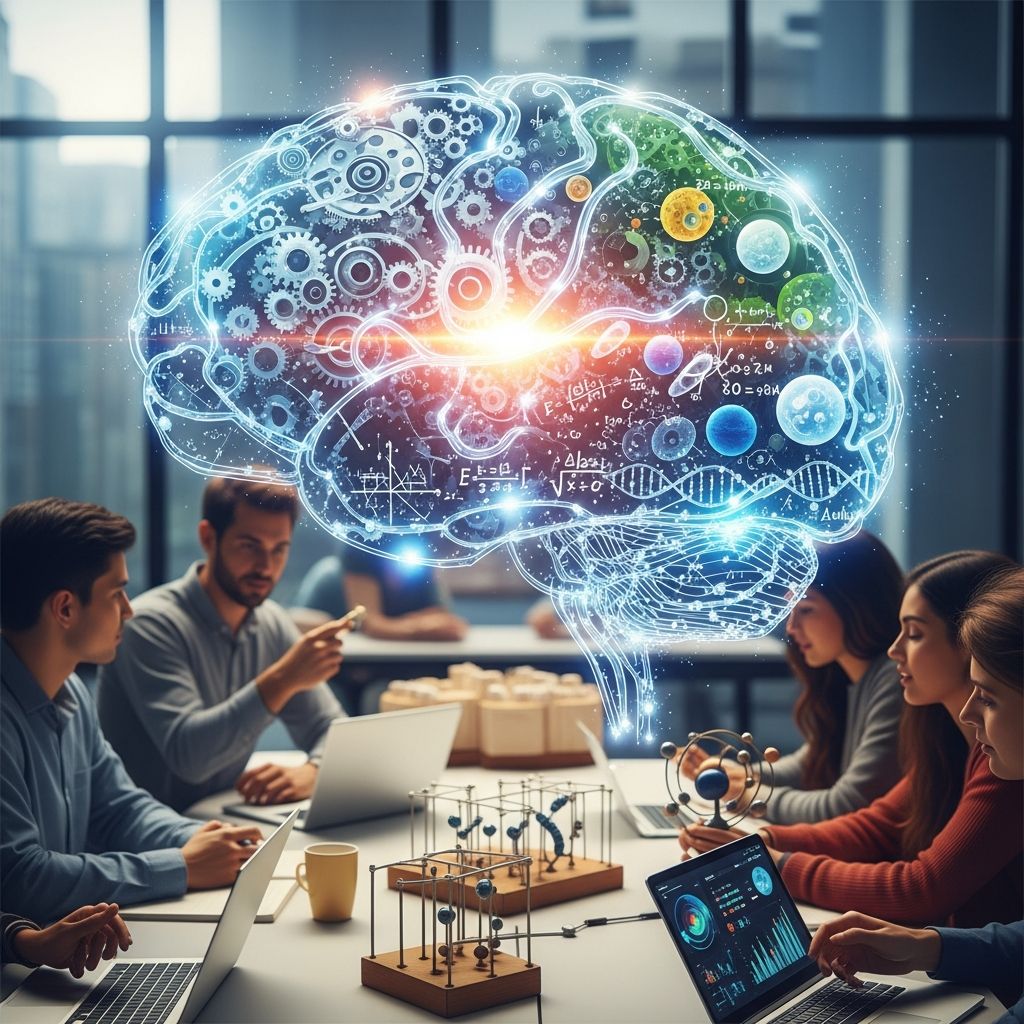
Developing Higher-Order Thinking Through Strategic STEM Instruction
Science, Technology, Engineering, and Mathematics education extends far beyond the transmission of factual knowledge. Contemporary educational research emphasizes the development of sophisticated cognitive competencies that enable students to analyze complex problems, generate innovative solutions, and adapt their thinking across diverse contexts. This shift reflects a fundamental understanding that students equipped with robust critical thinking abilities can navigate an increasingly complex world and contribute meaningfully to technological advancement and scientific discovery.
The foundation of effective STEM instruction rests upon intentional pedagogical design that systematically builds students’ capacity for higher-order thinking. Rather than relying solely on direct instruction and memorization, contemporary approaches emphasize active engagement, metacognitive awareness, and collaborative knowledge construction. These methods transform classrooms into environments where students become investigators, designers, and problem-solvers.
Cultivating Intellectual Flexibility and Creative Reasoning
One of the most critical competencies in STEM fields is the ability to approach challenges from multiple perspectives and generate diverse solutions. Students who develop flexible thinking patterns can transfer knowledge across disciplines, recognize patterns in seemingly unrelated domains, and synthesize information to create novel applications.
Educators can systematically develop this flexibility through targeted instructional strategies:
- Generative ideation activities: Prompt students to produce original ideas and create novel solutions to authentic problems. This requires them to synthesize disconnected concepts, embrace experimentation, and view failure as a valuable learning opportunity. When students regularly engage in invention-based tasks, they develop enhanced capacity for innovative thinking and cognitive adaptability.
- Empirical investigation: Encourage students to develop hypotheses, design experiments, and interpret findings through direct manipulation of materials and systems. This hands-on engagement with natural phenomena builds intuitive understanding and develops the procedural knowledge necessary for scientific reasoning.
- Solution pluralism: Structure learning experiences where students identify multiple viable approaches to complex problems. By examining different solution pathways, students recognize that intellectual challenges rarely have single correct answers. This realization promotes intellectual humility, perspective-taking, and willingness to consider alternative viewpoints.
- Constructive production: Engage students in creating tangible outcomes such as physical models, digital artifacts, written explanations, or artistic representations. The process of externalizing understanding through creation deepens comprehension and reveals conceptual gaps that students can then address.
Strategic Environmental Design for Optimal Learning Outcomes
The physical and social environment profoundly influences student thinking and engagement. Intentional design of classroom spaces, material availability, and grouping structures creates conditions that naturally encourage deeper cognitive engagement and collaborative knowledge-building.
Environmental structuring encompasses several interconnected elements:
- Purposeful material arrangement: Strategic placement of manipulatives, tools, and resources shapes how students interact with learning content. When diverse materials are organized thoughtfully—for example, positioning advanced STEM tools adjacent to familiar objects—students spontaneously create connections and extend their exploratory play into more sophisticated inquiry.
- Deliberate resource curation: Selection of materials that invite sensory exploration and support conceptual development creates rich learning opportunities. A carefully assembled collection of materials encourages sustained investigation and provides multiple entry points for students with varying interests and abilities.
- Purposeful spatial positioning: Teacher proximity, eye contact, and physical arrangement near student work groups enhance engagement and facilitate responsive instruction. Warm, attentive presence communicates value and creates psychological safety necessary for intellectual risk-taking.
- Strategic peer grouping: Deliberate composition of collaborative groups—considering ability levels, demographic diversity, and interpersonal dynamics—creates conditions for productive dialogue, perspective-sharing, and cognitive scaffolding between peers.
Responsive Teaching Interactions and Guided Discovery
The quality of moment-to-moment interactions between educators and students fundamentally shapes cognitive development. Rather than transmitting information, responsive educators strategically guide students’ thinking through carefully calibrated questioning, modeling, and resource provision.
Foundational interactive strategies include:
- Metacognitive questioning: Ask students to articulate their reasoning, provide evidence for claims, and explain their thinking processes. Questions that prompt reflection activate higher-order thinking and make implicit understanding explicit.
- Explanatory guidance: Provide strategic explanations that illuminate thinking processes without replacing student reasoning. Well-timed explanations connect new information to existing knowledge frameworks and model productive reasoning patterns.
- Exploratory autonomy: Create less-structured learning environments where students pursue questions they find compelling. This autonomy builds agency and allows students to follow intellectual curiosity while developing self-directed learning capabilities.
- Collaborative sense-making: Intentionally create social learning contexts through peer collaboration and small-group activities. When students articulate understanding to peers and hear alternative interpretations, they develop more robust and flexible conceptual frameworks.
- Reflective documentation: Encourage students to maintain reflective journals where they record evolving positions, supporting evidence, and awareness of counterarguments. This documentation develops epistemic awareness and demonstrates the provisional nature of understanding.
Intentional Scaffolding and Competency Development
Effective instruction provides temporary support structures that gradually diminish as student competence increases. Scaffolding represents a dynamic process of calibrating instructional support to maintain optimal challenge while preventing frustration.
Comprehensive scaffolding involves multiple instructional techniques applied purposefully:
- Strategic questioning that prompts recall and deeper analysis
- Modeling of expert thinking patterns and problem-solving approaches
- Descriptive feedback highlighting specific strengths and growth areas
- Suggested strategies adapted to individual student readiness
- Encouragement and emotional support during challenging cognitive work
Scaffolding proves particularly powerful for addressing emerging competencies—skills just beginning to develop or slightly above current independent performance levels. Through graduated release of responsibility, students internalize cognitive strategies and develop increasing autonomy.
Feedback Systems and Self-Perception as Learners
Strategic feedback accelerates learning by helping students recognize productive thinking patterns and build accurate self-assessment capabilities. Effective feedback serves multiple functions simultaneously: reinforcing successful strategies, encouraging persistence through difficulty, and developing metacognitive awareness.
Intentional feedback practices create positive learning cycles where students increasingly recognize themselves as capable mathematical and scientific thinkers. This positive self-perception predicts academic persistence and willingness to tackle challenging content.
Collaborative Problem-Solving and Knowledge Co-Construction
Beyond individual scaffolding, educators facilitate joint problem-solving processes where teachers and students work collaboratively to understand phenomena. This approach—termed co-construction—emphasizes authentic dialogue and mutual learning rather than unidirectional knowledge transmission.
Co-constructive teaching involves:
- Genuine listening to student interpretations and questions
- Valuing student meanings and perspectives alongside scientific understanding
- Building shared understanding through negotiation and dialogue
- Modeling curiosity and uncertainty rather than omniscience
- Creating spaces where student ideas genuinely influence instructional direction
This collaborative stance develops initiative, creativity, and reasoning capabilities while building confidence and fostering genuine enthusiasm for scientific inquiry.
Connecting STEM to Authentic Real-World Contexts
Abstract STEM concepts become meaningful when grounded in tangible, relevant applications. By contextualizing learning within authentic scenarios and practical applications, educators help students recognize STEM’s relevance to everyday life and career possibilities.
Practical contextualization strategies include:
- Narrative integration: Select literature that portrays STEM professionals and applications in realistic contexts. Books showcasing how scientific and mathematical thinking addresses real challenges make disciplinary content relevant and aspirational.
- Measurement activities: Engage students in measurement tasks using their own bodies and environments—calculating jump distances, determining heights, measuring recipe quantities. These activities make abstract concepts concrete and demonstrate immediate practical value.
- Simple machine exploration: Have students investigate mechanical principles using playground equipment and toys. Direct experience with levers, pulleys, and inclined planes builds intuitive understanding of physics principles underlying countless technologies.
- Career connections: Invite professionals from STEM fields to discuss how they apply academic learning in meaningful work. These connections help students envision themselves in STEM careers and appreciate the relevance of classroom content.
Technology Integration and Modern Learning Modalities
Contemporary educational technology provides unprecedented opportunities to visualize abstract concepts, access authentic scientific data, and create personalized learning pathways. Effective technology integration aligns digital tools with pedagogical objectives rather than treating technology as an end in itself.
Evidence-based technology applications include:
- Multimedia concept explanation: Video resources and dynamic visualizations help students grasp complex theories that resist verbal or textual explanation. Animation depicting molecular structures, evolutionary processes, or mathematical transformations makes abstract concepts perceptually accessible.
- Virtual laboratory experiences: Simulated experiments and virtual labs overcome resource limitations while providing safe, controlled learning environments. Students conduct investigations that might be impossible, expensive, or dangerous in physical settings.
- Interactive applications: Educational games and adaptive platforms provide personalized learning experiences calibrated to individual student needs. These tools offer immediate feedback, adjust difficulty dynamically, and maintain engagement through game-based elements.
- Immersive environments: Virtual reality and augmented reality create 360-degree interactive experiences impossible to replicate in classrooms. Students can explore ecosystems, historical sites, or molecular structures from immersive perspectives.
Differentiated Instruction for Diverse Learners
Student populations bring varied prior knowledge, learning preferences, processing speeds, and cultural backgrounds to STEM classrooms. Differentiated instruction acknowledges this diversity through flexible grouping, variable task complexity, and multiple pathways to demonstrating competence.
Differentiation ensures that all learners—whether advanced, struggling, or somewhere between—experience appropriately challenging content delivered through formats matching their learning preferences. This approach increases engagement and success for the full spectrum of learners.
Inquiry-Based Learning Frameworks
Inquiry-based approaches position students as investigators who develop understanding through structured questioning and evidence-gathering. Rather than receiving explanations, students generate questions, design investigations, collect data, and draw conclusions.
This approach develops procedural understanding alongside conceptual knowledge while cultivating scientific thinking habits and dispositions. Students who engage regularly in inquiry-based learning develop increased confidence in their reasoning abilities and greater intellectual independence.
Assessment as Learning Tool
Strategic assessment practices serve dual purposes: measuring achievement and informing instruction. Ongoing formative assessment helps educators identify misconceptions early, recognize emerging competencies, and adjust instruction responsively. Assessment becomes a learning tool rather than merely a measurement device.
Effective assessment practices include student self-assessment, peer evaluation, and performance-based tasks that reveal deeper understanding than traditional testing. When students engage in regular self-assessment, they develop metacognitive awareness and increased ownership of learning.
Frequently Asked Questions
Q: How can teachers balance teacher-directed instruction with student-centered inquiry?
A: Effective STEM teaching employs a responsive balance where teachers provide strategic scaffolding and explicit instruction when students need support, while creating autonomous exploration opportunities when students demonstrate readiness. The key is adjusting instructional intensity based on continuous assessment of student understanding and engagement.
Q: What classroom management strategies support higher-order thinking environments?
A: Classrooms emphasizing critical thinking require clear norms valuing respectful disagreement, intellectual risk-taking, and collaborative problem-solving. Establishing these norms explicitly and maintaining them consistently creates psychological safety necessary for students to engage authentically with challenging material.
Q: How can educators address misconceptions without simply correcting students?
A: Rather than directly correcting errors, educators can strategically design experiences helping students recognize contradictions between their current understanding and observational evidence. Carefully structured questioning prompts students to reconsider their thinking, leading to self-correction and deeper understanding.
Q: What role should failure play in STEM learning environments?
A: Productive failure—unsuccessful attempts that generate valuable insights—should be celebrated as essential to innovation and discovery. Educators can frame failure as normal and informative rather than shameful, helping students develop resilience and viewing setbacks as learning opportunities.
Q: How can teachers support STEM learning for students from underrepresented groups?
A: Culturally responsive STEM teaching validates diverse perspectives, connects learning to students’ communities and experiences, intentionally combats stereotypes about who can succeed in STEM, provides mentorship and role models, and creates explicitly welcoming classroom cultures.
References
- Innovative Teaching Methods in STEM: What You’ll Learn in Professional Development Programs — Bramson ORT, June 25, 2024. https://bramsonort.edu/2024/06/25/innovative-teaching-methods-in-stem-what-youll-learn-in-professional-development-programs/
- Innovative Techniques for Teaching STEM — Education Corner. https://www.educationcorner.com/innovative-techniques-teaching-stem/
- 14 Innovative Strategies & Tips for High School STEM Teachers — JoVE Schools. https://www.jove.com/schools/science-teaching-strategies-for-high-school-teachers/
- 9 Innovative Tools and Techniques to Engage Modern Learners — Watermark Insights. https://www.watermarkinsights.com/resources/blog/engaging-learners-innovative-tools-techniques/
- 76 Innovative Teaching Resources for STEM Subjects — Rutgers Alternate Route. https://njalternateroute.rutgers.edu/blog/76-innovative-teaching-resources-stem-subjects
- Hands-On STEM Teaching Strategies for K-12 Classrooms — Eastern Washington University Online. https://online.ewu.edu/degrees/education/med/curriculum-and-instruction/stem-education-during-the-covid-19-pandemic/
- Strategies for Educators to Support Students in STEM — University of Nevada, Reno. https://www.unr.edu/education/research/centers-and-student-resources/initiatives/northern-nevada-math-technology-program/math-tips/educator-support-of-stem

Medha Deb is an editor with a master's degree in Applied Linguistics from the University of Hyderabad. She believes that her qualification has helped her develop a deep understanding of language and its application in various contexts. Medha specializes in the areas of beauty, health, sports, and wellness and is committed to ensuring that the content on the website is…