
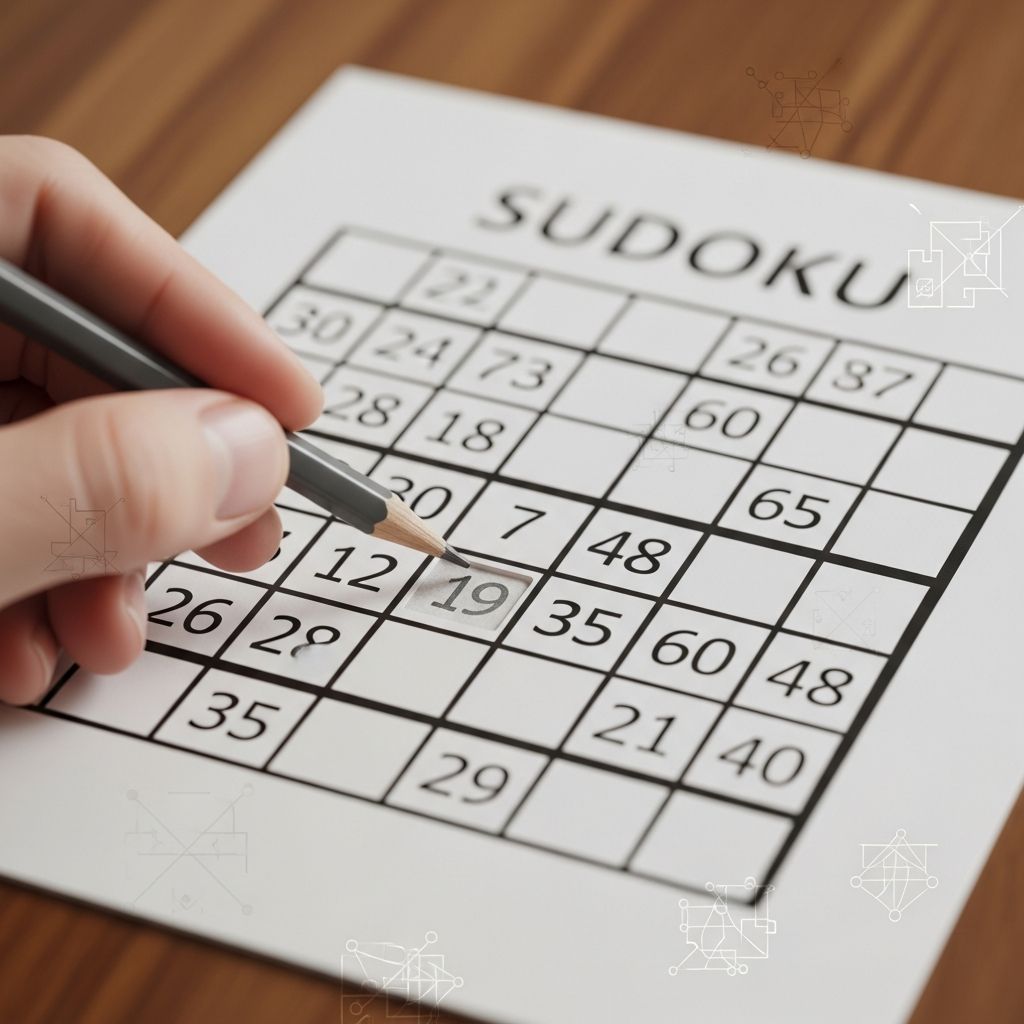
Understanding the Foundation of Sudoku Problem-Solving
Sudoku represents one of the most engaging logic-based puzzles available today, captivating millions of enthusiasts worldwide. The appeal lies not merely in filling a grid with numbers, but in the intellectual challenge of applying systematic reasoning to uncover each solution. Whether you’re a casual solver seeking to improve your times or someone looking to develop genuine expertise, understanding the underlying principles of effective solving is essential. The journey from novice to proficient solver involves developing methodical approaches that transform what initially feels overwhelming into a series of manageable deductions.
The fundamental principle underlying all successful Sudoku solving is constraint satisfaction. Every puzzle operates under the same basic rules: each row, column, and 3×3 box must contain the digits one through nine exactly once. This constraint-based framework means that solving efficiently depends on recognizing how these limitations interact and how deductions in one area cascade through the rest of the puzzle. Rather than guessing or trying random numbers, skilled solvers use logical elimination to narrow possibilities systematically until only valid solutions remain.
Foundational Scanning Methods for Efficient Grid Analysis
The most efficient starting point for any Sudoku puzzle involves systematic examination of the grid’s basic structure. Rather than jumping randomly between cells, successful solvers employ organized scanning patterns that reveal the easiest placements first. This approach builds momentum and prevents the frustration of getting stuck early.
Row, Column, and Box Examination
The primary scanning method involves examining each row, column, and 3×3 box individually to locate numbers that have limited placement options. Begin by identifying which digits are already present in each structural unit, then determine which numbers from one to nine are still needed. This process quickly reveals instances where a missing number has only one possible location—situations commonly called “hidden singles.”
When scanning a particular row, mentally eliminate numbers already present in that row, then check the columns and boxes that intersect with empty cells. If a number can only fit in one position across all its constraints, that placement becomes definite. The key to efficient scanning involves moving through the grid systematically without backtracking. Work through rows methodically, then columns, then boxes, rather than jumping erratically between different sections.
Multi-Directional Analysis
More sophisticated scanning involves checking interactions between different structural directions simultaneously. When examining where a specific number might belong in a box, also consider its implications in the overlapping rows and columns. This two-directional approach often reveals solutions that one-directional analysis misses.
For example, if you’re determining where the number five belongs in the middle box, you might find that two possible positions exist. However, if one of those positions shares a row with another five elsewhere in the puzzle, you’ve eliminated one candidate and revealed the correct placement. This intersection analysis creates powerful eliminations that accelerate the solving process significantly.
Strategic Use of Candidate Notation
While novice solvers often attempt to fill numbers with certainty from the start, experienced solvers recognize that marking possible candidates early in the solving process actually saves considerable time. Although candidate notation appears to add extra steps initially, the ability to quickly see which numbers could potentially occupy each cell prevents inefficient circular logic and dead ends.
Establishing Your Notation System
Develop a consistent method for recording candidate possibilities in empty cells. Many solvers use small numbers written in pencil or digital notation to indicate which digits could theoretically occupy each space. Standard systems often place candidates in a small grid format within each cell, making patterns visually apparent. The specific notation matters less than consistency—whatever system you establish should allow quick recognition of candidate patterns.
Some solvers prefer marking candidates immediately after initial scanning, while others build their candidate lists gradually as they make deductions. Either approach works, provided you maintain accuracy and update your candidates whenever you place a number. Each placement eliminates that candidate from related rows, columns, and boxes, progressively reducing the candidate pool.
Pattern Recognition Through Candidate Analysis
Once candidates are marked, visual patterns often become apparent. Clusters of candidates in specific locations frequently reveal opportunities for advanced techniques. You might notice that a particular digit appears as a candidate in only two cells within a box, or that certain number combinations recur across rows. These patterns become the foundation for more sophisticated solving strategies.
Recognizing and Eliminating Common Candidate Patterns
As you progress beyond basic scanning, learning to identify recurring candidate patterns substantially accelerates solving speed. These patterns represent logical deductions that apply consistently across every puzzle you encounter.
Paired Number Identification
One fundamental pattern involves identifying pairs of cells within a structural unit (row, column, or box) that share exactly the same two candidates. When two cells in a row, column, or box both contain only candidates “3” and “7” and no other digits, you know with certainty that these two cells will contain only those numbers. Consequently, you can immediately eliminate 3 and 7 from all other cells in that same row, column, or box.
This concept expands to triple patterns as well. If three cells within a structural unit collectively contain only candidates “2,” “5,” and “8” (regardless of how these candidates distribute across the three cells), then those three numbers are restricted to those three cells. All other cells in that structural unit can have 2, 5, and 8 removed from their candidate lists.
Hidden Number Groupings
Beyond the obvious paired patterns, more subtle configurations exist where certain numbers appear as candidates only in specific cells, even when those cells contain additional candidates. If a particular digit shows as a candidate in only two locations within a given row, those two cells must eventually contain that number. This knowledge allows you to eliminate other candidates from those cells, sometimes creating cascading deductions throughout the puzzle.
Advanced Pattern Recognition Techniques
Once foundational methods become comfortable, introducing advanced techniques dramatically improves solving speed on difficult puzzles. These methods require deeper analysis but yield powerful eliminations when applied correctly.
X-Wing Configuration
The X-Wing technique emerges when a digit appears as a candidate in exactly two cells within two different rows, and those four cells align in the same two columns. Visualizing these four cells creates an X-pattern. When this configuration exists, you can eliminate that digit from all other cells in those two columns. This technique requires careful verification but reveals eliminations impossible through simpler methods.
Extended Logical Chains
More advanced solvers employ extended logical chains where a specific candidate in one cell directly determines possibilities in other cells through a series of logical connections. Rather than looking at isolated patterns, you trace implications through multiple steps, recognizing how solving one cell cascades through related structural units.
Organizational Strategies for Maintaining Solving Momentum
Beyond individual techniques, the organizational framework surrounding your solving approach significantly impacts both speed and accuracy. How you approach the puzzle systematically determines whether you’ll experience efficient progress or frustrating plateaus.
Systematic Scanning Sequence
Develop a consistent order for examining the puzzle rather than jumping randomly between sections. Some solvers prefer working row by row from top to bottom, others prefer column by column, and still others scan boxes in a specific pattern. The actual sequence matters less than maintaining consistency—your brain becomes more efficient when it knows what to expect next.
Breaking Complex Puzzles Into Manageable Segments
When confronting a particularly challenging puzzle, avoid the temptation to view the entire grid simultaneously. Instead, mentally isolate specific sections and focus your attention narrowly. Solving one box completely, then moving to adjacent boxes, prevents the cognitive overload that occurs when trying to track all nine boxes simultaneously. This segmented approach often reveals solutions that become visible only when examining concentrated sections in detail.
Strategic Pivot Points During Difficult Sections
When you reach a point where no obvious moves appear in your current working area, move deliberately to a different section rather than staring at the problematic area. Often, making progress elsewhere provides insights that unlock the stalled section. The new information gathered from solving other parts frequently eliminates candidates or creates patterns that make previously stuck cells suddenly solvable. This strategic pivoting prevents mental fatigue and maintains forward momentum.
Building Expertise Through Deliberate Practice
Speed and accuracy in Sudoku develop through consistent, purposeful practice rather than occasional casual play. Understanding the techniques means little without regular application and refinement.
Progressive Difficulty Advancement
Begin your practice with puzzles rated as easy or beginner-level. These puzzles primarily require basic scanning methods and candidate elimination, allowing you to build confidence and pattern recognition skills without overwhelming complexity. As scanning and candidate analysis become automatic, gradually introduce medium-difficulty puzzles that demand some pattern recognition. Only after consistently solving medium puzzles efficiently should you progress to challenging variants.
This graduated approach prevents frustration while systematically building your problem-solving vocabulary. Each difficulty level introduces slightly more complex scenarios, expanding your repertoire of recognized patterns and applicable strategies.
Consistent Practice Schedules
Regular shorter practice sessions prove more effective than occasional lengthy attempts. Solving one or two puzzles daily maintains your skills and allows continuous refinement of your approach. During each practice session, consciously focus on implementing specific techniques you’re developing rather than simply rushing to completion.
Progress Monitoring and Performance Tracking
Record your solving times for puzzles of consistent difficulty. Over weeks and months, you should notice improvement in your average times as techniques become internalized and pattern recognition accelerates. Tracking progress provides motivation and demonstrates the concrete benefits of your practice efforts.
Common Obstacles and Strategies for Overcoming Them
Managing Candidate Lists
As puzzles become more complex, candidate lists can become overwhelming. If you reach a point where almost every cell contains multiple candidates and progress stalls completely, you may have made an error earlier. Rather than continuing indefinitely, consider restarting with more careful attention to initial deductions. Alternatively, using systematic error-checking techniques—examining a completed section to verify all numbers follow the rules—can help identify where mistakes occurred.
Recognizing When to Change Approaches
If you’ve applied basic techniques extensively and find yourself truly stuck, it’s time to progress to advanced methods. Continuing to use only basic techniques on puzzles that require advanced pattern recognition wastes time and creates frustration. Learning to recognize when a puzzle demands more sophisticated analysis prevents this unproductive cycle.
Frequently Asked Questions
Q: How long should it take to solve a Sudoku puzzle efficiently?
A: Solving times vary significantly based on difficulty and solver experience. Easy puzzles might take five to fifteen minutes, medium puzzles fifteen to forty minutes, and hard puzzles can require an hour or more. As you improve, your times for each difficulty level should decrease noticeably.
Q: Is guessing ever acceptable in Sudoku?
A: Authentic Sudoku solving relies entirely on logical deduction. Any well-constructed puzzle has a unique solution discoverable through reasoning alone. If you find yourself guessing, either the puzzle contains an error or you haven’t yet recognized an applicable technique.
Q: What’s the best way to start any Sudoku puzzle?
A: Begin with systematic scanning of rows, columns, and boxes to place any hidden singles—numbers that have only one possible location. This initial pass often reveals five to fifteen numbers, providing momentum and creating new opportunities for additional deductions.
Q: How can I improve my speed without sacrificing accuracy?
A: Focus on mastering one new technique at a time, ensuring accuracy before moving faster. Speed naturally develops as techniques become automatic rather than requiring conscious thought. Never prioritize speed over correctness during your learning phase.
Q: Are there different Sudoku variants with different solving strategies?
A: Yes, variants like Killer Sudoku, X-Sudoku, and Irregular Sudoku introduce additional constraints or rule modifications. However, the fundamental logical reasoning principles apply across all variants, though specific techniques may require adaptation for the variant’s unique rules.
References
- How to Do Sudoku Fast: Speed Techniques for Quick Solving — 247Sudoku. Accessed 2026-04-04. https://www.247sudoku.com/news/how-to-do-sudoku-fast-speed-techniques-quick-solving/
- Sudoku techniques — Conceptis Puzzles. Accessed 2026-04-04. https://www.conceptispuzzles.com/index.aspx?uri=puzzle%2Fsudoku%2Ftechniques
- Sudoku Rules – Strategies, solving techniques and tricks — Sudoku.com. Accessed 2026-04-04. https://sudoku.com/sudoku-rules/
- Sudoku Solving Techniques — Kristanix. Accessed 2026-04-04. https://www.kristanix.com/sudokuepic/sudoku-solving-techniques.php
- The Ultimate Sudoku Strategy Guide: Learn all the Tricks — Best of Sudoku. Accessed 2026-04-04. https://bestofsudoku.com/sudoku-strategy

Medha Deb is an editor with a master's degree in Applied Linguistics from the University of Hyderabad. She believes that her qualification has helped her develop a deep understanding of language and its application in various contexts. Medha specializes in the areas of beauty, health, sports, and wellness and is committed to ensuring that the content on the website is…