
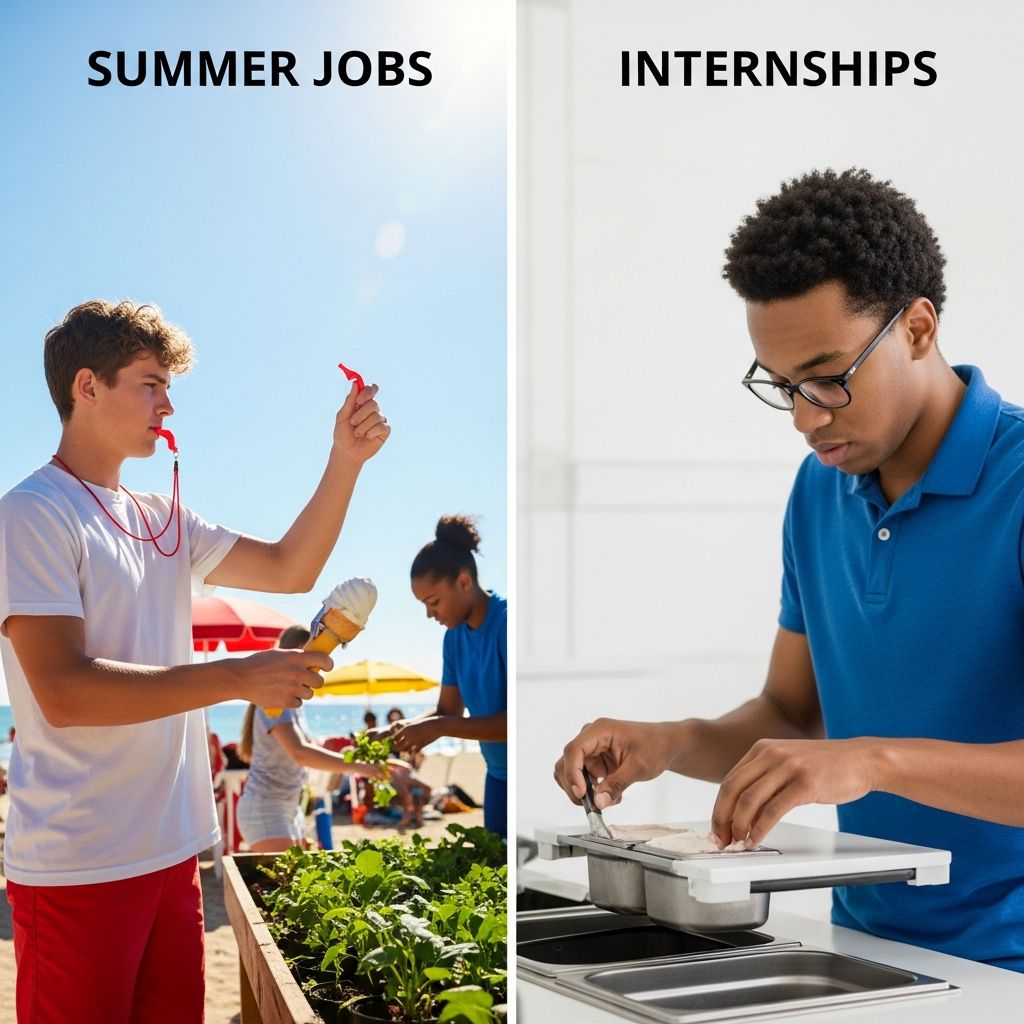
Summer offers high school and college students prime opportunities to build work experience through either traditional summer jobs or targeted internships. While both paths foster responsibility and real-world exposure, they diverge significantly in purpose, compensation, duration, and career relevance, influencing which option best suits individual goals like earning money or exploring professions.
Defining Summer Jobs for Students
Summer jobs represent entry-level roles designed primarily for short-term employment, often in retail, hospitality, or service industries. These positions guarantee payment, typically at hourly rates, allowing young workers to earn immediate income without prior expertise. Unlike career-specific roles, they emphasize general workplace adaptation over specialized training.
- Paid Compensation: Always salaried, helping cover personal expenses or savings.
- Flexible Duration: Often seasonal but adjustable; many allow reduced hours during school terms.
- Broad Skill Focus: Develops foundational abilities like punctuality, customer interaction, and task juggling.
These jobs suit students prioritizing financial independence. For instance, working at a local store teaches budgeting as earnings directly fund summer activities or future needs. Data from 2022 indicates about 20% of teens aged 16-19 balance school with part-time work, often stemming from summer starts.
Understanding Internships in Depth
Internships function as structured, time-bound placements within specific industries, offering immersion in professional environments. They prioritize experiential learning over routine tasks, frequently aligning with academic interests or career aspirations. Compensation varies: some pay hourly wages or stipends, while others remain unpaid, emphasizing opportunity cost versus monetary gain.
- Temporary Nature: Fixed start and end dates, usually 8-12 weeks, ensuring clarity for all involved.
- Field-Specific: Targets areas like tech, healthcare, or marketing, providing relevant exposure.
- Networking Emphasis: Builds professional relationships that extend beyond the summer.
Interns engage in meaningful projects, shadowing experts and contributing to teams, which refines career clarity. Surveys from the National Association of Colleges and Employers highlight internships as the top hiring influencer, signaling dedication and fit.
Compensation Breakdown: What to Expect
Financial aspects markedly separate these options. Summer jobs deliver consistent paychecks, often minimum wage or slightly above, enabling tangible rewards like new gadgets or travel funds. Internships, however, present a spectrum: paid versions match job rates or offer housing stipends, ideal for relocators, while unpaid ones trade income for prestige and connections.
| Aspect | Summer Job | Internship |
|---|---|---|
| Payment Guarantee | Always paid (hourly) | Paid or unpaid |
| Average Earnings | $10-15/hour | Varies; stipends common |
| Financial Goal Fit | High (immediate cash) | Medium (experience trade-off) |
Students facing tight budgets lean toward jobs, but those with support might select unpaid internships for superior resume value.
Skill Development and Professional Growth
Summer jobs hone universal “soft skills” essential across sectors: effective communication during customer service, time management amid shifts, and teamwork in fast-paced settings. These translate to any resume, demonstrating reliability to future employers or admissions officers.
Internships elevate this to technical proficiencies and industry insights. Participants analyze data, draft reports, or code software, bridging classroom theory to practice. This hands-on approach clarifies passions—perhaps enjoying marketing strategy but not sales execution—while building a portfolio of achievements.
- Jobs: Problem-solving in daily operations, financial literacy from paychecks.
- Internships: Specialized tools, mentorship, strategic thinking.
Impact on Resumes and Future Opportunities
Both enhance applications, but context matters. Summer jobs signal work ethic and versatility, valuable for non-specialized paths. They prove commitment, especially if sustained year-round.
Internships shine brighter for targeted pursuits, showcasing initiative and field knowledge. Recruiters favor them; one study notes they outweigh general jobs in hiring decisions. Networking yields letters of recommendation or job leads, giving interns an edge in competitive fields.
Pros and Cons: Side-by-Side Analysis
Weighing benefits helps decision-making.
| Pros | Cons | |
|---|---|---|
| Summer Job | Earn money; flexible schedule; broad skills; potential year-round role | Less career relevance; repetitive tasks; limited networking |
| Internship | Industry exposure; connections; resume boost; skill honing | Possibly unpaid; rigid timeline; competitive applications |
Part-time hybrids exist: internships allowing side jobs balance both worlds, preserving funds while gaining experience.
How to Choose Based on Personal Goals
Align with priorities. Need cash for college or fun? Opt for jobs teaching money management. Curious about engineering or journalism? Pursue internships for validation. Assess career stage: early explorers benefit from jobs’ low pressure; focused students gain from internships’ depth.
Online schooling fosters self-motivation, a plus for applications. Evaluate via questions: What’s my budget? Career interests? Time availability?
Finding and Applying for Opportunities
Search locally for jobs via community boards or apps. Internships demand tailored resumes highlighting relevant coursework or clubs; platforms like LinkedIn or Handshake connect to openings. Prepare for interviews: jobs stress availability; internships probe field knowledge.
- Job Tips: Emphasize reliability, customer service anecdotes.
- Internship Tips: Research company, express genuine interest.
Balancing Work with Summer Life
Neither consumes all time. Part-time roles (20-30 hours/week) leave room for friends, hobbies, or volunteering. Remote internship options add flexibility, preventing burnout.
Frequently Asked Questions
Are unpaid internships worth it?
Yes, if in a desired field—they offer unmatched experience and networks, often leading to paid roles.
Can summer jobs lead to careers?
Often, especially in growing companies; many part-timers advance.
Which looks better on college apps?
Internships for field alignment; jobs for demonstrated responsibility.
How long do internships last?
Typically 8-12 weeks, full- or part-time.
Do I need experience to apply?
No—enthusiasm and basics suffice for entry-level.
Maximizing Any Summer Experience
Reflect post-summer: log skills gained, connections made. Seek feedback; volunteer for extras. Both paths cultivate maturity, setting foundations for success. Hybrid approaches—part-internship, part-job—optimize outcomes.
Parents guide by discussing goals, reviewing options. Ultimately, action trumps idleness; any structured work impresses.
References
- The Differences Between Summer Jobs and Internships — Connections Academy. 2023. https://www.connectionsacademy.com/support/resources/article/summer-job-internships-differences/
- Summer Job Versus Summer Internship — Winds of Change Magazine (AISES). 2023. https://woc.aises.org/content/summer-job-versus-summer-internship
- Difference Between Seasonal Work and Internship — CollegeVine. 2023. https://www.collegevine.com/faq/154246/difference-between-seasonal-work-and-internship
- Should I Get A Summer Job Or Internship? — College Raptor. 2023. https://www.collegeraptor.com/paying-for-college/articles/questions-answers/get-summer-job-internship/
- Internship vs. Summer Program vs. Summer Job — College Confidential Forums. 2017. https://talk.collegeconfidential.com/t/internship-vs-summer-program-vs-summer-job/1709988

- Integrated M.A. in Applied Linguistics, University of Hyderabad
- 5+ years in editorial, instructional, SEO, and research-based writing
Sneha is a relationships and lifestyle writer with a strong foundation in applied linguistics and certified training in relationship coaching. She brings over five years of writing experience to theskillvault, crafting thoughtful, research-driven content that empowers readers to build healthier relationships, boost emotional well-being, and embrace holistic living. Her writing and insights reflect the belief that beauty, happiness, and wellness…