
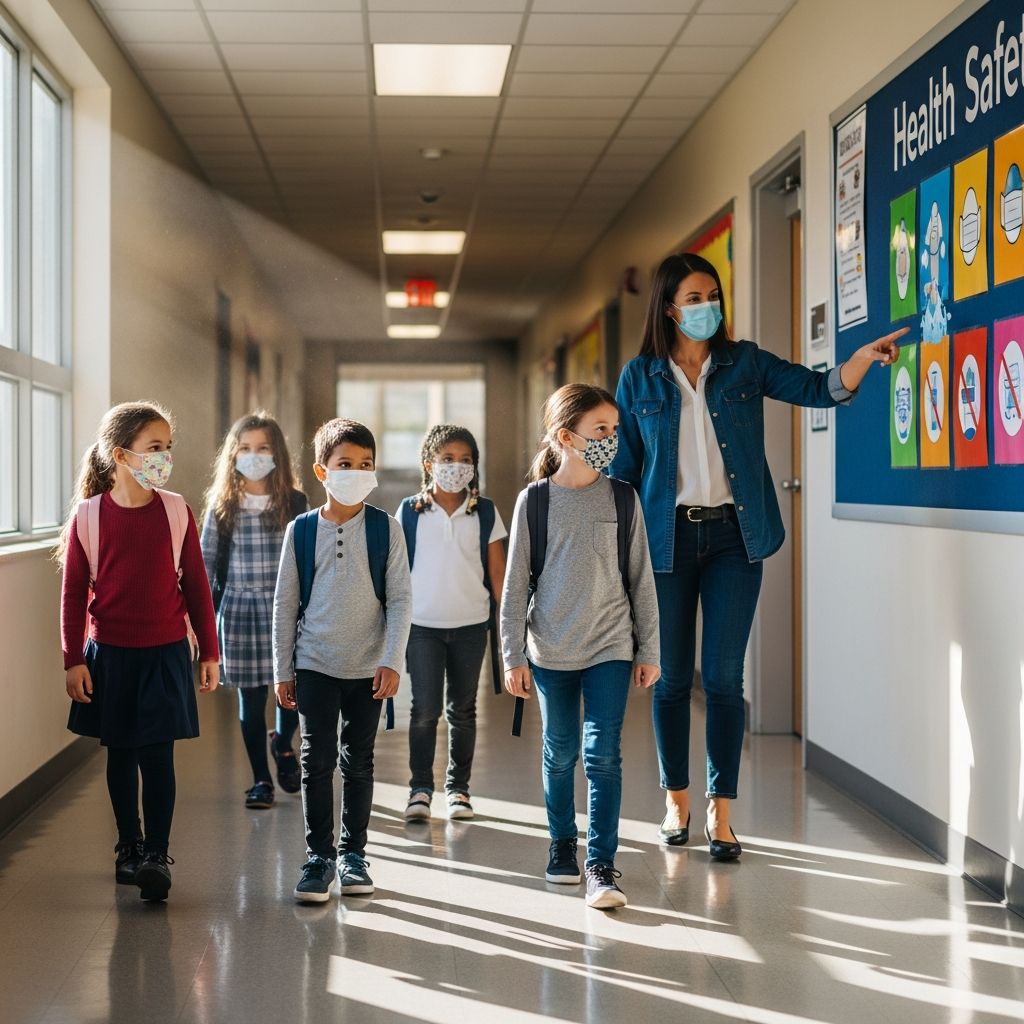
Supporting Student Transition to New Classroom Safety Expectations
The return to in-person learning has required significant adjustments from both educators and students. When schools reopen with new safety protocols, young learners face a fundamentally different classroom environment than they experienced before the pandemic. Teachers play a critical role in helping students understand why these measures exist, how to implement them consistently, and how to maintain emotional well-being during this transition. By taking a thoughtful, structured approach to introducing safety guidelines, educators can transform potentially confusing or anxiety-inducing requirements into manageable, even positive, aspects of the school day.
Understanding Your Own Perspective Before Teaching Students
Before addressing pandemic safety protocols with your class, it is essential to examine your own feelings and concerns about these guidelines. Research shows that students are remarkably perceptive and will absorb the emotional tone adults bring to discussions about health and safety. If you communicate anxiety, frustration, or uncertainty about the protocols, your students will likely internalize those feelings and approach compliance with fear or resistance. Taking time for self-reflection allows you to process your concerns separately and develop a calm, confident framework for presenting these guidelines to your class.
Consider speaking with colleagues, school administrators, or counselors about your concerns. This peer support can help you establish clarity about which aspects of the guidelines are fixed requirements and which offer flexibility. When you approach the topic with measured confidence and clear explanations, students respond more positively and demonstrate greater willingness to participate in safety practices.
Establishing Clear Communication About Health Protocols
Transparency is fundamental when explaining pandemic safety measures to students. Rather than presenting protocols as arbitrary rules, explain the science behind them in age-appropriate language. Help students understand that these guidelines exist to protect everyone—their classmates, teachers, families at home, and community members. This knowledge transforms safety practices from restrictions into shared responsibility.
When communicating with students about COVID-19 guidelines, acknowledge what is known and what remains uncertain. Avoid false reassurance or oversimplifying complex situations. Instead, frame discussions around concrete, observable practices that students can understand and implement. For example, explain that maintaining physical distance reduces the chance of transmitting respiratory droplets, making it easier for everyone to stay healthy and attend school regularly.
Teaching Physical Distance Awareness in Practical Ways
Physical distancing recommendations have evolved as research has advanced, with current guidance suggesting that students who are seated and wearing masks in classrooms can maintain effective protection with spacing of approximately three feet or greater. However, the concept of maintaining distance requires concrete instruction, particularly for younger students who may not naturally understand spatial boundaries.
To help students internalize appropriate distancing, use tangible visual markers throughout your classroom and school spaces. Consider implementing:
- Colored tape or floor markings that clearly indicate where students should stand during transitions and group activities
- Wayfinding arrows and signs that guide traffic flow through hallways and common areas
- Textured floor squares or carpet tiles that serve as physical reminders of personal space boundaries
- Visual placeholders on desks or tables that show appropriate seating arrangements
These tactile and visual supports help students understand spacing requirements without requiring constant verbal reminders. Over time, maintaining appropriate distance becomes habitual rather than forced.
Normalizing Mask-Wearing in the Classroom Environment
One of the most visible changes in classroom settings involves masks. Many educators initially worried that students would resist wearing masks throughout the school day or remove them frequently. However, experience has shown that with proper instruction and positive framing, most students adapt successfully to mask-wearing.
To encourage consistent mask use, consider these approaches:
- Frame mask-wearing as a team effort—explain that when everyone participates, the whole classroom community stays healthier
- Select masks that are age-appropriate and allow for visibility of mouth movements, which supports communication and emotional expression
- Build in brief breaks during the day when students can remove masks in controlled settings, such as outdoor recess or designated indoor areas where distance can be maintained
- Use class discussions or creative projects to make mask-wearing feel manageable and even fun
- Acknowledge that wearing masks requires adjustment and validate any discomfort students express
Research indicates that masks significantly reduce infection risk when germs are actively spreading in school communities. Helping students understand this connection between their action and community protection increases motivation to maintain this practice consistently.
Building Effective Hand-Washing and Respiratory Hygiene Habits
Hand hygiene remains one of the most fundamental and enduring safety practices in schools. Teaching proper hand-washing techniques creates habits that protect against COVID-19 and numerous other infectious illnesses. The standard recommendation is to wash hands with soap and water for at least 20 seconds, with a helpful mnemonic being to sing the “Happy Birthday” song twice through.
To establish strong hand-hygiene practices in your classroom:
- Ensure soap, water, and paper towels are readily available at all times, with supplies regularly restocked
- Build hand-washing into the daily schedule before eating, after bathroom use, after coughing or sneezing, and after outdoor activities
- Demonstrate correct hand-washing technique, including scrubbing between fingers, under nails, and the backs of hands
- For situations where soap and water are unavailable, provide hand sanitizer containing at least 60% alcohol
- Teach respiratory etiquette—covering the mouth and nose with an elbow or tissue when coughing or sneezing, then disposing of tissues and washing hands immediately
These practices, while sometimes challenging to instill in younger students with limited fine motor coordination, establish lifelong healthy habits that extend far beyond pandemic concerns.
Creating Structured Classroom Behavior Management Around Safety
The new classroom environment requires updated behavior management approaches. Because students have spent extended periods away from traditional classroom settings, many need reminders about fundamental expectations. Additionally, the physical layout of classrooms has changed significantly, with different spacing, traffic patterns, and routines. Behavior management becomes crucial for maintaining order while students adapt to these changes.
Develop clear, concise expectations that address the specific behaviors required by safety protocols. Use positive language that emphasizes what students should do rather than what they should avoid. For example, “We keep our masks on during instruction time” is more effective than “Don’t take off your mask.” Practice these expectations through role-playing, demonstrations, and repeated positive reinforcement. Be prepared to redirect behavior quickly and with minimal disruption, allowing you to maintain classroom control and keep the learning environment focused.
Monitoring Student Health and Creating Safe Isolation Procedures
Daily health screening is a critical component of keeping schools safe. This involves monitoring students for symptoms of illness before the school day begins and encouraging families to keep symptomatic children at home. Schools should communicate clearly with families about which symptoms warrant staying home and the importance of healthcare provider evaluation and testing when symptoms appear.
Within the school building, establish procedures for identifying and isolating students who develop symptoms during the school day. Create a designated isolation room or area where a potentially ill student can wait safely while supervised by an adult until a parent or guardian can pick them up. Ensure this space maintains appropriate ventilation and has necessary supplies for comfort and hygiene.
When a student tests positive for COVID-19, current approaches focus on quarantining close unvaccinated contacts rather than isolating entire classroom cohorts. This targeted approach, combined with proactive testing of the exposed cohort, reduces unnecessary disruptions to learning while still providing protection.
Optimizing Classroom Ventilation and Environmental Controls
Environmental factors significantly influence disease transmission in schools. While viral transmission primarily occurs through respiratory droplets, improving air quality and ventilation provides an additional protective layer. Schools should:
- Ensure classrooms have adequate airflow, including opening windows and doors regularly when weather permits
- Review ventilation systems to confirm they meet current standards
- Continue regular cleaning and disinfection of high-touch surfaces such as doorknobs, light switches, and bathroom fixtures
- Educate students about the importance of these environmental measures and how they contribute to everyone’s safety
Multiple protective layers working together—physical distancing, masks, hand hygiene, ventilation, and testing—create a synergistic effect that minimizes viral exposure far more effectively than any single measure alone.
Supporting Vaccination Efforts and Communicating with Families
Vaccination represents one of the most effective tools for preventing COVID-19 transmission in schools. Public health recommendations indicate that updated COVID-19 vaccines, along with seasonal flu vaccines, should be administered to all eligible individuals. As an educator, you can support vaccination efforts by:
- Communicating factual information about vaccine safety and efficacy based on reliable public health sources
- Facilitating vaccine information sessions or connecting families with healthcare providers
- Addressing vaccine hesitancy with empathy while maintaining clear communication about the evidence supporting vaccination
- Reinforcing that vaccination is one component of a comprehensive approach to school safety
Regular communication with families about health policies, attendance expectations, and available resources helps create a shared understanding of how schools maintain safe learning environments.
Addressing Student Anxiety and Building Resilience
Beyond the practical aspects of safety protocols, many students experience anxiety related to the pandemic and new classroom procedures. Acknowledging these feelings while maintaining calm confidence helps students develop resilience. Create space in your classroom for discussing concerns, validating emotions, and celebrating the adaptation students have already demonstrated. Both students and educators have shown remarkable resilience through remote learning transitions and school reopening, qualities worth recognizing and building upon.
Frequently Asked Questions About Classroom Safety Protocols
Q: How can I help resistant students accept safety guidelines?
A: Start by understanding their specific concerns—whether resistance stems from discomfort, not understanding the rationale, or peer pressure. Address concerns directly with age-appropriate explanations. Frame guidelines as community protection rather than individual restriction. Involve resistant students in problem-solving how to implement guidelines comfortably.
Q: What should I do if a student becomes ill during the school day?
A: Follow your school’s established protocol for identifying and isolating symptomatic students. Contact a parent or guardian for pickup. Maintain appropriate supervision and comfort while the student waits. Document the incident according to school procedures.
Q: How often should classrooms be cleaned and disinfected?
A: Schools should follow CDC guidance for cleaning common areas and high-touch surfaces daily. Classroom desks, doorknobs, and bathroom fixtures require regular disinfection. However, research suggests surface transmission of COVID-19 is limited, so cleaning should be balanced with other protective measures.
Q: Can students with medical conditions be exempt from wearing masks?
A: Medical exemptions vary by district and should be handled through consultation with school health officials and families’ healthcare providers. Alternative protective measures may be implemented when masks cannot be worn.
Q: How do I balance safety protocols with creating a welcoming classroom environment?
A: Frame safety measures as strategies that allow students to return to full in-person learning and school activities. Use positive language, celebrate adaptations, and maintain focus on learning objectives while consistently reinforcing safety practices.
References
- COVID-19: Safe Schools — World Health Organization Western Pacific Region. Accessed 2026-04-04. https://www.who.int/westernpacific/emergencies/covid-19/information/covid-19-safe-schools
- Considerations for the Safe Operation of Schools During the COVID-19 Pandemic — National Center for Biotechnology Information, U.S. National Library of Medicine. 2021. https://pmc.ncbi.nlm.nih.gov/articles/PMC8716382/
- Safety Tips for Attending School During COVID-19 — Mayo Clinic. Accessed 2026-04-04. https://www.mayoclinic.org/diseases-conditions/coronavirus/in-depth/returning-safely-to-school-covid-19/art-20490441
- How to Teach Younger Students COVID-19 Classroom Safety — Planbook. Accessed 2026-04-04. https://blog.planbook.com/covid-19-classroom-safety/
- Protecting Against Infections in Early Care and Education Programs — Centers for Disease Control and Prevention. Accessed 2026-04-04. https://www.cdc.gov/early-care/prevention/protecting-against-infections.html
- COVID-19 Resources for Schools, Students, and Families — U.S. Department of Education. Accessed 2026-04-04. https://www.ed.gov/teaching-and-administration/safe-learning-environments/covid-19/covid-19-resources-for-schools-students-and-families
- Preventing Spread of Infections in K-12 Schools — Centers for Disease Control and Prevention. Accessed 2026-04-04. https://www.cdc.gov/children-and-school-preparedness/infection-prevention/index.html

- Integrated M.A. in Applied Linguistics, University of Hyderabad
- 5+ years in editorial, instructional, SEO, and research-based writing
Sneha is a relationships and lifestyle writer with a strong foundation in applied linguistics and certified training in relationship coaching. She brings over five years of writing experience to theskillvault, crafting thoughtful, research-driven content that empowers readers to build healthier relationships, boost emotional well-being, and embrace holistic living. Her writing and insights reflect the belief that beauty, happiness, and wellness…