
The Evolution of Job Discovery in the Digital Age
The employment landscape has undergone a dramatic transformation over the past decade. What once required spending hours on multiple job boards and manually comparing listings has evolved into a streamlined, mobile-first experience. Today’s job seekers have access to sophisticated platforms that leverage artificial intelligence, machine learning, and intuitive user interfaces to match candidates with opportunities tailored to their skills and aspirations. The traditional model of browsing job listings passively has given way to dynamic, interactive platforms that put candidates in control of their search journey.
One of the most innovative developments in this space is the emergence of swipe-based job discovery platforms. These applications borrow the familiar interaction model popularized by dating apps—users swipe right to express interest in opportunities and left to pass—and apply it to career matching. This approach has proven remarkably effective, combining accessibility with engagement while reducing decision fatigue in an overwhelmingly vast job market.
Understanding Swipe-Based Job Matching Technology
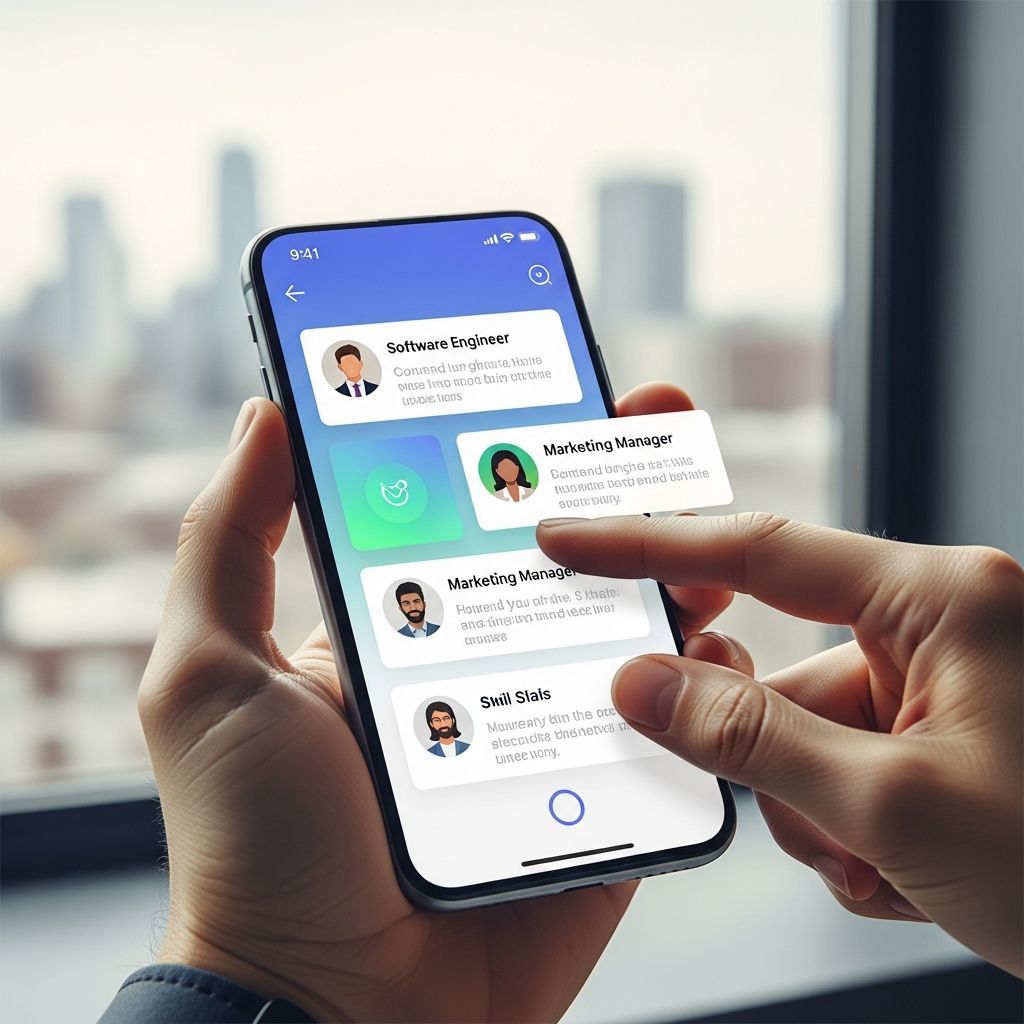
Swipe-based job discovery platforms represent a paradigm shift in how candidates interact with employment opportunities. Rather than requiring users to navigate complex filter systems, review lengthy job descriptions, and manage multiple applications, these platforms present opportunities one at a time in a simplified, card-based interface. Each job card displays essential information: the position title, company name, salary range, location flexibility, and key responsibilities.
The mechanics are straightforward. Users swipe right to save opportunities or express interest, triggering a notification to the employer that the candidate is interested. Conversely, swiping left removes the job from the queue without penalty or explanation required. This low-pressure approach removes the cognitive burden of traditional job applications, which often involve lengthy forms, cover letter composition, and submission hesitation.
Behind this simple interface lies sophisticated technology. Machine learning algorithms analyze user behavior patterns—which jobs users swipe on, how long they pause on each card, what job characteristics correlate with engagement—to refine recommendations over time. The platform learns whether a candidate prioritizes remote flexibility, salary expectations, company size, or industry type. This personalization becomes increasingly accurate as the system gathers more data about individual preferences.
Core Advantages of Swipe-Based Discovery
Efficiency and Speed
Traditional job searching involves navigating multiple websites, entering credentials repeatedly, and filtering through irrelevant listings. Swipe-based platforms consolidate this experience. Candidates can review dozens of relevant opportunities in minutes rather than hours. The standardized card format provides consistent information presentation, allowing users to quickly assess fit without digging into varying website layouts and formats.
Reduced Decision Fatigue
The paradox of choice suggests that when presented with too many options, decision-making becomes difficult and satisfaction decreases. Job searching amplifies this phenomenon—thousands of listings can feel paralyzing. By presenting opportunities sequentially and limiting information to relevant highlights, swipe platforms reduce cognitive load. Users make faster, less stressful decisions about whether opportunities warrant deeper investigation.
Mobile-First Design Philosophy
Modern job seekers conduct searches across multiple devices and contexts—during commutes, between meetings, or while multitasking. Swipe-based platforms are designed natively for mobile phones, with touch-friendly interfaces optimized for smaller screens. This accessibility means candidates can engage with job searching during downtime rather than requiring dedicated computer time, dramatically increasing engagement frequency.
Privacy and Non-Committal Engagement
Traditional applications often feel binding. Once submitted, candidates worry about follow-up expectations and employer impressions. Swipe-based systems normalize browsing without commitment. Users can explore opportunities, understand market expectations, and research companies without the pressure of formal application submission. This encourages more browsing and genuine engagement with the hiring process.
How Algorithmic Matching Enhances Job Discovery
The intelligence behind swipe-based platforms extends beyond simple preference tracking. Advanced algorithms analyze multiple data dimensions simultaneously. They consider explicit criteria such as required skills, educational background, and experience level. Simultaneously, they evaluate implicit signals including job search timing, career progression patterns, previous employer types, and industry transitions users have pursued.
Natural language processing technologies parse job descriptions to identify underlying requirements that may not be explicitly stated. Similarly, these systems analyze user profiles and resumes to extract nuanced capabilities and interests. When a user swipes on certain opportunities, the algorithm identifies common attributes and surface more comparable positions, creating a virtuous cycle of improved recommendations.
Some platforms incorporate behavioral economics principles into their matching logic. For instance, they might prioritize showing jobs with high application-to-interview conversion rates, increasing the likelihood that user effort translates to actual interviews. Others weight recommendations based on employer engagement metrics, ensuring candidates see positions from companies actively and promptly responding to applications.
Integration with Broader Hiring Ecosystems
Employer Dashboard and Candidate Intelligence
While job seekers enjoy streamlined discovery, employers benefit from structured candidate data. When users interact with swipe-based platforms, they generate detailed engagement records. Employers gain insights into which job attributes attract candidates, how candidate interest correlates with company characteristics, and what messaging resonates in listings. This data empowers more targeted recruitment strategies.
Two-Way Matching Dynamics
Progressive swipe platforms implement two-way matching mechanisms where employers can also express interest in candidates. When both parties swipe right on each other, the platform facilitates an introduction or automatic conversation initiation. This mutual matching reduces wasted outreach—employers contact candidates who have already expressed interest—and candidates receive recruitment communications from companies they’ve deemed relevant.
Seamless Application Integration
Upon indicating interest through a swipe, candidates typically move into an application process. However, swipe platforms minimize friction by pre-populating forms with resume data, pre-approved answers to common questions, and one-click submission options. Some integrate with email systems to streamline communication or connect to video interview platforms for rapid next-stage assessments.
Comparing Swipe-Based Platforms with Traditional Job Sites
| Feature | Swipe-Based Platforms | Traditional Job Sites ||———|———————-|———————|| **User Interface** | Card-based, sequential presentation | Grid-based listings with extensive filtering || **Information Density** | Minimal, essential details only | Comprehensive, detailed job descriptions || **Decision Time** | Seconds per opportunity | Minutes per opportunity || **Mobile Experience** | Native, touch-optimized | Responsive but often desktop-focused || **Application Process** | Streamlined, one-click possible | Multi-step, form-intensive || **Algorithmic Matching** | Continuous learning from behavior | Static filters and search terms || **Engagement Model** | Exploratory, low-pressure browsing | Intentional searching and filtering || **Employer Visibility** | Data-driven matching insights | Application volume and resume screening |
Practical Strategies for Maximizing Swipe-Based Platform Success
Profile Optimization
Swipe-based platforms derive recommendations from profile completeness and accuracy. Users should invest time in comprehensive profile creation, including detailed skill descriptions, work history with specific accomplishments, and clear indication of career aspirations. The more complete the profile, the more sophisticated the algorithmic matching becomes. Including keywords relevant to target roles helps the system surface appropriate opportunities.
Intentional Swiping Patterns
While casual browsing is encouraged, strategic swiping accelerates discovery of ideal opportunities. Rather than swiping right on every moderately acceptable position, users should swipe right on positions that genuinely excite them. This trains the algorithm to prioritize truly aligned opportunities. Conversely, swiping left on jobs missing critical elements signals important preferences to the matching system.
Notification Management
Most swipe platforms offer customizable notifications for opportunities matching specified criteria or when mutual matches occur. Users should configure notifications thoughtfully—enough to stay engaged without becoming overwhelmed. Tailored alerts ensure candidates learn about relevant new opportunities without notification fatigue.
Regular Profile Refreshes
Periodic profile updates signal active job-seeking status to algorithms, often boosting visibility in recommendations. Adding new skills, updating employment information after role changes, or clarifying career direction helps the system provide increasingly accurate matches over time.
The Role of User Experience Design
The success of swipe-based job discovery hinges on thoughtful user experience design. Every element—from card layout to swiping sensitivity to notification frequency—affects engagement. Effective platforms balance information sufficiency with cognitive simplicity. Cards include enough detail to make informed decisions but not so much that users feel overwhelmed. Swiping mechanics feel responsive and satisfying without requiring precise gestures that frustrate users.
Color design, typography, and visual hierarchy guide user attention to most important information. Employer branding elements help candidates quickly assess company culture and values. Progress indicators and motivational messaging encourage continued browsing. The best-designed platforms feel intuitive to newcomers while offering depth for power users who want to refine search parameters.
Industry-Specific and Niche Variations
While general-purpose swipe-based platforms address broad job-seeking populations, specialized variants cater to specific industries. Technology-focused platforms emphasize technical skills and equity compensation, showing startup opportunities with founder access and transparent compensation structures. Remote-focused platforms highlight work flexibility, asynchronous collaboration capabilities, and location independence. Hourly and service-industry versions emphasize shift scheduling, pay frequency, and quick hiring timelines.
These specialized platforms maintain the core swipe-based discovery advantages while tailoring recommendations, employer matching, and application processes to industry-specific workflows. A platform for trades workers might emphasize project type and equipment, while one for creative professionals highlights portfolio requirements and creative brief details.
Data Privacy and Candidate Safety Considerations
Swipe-based platforms collect detailed behavioral data to power their recommendation engines. Users should understand what data collection occurs and how personal information is used. Privacy-conscious platforms clearly communicate data handling practices, allow users to control information sharing, and implement strong security measures protecting sensitive career information. Candidates should review privacy policies and adjust settings according to comfort levels before extensive use.
Additionally, candidates should remain vigilant about employer legitimacy. While reputable platforms vet employer listings, scams occasionally slip through. Red flags include requests for upfront payments, suspicious email addresses, or offers that seem unrealistically attractive. Candidates should verify company information through independent research before sharing sensitive personal or financial information.
Common Questions About Swipe-Based Job Discovery
Q: How accurate are algorithmic job recommendations?
A: Accuracy improves significantly as users interact with platforms over time. Initial recommendations rely on profile data, but as users swipe on jobs and engage with listings, algorithms learn preferences and refine suggestions. Most users report meaningful accuracy improvements after using the platform for several weeks.
Q: Can employers see when I browse their job postings?
A: Most platforms only notify employers when users explicitly express interest through swiping right or applying. Passive browsing typically remains invisible to employers, allowing candidates to explore without pressure or tracking concerns.
Q: Do swipe-based platforms charge users fees?
A: Many offer free versions with limited features or advertising, while premium subscriptions unlock advanced filtering, curated opportunities, and priority employer attention. Some employers subsidize candidate access as part of recruitment strategies. Users should review pricing models to understand costs and free alternatives.
Q: How long does the hiring process typically take after matching?
A: Timeline varies significantly by employer and role. Some mutual matches lead to interviews within days, while others may take weeks for employers to review candidates. Platform features often show historical response times for employers, helping candidates set realistic expectations.
Q: Can I control what types of opportunities the algorithm shows?
A: Yes. Most platforms offer filtering options for salary ranges, job types, industries, locations, and remote flexibility. These explicit filters work alongside algorithmic matching, allowing users to both narrow parameters and benefit from learning-driven recommendations.
Q: What should I include in my profile for best results?
A: Comprehensive profiles yield better recommendations. Include complete work history, specific accomplishments, relevant certifications, technical skills with proficiency levels, educational background, and clear statement of job search goals and preferences. More complete profiles enable more sophisticated matching.
References
- Top 12 Best Job Search Sites in the US for 2025 — Wellness360. 2025. https://www.wellness360.co/top-12-best-job-search-sites-in-the-us-for-2025/
- 20 Best Job Search Sites in 2025 — FlexJobs. 2025. https://www.flexjobs.com/blog/post/best-job-search-sites
- Best Job Boards 2025: 10 Platforms That Actually Get You Hired — The Interview Guys. 2025. https://blog.theinterviewguys.com/best-job-boards-2025/
- 8 Best Job Search Sites I Like Using in 2025 — G2 Learning Hub. 2025. https://learn.g2.com/best-job-search-sites
- Best Job Search Sites December 2025 — Edvisors. 2025. https://www.edvisors.com/plan-for-college/careers/best-job-search-sites/

Medha Deb is an editor with a master's degree in Applied Linguistics from the University of Hyderabad. She believes that her qualification has helped her develop a deep understanding of language and its application in various contexts. Medha specializes in the areas of beauty, health, sports, and wellness and is committed to ensuring that the content on the website is…