
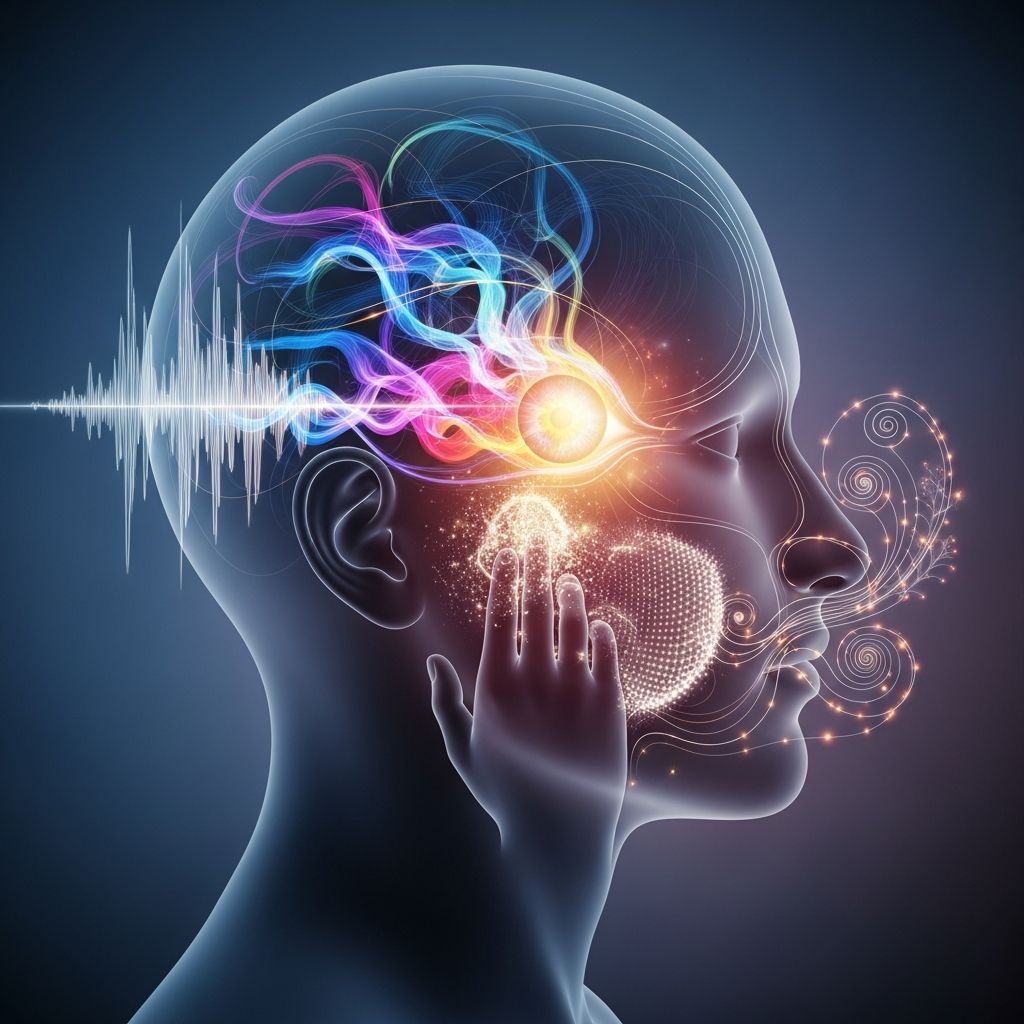
Synesthesia represents a remarkable neurological occurrence where activation of one sensory pathway spontaneously elicits experiences in another, creating blended perceptions such as viewing sounds as vivid colors or associating letters with specific tastes. This condition affects approximately 4% of the population and manifests in over 80 distinct forms, highlighting the brain’s capacity for cross-wired sensory processing.
Understanding the Core Mechanism of Synesthesia
At its essence, synesthesia involves automatic, consistent sensory crossovers that differ from typical metaphors or associations. For instance, a synesthete might perceive the note C as bright yellow every time, a response that is involuntary and stable over time. Researchers distinguish between projectors, who see concurrents externally overlaid on stimuli, and associators, who experience them internally as mental imagery. This perceptual blending stems from heightened neural connectivity, particularly in areas like the fusiform gyrus for grapheme-color types.
Unlike hallucinations, synesthetic experiences are grounded in real stimuli and enhance rather than disrupt perception for most individuals. Studies confirm synesthetes often excel in memory tasks due to these rich, multi-sensory associations.
Prevalent Forms of Synesthetic Experiences
Synesthesia’s diversity spans numerous combinations. Grapheme-color synesthesia, the most documented variant, links letters or numbers to hues; for example, the letter A might consistently appear red. This form accounts for up to 70% of cases and aids learning in neurodiverse individuals by associating abstract symbols with memorable visuals.
- Chromesthesia (Sound-to-Color): Musical tones or noises evoke colors, shapes, or textures. High pitches might flash blue, while bass notes appear deep purple, influencing composers like Franz Liszt.
- Auditory-Tactile: Sounds induce physical sensations like pressure, vibration, or temperature shifts. Heavy metal tracks could feel like pins on the skin.
- Lexical-Gustatory: Words or spoken terms trigger tastes, such as ‘basketball’ evoking chocolate, independent of actual flavor.
Uncommon Yet Intriguing Synesthetic Blends
Beyond common types, rarer forms reveal synesthesia’s breadth. Mirror-touch synesthesia causes observers to feel touches or pains seen on others, amplifying empathy but potentially overwhelming. Time-space synesthesia visualizes calendars or sequences in fixed spatial layouts, like months arranged in a circular mental map.
Other variants include:
- Smell-color associations, where coffee aromas summon brown shades.
- Personality-smell, linking traits to scents, such as friendliness evoking fresh linen.
- Flavour-temperature, blending tastes with warmth or coolness.
| Type | Trigger | Concomitant Sensation | Prevalence |
|---|---|---|---|
| Grapheme-Color | Letters/Numbers | Colors | Most Common (~70%) |
| Chromesthesia | Sounds/Music | Colors/Shapes | Common |
| Mirror-Touch | Observed Touch | Felt Touch/Pain | Rare |
| Lexical-Gustatory | Words | Tastes | Very Rare |
This table summarizes key types, illustrating how triggers from one modality reliably produce specific secondary perceptions.
Neurological Foundations and Genetic Links
Synesthesia arises from atypical brain wiring, where sensory regions that typically operate separately show increased white matter connections. Functional MRI scans reveal overlapping activation in visual and auditory cortices during stimuli. Genetic factors play a role, with familial clustering suggesting heritability; female predominance hints at X-chromosome influences.
Developmentally, it often emerges in childhood alongside learning milestones, persisting lifelong without decline. While not pathological, intense forms may correlate with conditions like autism or migraines, though most synesthetes report cognitive advantages.
Daily Life Impacts and Cognitive Advantages
For many, synesthesia enriches existence: artists like Pharrell Williams describe music as colorful explosions, fueling creativity. Enhanced memory underpins superior recall; grapheme-color synesthetes outperform controls in digit-span tests by leveraging visual codes.
Challenges arise in overwhelming environments—crowded sounds might flood with colors—or social contexts, where explaining ‘tasting’ words invites skepticism. Rarely disruptive, it seldom requires intervention, but therapy aids mirror-touch pain empathy.
Diagnosis Methods and Research Validation
Confirming synesthesia demands tests ensuring consistency, automaticity, and uniqueness. The Synesthesia Battery, an online tool, uses repeated grapheme-color matching over weeks; scores above 90% consistency indicate genuineness. EEG and fMRI provide objective markers via cross-activation patterns.
Prevalence estimates vary from 2-4%, with self-reports validated against controls showing no learning effects. Ongoing research explores therapeutic applications, like using synesthetic-like training for memory enhancement.
Frequently Asked Questions (FAQs)
What causes synesthesia?
Synesthesia results from hyperconnectivity between sensory brain areas, often genetically influenced, leading to automatic cross-activations.
Is synesthesia a disorder?
No, it’s a perceptual variation, typically beneficial, not requiring treatment unless disruptive.
Can anyone develop synesthesia?
It’s largely innate, stable from childhood, though psychedelics or brain injury can induce temporary episodes.
Do synesthetes see the world differently all the time?
Only specific triggers evoke concurrents; everyday vision remains normal otherwise.
How is synesthesia tested?
Through consistency tests like battery assessments measuring stable associations over trials.
Synesthesia in Culture and Famous Examples
Historical figures like Vladimir Nabokov detailed letter-colors in memoirs, while modern musicians like Billie Eilish credit chromesthesia for songwriting. This sensory artistry underscores synesthesia’s cultural footprint, from literature to visual arts.
Research continues uncovering subtypes, with over 150 identified, promising insights into consciousness and perception.
References
- Synesthesia | Definition, Types, Examples, & Facts — Britannica. 2023-10-15. https://www.britannica.com/science/synesthesia
- Synesthesia: What It Is, Causes, Symptoms, Types & Treatment — Cleveland Clinic. 2024-05-20. https://my.clevelandclinic.org/health/symptoms/24995-synesthesia
- Why are there different types of synesthete? — PMC – NIH. 2013-09-15. https://pmc.ncbi.nlm.nih.gov/articles/PMC3759026/

- Integrated M.A. in Applied Linguistics, University of Hyderabad
- 5+ years in editorial, instructional, SEO, and research-based writing
Sneha is a relationships and lifestyle writer with a strong foundation in applied linguistics and certified training in relationship coaching. She brings over five years of writing experience to theskillvault, crafting thoughtful, research-driven content that empowers readers to build healthier relationships, boost emotional well-being, and embrace holistic living. Her writing and insights reflect the belief that beauty, happiness, and wellness…