
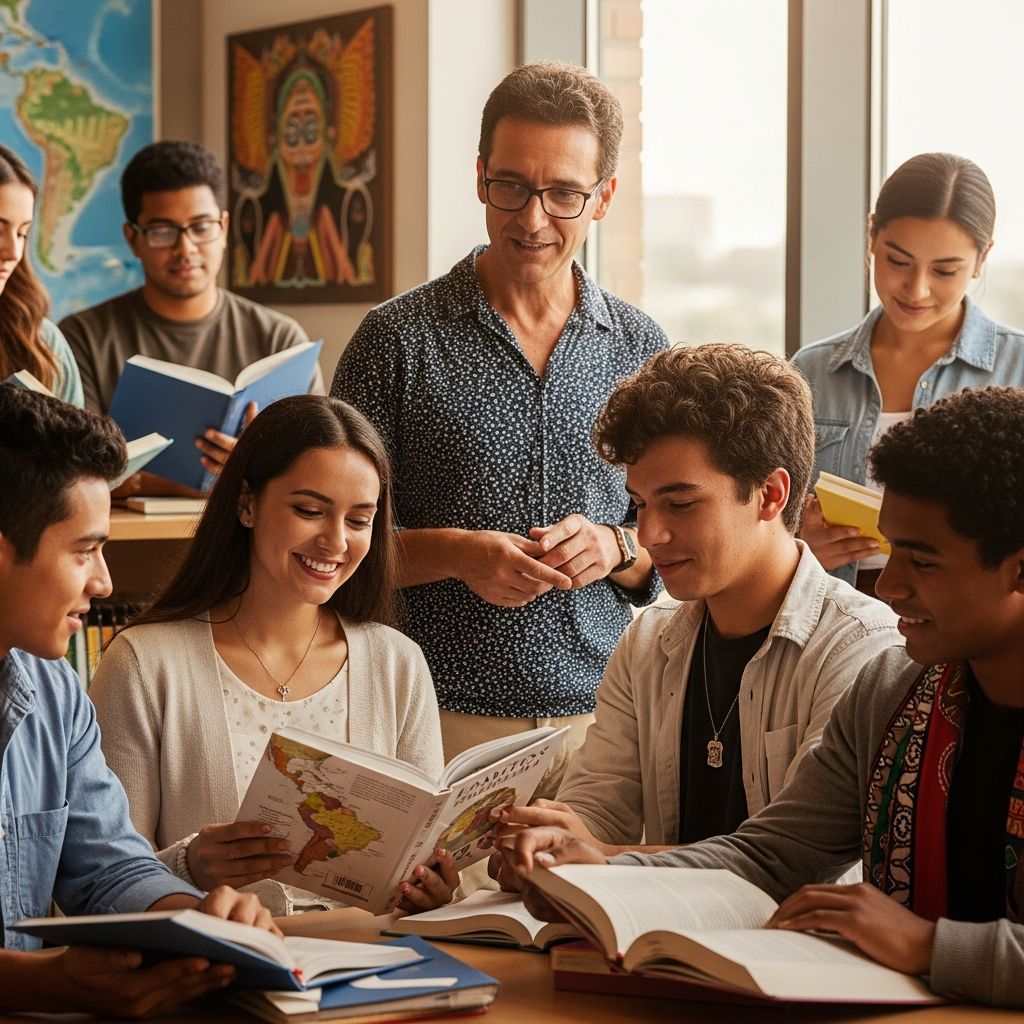
Hispanic and Latino communities encompass a wide array of traditions, languages, and histories from over 20 countries in Latin America, Spain, and beyond. Educators play a pivotal role in highlighting this diversity to create inclusive learning environments that resonate with students’ backgrounds and enhance overall academic performance.
The Vast Spectrum of Hispanic and Latino Identities
The terms \”Hispanic\” and \”Latino\” are often used interchangeably but carry distinct meanings. \”Hispanic\” refers to people with ties to Spanish-speaking countries, including Spain, while \”Latino\” typically denotes origins from Latin America, excluding Spain. This distinction underscores the heterogeneity within these groups, influenced by national origins, indigenous roots, African heritage, and migration patterns.
For instance, Mexican Americans form the largest subgroup in the U.S., followed by Puerto Ricans, Cubans, Salvadorans, and Dominicans. Each brings unique customs: Mexican traditions emphasize family gatherings with dishes like tamales during holidays, Puerto Rican culture celebrates bomba y plena music, and Cuban influences feature vibrant salsa rhythms. Recognizing these differences prevents stereotypes and promotes authentic representation in curricula.
Family Dynamics as the Heart of Latino Culture
Family, or familismo, is central to Hispanic and Latino life, extending beyond the nuclear unit to include extended relatives and community networks. This collectivist approach prioritizes group harmony, respect for elders (respeto), and mutual support, contrasting with individualistic values in mainstream U.S. culture.
In classrooms, understanding these dynamics can bridge home-school gaps. Parents may view education as a communal investment, actively supporting siblings’ learning. Educators can leverage this by hosting family involvement events with bilingual materials and flexible timings to accommodate work schedules.
- Respeto in Action: Students defer to authority figures, so teachers modeling mutual respect fosters trust.
- Collective Success: Group projects mirroring family collaboration boost participation.
- Extended Networks: Inviting grandparents to share oral histories enriches lessons.
Regional Variations Across Latin America and the U.S.
Hispanic and Latino cultures vary by region, shaped by geography, history, and colonialism. Central Americans like Salvadorans highlight pupusas and indigenous crafts, while South Americans from Peru celebrate ceviche and Inca heritage. Caribbean influences from the Dominican Republic blend African, Spanish, and Taíno elements in merengue dance.
| Region | Key Cultural Elements | Educational Tie-In |
|---|---|---|
| Mexico/Central America | Mariachi music, Day of the Dead | Art projects on altars, math with market vendors |
| Caribbean (Puerto Rico, Cuba) | Salsa, Santería traditions | Music integration for rhythm-based learning |
| South America (Argentina, Colombia) | Tango, Andean textiles | Geography lessons on diverse landscapes |
These variations offer teachable moments. For example, compare Andean pan flutes to Mexican guitars in music class to illustrate sonic diversity.
Overcoming Educational Barriers for Hispanic Students
Hispanic students face systemic challenges, including lower educational attainment rates. Only 11% of Hispanics over 25 hold a bachelor’s degree or higher, with Mexican Americans showing the lowest rates among subgroups. Initial disadvantages arise from limited preschool access, language barriers, and socioeconomic factors, persisting through K-12.
By kindergarten, Hispanic children often lag in reading and math due to less home literacy exposure, especially in Spanish-speaking households. Teacher-student relationships, predominantly non-Hispanic educators, can exacerbate disengagement if cultural mismatches occur. Parental educational levels vary: Cuban and South American heritage parents have higher attainment, while Mexican and Central American ones face more hurdles.
Promising interventions include quality preschool to build English skills and cultural bridges, and adult education programs like ESL and GED for parents to model lifelong learning.
Practical Classroom Strategies for Cultural Integration
Incorporate diversity through themed units. During Hispanic Heritage Month (September 15–October 15), assign projects on notable figures like César Chávez or Rigoberta Menchú, linking to social studies and writing.
- Multimedia Exploration: Play regional music playlists, discussing lyrical themes of migration and resilience.
- Hands-On Crafts: Create piñatas or papel picado, tying into geometry and fine motor skills.
- Guest Speakers: Virtual visits from community leaders sharing personal stories.
- Bilingual Books: Read titles like The Day of the Dead to honor traditions.
These activities build empathy and self-esteem, key to academic gains.
Leveraging Language Diversity for Bilingual Proficiency
Many students are bilingual, navigating Spanish dialects from Spain’s Castilian to Mexico’s variants. True bilingualism enhances cognitive flexibility, yet schools must support native language maintenance alongside English acquisition.
Strategies include dual-language programs and peer translation during group work. Avoid assuming monolingual deficits; celebrate linguistic assets in debates or storytelling.
Parental Engagement: Building Bridges Between Home and School
Latino parents engage deeply but face barriers like language, work demands, and unfamiliarity with U.S. systems. Schools can counter this with Spanish communications, childcare at events, and training staff on cultural norms.
- Flexible parent-teacher conferences.
- Workshops on navigating college applications.
- Recognizing home-based involvement like homework supervision.
Academic Achievement Gaps and Pathways Forward
NAEP data shows persistent reading score gaps: by 12th grade, Hispanics trail whites by 18 points, partly due to higher dropout rates. Generational shifts offer hope—second-generation students outperform first due to parental motivation.
Targeted guidance on course selection and college access can close gaps. Encourage STEM exposure through Latino role models like Ellen Ochoa, the first Hispanic astronaut.
Interactive Activities to Spark Cultural Curiosity
Engage students with mapping exercises tracing migration routes or taste-tests of regional foods (e.g., empanadas vs. arepas). Role-playing historical events like the Mexican Revolution builds historical empathy.
For younger learners, puppet shows depicting folktales like La Llorona teach moral lessons creatively.
FAQs: Teaching Hispanic and Latino Diversity
What is the difference between Hispanic and Latino?
Hispanic ties to Spanish language; Latino to Latin American geography. Both overlap but highlight unique identities.
How can teachers address language barriers?
Use bilingual resources, visual aids, and encourage home language use to support biliteracy.
Why focus on family involvement?
Familismo drives success; inclusive events strengthen support networks.
What holidays should classrooms celebrate?
Day of the Dead, Three Kings Day, and quinceañeras alongside Heritage Month.
How does cultural teaching impact achievement?
It boosts engagement, self-esteem, and belonging, narrowing gaps.
Measuring Success in Culturally Responsive Teaching
Track progress via student feedback surveys, participation rates, and achievement metrics. Professional development on cultural competence ensures sustained impact.
By weaving Hispanic and Latino diversity into daily instruction, educators cultivate global citizens ready for a multicultural world.
References
- Barriers to Educational Opportunities for Hispanics in the United States — National Academies Press (NCBI). 2004. https://www.ncbi.nlm.nih.gov/books/NBK19909/
- National Profile of Latino Parents’ Educational Attainment — Hispanic Research Center. Recent (post-2020 update inferred). https://www.hispanicresearchcenter.org/research-resources/national-profile-of-latino-parents-education-attainment-underscores-the-diverse-educational-needs-of-a-fast-growing-population/
- Hispanic & Latino American Diversity Cultural Information — Brigham Young University (BYU) Education. Ongoing. https://education.byu.edu/diversity/culture/hispanicamerican.html
- 5 Ways to Honor and Celebrate Hispanic Heritage in Your Classroom — Novak Education. Recent. https://www.novakeducation.com/blog/5-ways-to-honor-and-celebrate-hispanic-heritage-in-your-classroom

Medha Deb is an editor with a master's degree in Applied Linguistics from the University of Hyderabad. She believes that her qualification has helped her develop a deep understanding of language and its application in various contexts. Medha specializes in the areas of beauty, health, sports, and wellness and is committed to ensuring that the content on the website is…