
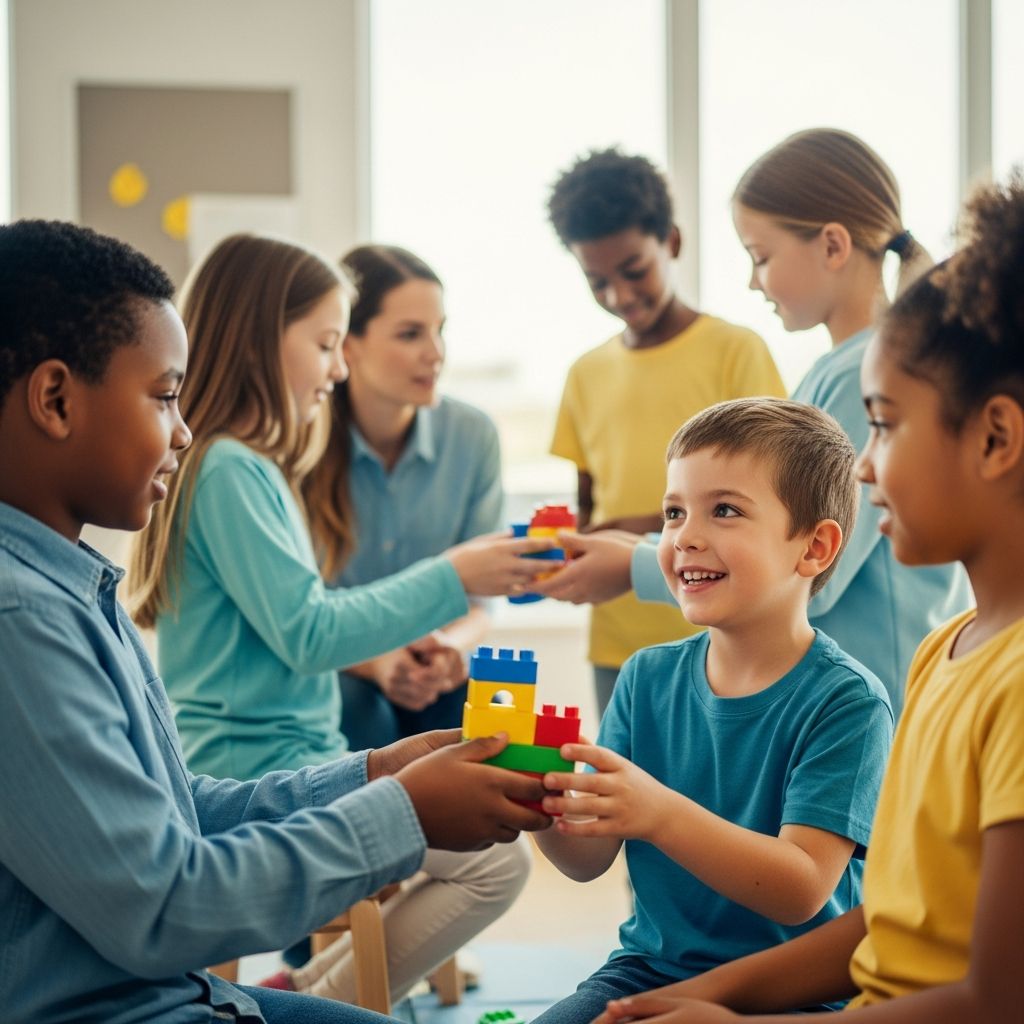
Children on the autism spectrum often face unique challenges in navigating social landscapes, from interpreting facial expressions to initiating conversations. This article explores innovative, evidence-based approaches to foster these essential skills, drawing on proven methods to help educators, parents, and therapists create supportive environments for growth.
Understanding Social Challenges in Autism
Social interactions form the backbone of daily life, yet for many with autism, they present significant hurdles. Difficulties may include recognizing nonverbal cues like gestures or tone of voice, taking turns in conversations, or responding appropriately to peers. These challenges can lead to isolation, but targeted interventions yield remarkable improvements in friendship-building, emotional regulation, and overall life satisfaction.
Research emphasizes explicit teaching over implicit learning, as individuals with autism benefit from direct instruction in realistic settings. Key areas include timing social responses, enhancing communication, and integrating sensory supports to make interactions more accessible. By addressing these, we pave the way for deeper peer connections and community participation.
Core Strategies for Teaching Social Skills
Effective social skill development relies on structured, repetitive practice. Parents and educators can model behaviors daily, such as greeting neighbors or engaging in small talk, explaining the ‘why’ behind each action to build understanding. Consistency reinforces these patterns, turning observation into habit.
- Modeling Positive Interactions: Demonstrate greetings, sharing, and empathy in real-time, narrating your thought process.
- Repetition and Reinforcement: Practice scenarios multiple times to embed skills.
- Sensory Considerations: Adapt activities to accommodate sensory sensitivities, ensuring comfort during learning.
Group settings, like specialized social clubs, pair children with similar needs for peer practice in conversation starters and turn-taking. These environments simulate real-world dynamics safely.
Engaging Activities to Build Connections
Hands-on activities transform abstract social concepts into tangible experiences. Board games focusing on emotions, manners, and friendship encourage strategic thinking alongside interaction. For instance, players discuss characters’ feelings, practicing empathy and response formulation.
Another approach involves daily social challenges: Assign a simple task, like complimenting a peer, followed by reflection on emotions experienced. This builds self-awareness and adaptability.
| Activity Type | Description | Skills Targeted | Group Size |
|---|---|---|---|
| Board Games | Games with moral dilemmas and emotion cards | Empathy, turn-taking, morals | 2-6 players |
| Musical Chairs Variation | Circle game with music; hands on heads | Sharing seats, handling loss | 4+ players |
| Emotion Charades | Act out feelings without words | Nonverbal recognition, expression | 3-8 players |
| Sharing Circles | Weekly show-and-tell on interests | Initiating talk, listening | Classroom size |
Visual aids like emotion cards help identify feelings in self and others. Shuffle and discuss: ‘What makes this face embarrassed?’ Provide context to deepen comprehension.
The Power of Social Narratives
Social stories—short, personalized tales from a child’s viewpoint—prepare for real scenarios like waiting in line or joining play. They outline steps, expected behaviors, and outcomes, reducing anxiety. Create custom stories for school routines, using simple language and visuals.
For example, a story on ‘Making Eye Contact’ might describe: ‘When I talk to my friend, I look at their eyes briefly. This shows I’m listening.’ Read repeatedly, then role-play. Libraries of free stories cover topics from patience to device care, adaptable for home or class.
Role-Playing and Real-World Practice
Role-playing bridges theory and application. Reenact past events or invent scenarios, like ordering food or resolving conflicts, debriefing alternatives. Use props or pictures to depict situations, prompting: ‘What do you say next?’.
Extend to community outings: Practice at parks, modeling peer approaches. Track progress with charts, celebrating small wins to motivate.
Sensory-Friendly Group Games
Incorporate movement to engage kinesthetic learners. Adapt Musical Chairs: Students circle chairs hands-free during music, sitting quickly when it stops. Losers assist next round, teaching graciousness.
- Parachute Play: Group holds edges, lifts/ lowes on cue—promotes teamwork, following directions.
- Partner Tag: Pairs link arms, tagging others gently—builds cooperation without overwhelm.
- Story Chain: Each adds a sentence to a group tale—enhances listening, contribution.
These games address sensory issues, using soft music or quiet spaces.
Recommended Resources and Tools
Curated books offer ready-made activities. ‘Social Skills Handbook for Autism’ provides 50+ exercises for friendships. ‘How to Make & Keep Friends’ tackles 50 challenges for older kids.
Online packs like ‘Size of the Problem’ teach problem scaling and solutions via activities. The Autism Helper’s curriculum uses adapted books and visuals for sharing/turn-taking. Autism Speaks compiles tips and tools.
Frequently Asked Questions (FAQs)
What are the best first steps for teaching social skills at home?
Start with modeling daily interactions and simple role-plays, using visual supports like social stories for reinforcement.
How do social stories benefit children with autism?
They provide clear, predictable scripts for social situations, reducing uncertainty and promoting appropriate responses.
Can group activities work for all autism levels?
Yes, with adaptations; match peers by ability and include sensory breaks for inclusivity.
What role do emotions play in social skill development?
Recognizing and managing emotions in self/others is foundational, aided by cards and games.
Are there free resources available?
Yes, sites offer social story libraries and printable activities tailored for school and home.
Measuring Progress and Long-Term Success
Track advancements via journals: Note successful interactions weekly. Adjust based on feedback, aiming for generalization across settings. Long-term, expect better friendships, reduced isolation, and higher well-being. Collaborate with therapists for personalized plans.
Integrate technology: Apps with video modeling simulate scenarios. Parent training workshops enhance home-school synergy.
References
- Social Skills Activities for Children with Autism — Forbrain. 2023. https://www.forbrain.com/autism-learning/social-skills-activities/
- 18 Social Skills Activities for Kids with Autism and Sensory Issues — We Rock the Spectrum Kids Gym. 2023. https://www.werockthespectrumkidsgym.com/18-social-skills-activities-for-kids-with-autism-and-sensory-issues/
- Social Skills and Autism — Autism Speaks. 2024-01-15. https://www.autismspeaks.org/social-skills-and-autism
- Social Skills Group Activities — The Autism Helper. 2023. https://theautismhelper.com/social-skills-group-activities/
- 24 Classroom Activities for Kids with Autism — Waterford.org. 2024. https://www.waterford.org/blog/activities-for-children-with-autism/
- Free Library of Social Stories for Autism — Autism Behavior Services. 2023. https://autismbehaviorservices.com/social-stories/

Medha Deb is an editor with a master's degree in Applied Linguistics from the University of Hyderabad. She believes that her qualification has helped her develop a deep understanding of language and its application in various contexts. Medha specializes in the areas of beauty, health, sports, and wellness and is committed to ensuring that the content on the website is…