
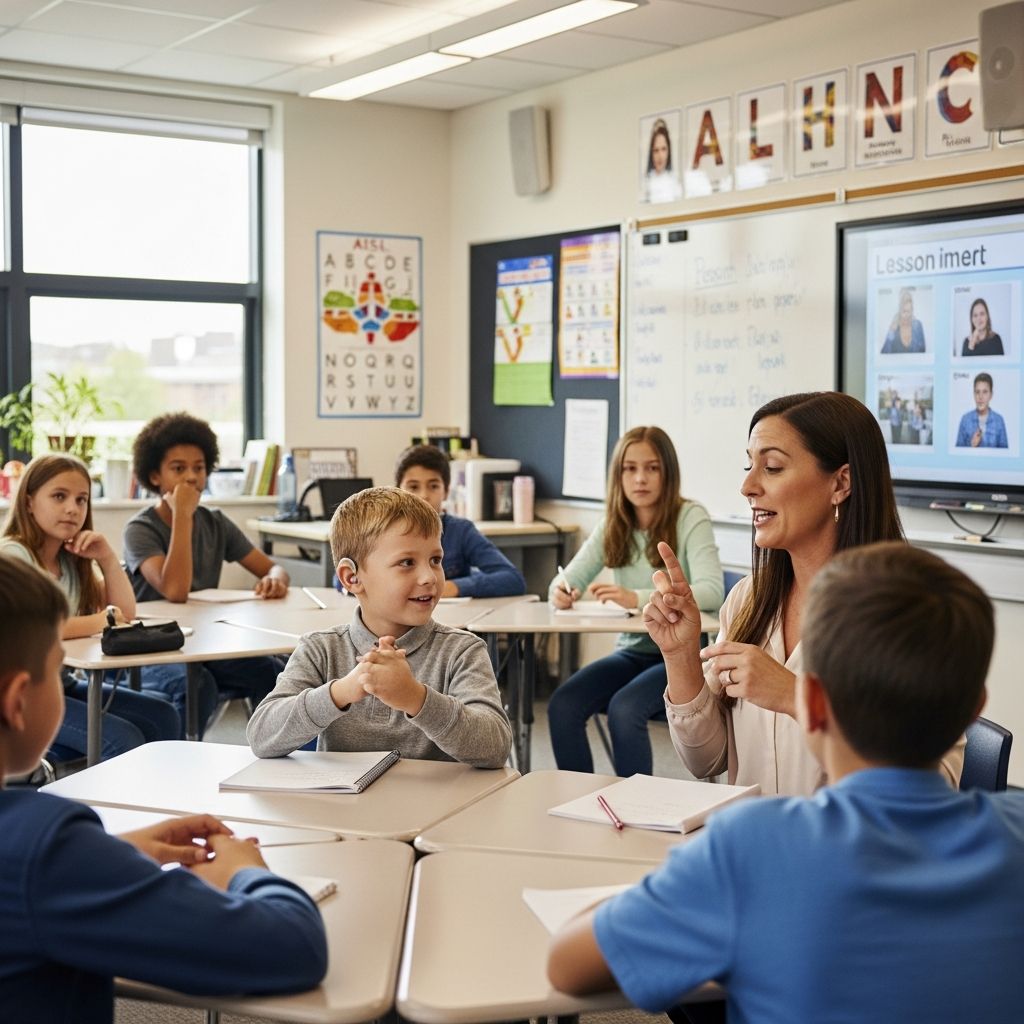
Hearing-impaired students face unique challenges in traditional classroom settings, where auditory information dominates instruction. By implementing targeted strategies, educators can create inclusive environments that maximize access to learning, foster independence, and promote academic equity. This article explores practical approaches drawn from expert recommendations to support deaf and hard-of-hearing learners across all grade levels.
Optimizing the Physical Learning Space
The classroom environment significantly impacts a hearing-impaired student’s ability to engage with content. Acoustic quality, lighting, and seating arrangements are foundational elements that require deliberate attention.
To minimize auditory distractions, educators should prioritize sound control measures. Closing doors and windows during lessons prevents external noises from interfering with instruction. Adding soft furnishings like carpets, wall panels, or chair leg covers absorbs echoes and reduces reverberation, allowing clearer speech perception. Positioning desks away from noisy sources such as HVAC units or audiovisual equipment further enhances focus.
- Install acoustic tiles or heavy curtains to dampen sound reflections.
- Use tennis balls sliced with an ‘X’ on chair and table legs to silence movements.
- Ensure all equipment like fans or doors operates quietly.
Lighting plays a critical role for lip-reading and sign language comprehension. Position yourself to avoid backlighting from windows or bright sources, ensuring your face remains clearly visible. Encourage students to select front-row seats for unobstructed views.
Mastering Effective Communication Techniques
Clear communication bridges the gap between hearing-impaired students and curriculum delivery. Simple adjustments in speaking habits and interaction protocols yield substantial benefits.
Always gain the student’s attention before speaking—use a gentle tap, wave, or eye contact. Face the student directly, speak at a natural pace and volume without shouting, and keep hands away from your mouth. Incorporate natural gestures and facial expressions to convey meaning.
| Do | Don’t |
|---|---|
| Speak clearly and slowly | Shout or exaggerate mouth movements |
| Repeat or rephrase as needed | Turn away while speaking |
| Use open-ended questions | Assume a nod means full understanding |
| Pause for processing time | Cover your mouth or chew gum |
In group settings, announce who will speak next and limit simultaneous talkers. For interpreters, provide advance lesson plans, address the student directly (not the interpreter), and discuss progress collaboratively. These practices ensure equitable participation.
Leveraging Assistive Technologies and Tools
Technology amplifies access for hearing-impaired learners, particularly in diverse instructional formats like virtual or hybrid classes.
Sound field FM systems equip teachers with microphones that broadcast voice evenly throughout the room, benefiting all students while reducing teacher vocal strain. Remote microphones pair directly with hearing aids, countering distance and noise barriers.
- Real-time captioning services transcribe speech instantly.
- Clear masks with transparent mouth panels aid lip-reading while maintaining hygiene.
- Induction loops or personal receivers enhance compatibility with hearing devices.
In virtual environments, mute non-speakers, employ raise-hand features, and integrate auto-captioning. Regularly consult educational audiologists to tailor tech solutions to individual needs and revisit IEPs or 504 plans during transitions.
Enhancing Curriculum Delivery and Instruction
Beyond environment and communication, instructional design must address language development gaps common among hearing-impaired students, who often miss incidental vocabulary learning.
Pre-teach key terms using visual contexts, semantic maps, and feature analyses before core lessons in subjects like science or math. Explicitly connect signed language to printed English through translation exercises and repeated story readings.
Reinforce phonemic awareness visually via tools like See-the-Sound Visual Phonics, even for profoundly deaf learners. Guide students to generate questions before reading to build comprehension and inference skills. Provide written handouts, visual aids, and note-taking support to prevent multitasking overload during lip-reading or interpreting.
Fostering Social Inclusion and Emotional Well-Being
Hearing loss can isolate students socially, impacting confidence and peer relationships. Proactive strategies promote belonging.
Encourage group arrangements where everyone faces each other. Model inclusive language by repeating peer questions for the class. Involve students in selecting preferred supports, empowering their agency. Regular check-ins during instructional shifts ensure ongoing suitability.
Collaborate with speech-language pathologists, audiologists, and families to align on receptive/expressive strengths. Consistent phoneme introduction via IEPs supports literacy foundations.
Building Collaborative Support Networks
Success hinges on teamwork among educators, specialists, and families. IEP meetings should outline phonemic strategies, tech use, and progress monitoring.
Share lesson plans with interpreters and interpreters with teachers on discipline protocols. Pre-discuss potential challenges to preempt struggles.
Frequently Asked Questions (FAQs)
What seating arrangement works best for hearing-impaired students?
Front-row or opposite the speaker positions provide optimal visibility for lip-reading and signing, away from noise sources.
How can teachers reduce classroom noise effectively?
Close doors/windows, add absorbent materials like carpets, and position furniture strategically to minimize echoes and distractions.
Are FM systems beneficial for the entire class?
Yes, they amplify the teacher’s voice uniformly, improving clarity for all learners while conserving vocal energy.
Should teachers change their speaking style for deaf students?
Speak naturally but clearly, using gestures; avoid shouting or turning away to maintain visual cues[10].
How often should IEPs be reviewed for hearing-impaired students?
Revisit during format changes (e.g., in-person to virtual) or as needs evolve, consulting audiologists.
Key Takeaways for Immediate Implementation
- Prioritize visual access and noise reduction in every classroom setup.
- Adopt consistent communication protocols daily.
- Integrate tech and visuals to support content delivery.
- Collaborate across teams for personalized plans.
By embedding these tactics, educators transform challenges into opportunities, enabling hearing-impaired students to thrive academically and socially. Commitment to these inclusive practices not only meets legal mandates but elevates the entire learning community.
References
- Instructional Strategies for Students who are Deaf and Hard of Hearing — TTAC Online. 2023. https://ttaconline.org/instructional-strategies-students-deaf-hard-of-hearing
- Tips for Helping Students With Hearing Loss in Virtual and In-Person Learning Settings — American Speech-Language-Hearing Association (ASHA). 2023. https://www.asha.org/aud/tips-for-helping-students-with-hearing-loss-in-virtual-and-in-person-learning-settings/
- Hearing Loss | Chapter 4: Teaching Strategies and Accommodations — Trinity University. 2023. https://trinity.edu/sites/students-vision-hearing-loss/hearing-loss/teaching-strategies-accommodations
- 7 Teaching Strategies to Empower Deaf Students — Deaf Unity. 2023. https://deafunity.org/article_interview/7-teaching-strategies-to-empower-deaf-students/
- Teaching Students who are Deaf and Hard of Hearing — Indiana University of Pennsylvania (IUP). 2023. https://www.iup.edu/disabilitysupport/resources-faculty-and-staff/teaching-students-who-are-deaf-and-hard-of-hearing.html
- Children With Hearing Loss: Guidelines for Schools — Nationwide Children’s Hospital. 2023. https://www.nationwidechildrens.org/family-resources-education/health-wellness-and-safety-resources/helping-hands/children-with-hearing-loss-guidelines-for-schools

- Integrated M.A. in Applied Linguistics, University of Hyderabad
- 5+ years in editorial, instructional, SEO, and research-based writing
Sneha is a relationships and lifestyle writer with a strong foundation in applied linguistics and certified training in relationship coaching. She brings over five years of writing experience to theskillvault, crafting thoughtful, research-driven content that empowers readers to build healthier relationships, boost emotional well-being, and embrace holistic living. Her writing and insights reflect the belief that beauty, happiness, and wellness…