
The Foundation of Visual Communication
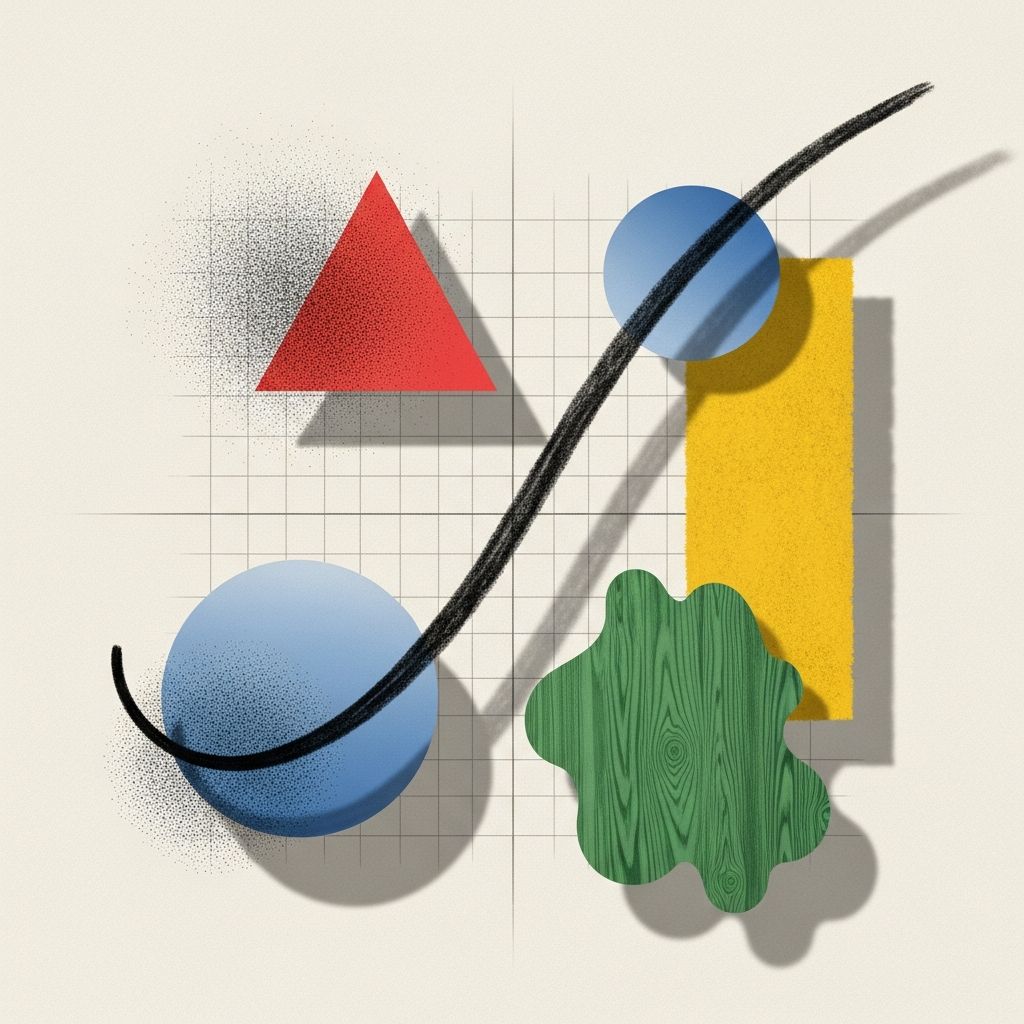
Every painting, sculpture, drawing, or digital artwork shares a common language—a system of visual components that artists strategically employ to convey meaning and emotion. These fundamental building blocks transcend cultural boundaries, artistic styles, and historical periods. Whether an artist is creating a Renaissance portrait, a contemporary sculpture, or abstract digital art, they are working within a framework of core components that have been recognized and refined throughout art history.
Understanding these foundational elements is not merely an academic exercise; it provides viewers with deeper insight into how artists construct their work and why certain compositions feel balanced, dynamic, or emotionally resonant. For aspiring artists, mastery of these components is the gateway to developing a personal artistic voice and effectively communicating visual ideas.
The Seven Essential Elements Every Artist Must Know
Art educators and theorists have identified seven primary elements that appear in virtually all visual artwork. These elements function as both individual concepts and as interdependent components that work together to create cohesive compositions. Each element serves distinct purposes while simultaneously interacting with the others to produce the final visual result.
The recognition of these seven elements has become standardized across educational institutions, museums, and professional art organizations worldwide. This consistency allows for a shared vocabulary when discussing, analyzing, and creating visual art across different disciplines and mediums.
Linear Expression: Marks That Define
Line represents the most fundamental and versatile element available to any artist. At its simplest, a line is a continuous mark created on a surface, yet its applications extend far beyond basic drawing. Artists manipulate lines to create movement, establish boundaries, guide the viewer’s eye, and communicate emotion through their physical characteristics.
The qualities of a line dramatically affect its visual and emotional impact. A precise, rigid line conveys stability and control, while a loose, gestural line suggests spontaneity and energy. Horizontal lines typically evoke calm and tranquility, vertical lines suggest strength and dignity, diagonal lines create tension and movement, and curved lines communicate fluidity and softness. Artists employ these psychological associations to reinforce their compositional intentions.
Lines also serve structural purposes. Contour lines define the edges and outlines of objects, creating recognizable forms. Cross-hatching and parallel lines can suggest volume, shadow, and texture. In more conceptual work, lines might exist purely as aesthetic elements, exploring themes of minimalism or abstraction. The variety of line weights—from delicate whispers to bold declarations—adds another dimension to this fundamental element.
Enclosed Areas: Shape and Its Properties
Shape emerges when lines connect to create enclosed areas. Shapes are two-dimensional, possessing height and width but no depth. Artists classify shapes into geometric categories (squares, circles, triangles) and organic categories (irregular, natural-looking forms). The distinction between these categories carries semantic weight; geometric shapes often suggest order, precision, and human construction, while organic shapes reference nature and biological forms.
Shapes function as building blocks for composition. By arranging multiple shapes of varying sizes, artists create visual hierarchies that direct attention and establish narrative relationships. The negative spaces around and between shapes prove equally important as the shapes themselves. This interplay between positive and negative space creates visual rhythm and prevents compositions from feeling static or overcrowded.
Shape psychology influences viewer perception. Pointed or angular shapes register as aggressive or dynamic, while rounded shapes feel approachable and gentle. By deliberately choosing shape characteristics, artists manipulate emotional responses before a viewer consciously registers specific subject matter.
Three-Dimensional Reality: Form and Volume
Form represents the three-dimensional equivalent of shape. While shapes exist in two dimensions (length and width), forms possess length, width, and height, occupying actual space. Form becomes particularly crucial in sculpture, architecture, and installation art, though painters and digital artists also create the illusion of form on flat surfaces.
Understanding form requires comprehending how light and shadow interact with three-dimensional objects. The way light wraps around a form, creating highlights and shadows, communicates volume and mass. Artists study form through life drawing, where observing the human figure in three dimensions develops their ability to depict volume convincingly. This knowledge transfers to all subject matter; mastering how to represent a human torso makes depicting a draped fabric or folded paper significantly easier.
Form also encompasses the overall structure and organization of an artwork’s physical presence. In sculpture, the form is the literal three-dimensional object. In painting, form describes the apparent solidity and spatial existence of depicted objects. Architects consider form as the primary communicative element, with buildings themselves serving as forms that occupy and define space.
Spatial Relationships: Creating Depth and Distance
Space encompasses the areas around, between, and within objects and elements in an artwork. This element proves essential for creating the illusion of depth and three-dimensionality on two-dimensional surfaces. Without deliberate management of space, artworks feel flat, confined, and claustrophobic.
Artists employ various techniques to manipulate spatial perception. Overlapping objects—placing one form partially in front of another—immediately suggests depth. Perspective drawing systems, developed during the Renaissance, allow artists to create mathematically accurate representations of receding space. Atmospheric perspective, where distant objects appear hazier and lighter in color, mimics how the eye perceives distance in natural environments. Size variation also communicates space; objects appearing smaller typically register as farther away, while larger objects seem closer.
Space itself becomes an active compositional element. Positive space refers to the areas occupied by objects, while negative space describes the empty areas surrounding and between them. Skilled artists recognize that negative space is not merely absence but an active design choice that shapes the overall composition. A composition packed densely with positive space communicates differently than one that allows breathing room through generous negative space.
The psychological impact of spatial treatment influences emotional response. Cramped space creates tension and discomfort, while expansive space evokes freedom and possibility. Artists manipulate these spatial relationships to reinforce their conceptual intentions and guide emotional responses.
Light and Shadow: Understanding Value
Value describes the relative lightness or darkness of colors and tones within an artwork. This element operates independently of color itself; an artwork rendered entirely in black, white, and gray still employs value as a primary design tool. Value contrast creates visual drama, directs attention, and establishes spatial relationships.
Understanding value requires thinking beyond specific colors. A light blue and a light yellow share similar value levels despite being different colors. Conversely, a dark blue and a dark red occupy comparable value ranges. By manipulating value contrast, artists can make certain elements pop from the background or cause different elements to recede into shadow.
Value studies, often created in grayscale, help artists understand compositional strength before adding color complexity. A strong composition with good value contrast remains compelling even without color. Conversely, poor value structure cannot be salvaged by adding attractive colors. Most professional artists work out value relationships as a foundational step before addressing color choices.
The spectrum from black through infinite gray tones to white provides a vocabulary for describing atmosphere, mood, and visual weight. High-contrast compositions with strong value differentiation feel bold and dramatic. Low-contrast compositions with similar value ranges throughout feel subtle and harmonious. Artists deliberately choose their value approach to match their creative vision.
Chromatic Expression: The Power of Color
Color remains one of the most emotionally charged and complex elements in art. Light reflected from surfaces reaches our eyes and registers as color. Beyond its physical properties, color carries cultural associations, emotional resonances, and symbolic meanings that vary across contexts and cultures.
Color possesses three primary characteristics. Hue refers to the specific color itself—red, blue, yellow, or any other chromatic family. Value, as discussed previously, describes how light or dark the color appears. Intensity (or saturation) indicates how bright or muted the color appears. A bright, vibrant red differs significantly from a muted, dusty red despite sharing the same hue. Manipulating these three properties allows artists infinite chromatic possibilities from a limited palette.
Color relationships structured around the color wheel create predictable visual effects. Complementary colors (colors opposite on the color wheel) create maximum contrast and visual vibration. Analogous colors (colors adjacent on the wheel) create harmony and cohesion. Triadic color schemes (three colors equally spaced on the wheel) offer balanced variety. Artists strategically employ these relationships to establish mood, direct attention, and create visual interest.
Warm colors—reds, oranges, yellows—typically evoke energy, passion, and warmth. Cool colors—blues, greens, purples—generally communicate calm, sadness, and coolness. However, these associations are not absolute; context, saturation, and cultural background all influence color perception. Understanding color theory provides a foundation, but experienced artists learn to trust their intuitive responses and experiment beyond conventional color associations.
Surface Quality: The Element of Texture
Texture refers to the surface quality of an artwork—how it feels to the touch or how it appears as though it would feel. This element divides into two categories: physical texture, which can literally be felt by running a hand across the surface, and implied or visual texture, which is represented pictorially without actual surface variation.
Physical texture results from an artist’s material choices and application techniques. Heavy brushstrokes, impasto paint, sculptural marks, collage elements, and varied paper surfaces all create tangible texture. Viewers can feel the roughness, smoothness, raised areas, and dimensional qualities. This tactile dimension adds richness and invites interaction; many artworks benefit from being experienced through touch as well as vision.
Implied texture communicates tactile qualities through visual representation alone. A carefully rendered drawing of rough wood grain or soft fur convinces viewers of texture without them actually feeling it. This representational approach proves essential in mediums where physical texture is impossible or inappropriate, such as traditional watercolor or digital art.
Texture contributes significantly to visual interest and can communicate narrative information. Rough textures suggest age, weathering, or harshness, while smooth textures communicate refinement or artificiality. By combining varied textures—rough alongside smooth, delicate alongside heavy—artists create visual complexity and prevent compositions from becoming monotonous.
How These Elements Work in Concert
While each element can be studied individually, they function most powerfully in combination. A successful artwork demonstrates intentional orchestration of multiple elements working together toward a unified vision. An artist might use bold diagonal lines to create energy, rely on warm colors to establish an inviting mood, employ value contrast to direct attention to a focal point, and incorporate varied textures to engage tactile interest.
The relationship between elements creates meaning. A single line might be neutral, but that line placed within a specific spatial context, combined with a particular color and textural treatment, becomes a vehicle for communicating complex ideas. Professional artists develop sensitivity to these relationships through years of practice and experimentation.
Different artistic disciplines emphasize different elements. A calligrapher prioritizes line quality and texture. A color field painter focuses intensely on color relationships and subtle value variations. A sculptor emphasizes form, space, and the interplay of light and shadow. A photographer exploits spatial composition, value contrast, and often implied texture. Understanding which elements matter most for a specific project allows artists to allocate their attention and energy effectively.
Frequently Asked Questions About Art Elements
Q: Must an artwork contain all seven elements?
A: No. Every artwork must contain at least one element, but incorporating all seven is neither necessary nor always desirable. Many powerful artworks focus intensely on one or two elements while de-emphasizing others. A minimalist line drawing, a monochromatic abstract painting, or a conceptual art piece might deliberately exclude several traditional elements.
Q: How do these elements differ from the principles of art?
A: Elements are the component parts available to artists (like ingredients in a recipe), while principles describe how those elements are organized and combined (like cooking techniques). Principles include balance, emphasis, movement, rhythm, unity, variety, and proportion. Elements answer “what is used,” while principles answer “how it is used.”
Q: Can understanding these elements improve my ability to view art?
A: Absolutely. By recognizing how artists employ these elements, viewers gain deeper appreciation for artistic choices and can articulate their responses more clearly. You might notice how an artist used color contrast to create drama or how spatial composition guides your eye through the composition.
Q: Do all artistic mediums work with the same elements?
A: Yes, though emphasis varies. A photographer works primarily with space, value, and color within existing scenes. A sculptor emphasizes form and three-dimensional space. A graphic designer balances all elements for visual communication. Despite medium differences, these seven elements remain fundamental across all visual arts.
Q: How do beginners prioritize learning these elements?
A: Most art educators recommend starting with line and shape, as these are most accessible and foundational. Progress to value and space, which determine compositional strength. Add color understanding, then explore form through three-dimensional work. Texture often comes last as students develop material sophistication.
Practical Application for Developing Artists
Understanding these elements theoretically differs from applying them in practice. Beginning artists benefit from focused exercises isolating individual elements. Create line studies exploring different line qualities. Produce shape compositions using only geometric forms. Develop value studies in grayscale before introducing color. Complete texture studies exploring surface variations. These foundational exercises build the visual literacy necessary for sophisticated composition.
As competency develops, intentionally combine elements to achieve specific effects. Experiment with compositions emphasizing space and minimal color. Explore how value contrast functions independent of color. Discover personal preferences regarding which elements feel most expressive. This experimental approach develops intuitive understanding beyond intellectual knowledge.
Professional artists internalize these elements to the point of unconscious application. While mastery requires deliberate practice and study, the goal is ultimately intuitive deployment. An experienced painter doesn’t consciously calculate how to employ each element; instead, these considerations become integrated into the creative process, allowing the artist to focus on conceptual and emotional expression.
References
- Elements of Art — Wikipedia. Accessed April 2026. https://en.wikipedia.org/wiki/Elements_of_art
- What Are the Seven Elements of Art? Definitions, Design Principles & Examples — Study.com. Accessed April 2026. https://study.com/academy/lesson/what-are-the-seven-elements-of-art-definition-examples.html
- 7 Elements of Art — Online Art Lessons. Accessed April 2026. https://onlineartlessons.com/tutorial/7-elements-of-art/
- What Are the Elements of Art and the Principles of Art? — Solano Community College, LibreTexts. Accessed April 2026. https://human.libretexts.org/Courses/Solano_Community_College/ART_002:_Art_History/01:_A_World_Perspective_of_Art_Appreciation/1.06:_What_Are_the_Elements_of_Art_and_the_Principles_of_Art
- Elements of Art — Arkansas Museum of Fine Arts. Accessed April 2026. https://arkmfa.org/wp-content/uploads/2025/07/amfa_-_elements_of_art.pdf
- The Elements of Art – Form — The Virtual Instructor. Accessed April 2026. https://thevirtualinstructor.com/form.html
- Elements of Art: Value — Cascadia Art Museum. Accessed April 2026. https://www.cascadiaartmuseum.org/elements-of-art-value/

- Integrated M.A. in Applied Linguistics, University of Hyderabad
- 5+ years in editorial, instructional, SEO, and research-based writing
Sneha is a relationships and lifestyle writer with a strong foundation in applied linguistics and certified training in relationship coaching. She brings over five years of writing experience to theskillvault, crafting thoughtful, research-driven content that empowers readers to build healthier relationships, boost emotional well-being, and embrace holistic living. Her writing and insights reflect the belief that beauty, happiness, and wellness…