
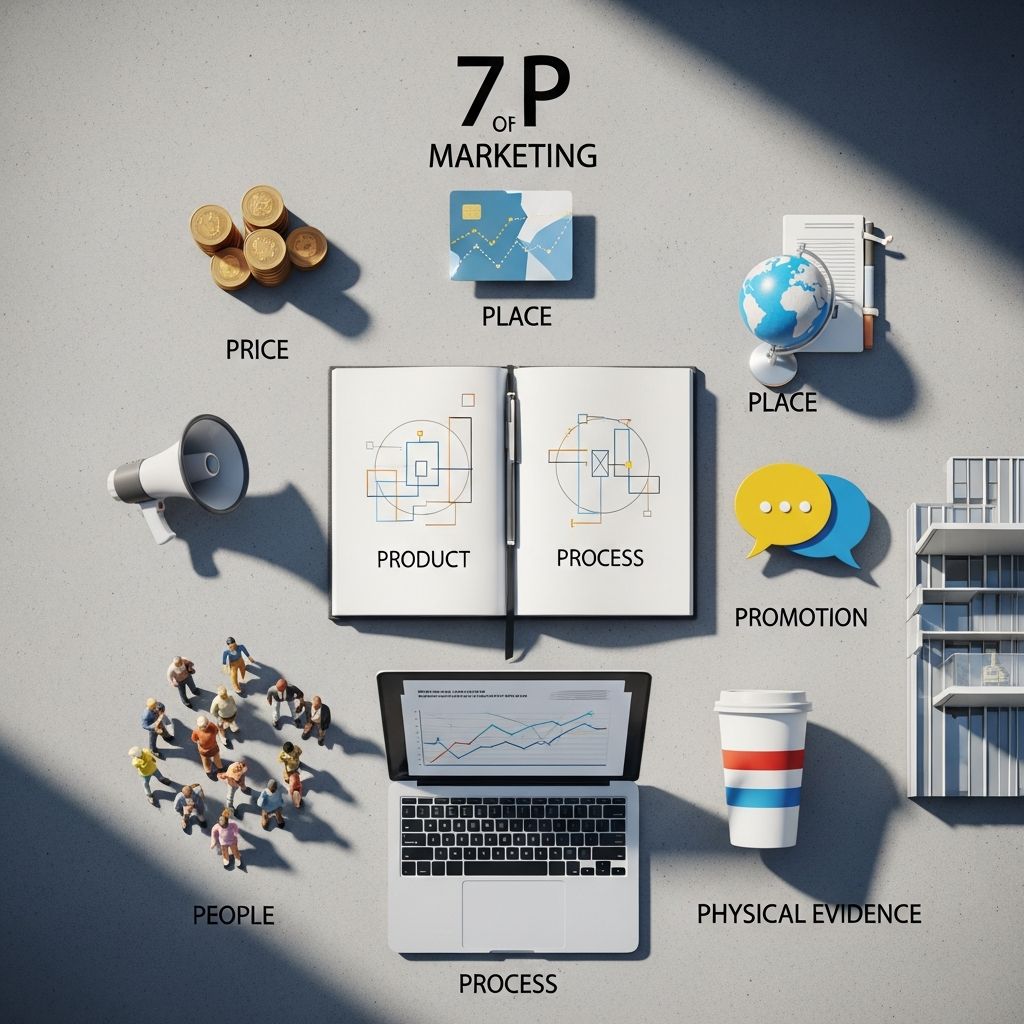
The 7 Ps of marketing represent a comprehensive framework that helps businesses craft strategies capable of capturing attention, satisfying needs, and fostering loyalty in competitive landscapes. Originally evolving from the classic 4 Ps, this expanded model incorporates service-oriented elements essential for modern enterprises. By balancing these seven components—Product, Price, Place, Promotion, People, Process, and Physical Evidence—companies can create cohesive plans that resonate with audiences and drive sustainable results.
Understanding the Evolution of the Marketing Mix
Marketing strategies have long relied on foundational elements to align offerings with customer expectations. The traditional 4 Ps—Product, Price, Place, and Promotion—laid the groundwork by focusing on tangible goods and distribution. However, as services became prominent, experts introduced People, Process, and Physical Evidence in the 1980s to address intangible aspects. This holistic approach ensures that every interaction reinforces brand value, from initial awareness to post-purchase support.
Today, businesses apply the 7 Ps across industries, adapting them to digital channels and global markets. The framework’s flexibility allows teams to emphasize certain Ps based on context, such as prioritizing People in customer service-heavy sectors or Process in e-commerce operations.
1. Product: Building the Foundation of Value
At the core of any marketing strategy lies the product—the offering designed to solve specific customer problems. A successful product goes beyond basic functionality; it delivers unique benefits that differentiate it from competitors. Marketers must conduct thorough research to identify market gaps, customer preferences, and evolving demands.
Key considerations include quality, safety, design, and features. For instance, innovative elements like eco-friendly materials can appeal to conscious consumers, while user-friendly interfaces enhance satisfaction. Regular feedback loops, such as surveys and usage data, help refine products over time, ensuring they remain relevant.
- Assess customer pain points through targeted research.
- Develop features that provide clear, measurable value.
- Test prototypes to validate appeal before full launch.
In service industries, the ‘product’ extends to experiences, where consistency in delivery is paramount.
2. Price: Balancing Value and Profitability
Pricing decisions reflect perceived value and directly influence purchasing behavior. Effective pricing strategies consider costs, competitor benchmarks, customer willingness to pay, and market positioning. Options range from penetration pricing for market entry to premium pricing for luxury appeal.
Psychological factors play a role; for example, charm pricing (e.g., $9.99 instead of $10) can boost conversions. Dynamic pricing, adjusted in real-time based on demand, is common in travel and tech sectors. Businesses must also account for discounts, bundles, and financing to broaden accessibility without eroding margins.
| Pricing Strategy | Description | Best For |
|---|---|---|
| Cost-Plus | Adds markup to production costs | Stable markets |
| Value-Based | Based on customer-perceived benefits | Premium brands |
| Competitive | Matches or undercuts rivals | Price-sensitive segments |
Ultimately, price signals quality and brand strength, requiring ongoing analysis to adapt to economic shifts.
3. Place: Optimizing Distribution Channels
Place determines how easily customers access the product, encompassing distribution networks, retail partnerships, and online platforms. The goal is seamless availability that minimizes friction in the buying journey.
Multi-channel strategies combine physical stores, e-commerce sites, marketplaces like Amazon, and direct-to-consumer models. Logistics efficiency, inventory management, and global reach are critical, especially for international expansion. Digital tools like SEO and targeted ads enhance visibility in virtual ‘places’.
- Evaluate channel costs versus reach.
- Leverage data analytics for demand forecasting.
- Partner with reliable suppliers for just-in-time delivery.
Effective Place strategies reduce cart abandonment and increase repeat purchases.
4. Promotion: Crafting Compelling Communications
Promotion involves all activities to communicate value and persuade action, including advertising, PR, sales promotions, and content marketing. Integrated campaigns ensure consistent messaging across channels, from social media to email newsletters.
Understanding audience preferences guides tactics: video content for younger demographics, email for loyalty programs. Storytelling that highlights benefits over features builds emotional connections. Metrics like ROI and engagement rates measure success, allowing refinements.
Modern promotion emphasizes personalization through data-driven targeting, boosting relevance and conversion.
5. People: The Human Element in Service Delivery
People represent the staff and interactions that shape customer experiences. Trained, empathetic employees act as brand ambassadors, influencing satisfaction and advocacy.
Recruitment should prioritize skills like communication and problem-solving. Ongoing training on product knowledge and customer service protocols ensures alignment. In remote or digital settings, chat support and virtual reps extend this principle.
- Implement feedback systems for staff performance.
- Foster a customer-first culture.
- Use incentives to motivate exceptional service.
Strong People focus turns transactions into relationships.
6. Process: Streamlining Operations for Excellence
Process covers the systems and procedures that deliver the product or service efficiently. Smooth processes minimize delays, errors, and frustrations, enhancing perceived quality.
From order fulfillment to complaint resolution, every step should be customer-centric. Automation tools streamline workflows, while standardization ensures consistency across locations. Continuous improvement via Lean methodologies optimizes efficiency.
Examples include one-click checkouts in e-commerce or self-service kiosks in retail, reducing wait times.
7. Physical Evidence: Tangible Proof of Quality
Physical Evidence provides visible cues that reassure customers of value, especially in services where outcomes are intangible. This includes packaging, store ambiance, websites, testimonials, and warranties.
Professional branding, clean layouts, and quality materials build trust. Digital equivalents like intuitive UI and secure payment badges serve the same purpose online. Gathering reviews amplifies positive evidence.
- Design environments that evoke desired emotions.
- Display certifications and awards prominently.
- Monitor and refresh visual assets regularly.
Integrating the 7 Ps for Cohesive Strategies
The power of the 7 Ps emerges when integrated thoughtfully. For example, a luxury brand might pair high Price with premium Physical Evidence and selective Place to reinforce exclusivity. Regular audits assess balance, using tools like SWOT analysis.
Case studies show integrated approaches yield higher retention; customer-centric tweaks across Ps can cut acquisition costs significantly. Digital transformation amplifies this, with AI personalizing each P.
Common Challenges and Solutions
Businesses often struggle with siloed Ps, leading to inconsistent experiences. Solution: Cross-functional teams for alignment. Another issue is adapting to trends like sustainability—update Product and Promotion accordingly.
| Challenge | Solution |
|---|---|
| Inconsistent messaging | Unified brand guidelines |
| Poor distribution | Channel optimization audits |
| Staff turnover | Training and culture programs |
Measuring Success with the 7 Ps
Track KPIs tailored to each P: sales volume for Product, margin trends for Price, conversion rates for Place, engagement for Promotion, satisfaction scores for People and Process, and NPS for Physical Evidence. Holistic dashboards provide insights for iteration.
Frequently Asked Questions (FAQs)
What are the original 4 Ps of marketing?
The classic 4 Ps are Product, Price, Place, and Promotion, forming the basis for the expanded 7 Ps model.
How do the 7 Ps apply to digital marketing?
Digital adapts Place to online channels, Promotion to social ads, Process to automated funnels, and Physical Evidence to website design.
Why is People important in product-based businesses?
Even product companies rely on sales and support staff to influence perceptions and loyalty.
Can small businesses use the 7 Ps effectively?
Yes, by focusing on core strengths like personal service (People) and targeted online Promotion.
How often should the 7 Ps be reviewed?
Quarterly or after major market shifts to stay agile.
References
- What are the Principles of Marketing? — CPD Online College. 2023-05-15. https://cpdonline.co.uk/knowledge-base/business/principles-of-marketing/
- Marketing Fundamentals: Key Principles Every Marketer Needs — Powerful Marketers. 2024-02-10. https://powerful-marketers.com/marketing-fundamentals/
- How the Fundamentals of Marketing Shape Brand Success — Gisma. 2024-08-20. https://www.gisma.com/blog/how-the-fundamentals-of-marketing-shape-brand-success
- Understanding the Principles of Marketing: Key Concepts & Insights — Young Urban Project. 2023-11-05. https://www.youngurbanproject.com/principles-of-marketing/
- Principles of Marketing: How to Drive Business Success — Camphouse. 2024-01-12. https://camphouse.io/blog/principles-of-marketing

Medha Deb is an editor with a master's degree in Applied Linguistics from the University of Hyderabad. She believes that her qualification has helped her develop a deep understanding of language and its application in various contexts. Medha specializes in the areas of beauty, health, sports, and wellness and is committed to ensuring that the content on the website is…