
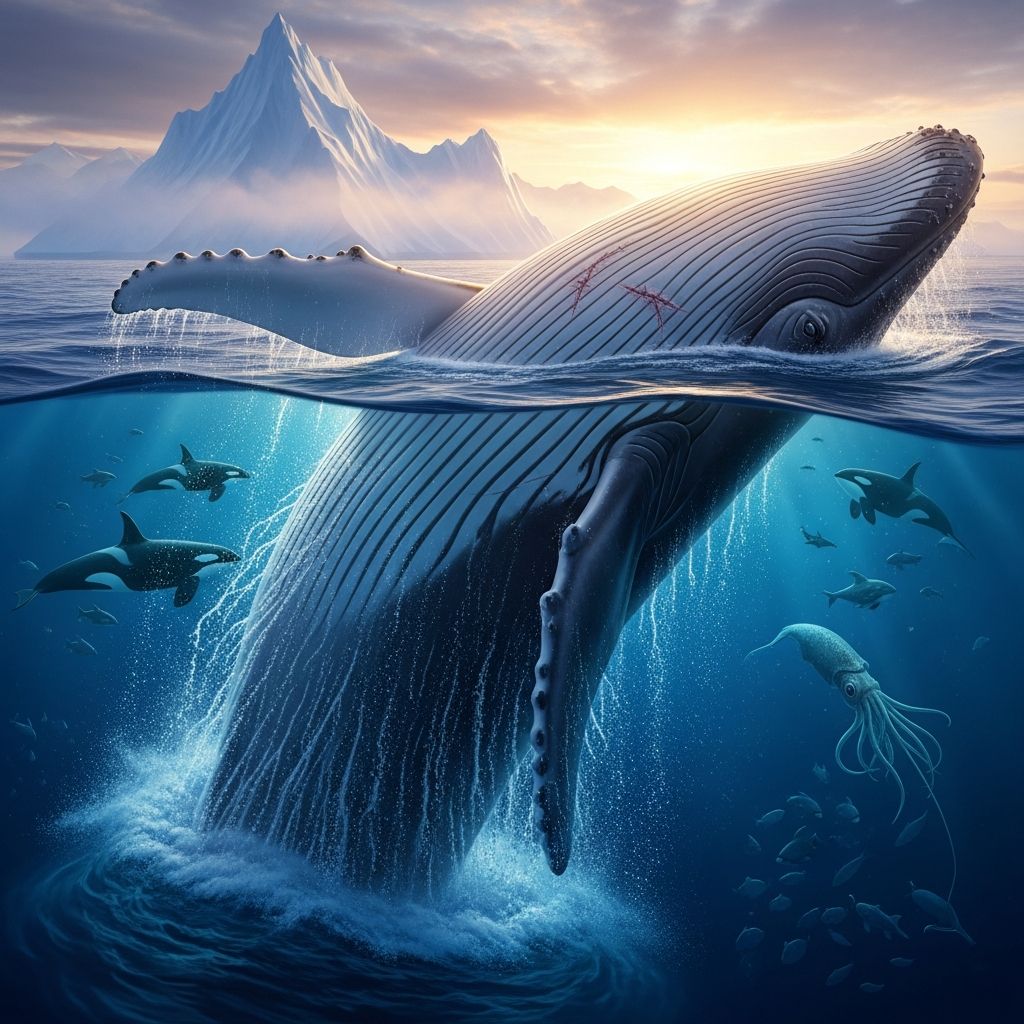
The vast expanse of Earth’s oceans hides some of the planet’s most awe-inspiring inhabitants. These marine behemoths not only captivate with their sheer scale but also embody the intricate balance of aquatic ecosystems. From filter-feeding mammals that dwarf dinosaurs to elongated invertebrates lurking in the abyss, the sea’s giants challenge our understanding of size and survival. This exploration delves into their dimensions, behaviors, and the critical role they play in ocean dynamics.
Supreme Ruler of the Seas: The Blue Whale
At the pinnacle of oceanic enormity stands the blue whale (Balaenoptera musculus), undisputed as the largest animal ever known. These majestic creatures can stretch up to 33 meters (108 feet) in length and tip the scales at 190 metric tons or more—equivalent to roughly 33 elephants. Their massive bodies, powered by powerful flukes, enable migrations across global waters, from polar feeding grounds to tropical breeding zones.
Blue whales sustain their colossal frames through krill feasts, engulfing up to 4 tons daily via expandable throats. Their hearts alone weigh as much as a car, pumping blood through veins wide enough for a human to swim through. Despite their size, they produce haunting songs that travel hundreds of miles, aiding communication in the open ocean.
Largest Fish: The Majestic Whale Shark
If mammals are set aside, the whale shark (Rhincodon typus) claims the title of the biggest fish, reaching 18.8 meters (62 feet). Unlike predatory sharks, these spotted gentle giants are filter feeders, sieving plankton with cavernous mouths up to 1.5 meters wide. Their unique skin patterns serve as individual identifiers, much like human fingerprints.
Inhabiting warm tropical seas, whale sharks undertake long migrations, often gathering at nutrient-rich sites. They boast lifespans potentially exceeding 100 years, making them ancient wanderers of coral ecosystems. Divers worldwide cherish encounters with these docile swimmers, highlighting their curious yet non-aggressive nature.
Deep-Sea Powerhouse: Sperm Whale
The sperm whale (Physeter macrocephalus) reigns as the largest toothed predator, growing to 20.7 meters (68 feet) and weighing up to 57 tons. Famous for epic dives to 3,000 meters, they hunt giant squid in pitch-black depths, using the largest animal brain on record—weighing about 9 kilograms.
Equipped with a spermaceti organ for echolocation and buoyancy control, sperm whales produce clicks up to 230 decibels, the loudest biological sounds. Historic battles with colossal squid have left scars on their hides, tales verified by modern submersible footage. They favor deep offshore waters year-round, unlike migratory baleen whales.
Elongated Enigmas: Giant Squid and Lion’s Mane Jellyfish
Deep-sea mysteries include the giant squid (Architeuthis dux), the longest invertebrate at up to 13 meters (43 feet), with eyes the size of dinner plates for abyssal vision. Once dismissed as myth, specimens confirm their role as prey for sperm whales.
Outstretching even blue whales in linear measure, the lion’s mane jellyfish (Cyanea capillata) boasts tentacles reaching 36.6 meters (120 feet). Thriving in frigid northern waters, its stinging cells deliver potent venom, ensnaring prey in a drifting web of doom.
Other Oceanic Titans Worth Noting
- Giant Oceanic Manta Ray (Mobula birostris): Wingspan of 9.1 meters (30 feet), the largest ray with an oversized brain for fish. Stinger-less and somersault-feeding on plankton.
- Orca (Orcinus orca): Apex predators up to 9.8 meters (32 feet), known for cooperative hunting strategies worldwide.
- Great White Shark (Carcharodon carcharias): Macropredator at 6.1 meters (20 feet), 2,200 kg, with bone-crushing bites.
- Beluga Sturgeon (Huso huso): Bony fish giant at 7.2 meters (24 feet), critically endangered due to caviar demand.
- Giant Clams: Bivalves spanning 1.2 meters (4 feet), weighing 227 kg (500 lbs) in Indo-Pacific reefs.
Comparative Scales: Size Breakdown
| Species | Category | Max Length | Max Weight | Habitat |
|---|---|---|---|---|
| Blue Whale | Mammal | 33 m (108 ft) | 190 tonnes | Global oceans |
| Whale Shark | Fish | 18.8 m (62 ft) | ~21 tonnes | Tropical seas |
| Sperm Whale | Mammal | 20.7 m (68 ft) | 57 tonnes | Deep oceans |
| Lion’s Mane Jellyfish | Invertebrate | 36.6 m (120 ft) tentacles | Variable | Cold northern waters |
| Giant Squid | Invertebrate | 13 m (43 ft) | ~500 kg | Abyssal depths |
This table illustrates the diversity in measurement: mass favors whales, length favors jellyfish.
Ancient and Extinct Contenders
While modern oceans host these giants, prehistoric seas featured even more formidable forms. Ichthyotitan severnensis, a shastasaurid ichthyosaur from 202 million years ago, measured 25-35 meters, dubbed the largest marine reptile and macropredator ever. The Perucetus colossus whale, at 17-20 meters, may have outweighed blue whales at up to 340 tonnes due to denser bones.
These fossils remind us that ocean gigantism peaks in nutrient-rich eras, influenced by prey availability and oxygen levels.
Conservation Challenges Facing Sea Giants
Many colossal creatures teeter on the brink. Blue whales, once hunted to near-extinction, number fewer than 25,000, hampered by ship strikes and noise pollution. Whale sharks face finning and bycatch; sperm whales endure plastic ingestion and sonar disruption.
Protected areas, seasonal closures, and international bans aid recovery, but climate change alters krill distributions, threatening food chains. Public awareness through ecotourism fosters support for these living wonders.
Frequently Asked Questions (FAQs)
What is the heaviest animal in the ocean?
The blue whale holds this record at up to 190-250 tonnes, surpassing all terrestrial or aerial animals.
Which sea creature has the longest reach?
The lion’s mane jellyfish, with tentacles extending 36.6 meters, exceeds blue whale length.
Are whale sharks dangerous to humans?
No, they are harmless filter feeders, posing no threat despite their size.
How do sperm whales hunt in the deep sea?
Using powerful echolocation clicks and the spermaceti organ for navigation and stunning prey.
What threatens the survival of ocean giants today?
Habitat loss, pollution, climate shifts, and historical whaling remnants.
Why These Giants Matter
Ocean titans regulate ecosystems: whales fertilize phytoplankton via iron-rich feces, boosting carbon sequestration; sharks maintain food webs. Their decline cascades through marine life, underscoring the need for vigilant stewardship. Encountering them—via ethical dives or research—ignites passion for ocean preservation, ensuring future generations witness these natural spectacles.
References
- The 10 Biggest Animals in the Sea | Facts You Won’t Believe! — Dressel Divers. 2023. https://www.dresseldivers.com/blog/biggest-animals-sea/
- Largest and heaviest animals — Wikipedia (citing primary paleontological sources). 2024-04. https://en.wikipedia.org/wiki/Largest_and_heaviest_animals
- Top Ten Biggest Sea Creatures in the Ocean — Original Diving. 2023. https://www.originaldiving.com/blog/top-ten-biggest-sea-creatures
- Blue whale | Animals A to Z — Monterey Bay Aquarium. 2024. https://www.montereybayaquarium.org/animals/animals-a-to-z/blue-whale
- Meet the Biggest Animal in the World: The Blue Whale — World Wildlife Fund. 2023. https://www.worldwildlife.org/resources/explainers/meet-the-biggest-animal-in-the-world/

- Integrated M.A. in Applied Linguistics, University of Hyderabad
- 5+ years in editorial, instructional, SEO, and research-based writing
Sneha is a relationships and lifestyle writer with a strong foundation in applied linguistics and certified training in relationship coaching. She brings over five years of writing experience to theskillvault, crafting thoughtful, research-driven content that empowers readers to build healthier relationships, boost emotional well-being, and embrace holistic living. Her writing and insights reflect the belief that beauty, happiness, and wellness…