
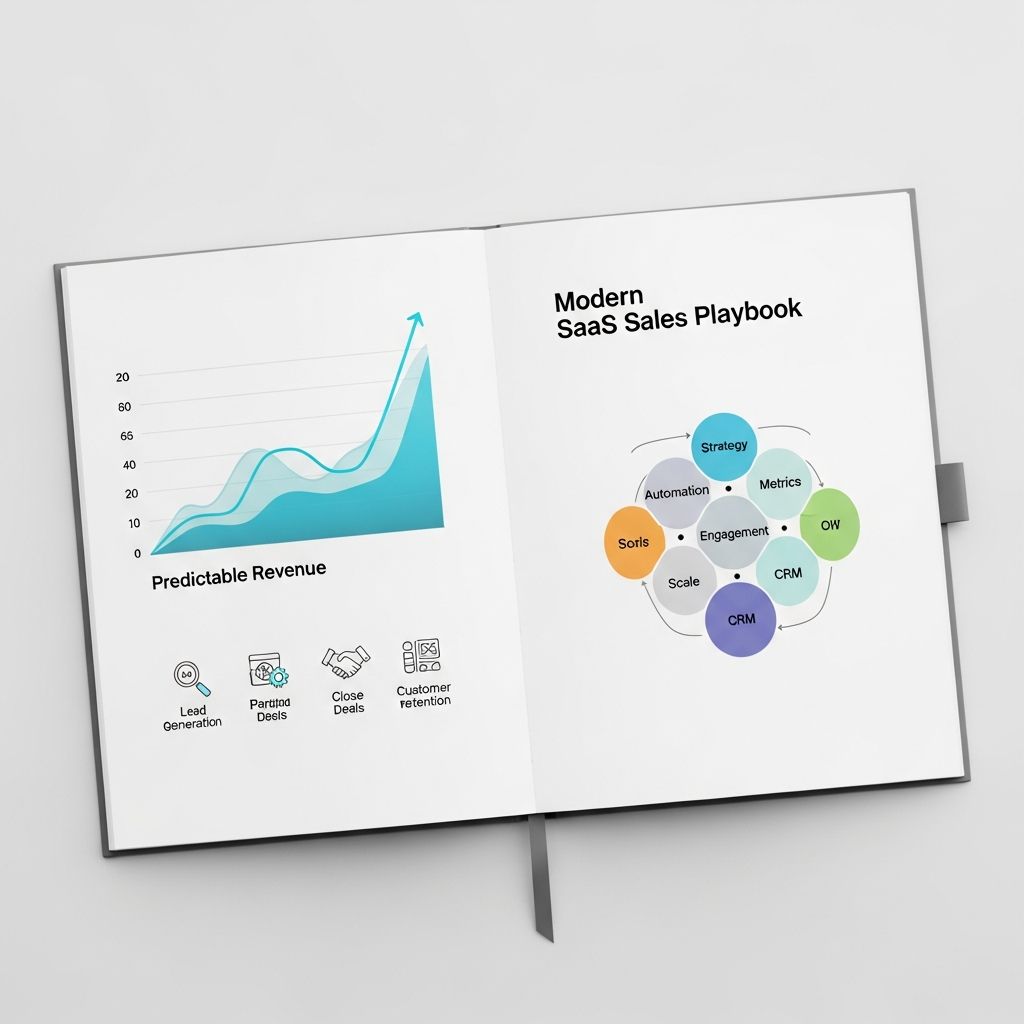
Software-as-a-Service (SaaS) sales is no longer just about closing one-time deals. It is about building a repeatable engine that acquires the right customers, delivers ongoing value, and turns subscriptions into long-term, predictable revenue. This guide walks through the critical elements of a modern SaaS sales motion and how to put them into practice.
Understanding the SaaS Sales Fundamentals
Before you design specific tactics, you need clarity on what makes SaaS sales different from traditional software or one-time product sales.
Why SaaS Sales Is Unique
In SaaS, customers pay recurring fees instead of a single up-front license. That shift creates a few key implications:
- Revenue is subscription-based – Monthly or annual contracts spread revenue over time rather than concentrating it at purchase.
- Retention drives profitability – Because the cost to acquire a customer is typically paid up front, profits often arrive only after several months of renewal.
- Customer success is central – Buyers can cancel relatively easily in competitive markets, so post-sale value delivery is critical to survival.
- Usage and data guide decisions – Product usage data provides early signals about conversion, upsell, and churn risk, enabling data-driven sales and success strategies.
Core Metrics Every SaaS Sales Team Should Track
Effective SaaS selling requires a metrics mindset. Commonly used measures include:
- Monthly Recurring Revenue (MRR) – Total predictable revenue in a given month.
- Customer Acquisition Cost (CAC) – Total sales and marketing costs divided by new customers acquired in a period.
- Customer Lifetime Value (CLV or LTV) – The net revenue expected from a customer over the life of the relationship.
- Churn rate – Percentage of customers or revenue lost in a period.
- Net Revenue Retention (NRR) – Existing customer revenue after expansion and churn, expressed as a percentage of the starting amount.
These metrics help you understand if your sales motion is scalable and sustainable, not just whether you are closing deals.
Designing Your Ideal Customer and Market Focus
SaaS sales efforts break down quickly when they try to sell to everyone. Sharpening your focus on the customers you serve best is the foundation of a strong sales strategy.
Defining Your Ideal Customer Profile (ICP)
An Ideal Customer Profile describes the type of company that gets the most value from your product and is the most profitable to serve. Research on B2B SaaS selling emphasizes the importance of precise targeting for complex, multi-stakeholder deals.
When you build your ICP, consider:
- Firmographics – Industry, company size, geography, revenue band.
- Technology stack – Tools they already use and integrate with.
- Business triggers – Events that create need (e.g., growth, compliance, consolidation).
- Pain intensity – How urgent and costly the problem is that you solve.
Mapping Key Stakeholders
SaaS purchases, especially in the enterprise, rarely involve just one person. Studies of enterprise buying indicate that complex deals often require buy-in from several stakeholders, including a financial decision-maker such as a CFO.
Map at least these groups:
- Economic buyer – Owns the budget and signs the contract.
- Business champion – Feels the pain directly and advocates for change.
- Technical gatekeeper – Reviews security, integrations, and risk.
- End users – Use the tool daily and influence adoption.
Sales teams that understand stakeholder priorities can tailor value messages to each group and reduce friction during approval.
Crafting a SaaS-Ready Pricing and Packaging Strategy
Pricing and packaging are not just financial decisions; they shape how buyers evaluate your product and how your sales process works.
Common SaaS Pricing Approaches
Most SaaS companies use subscription-based models, which provide flexibility for customers and predictability for vendors. Consider:
- Tiered plans – Offering multiple tiers (e.g., Basic, Pro, Enterprise) lets you serve different segments and create natural upgrade paths.
- Usage- or seat-based pricing – Charging per user, per transaction, or per unit of consumption aligns pricing with value.
- Freemium or free trial – Allowing prospects to try the product reduces perceived risk and supports product-led growth.
Aligning Pricing With Value
For higher-value B2B deals, the most effective pricing strategy ties directly to business outcomes. Research on SaaS selling frameworks emphasizes value-based and consultative approaches, particularly when ROI is central to the decision.
To align price and value:
- Identify the most important outcomes for your ICP (e.g., time saved, revenue gained, risk reduced).
- Quantify those outcomes wherever possible with benchmarks or customer proof.
- Package higher tiers around advanced capabilities that amplify those outcomes.
| Pricing Style | Best For | Main Advantage | Main Risk |
|---|---|---|---|
| Simple tiered plans | SMB and mid-market | Easy to understand and compare | May leave money on the table for large accounts |
| Usage-based pricing | Tools with variable consumption (APIs, infrastructure) | Scales as customers grow usage | Revenue can be less predictable at first |
| Custom enterprise agreements | Large, complex organizations | Captures high value and complex needs | Longer sales cycles and negotiation effort |
Building a High-Conversion SaaS Sales Process
Your process is the step-by-step path that turns strangers into paying, long-term customers. While details differ across markets, most effective SaaS sales motions share a few core stages.
1. Lead Generation and Qualification
Modern SaaS teams use a mix of inbound, outbound, and product-led tactics to fill the pipeline.
- Inbound – Content marketing, webinars, and SEO attract prospects researching problems you solve.
- Outbound – Targeted email, social outreach, and calling help you reach high-value accounts proactively.
- Product-qualified leads (PQLs) – Users who have already interacted meaningfully with your product, such as through a trial or freemium tier.
Qualify leads on both fit (ICP alignment) and intent (engagement, urgency, and timing) to focus sales resources where they matter most.
2. Discovery and Problem Diagnosis
Effective SaaS sales conversations are more consultative than transactional. The objective is to deeply understand the buyer’s situation, constraints, and desired outcomes, not just to pitch features.
Good discovery uncovers:
- Current process and tools
- Quantifiable impact of existing problems
- Key decision criteria and timeline
- Stakeholders who must be involved
3. Product Demonstrations That Tell a Story
In SaaS, the product experience is often the centerpiece of the sale. High-performing teams create tailored demos that mirror the prospect’s real-world workflows instead of generic click-through tours.
Best practices include:
- Start by restating the prospect’s goals and pains.
- Show only the features relevant to those goals.
- Connect each feature to a specific outcome (e.g., fewer manual steps, faster reporting).
- End with a recap of business value, not a list of functions.
4. Trials, Pilots, and Product-Led Motions
Free trials, freemium models, and pilots allow prospects to experience value before committing. Studies of SaaS sales emphasize combining self-service product access with targeted sales engagement for maximum impact.
To make trials effective:
- Keep setup simple so value appears quickly.
- Use in-app guidance and onboarding flows to highlight key actions.
- Monitor usage and intervene when high-potential users stall.
- Time-limited trials can create urgency, but only if supported by a clear success plan.
5. Handling Objections and Closing
Common SaaS objections revolve around integration complexity, security, total cost of ownership, and competing priorities. Prepare structured responses that tie back to your discovery insights.
Closing techniques should focus on confirming outcomes and aligning on next steps rather than pressure. Examples include:
- Mutual action plans outlining tasks, owners, and dates.
- Proof-of-concept success criteria that both sides agree on.
- Flexible contract structures that reduce perceived risk (e.g., phased rollouts).
Retaining and Expanding Customers After the Sale
Because revenue accumulates over time, post-sale activities are just as important as the initial deal. Modern research on SaaS growth highlights land-and-expand, value-based selling, and customer success as central to long-term revenue.
Onboarding for Fast Time-to-Value
The first 30–90 days after signing can determine whether a customer becomes an advocate or a churn risk. Effective onboarding includes:
- A clear implementation plan that matches the customer’s capacity and constraints.
- Training tailored to different user groups (admins vs. everyday users).
- Regular check-ins to monitor progress toward the original business goals.
Land, Adopt, and Expand Strategy
Many successful SaaS companies use a “land, adopt, expand” approach to grow existing accounts.
- Land – Start with a specific team or use case where value is easiest to prove.
- Adopt – Ensure active, sustained usage through training, support, and product improvements.
- Expand – Once value is demonstrated, broaden to new teams, geographies, or higher tiers.
Sales and customer success teams should share data on usage, satisfaction, and unserved needs to identify the best expansion opportunities.
Reducing Churn and Increasing Net Revenue Retention
High churn erodes growth and can make CAC unsustainable. Research on SaaS performance shows that companies with strong net revenue retention often grow faster and more efficiently than those relying heavily on new customer acquisition.
Practical ways to control churn include:
- Monitoring leading indicators such as login frequency, feature adoption, and support volume.
- Re-engaging at-risk customers with success reviews and training.
- Aligning pricing with realized value rather than just usage limits.
- Collecting and acting on qualitative feedback through interviews and surveys.
Enabling Your SaaS Sales Team for Consistent Performance
Even the best strategy fails without an enabled team and the right tools to execute. SaaS organizations increasingly invest in technology and training to improve win rates and efficiency.
Essential Tools for SaaS Sales
- Customer Relationship Management (CRM) – Centralizes contact data, deal stages, and communication history, enabling better forecasting and collaboration.
- Sales engagement and automation – Helps structure outreach sequences, track engagement, and scale personalized communication.
- Product analytics – Surfaces behavioral data such as feature usage and trial activity to identify PQLs and expansion potential.
- Demo and proof-of-concept platforms – Make it easier to create tailored demos without complex engineering involvement.
Training and Coaching for Modern SaaS Reps
The skills required in SaaS selling go beyond traditional pitch-based approaches. Teams need strength in discovery, problem-solving, and value communication.
Effective enablement should cover:
- Industry and domain knowledge so reps can speak credibly about customer challenges.
- Frameworks for consultative conversations, including discovery question playbooks.
- Role-play sessions to practice demos, objection handling, and multi-stakeholder navigation.
- Ongoing coaching based on recorded calls and deal reviews.
Frequently Asked Questions (FAQs)
Q: How is SaaS sales different from traditional software sales?
A: Traditional software often involves large one-time licenses and lengthy implementation projects. SaaS sales, by contrast, focuses on recurring subscriptions, continuous value delivery, and long-term customer relationships. Because customers can switch providers more easily, sales teams must coordinate closely with product and customer success to ensure ongoing adoption and outcomes.
Q: What is a healthy churn rate for a SaaS business?
A: Acceptable churn varies by market and price point, but lower is always better. High-performing B2B SaaS companies often aim for annual revenue churn in the single digits and focus on achieving net revenue retention above 100%, meaning expansions from existing customers more than offset any losses.
Q: Do all SaaS companies need a free trial or freemium model?
A: No. Free access works well when onboarding is simple and value can be demonstrated quickly. For complex or high-touch solutions, structured pilots or paid proofs of concept may be more effective. The right approach depends on your ICP, deal sizes, and product complexity.
Q: How important is customer success to SaaS sales?
A: Customer success is critical because renewals and expansions drive much of a SaaS company’s long-term revenue. Without deliberate efforts to help customers achieve their goals, churn will increase and the cost of acquiring new customers may become unsustainable. Many modern SaaS organizations treat customer success as a core part of the overall revenue team rather than a separate support function.
Q: Should a new SaaS startup focus more on inbound or outbound sales?
A: Early-stage companies often blend both. Outbound helps you learn quickly from direct conversations with target accounts, while inbound and product-led tactics scale over time. The right mix depends on your price point, sales cycle length, and how concentrated your ideal customers are in specific segments.
References
- Effective SaaS Sales Strategies to Boost Growth in 2025 — Development Corporate. 2024-10-15. https://developmentcorporate.com/uncategorized/saas-sales-strategies/
- Effective SaaS Sales Strategies for Success in 2025 — NetHunt CRM. 2024-06-12. https://nethunt.com/blog/saas-sales/
- Enterprise SaaS Sales Process Guide 2025: Win More High-Value Deals — Martal Group. 2024-09-03. https://martal.ca/saas-sales-process-lb/
- 2025 Insights: How to Sell B2B SaaS — 10 Strategies for Success — AppDirect. 2024-08-20. https://www.appdirect.com/blog/draft-2025-update-how-to-sell-b2b-saas-10-strategies-for-success
- What Is SaaS Sales? All You Need to Know in 2025 — Leadfeeder. 2024-04-09. https://www.leadfeeder.com/blog/saas-sales/
- SaaS Sales Guide: How to Sell Software in 2025 — Reprise. 2024-07-18. https://www.reprise.com/resources/blog/saas-sales-ultimate-guide

- Integrated M.A. in Applied Linguistics, University of Hyderabad
- 5+ years in editorial, instructional, SEO, and research-based writing
Sneha is a relationships and lifestyle writer with a strong foundation in applied linguistics and certified training in relationship coaching. She brings over five years of writing experience to theskillvault, crafting thoughtful, research-driven content that empowers readers to build healthier relationships, boost emotional well-being, and embrace holistic living. Her writing and insights reflect the belief that beauty, happiness, and wellness…