
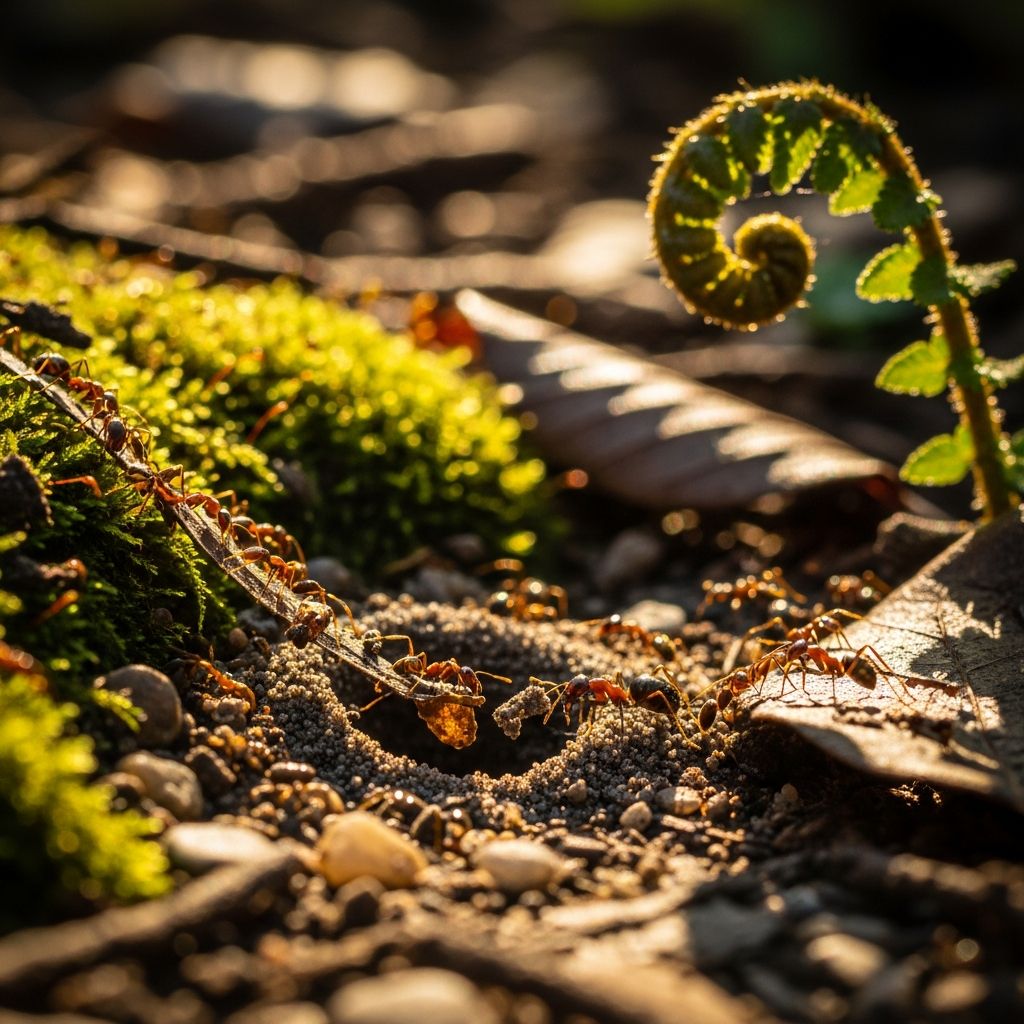
Understanding the Ecological Importance of Ants
When most people think about ants, the first images that come to mind often involve picnics ruined by invasive colonies or homes infested with unwanted pests. However, this narrow perspective overlooks one of nature’s most industrious and beneficial creatures. Ants represent far more than a nuisance; they are fundamental architects of healthy ecosystems across the globe. From the forest floor to agricultural fields, these tiny organisms perform essential services that maintain the balance and productivity of natural systems. Understanding the true value of ants requires looking beyond the occasional inconvenience and recognizing their profound contributions to environmental health.
Scientific research reveals that ants are among the most ecologically significant insects on Earth. Their activities influence soil composition, nutrient distribution, plant growth, and pest population dynamics. The sheer biomass of ants on our planet—with estimates suggesting approximately 1.5 million ants for every human—underscores their collective impact on terrestrial ecosystems. These creatures work tirelessly in ways that many organisms, including earthworms, struggle to match in efficiency and scope.
Soil Architecture and Underground Engineering
One of the most remarkable contributions ants make to the environment involves their role as master soil engineers. As ants excavate tunnels and chambers throughout the soil, they create intricate networks that fundamentally alter the physical structure of the earth beneath our feet. This underground architecture serves multiple critical functions that ripple through entire ecosystems.
When ants tunnel through soil, they loosen compacted earth that might otherwise remain dense and impenetrable. This loosening action creates pathways for water infiltration, allowing moisture to penetrate deeper into the soil profile. Similarly, these tunnels serve as channels for oxygen, improving soil aeration to levels that benefit plant root systems and the microbial communities living in the soil. Plants require both water and oxygen at their roots, and the work of ants facilitates both.
The scale of ant-driven soil modification is substantial. Research indicates that ants move approximately the same amount of soil as earthworms, creatures long celebrated for their role in soil maintenance. In some agricultural contexts, the presence of ants and termites working in conjunction has increased wheat yields by as much as 36 percent, a figure that directly reflects their impact on soil water infiltration and nutrient availability.
Beyond simple physical movement, ants contribute to soil enrichment through their feeding and nesting behaviors. As they transport organic material into their colonies, they inadvertently mix surface debris with deeper soil layers, promoting the integration of organic matter throughout the soil profile. This process enhances soil fertility by distributing nutrients more evenly and creating conditions favorable for decomposition of organic materials.
The Nutrient Recycling Machine
Ants function as nature’s cleanup crew and nutrient recyclers, performing decomposition services that are essential for ecosystem function. Throughout their daily activities, ants scavenge dead insects, decaying plant material, and other organic debris that would otherwise accumulate in the environment. By collecting this material and transporting it to their nests, ants accelerate decomposition through a combination of their own feeding activity and the microbial processes that occur within their colonies.
This decomposition process serves a critical function: it breaks down complex organic compounds into simpler nutrients that plants can absorb and utilize. Dead material that might otherwise harbor pathogens or pests is processed and returned to the soil in a form that nourishes plant growth. The result is a more balanced and productive ecosystem where nutrients cycle continuously rather than becoming locked away in accumulated dead matter.
The efficiency of ant-mediated decomposition is particularly valuable in ecosystems where other decomposers may be limited. By diligently processing organic material, ants help maintain the energy flow and nutrient cycling that sustains the entire community of organisms dependent on soil health. Without this service, many ecosystems would accumulate waste products and experience nutrient depletion over time.
Seed Dispersal and Plant Reproduction
While most people associate seed dispersal with birds or wind, ants play a significant though often overlooked role in plant reproduction. Certain ant species actively harvest seeds as a food source, and in the process of transporting these seeds to their colonies, they inadvertently facilitate seed dispersal across landscapes. This behavior has profound implications for plant biodiversity and ecosystem composition.
When ants collect seeds from various plant species, they sometimes drop or cache seeds at distances from their origin points. This geographic separation increases the likelihood that seeds will germinate in new locations, expanding the range of plant species and promoting genetic diversity. The quality of soil in areas inhabited by ants tends to be higher due to their aeration and nutrient-cycling activities, which means seeds that germinate in these locations often enjoy superior growing conditions.
In some cases, ant-mediated seed dispersal can introduce entirely new plant species to regions they previously did not inhabit. This capacity to shape plant communities demonstrates how ants influence ecosystem composition and evolution at scales that might initially seem surprising for such small organisms. The cumulative effect of billions of individual ants moving seeds across landscapes represents a significant biological force.
Predatory Function and Pest Management
Ants are among the leading predators of other insects in terrestrial ecosystems. Their role in controlling pest populations provides immense value to both natural environments and human agricultural systems. Through both direct predation and the consumption of pest eggs and larvae, ants help maintain insect population balance.
This predatory behavior extends to many organisms that humans consider pests: fleas, flies, bedbugs, cockroaches, spiders, and termites all fall prey to various ant species. In agricultural settings, this natural pest control represents a valuable ecosystem service that reduces the need for synthetic pesticides. Farmers who recognize the value of maintaining healthy ant populations often experience reduced pest pressure and improved crop outcomes without relying as heavily on chemical interventions.
The predatory capacity of ants is enhanced by their social organization. Working as coordinated superorganisms, ant colonies can mobilize against pest species with efficiency that solitary predators cannot match. A single colony containing thousands or millions of individual ants can systematically hunt and eliminate large numbers of pest organisms, providing pest control benefits that scale with colony size.
Ants as Environmental Indicators
Beyond their direct ecological services, ants serve an important role as bioindicators of environmental health. The presence, diversity, and abundance of ant species in a particular area can reflect soil quality, ecosystem stability, and overall environmental conditions. Scientists and land managers increasingly recognize ants as reliable indicators of soil health, particularly in regions where access to sophisticated soil monitoring equipment is limited.
For agricultural producers seeking to assess soil condition without expensive testing procedures, monitoring ant populations offers a practical alternative. Areas with robust and diverse ant communities typically indicate healthy soil with good structure, adequate moisture retention, and appropriate nutrient levels. Conversely, areas where ant populations are sparse or absent may signal soil degradation or environmental stress that requires management attention.
This indicator function has particular value for sustainable agriculture and land management in developing regions. By training farmers to recognize and count ant species, agricultural extension programs can help them make informed decisions about soil management and land stewardship. The presence of ants essentially becomes an accessible tool for monitoring ecosystem function.
Agricultural Benefits and Sustainable Food Production
In agricultural contexts, the benefits provided by ants extend across multiple dimensions of crop production. Their soil aeration activities improve water infiltration and nutrient availability, directly contributing to increased crop yields. Research demonstrates that fields with active ant populations often produce measurably higher yields than fields where ant populations have been eliminated or suppressed through pesticide use.
The pest control services ants provide can significantly reduce crop damage from arthropod pests, decreasing the need for synthetic pesticide applications. This reduction in chemical inputs creates multiple benefits: lower production costs, reduced environmental contamination, less pesticide residue on food products, and improved safety for farm workers.
For sustainable agriculture specifically, ants represent a natural pest management solution that aligns with principles of ecological balance and minimal external input. Native ant species, in particular, offer promise for integrated pest management programs that maintain productivity while preserving environmental quality. As agriculture faces pressure to increase sustainability, the role of ants and other beneficial insects becomes increasingly central to viable production systems.
Global Distribution and Biodiversity
Ants occupy nearly every terrestrial ecosystem on Earth, with the notable exception of Antarctica. This near-universal distribution means their ecological influence extends across virtually all land-based biomes. From tropical rainforests to desert systems, from temperate woodlands to agricultural landscapes, ants adapt and thrive while providing essential services in each environment.
The diversity of ant species is staggering, with scientists describing thousands of species adapted to different environmental conditions and ecological roles. This diversity ensures that in nearly any ecosystem, ants fill ecological niches and perform functions suited to local conditions. Some species specialize in seed dispersal, others in predation, still others in soil modification, but collectively they provide comprehensive ecosystem services.
The sheer abundance of ants—with estimates of 20 quadrillion individual ants living at any given time—creates a biological force of enormous significance. The cumulative work of such vast numbers of organisms, each following simple behavioral rules but organized into complex colonies, produces ecosystem-level effects that few other animal groups can match.
Specialized Ant Behaviors and Ecological Functions
Beyond their general roles in soil and nutrient management, specific ant species exhibit specialized behaviors that provide unique ecological services. Some ants actively protect flowering plants from insect damage; peony flowers famously attract ants through nectar production, and these ants defend the flowers from herbivorous insects. While the plant is not harmed by the ants’ presence, the ants benefit from reliable food sources while providing protection services.
Other ant species have evolved specialized relationships with plants, aiding in pollination as they move across flowers searching for nectar. While ants are not primary pollinators for most plant species, their contribution to pollination services, though modest, adds to their overall ecological value.
The farming behavior of certain ant species, particularly their cultivation of aphids for honeydew production, represents another fascinating ecological interaction. Though this behavior can sometimes conflict with human agricultural interests, it demonstrates the complexity of ant ecology and their integration into natural food webs.
Frequently Asked Questions
Q: Do ants actually aerate soil better than earthworms?
A: Research suggests ants move approximately the same amount of soil as earthworms, making them equally important soil engineers. In some agricultural systems, the combination of ants and earthworms produces superior results compared to either species alone.
Q: Can ants really control garden pests?
A: Yes, ants consume the eggs and larvae of many common pests including fleas, flies, bedbugs, cockroaches, and termites. Their predatory behavior provides meaningful pest control benefits in both natural and agricultural settings.
Q: How do ants disperse seeds?
A: Harvester ant species collect seeds as food and transport them to their colonies. During transport and caching, seeds are often deposited at distances from their origin, facilitating dispersal and allowing plants to establish in new locations.
Q: What does it mean if I have lots of ants in my garden?
A: A robust ant population typically indicates healthy soil with good structure and appropriate moisture and nutrient levels. This is generally a positive sign for garden productivity, though some ant species do protect pest insects like aphids.
Q: Are ants found everywhere on Earth?
A: Ants inhabit every continent except Antarctica. With estimates of 1.5 million ants per person and their presence in virtually all terrestrial ecosystems, their global influence on environmental health is substantial.
Conclusion: Recognizing Ant Value
The tendency to view ants exclusively through the lens of household pests or garden nuisances obscures the remarkable ecological contributions these creatures provide. Their roles as soil engineers, nutrient recyclers, seed dispersers, and predatory pest controllers make them indispensable components of healthy ecosystems. The efficiency and organization that characterize ant colonies enable them to accomplish ecosystem services at scales that rival or exceed those of much larger organisms.
Recognizing and protecting ant populations represents an investment in environmental health and sustainability. Whether in natural ecosystems, agricultural systems, or even urban landscapes, ants provide benefits that ultimately support human wellbeing. As ecological challenges mount and sustainability becomes increasingly important, the humble ant emerges not as a pest to be eliminated but as a valuable ally in maintaining the healthy, productive ecosystems upon which all life depends.
References
- The Role of Ants in the Ecosystem — Insect Lore. 2024. https://www.insectlore.com/blogs/ants/the-ecological-importance-of-ants
- Ants Are Ecologically Beneficial — Iowa State University Extension and Outreach. 2024. https://yardandgarden.extension.iastate.edu/how-to/ants-are-ecologically-beneficial
- Ants Are Good: Agricultural and Ecological Benefits — University of California Agriculture and Natural Resources. 2024. https://ucanr.edu/blog/topics-subtropics/article/ants-are-good
- Are Ants Good for the Environment? — Southern Pest Control. 2024. https://southernpestcontrol.com/are-ants-good-for-the-environment/
- The Benefits and Drawbacks of Beneficial Ants — Bugs.com. 2024. https://bugs.com/blog/the-benefits-and-drawbacks-of-beneficial-ants/
- Why Ants Can Be Good for Your Yard — Meadows Farms. 2024. https://www.meadowsfarms.com/great-big-greenhouse-gardening-blog/why-ants-can-be-good-for-your-yard/
- Are There Some Benefits to Ants? — Rove Pest Control. 2024. https://www.rovepestcontrol.com/blog/are-all-ants-bad-or-are-there-some-benefits-of-ants/

- Integrated M.A. in Applied Linguistics, University of Hyderabad
- 5+ years in editorial, instructional, SEO, and research-based writing
Sneha is a relationships and lifestyle writer with a strong foundation in applied linguistics and certified training in relationship coaching. She brings over five years of writing experience to theskillvault, crafting thoughtful, research-driven content that empowers readers to build healthier relationships, boost emotional well-being, and embrace holistic living. Her writing and insights reflect the belief that beauty, happiness, and wellness…