
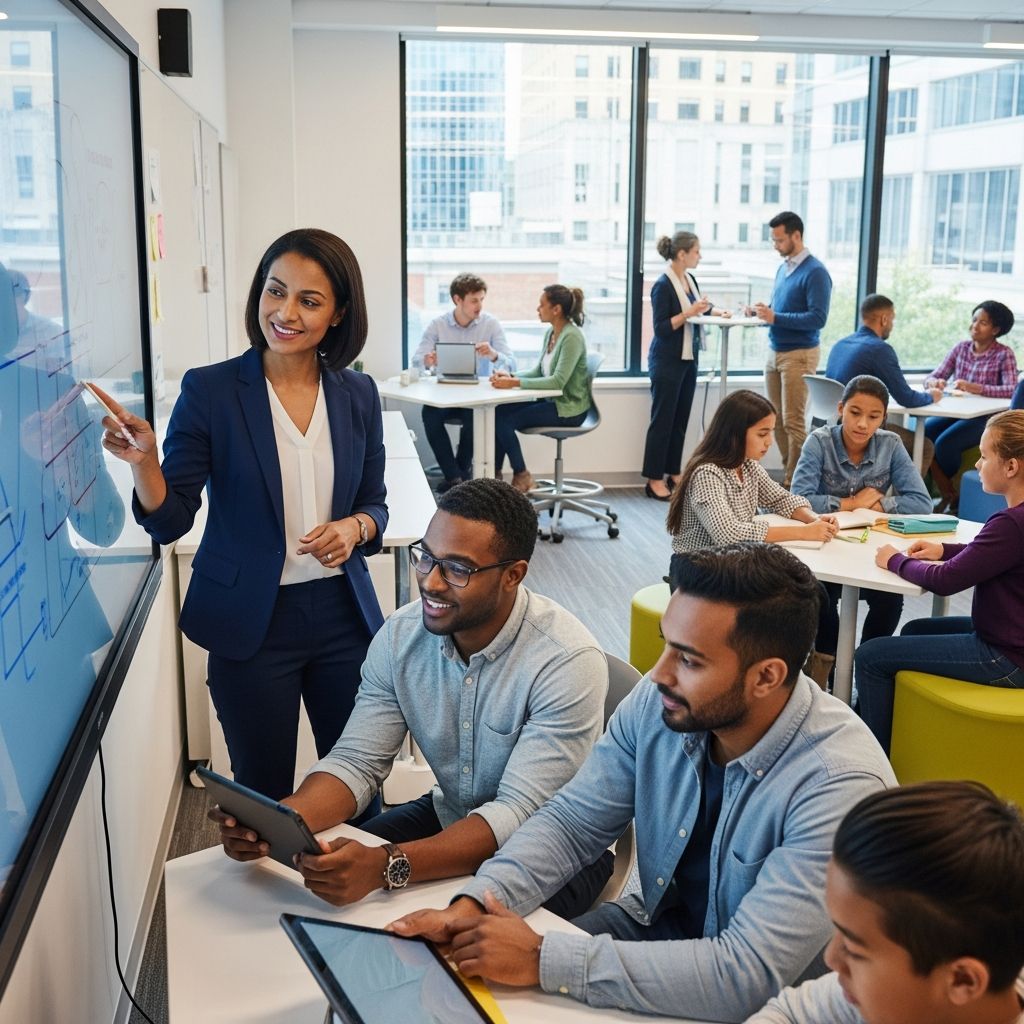
Educators in the 21st century serve as pivotal architects of student success, extending far beyond traditional knowledge delivery to encompass guidance, emotional support, and skill-building for a rapidly changing world. Their influence shapes not only academic achievements but also personal resilience and societal contributions.
From Knowledge Transmitters to Learning Facilitators
Historically, teaching centered on rote memorization and one-directional lectures, but contemporary education demands a shift toward interactive, student-centered approaches. Modern educators act as facilitators, designing experiences that encourage active participation and independent discovery.
Facilitators curate environments where learners explore concepts through hands-on activities, group discussions, and real-world applications. This method transforms passive recipients into proactive thinkers capable of applying knowledge flexibly.
- Encouraging questioning and debate to build analytical skills.
- Guiding project-based tasks that mirror professional challenges.
- Promoting self-directed research using digital tools.
By stepping back from the ‘sage on the stage’ model, teachers empower students to own their learning journey, fostering adaptability essential for lifelong education.
Nurturing Emotional and Social Growth
Beyond academics, educators play a crucial role in developing emotional intelligence (EQ), which research shows is vital for personal and professional success. They create safe spaces for students to express emotions, build empathy, and practice collaboration.
In diverse classrooms, teachers address mental health challenges exacerbated by technological shifts and societal pressures. Strategies include mindfulness exercises, peer mediation training, and inclusive dialogues that validate varied backgrounds.
| Aspect | Traditional Approach | Modern Approach |
|---|---|---|
| Emotional Support | Minimal focus | Integrated SEL programs |
| Social Skills | Incidental learning | Deliberate group activities |
| Resilience Building | Discipline-based | Growth mindset coaching |
This holistic nurturing equips students to navigate interpersonal dynamics and workplace demands effectively.
Integrating Technology for Enhanced Learning
Digital tools have revolutionized classrooms, positioning educators as tech-savvy integrators who blend innovation with pedagogy. From AI-driven analytics to virtual simulations, technology personalizes instruction and provides real-time feedback.
Teachers must master platforms for hybrid learning, ensuring equitable access while preventing over-reliance. They teach digital literacy, helping students discern credible information amid misinformation.
- Using adaptive software to tailor lessons to individual paces.
- Incorporating gamified apps for engagement.
- Facilitating virtual collaborations across global peers.
This integration prepares learners for tech-saturated careers, emphasizing ethical use and critical evaluation.
Promoting Critical Thinking and Problem-Solving
Core to modern teaching is cultivating higher-order skills like analysis, synthesis, and innovation. Educators design challenges that require students to deconstruct problems, evaluate evidence, and devise solutions.
In STEM-focused curricula, project-based learning (PBL) dominates, where teams tackle authentic issues such as sustainable design or data interpretation. This mirrors real-world demands, building confidence in ambiguity.
Teachers model these processes, demonstrating persistence through trial and error, which instills a growth mindset. Research underscores that such training yields adaptable graduates ready for unpredictable futures.
Building Inclusive and Equitable Classrooms
Diversity in learning styles, abilities, and cultures necessitates differentiated instruction. Educators assess needs via formative assessments, adapting methods to support neurodiverse populations.
Inclusive practices involve Universal Design for Learning (UDL), offering multiple representation modes, engagement options, and expression avenues. This ensures every student thrives, regardless of background.
- Flexible grouping to leverage peer strengths.
- Culturally responsive materials reflecting student identities.
- Accommodations like audio aids for accessibility.
By championing equity, teachers foster belonging, which boosts motivation and achievement.
Acting as Mentors and Role Models
Educators extend influence as lifelong mentors, offering career guidance, ethical modeling, and personal encouragement. They track progress holistically, celebrating milestones beyond grades.
In extracurriculars, they coach clubs and sports, reinforcing values like teamwork and perseverance. Parental partnerships amplify this, creating supportive ecosystems for student flourishing.
This relational aspect humanizes education, countering tech’s impersonality with genuine connections.
Preparing Students for Future Workforces
With automation reshaping jobs, teachers prioritize 21st-century competencies: creativity, collaboration, communication, and critical thinking (4Cs). Curricula emphasize interdisciplinary projects linking subjects to career pathways.
Guest speakers, internships, and entrepreneurship simulations bridge theory to practice. Educators instill adaptability, teaching pivots amid economic shifts.
| Skill | Classroom Application | Future Benefit |
|---|---|---|
| Creativity | Design thinking workshops | Innovation in dynamic markets |
| Collaboration | Team projects | Effective teamwork |
| Communication | Presentations and debates | Professional networking |
| Critical Thinking | Case studies | Strategic decision-making |
Such preparation ensures graduates excel as leaders and innovators.
Lifelong Professional Development for Educators
To remain effective, teachers pursue continuous training in pedagogy, technology, and equity. Professional learning communities (PLCs) facilitate peer collaboration and best-practice sharing.
Administrators support this via workshops and mentorships, recognizing burnout risks. Self-reflection journals and data-driven evaluations refine practices.
This commitment sustains educator vitality, directly enhancing student outcomes.
Frequently Asked Questions (FAQs)
What distinguishes modern educators from traditional ones?
Modern educators facilitate active learning and holistic development, unlike traditional ones focused on lectures and memorization.
How does technology impact teaching roles?
It enables personalized, interactive experiences but requires teachers to emphasize digital ethics and equity.
Why is emotional intelligence key in education?
It builds resilient, empathetic individuals equipped for complex social environments.
How do teachers foster inclusivity?
Through differentiated instruction, UDL, and culturally responsive practices honoring diverse needs.
What skills prepare students for future jobs?
The 4Cs—creativity, collaboration, communication, critical thinking—via real-world projects.
This comprehensive view underscores educators’ transformative impact, blending instruction with inspiration for empowered generations. (Word count: 1678)
References
- Redefining the Role of the Teacher: Shaping Minds, Building Futures — DPSSL. 2023. https://dpssl.net/blog/redefining-role-of-teacher
- Why Are Teachers Important in 2025 and Beyond — Alliant University. 2025. https://www.alliant.edu/blog/why-are-teachers-important
- The Evolving Role of Teachers in Modern Education Systems — MyWestford. 2024. https://www.mywestford.com/blog/evolving-role-of-teachers-in-modern-education/
- Redefining the Role of the Teacher: It’s a Multifaceted Profession — Edutopia. 2023. https://www.edutopia.org/redefining-role-teacher
- The Evolving Role of Educators in the Modern Classroom — McGraw Hill Education. 2024-06-01. https://www.mheducation.com/highered/blog/2024/06/the-evolving-role-of-educators-in-the-modern-classroom.html
- 7 Roles of a Teacher in the 21st Century — Eton Institute. 2023. https://etoninstitute.com/blog/the-7-roles-of-a-teacher-in-the-21st-century/
- What Do Teachers Do? 15 Things Teachers Do Every Day In 2025 — Teachers of Tomorrow. 2025. https://www.teachersoftomorrow.org/blog/insights/what-do-teachers-do/

Medha Deb is an editor with a master's degree in Applied Linguistics from the University of Hyderabad. She believes that her qualification has helped her develop a deep understanding of language and its application in various contexts. Medha specializes in the areas of beauty, health, sports, and wellness and is committed to ensuring that the content on the website is…