
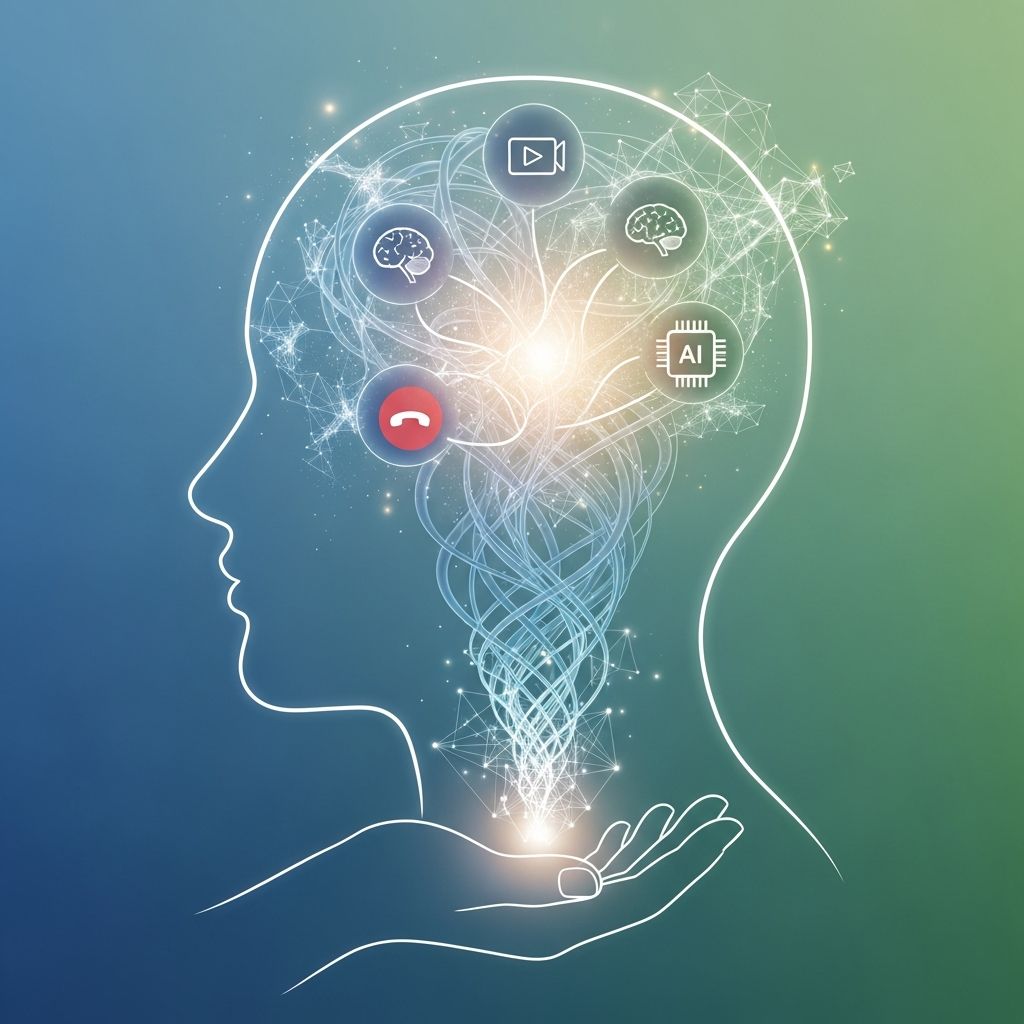
The counseling profession is undergoing rapid and lasting change. Telehealth, artificial intelligence (AI), and new models of practice are redefining how clinicians connect with clients, deliver care, and manage the demands of a growing mental health crisis. This transformation brings new possibilities for access and personalization, but also raises complex questions about ethics, equity, and the irreplaceable role of human connection in therapy.
Why Counseling Is Changing So Quickly
Several forces are pushing counseling into a new era:
- Rising demand for mental health services, driven by social, economic, and public health stressors.
- Widespread acceptance of remote care following the COVID-19 pandemic.
- Rapid advances in digital tools, including AI, mobile apps, and remote monitoring technologies.
- Policy and payment reforms that increasingly support telehealth and integrated behavioral health models.
At the same time, workforce shortages and long waitlists are pressuring systems to become more efficient and creative, using technology to extend limited human capacity.
Telehealth as a New Normal in Counseling
Telehealth—delivering counseling via video, phone, or secure messaging—moved from fringe to mainstream within a few years and now represents a core component of modern practice.
Key Benefits of Telehealth Counseling
- Greater access: Clients in rural or underserved areas can work with specialists who might otherwise be unavailable.
- Reduced barriers: Transportation, mobility challenges, stigma, and time constraints are often easier to manage with virtual visits.
- Continuity of care: Telehealth allows counseling to continue during illness, relocation, or crises that disrupt in-person services.
- Flexibility: Expanded scheduling options can improve adherence and reduce no-shows, especially for working caregivers and students.
Limitations and Clinical Risks
Despite its advantages, telehealth is not a universal solution. Clinicians must weigh several challenges:
- Clinical appropriateness: Some high-risk situations, severe crises, or complex presentations may be better suited for in-person or higher levels of care.
- Privacy constraints: Clients may lack a confidential space at home, especially in crowded or unsafe environments.
- Technology barriers: Limited broadband, device access, or digital literacy can deepen inequities in who benefits from telehealth.
- Licensure and jurisdiction: Counselors must navigate regulations about practicing across state or national borders.
The Hybrid Model: Blending Virtual and In-Person Care
Many practices are settling into a hybrid model, combining in-person and online sessions in flexible ways. Emerging patterns include:
- Initial sessions conducted in person to build rapport, followed by ongoing virtual visits.
- Primarily virtual care with occasional in-person check-ins for assessment or when risk increases.
- Clients choosing session format based on weekly needs, symptoms, or life circumstances.
This blended approach can honor client preference while allowing counselors to calibrate modality to clinical needs and safety considerations.
Artificial Intelligence in Counseling: Promise and Boundaries
AI is emerging in counseling not as a replacement for therapists, but as a set of tools that can augment human work and expand reach when used ethically.
Where AI Is Already Showing Up
- Administrative automation: AI-enabled systems are increasingly used for scheduling, billing, charting, and documentation, reducing administrative burdens and freeing more time for direct care.
- Clinical decision support: Some platforms analyze assessment data or symptom checklists to generate risk flags or treatment suggestions that clinicians can review alongside their own judgment.
- Digital companions and chatbots: AI-based conversational agents can provide psychoeducation, mood check-ins, and coping prompts between sessions, functioning as an adjunct—not a replacement—for therapy.
- Population insights: In large systems, de-identified data can be analyzed to identify trends in symptoms, service use, or treatment response, informing program design and resource allocation.
Major Ethical Questions Around AI
The use of AI in counseling raises a set of ethical and professional concerns that cannot be ignored:
- Client safety and accountability: AI systems do not carry professional responsibility in the way licensed clinicians do. Clear boundaries are needed so clients understand what AI can and cannot provide.
- Bias and fairness: Algorithms trained on biased data may perpetuate disparities in diagnosis or treatment recommendations, particularly for marginalized groups.
- Privacy and data security: Sensitive mental health data must be stored, processed, and shared in accordance with stringent privacy protections and informed consent standards.
- Over-reliance risk: In scenarios of workforce shortages, there is a danger that institutions lean too heavily on automated tools, delaying or substituting for human care in ways that could worsen outcomes.
Human-Centered AI: Principles for Responsible Use
To keep counseling grounded in human connection, many experts advocate “human-in-the-loop” models where counselors remain central decision-makers. Key design principles include:
- AI tools support but never replace core therapeutic relationships.
- Clients receive transparent information about how their data are used and what role AI plays in their care.
- Counselors retain authority to override AI recommendations based on clinical judgment and client context.
- Systems are regularly audited for bias, accuracy, and unintended harms, especially for vulnerable populations.
New Skills Counselors Need in a Tech-Rich World
As telehealth and AI reshape practice, counselors must acquire skills that extend beyond traditional clinical training. Digital literacy is rapidly becoming foundational to effective, ethical care.
Core Digital Competencies
- Telehealth fluency: Proficiency in secure video platforms, online intake processes, and digital consent tools.
- Cybersecurity awareness: Understanding encryption, secure messaging, and basic risk mitigation (e.g., preventing unauthorized access to devices or records).
- Digital clinical skills: Adapting interventions for virtual delivery, including managing nonverbal cues, disengagement, and online fatigue.
- Data literacy: Interpreting digital assessment outputs and AI-generated suggestions without over-reliance or misinterpretation.
Relational Skills Are Still Central
Despite new technologies, the future of counseling still depends on deeply human abilities:
- Empathic listening across digital channels.
- Cultural humility and responsiveness, especially when working with diverse clients across geographic and socioeconomic lines.
- Trauma-informed practice, recognizing the pervasive impact of trauma and integrating safety, trust, choice, collaboration, and empowerment.
The most effective counselors will blend technical comfort with enduring therapeutic competencies, not trade one for the other.
Practice Models in Transition: From Solo Offices to Digital Ecosystems
The structure of counseling work is changing alongside the tools. Private practices, group practices, and integrated health systems are all experimenting with new models to respond to demand, workforce pressures, and client expectations.
Growing Shift Toward Private and Hybrid Practices
Many clinicians are seeking more autonomy, flexibility, and financial stability by moving into private practice or group practice models. Trends include:
- Clinicians combining in-person offices with virtual services across broader regions.
- Collaborative practices that share digital infrastructure, billing support, and telehealth platforms.
- Use of AI-enhanced practice management systems to streamline scheduling, documentation, and revenue cycle tasks.
Integration With Broader Health and Social Systems
At the systems level, counseling is increasingly woven into primary care, schools, and community organizations:
- Integrated behavioral health: Models that co-locate or virtually connect counselors with medical providers to address mental and physical health together.
- Collaborative care: Team-based approaches where counselors, psychiatrists, and primary care providers share information, supported by digital tools and measurement-based care.
- Focus on youth and vulnerable populations: Expanded services for children, adolescents, and marginalized groups, often using digital outreach and telehealth to overcome access barriers.
Comparison: Traditional vs Emerging Counseling Models
| Aspect | Traditional Counseling Model | Emerging Digital/Hybrid Model |
|---|---|---|
| Typical setting | In-person sessions in a physical office | Mix of office visits, video sessions, and digital touchpoints |
| Access | Limited by geography and office hours | Broader geographic reach and more flexible scheduling |
| Technology use | Minimal (phone, paper records) | Telehealth platforms, EHRs, AI-assisted tools, apps |
| Data use | Primarily narrative notes and clinician memory | Structured measures, dashboards, and analytic support |
| Collaboration | Informal or ad hoc communication with other providers | Integrated, team-based care with shared digital systems |
Equity, Access, and the Digital Divide
The technology shaping the future of counseling is not evenly distributed. Without intentional design and policy, telehealth and AI could widen gaps in who receives timely, high-quality care.
Risks of Unequal Access
- Connectivity gaps: Rural communities, low-income households, and some older adults may lack consistent high-speed internet or devices suitable for video sessions.
- Language and cultural fit: Many digital tools are still optimized for dominant cultures and languages, which can reduce relevance and trust for diverse populations.
- Financial barriers: Even when telehealth is covered, related costs (data plans, hardware, private space) can be prohibitive.
Strategies to Promote Digital Equity in Counseling
Counselors, organizations, and policymakers can work together on solutions such as:
- Supporting policies that expand broadband access and infrastructure in underserved regions.
- Developing low-bandwidth and phone-based options when video is not feasible.
- Collaborating with community organizations (library, schools, centers) to provide private spaces and equipment for telehealth.
- Ensuring AI tools are developed and tested with diverse populations, and involving communities in design and evaluation.
Preparing for the Next Decade of Counseling
The future of counseling is neither purely virtual nor fully automated. Instead, it is likely to be characterized by:
- Hybrid care models that flex between in-person and digital formats.
- AI-enhanced workflows that make room for more meaningful human interactions.
- Expanded roles for counselors within integrated health and community systems.
- Ongoing tension between efficiency, ethics, and the need to preserve deeply relational work.
Counselors who lean into continuous learning—especially around technology, ethics, and cultural responsiveness—will be best positioned to navigate these shifts while safeguarding client well-being.
Frequently Asked Questions (FAQs)
Is telehealth as effective as in-person counseling?
Research and clinical experience suggest that for many conditions—such as depression, anxiety, and stress—telehealth counseling can be comparable in effectiveness to in-person care when delivered via secure platforms by trained clinicians. It may be less suitable for some high-risk situations or when clients lack privacy or basic technology access.
Will AI ever replace human therapists?
Current evidence and expert opinion indicate that AI is more likely to augment rather than replace counselors. AI can assist with tasks like triage, documentation, and between-session support, but core therapeutic processes—such as deep empathy, complex ethical reasoning, and nuanced relational work—remain human strengths.
What new skills should counselors prioritize learning?
Counselors should focus on telehealth competencies, digital ethics, cybersecurity basics, and the critical interpretation of data-driven tools. At the same time, strengthening cultural humility, trauma-informed care, and collaborative practice skills remains essential.
How is the counseling job market expected to change?
Demand for mental health counselors is projected to grow substantially over the coming decade, driven by increased recognition of mental health needs and policy initiatives to expand services. Counselors with digital fluency, specialization in high-need areas, and flexibility to work in integrated or hybrid settings will likely have strong opportunities.
What should clients ask about when using telehealth or AI-supported services?
Clients can ask providers about platform security, how their data will be stored and used, whether AI tools are involved in their care, and what to expect during virtual visits. They should also feel empowered to share preferences about format (video, phone, in-person) and to revisit those preferences over time.
References
- The Future of Counseling: New Technologies and Approaches — Counseling Psychology.org. 2023-06-15. https://www.counselingpsychology.org/the-future-of-counseling/
- 10 Behavioral Health Trends for 2025 — Behavioral Health News. 2024-01-10. https://behavioralhealthnews.org/10-behavioral-health-trends-for-2025/
- Therapy Practice Predictions for 2025 — Heard. 2024-02-20. https://www.joinheard.com/articles/therapy-practice-predictions-for-2025
- Top 5 Skills Counselors Need in 2025 — Agents of Change Training. 2024-03-05. https://agentsofchangeprep.com/blog/top-5-skills-counselors-need-in-2025/
- The Road to Tomorrow — American Counseling Association (Counseling Today). 2025-01-01. https://www.counseling.org/publications/counseling-today-magazine/article-archive/article/ct-jan-2025/the-road-to-tomorrow
- The 6 Emerging Trends Shaping Therapy in 2026 — SimplePractice. 2024-11-01. https://www.simplepractice.com/blog/trends-shaping-therapy-2026/
- Mental Health Counseling Trends: Why Now is the Best Time to Pursue This Career — Concordia University Irvine. 2024-05-08. https://www.cui.edu/townsend/articles/post/mental-health-counseling-trends-why-now-is-the-best-time-to-pursue-this-career

Medha Deb is an editor with a master's degree in Applied Linguistics from the University of Hyderabad. She believes that her qualification has helped her develop a deep understanding of language and its application in various contexts. Medha specializes in the areas of beauty, health, sports, and wellness and is committed to ensuring that the content on the website is…