
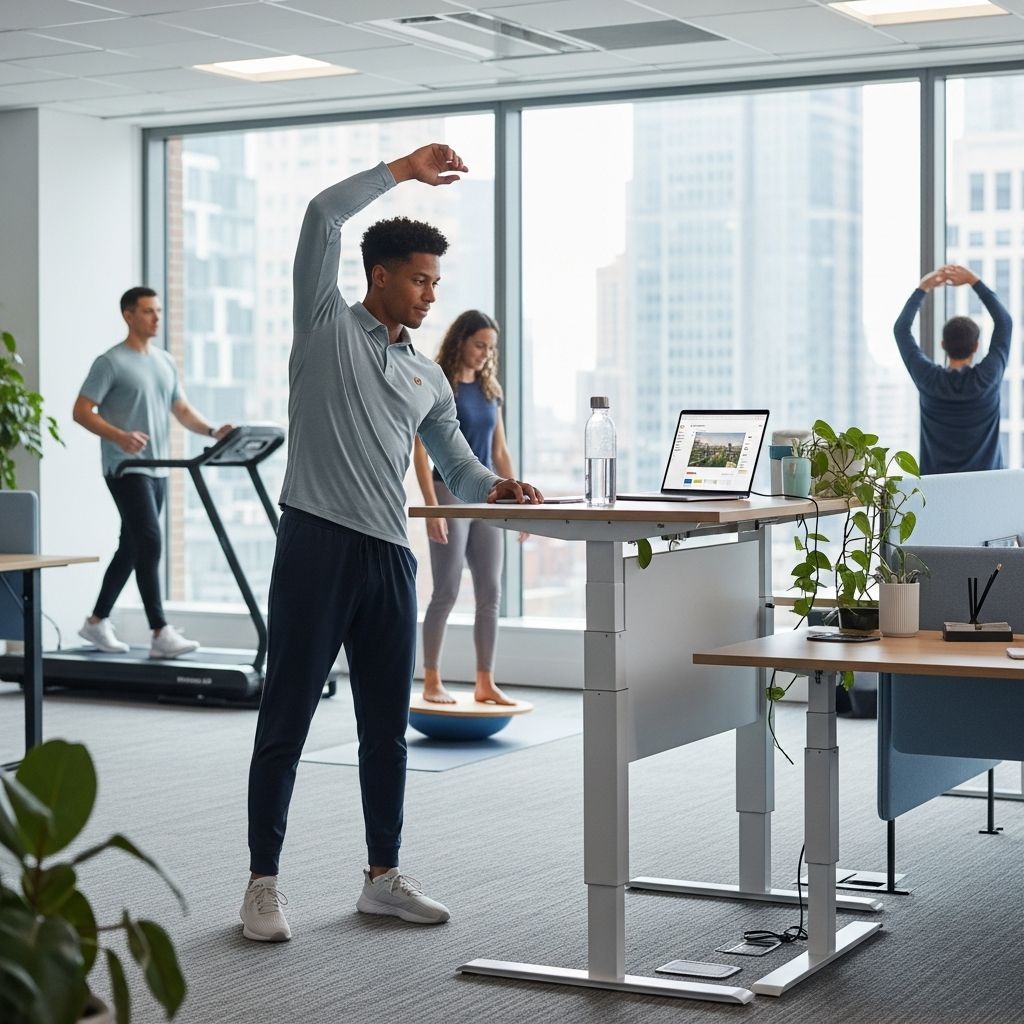
The Modern Office Challenge: Sedentary Work and Its Consequences
The contemporary workplace presents a unique health paradox. While technological advances have made our jobs more efficient, they have simultaneously trapped millions of workers in stationary positions for extended periods. Office workers spend an average of eight or more hours per day sitting, a behavior that researchers increasingly recognize as problematic for long-term health outcomes. Prolonged sedentary behavior has been linked to elevated risks of cardiovascular disease, metabolic dysfunction, weight gain, and psychological strain.
The effects of sitting for extended periods extend beyond physical health. Mental fatigue, reduced motivation, and declining mood are common experiences among desk-bound professionals who remain immobile throughout their workday. The solution, however, may be simpler than many realize: incorporating regular movement into the workday provides measurable benefits across multiple health dimensions.
The Science of Movement Breaks: Timing and Frequency Matter
Research has identified specific movement patterns that deliver optimal health benefits without requiring substantial time commitments. A landmark study from Columbia University discovered that brief walking intervals throughout the day can meaningfully offset the negative consequences of prolonged sitting. The research established that five minutes of walking every thirty minutes represents an effective threshold for maintaining metabolic health during a sedentary workday.
This finding is particularly significant because it demonstrates that substantial health improvements do not require intensive exercise sessions. Instead, short, frequent movement breaks distributed throughout the workday yield superior results compared to longer, isolated exercise periods. The Columbia researchers found that this walking regimen reduced blood sugar spikes by 58 percent after consuming large meals, compared to sitting all day.
The benefits extended to cardiovascular function as well. All walking intervals—even brief one-minute breaks—significantly reduced blood pressure by approximately 4 to 5 millimeters of mercury compared with continuous sitting. This reduction matches what individuals might achieve through daily exercise sustained over six months, demonstrating the remarkable efficiency of frequent movement breaks.
Understanding Different Movement Schedules
The Columbia research examined various movement frequencies to identify the most practical yet effective approach. Key findings included:
- One minute of walking every thirty minutes provided modest benefits for blood sugar management throughout the day
- Walking every sixty minutes, regardless of duration, provided no significant metabolic benefit
- Five minutes of walking every thirty minutes proved optimal for reducing both blood sugar and blood pressure
These distinctions suggest that consistency matters more than intensity. Workers who maintain shorter movement intervals throughout their day achieve better outcomes than those who attempt to concentrate activity into longer sessions.
Psychological Benefits: Mood, Stress, and Mental Resilience
Beyond measurable physiological changes, incorporating movement into work routines produces meaningful psychological improvements. Research participants across multiple studies reported enhanced mood and reduced fatigue when implementing regular movement breaks into their schedules. These emotional benefits have practical significance because they increase the likelihood that individuals will sustain movement practices over time.
When people experience tangible mood improvements from an activity, they naturally gravitate toward repeating that behavior. This psychological reinforcement creates a sustainable cycle where movement becomes intrinsically rewarding rather than an obligatory task. The endorphins released during even light physical activity contribute to lower anxiety levels and improved emotional resilience when facing workplace stressors.
For employees experiencing high stress or burnout symptoms, outdoor walking combined with professional coaching has demonstrated remarkable effectiveness. One study tracked employees with stress-related complaints who participated in periodic walking sessions in natural environments. Compared to control groups, these participants reported nearly twice as many positive changes in areas including mental health, job satisfaction, and self-esteem.
Cognitive Enhancement Through Active Movement
A persistent concern about integrating movement into work involves potential impacts on cognitive performance and task completion. However, research consistently demonstrates that this concern lacks empirical foundation. Individuals working at treadmill desks perform cognitive tasks nearly as well as those at traditional sitting desks, despite the simultaneous physical activity.
More impressively, some studies have identified cognitive improvements associated with movement integration. Mayo Clinic research revealed improved reasoning scores when participants engaged in standing, stepping, or walking compared with continuous sitting. This suggests that movement may enhance rather than diminish mental processing capabilities during work tasks.
The mechanisms underlying these cognitive benefits likely involve increased blood flow to the brain and enhanced oxygen delivery. Light, low-intensity movement requires minimal cognitive resources, allowing mental capacity to remain focused on work tasks while physical activity simultaneously enhances neural function.
Creativity and Innovation: The Movement Connection
Original thinking and problem-solving represent critical workplace competencies. Foundational research from Stanford University established that walking produces substantially more original ideas compared with sitting, with creativity increasing by over 80 percent among walkers. This effect persists whether individuals walk on treadmills or outdoors, though outdoor walking in natural settings without linear paths produces the most novel responses.
A comprehensive 2024 review of numerous experiments confirmed that low-intensity, natural walking reliably enhances originality and divergent thinking—the cognitive processes underlying idea generation, innovation, and creative problem-solving. Remarkably, these benefits emerge after just a few minutes of walking, making them practically accessible even within busy workdays.
For collaborative work environments, walking meetings provide dual benefits. Teams that conduct meetings while walking report improved creative thinking alongside better mood and strengthened interpersonal connections. Natural, quiet environments free from traffic noise appear optimal for this purpose.
Physical Health Outcomes: From Weight Management to Disease Prevention
The accumulation of movement throughout a workday contributes to meaningful weight management improvements. Studies found that sedentary office workers who adopted treadmill desks increased their daily step counts by 1,600 to 4,500 steps, with the greatest weight loss occurring among individuals with obesity. One small study of overweight and obese physicians using treadmill desks achieved 1.9 percent reduction in body fat.
Even slow walking speeds produce caloric expenditure. Research indicates that obese individuals walking at 1 mile per hour burn approximately 100 additional calories per hour compared with sitting. While this may seem modest, accumulated over a workday spanning eight hours, the cumulative caloric deficit becomes substantial when sustained consistently.
Beyond weight management, active workstations improve several cardiovascular and metabolic markers. Lower blood sugar levels, reduced risk of heart disease, improved circulation, and enhanced blood pressure regulation all represent documented outcomes of workplace movement integration. Walking as a weight-bearing exercise also maintains bone density, contributing to long-term skeletal health, particularly important for aging workers.
Practical Implementation: Active Workstation Options and Strategies
Organizations and individuals seeking to integrate movement into professional routines have several viable options. Active workstations encompass walking pads, treadmill desks, stationary bikes, and stepping devices that allow simultaneous working and moving. The specific technology matters less than the fundamental shift toward regular movement integration.
For individuals new to active workstations, an adjustment period of a few sessions typically precedes comfort and naturalness in working while moving. Gradual implementation, starting with shorter durations and lower intensity, facilitates successful adaptation. Many workers report that initial awkwardness resolves quickly, enabling full integration of movement into their professional routine.
For those unable to use specialized equipment, simple strategies provide substantial benefits. Setting hourly reminders for brief walking breaks, conducting meetings while walking, taking stairs instead of elevators, and standing during phone calls all contribute to movement accumulation throughout the day. The World Health Organization’s updated guidance emphasizes that “every move counts,” regardless of whether activity occurs in structured or incidental formats.
Creating a Sustainable Movement Practice
The most effective movement integration strategy is one that individuals can sustain long-term. Consider these implementation approaches:
- Schedule specific movement breaks at regular intervals, treating them as non-negotiable appointments
- Identify natural points in your workday when movement transitions are convenient (between meetings, before lunch, after completing specific tasks)
- Seek colleagues interested in walking meetings to enhance both accountability and social connection
- Prioritize outdoor walking when possible to maximize mood and creativity benefits
- Start with conservative movement targets and gradually increase duration as comfort increases
Addressing Common Concerns and Misconceptions
Several misconceptions persist regarding movement integration at work. Some individuals worry that walking while working reduces task performance or quality. Research conclusively demonstrates that this concern lacks support; work quality, mental performance, and time management all improved when employees moved more. Productivity may decrease slightly during an initial adaptation period, but this temporary adjustment quickly resolves.
Others question whether movement breaks consume excessive time. The Columbia research demonstrates that five-minute intervals every thirty minutes represent a manageable time investment with substantial health returns. These brief breaks typically improve work efficiency by reducing fatigue and enhancing mood, offsetting any time spent in movement.
Concerns about feasibility in demanding professional environments are also understandable. However, evidence suggests that movement integration becomes more practical than individuals initially assume. The cumulative benefits across physical health, mental resilience, and cognitive function create organizational value that justifies modest time investments in movement breaks.
Long-Term Health Impact and Disease Prevention
The implications of regular workplace movement extend far beyond immediate productivity improvements. Consistent movement integration throughout professional careers contributes to prevention of numerous chronic conditions. Extended sedentary behavior increases risks of preventable chronic diseases including cardiovascular disease, type 2 diabetes, certain cancers, and metabolic syndrome.
By maintaining regular movement throughout the workday in addition to dedicated exercise routines, individuals significantly reduce their long-term disease risk. The Columbia researchers emphasized that optimal health requires regular movement at work combined with daily exercise—a combination far more achievable than intensive exercise alone for busy professionals.
The daily steps recommendation of approximately 7,000 has emerged from research on disease prevention across numerous health conditions. Workplace movement integration provides a practical pathway for individuals to accumulate steps naturally throughout their professional day, making this health target more attainable.
Building a Culture of Movement at Work
Organizations recognizing the value of workplace movement integration can implement systemic changes supporting employee wellness. Providing access to active workstations, encouraging walking meetings, establishing movement break practices, and creating supportive cultural norms all facilitate individual choices toward movement integration.
When organizations actively support movement practices, they invest in workforce health with measurable returns. Employees practicing regular movement report better mental health, reduced stress, improved mood, and enhanced job satisfaction. These psychological improvements translate into reduced absenteeism, improved retention, and greater overall organizational productivity.
Frequently Asked Questions About Workplace Movement
Q: How much time must I devote to workplace movement to see health benefits?
A: Research shows that five minutes of walking every thirty minutes significantly reduces blood sugar and blood pressure. Even one minute of walking every thirty minutes provides modest metabolic benefits. These brief intervals distributed throughout the day are more effective than longer, isolated exercise sessions.
Q: Will walking at my desk reduce my work performance?
A: No. Research demonstrates that people on treadmill desks perform cognitive tasks nearly as well as those at sitting desks. Some studies show improvements in reasoning scores and work quality when movement is integrated into professional activity.
Q: What type of active workstation is most effective?
A: Research supports walking pads, treadmill desks, standing desks, stationary bikes, and stepping devices. The most effective option is whichever one an individual will use consistently. Benefits emerge from any approach that reduces prolonged sitting and integrates regular movement.
Q: Can walking meetings provide real professional benefits?
A: Yes. Walking meetings enhance creative thinking, improve mood among participants, and strengthen team connections. Outdoor walking in natural, traffic-free environments appears optimal for these collaborative benefits.
Q: How long does it take to adjust to working while moving?
A: Most people find working while on active workstations becomes comfortable and natural after a handful of sessions, despite initial awkwardness. Gradual implementation with shorter durations facilitates smoother adjustment.
Q: Does workplace movement replace dedicated exercise?
A: No. Workplace movement provides important health benefits, but optimal health requires regular movement at work combined with dedicated exercise routines. These practices work synergistically to reduce chronic disease risk.
References
- What Research Says About the Benefits of Walking at Work — Psychology Today. 2025-06. https://www.psychologytoday.com/us/blog/tracking-wonder/202506/what-research-says-about-the-benefits-of-walking-at-work
- Rx for Prolonged Sitting: A Five-Minute Stroll Every Half Hour — Columbia University Medical Center. https://www.cuimc.columbia.edu/news/rx-prolonged-sitting-five-minute-stroll-every-half-hour
- 6 Potential Health Benefits of Desk Treadmills — Baton Rouge Clinic. https://batonrougeclinic.com/news-education/does-a-desk-treadmill-actually-improve-health/
- Mayo Clinic Study Finds Active Workstations May Improve Cognitive Performance — Mayo Clinic News Network. https://newsnetwork.mayoclinic.org/discussion/mayo-clinic-study-finds-active-workstations-may-improve-cognitive-performance/
- A Simple Change to Your Standing Desk Could Make Workdays Healthier — ScienceAlert. https://www.sciencealert.com/a-simple-change-to-your-standing-desk-could-make-workdays-healthier
- People on Treadmill Desks Perform Tasks Nearly as Well as Those Sitting — Brigham Young University Life Sciences. https://lifesciences.byu.edu/people-on-treadmill-desks-perform-tasks-nearly-as-well-as-those-sitting
- The Health Benefits of Walking Pads and Other Active Workstations — Baptist Health. https://www.baptisthealth.com/blog/health-and-wellness/health-benefits-of-walking-pads

Medha Deb is an editor with a master's degree in Applied Linguistics from the University of Hyderabad. She believes that her qualification has helped her develop a deep understanding of language and its application in various contexts. Medha specializes in the areas of beauty, health, sports, and wellness and is committed to ensuring that the content on the website is…