
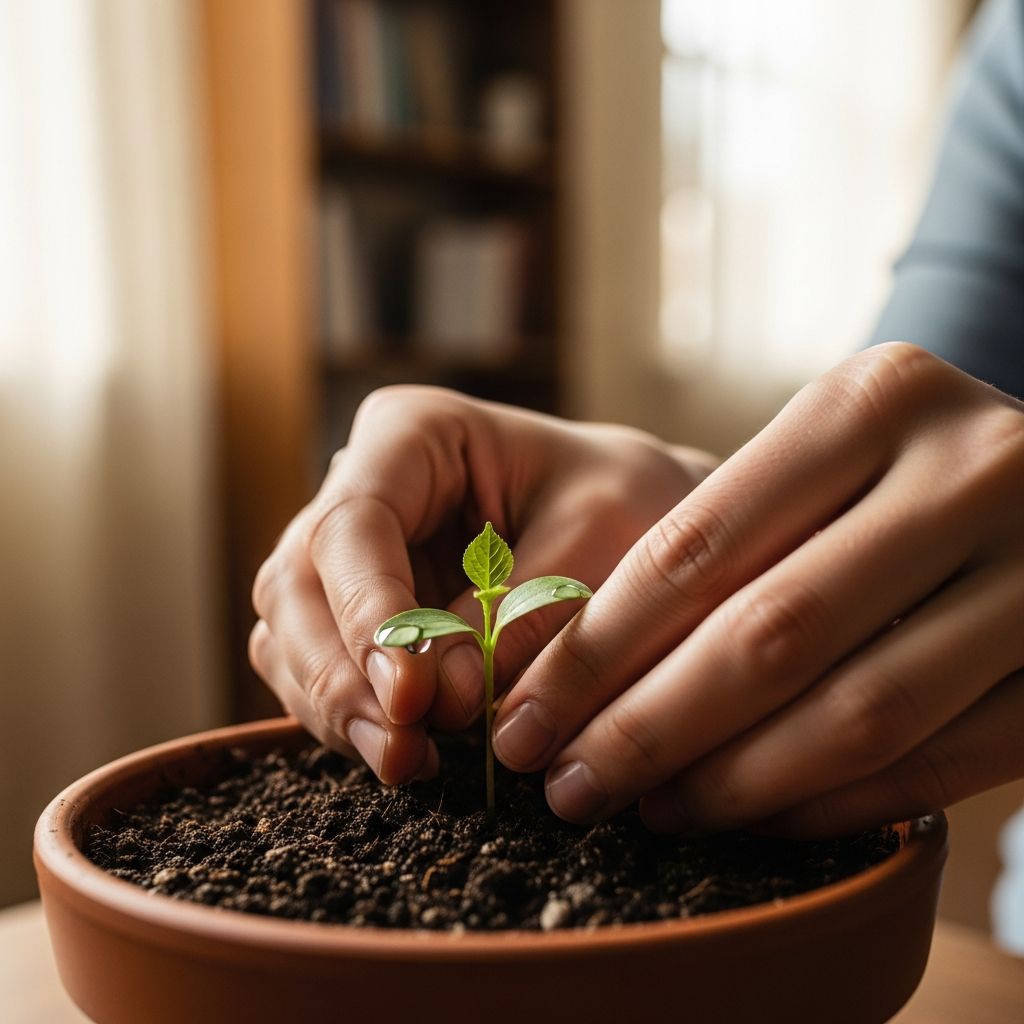
The Hidden Power of Patience in Modern Life
In a world that constantly demands speed and instant results, patience has become a rare and undervalued commodity. Yet research increasingly demonstrates that patience is not a sign of weakness or complacency—it is a fundamental skill that drives success across multiple dimensions of life. The ability to slow down, think carefully, and allow processes to unfold naturally has profound implications for how we work, relate to others, and achieve our goals.
Patience operates as a counterforce to the relentless pressure of modern productivity culture. Rather than fighting against our natural rhythms, patience invites us to work with them. This shift in perspective transforms not just what we accomplish, but how we feel while accomplishing it.
Understanding Patience as a Core Competency
Patience extends far beyond the common misconception of merely waiting passively. True patience involves active engagement with challenges, deliberate choices about how to allocate attention, and the wisdom to recognize when rushing produces suboptimal results. It represents a mature understanding that meaningful outcomes often require time, iteration, and sustained effort.
The distinction between patience and procrastination is critical. Patience involves purposeful delay and careful deliberation, while procrastination is avoidance driven by anxiety or discomfort. When we cultivate genuine patience, we develop the capacity to distinguish between situations where speed serves us and those where it undermines our objectives.
Patience and Cognitive Performance
Research in cognitive psychology reveals that patience directly influences mental clarity and problem-solving capability. When we rush through tasks, our brains operate in a stressed state characterized by elevated cortisol and impaired executive function. This neurochemical reality explains why hurried thinking often produces inferior solutions compared to deliberate analysis.
Taking measured approaches to work challenges fundamentally reshapes our cognitive capacity. By allowing adequate time for reflection, our brains can access deeper networks of knowledge and make unexpected connections. This process mirrors what researchers call the “default mode network”—the brain’s natural state when not focused on external tasks, during which creative insights emerge most readily.
Patience creates the mental space necessary for complex problem-solving. When facing intricate challenges, the initial impulse to act quickly often leads to surface-level solutions. In contrast, patient exploration of a problem from multiple angles reveals nuances and opportunities that rushed approaches inevitably miss.
The Relationship Between Patience and Creativity
Creative breakthroughs rarely emerge from frantic effort. The most innovative solutions typically arise when people have permission to explore ideas without premature judgment or pressure. Patience provides this essential permission.
Organizations that foster patient cultures consistently outperform those driven by constant urgency. Teams that can invest time in brainstorming, prototyping, and iterating produce more original and effective solutions. This is particularly evident in fields like design, engineering, and product development, where patient methodologies yield superior outcomes compared to rushed implementations.
The creative process requires what some researchers call “productive struggle”—the state where challenges are genuinely difficult but remain navigable. Patient engagement with difficult problems maintains this optimal zone, whereas impatience either causes people to abandon challenges prematurely or to accept inadequate solutions.
Patience as a Foundation for Meaningful Relationships
Professional relationships thrive when participants exercise patience with one another. Leaders who demonstrate patience create psychological safety, enabling team members to voice concerns, ask questions, and contribute more fully. This patient investment in relationships yields exponential returns through improved collaboration and loyalty.
Patient communication fundamentally alters how messages are received and interpreted. When we take time to listen fully before responding, to consider others’ perspectives before reacting, and to frame feedback thoughtfully rather than impulsively, we strengthen relational bonds. These strengthened connections form the foundation for effective teamwork and organizational culture.
In healthcare, educational, and coaching contexts, patient listening transforms outcomes. Professionals who resist the urge to interrupt, who ask clarifying questions, and who allow time for understanding demonstrate respect that clients or patients invariably recognize and reciprocate.
Patience’s Impact on Decision-Making Quality
Rushed decisions frequently lead to costly mistakes. Research on decision-making quality consistently shows that patient deliberation produces better outcomes, particularly in high-stakes situations. This principle applies whether the decision involves resource allocation, hiring, strategic planning, or personal life choices.
The phenomenon of “decision fatigue” compounds the risks of impatience. As we make multiple decisions throughout the day, our mental resources deplete, leading to progressively poorer choices. Patient approaches that space decisions, allocate sufficient thinking time, and avoid artificial urgency mitigate this degradation.
Patient decision-making also incorporates reflection on the broader context and long-term consequences. Quick decisions often optimize for immediate concerns while overlooking downstream effects. Patient analysis naturally accounts for time horizons and systemic impacts that rushed processes miss.
How Patience Reduces Stress and Enhances Well-Being
Impatience generates chronic stress through multiple mechanisms. The constant pressure to move faster, produce more, and achieve results immediately maintains elevated stress hormone levels. This physiological state compromises immune function, disrupts sleep, and accelerates the aging process.
Patience operates as a stress-buffering mechanism. When we accept that valuable outcomes require time, we release ourselves from the impossible demand to achieve everything instantly. This psychological shift produces tangible health benefits, including improved sleep quality, better immune function, and reduced anxiety.
The relaxed state that patience enables facilitates parasympathetic nervous system activation—the “rest and digest” mode where the body heals, regulates emotions, and restores resources. Modern life often demands constant sympathetic activation (the “fight or flight” state), which patience helps counterbalance.
Developing Patience in the Workplace
Building organizational cultures that value patience requires intentional leadership and structural support. Organizations that achieve this transformation typically implement several key strategies:
- Realistic timeline expectations: Setting project deadlines that acknowledge complexity rather than imposing artificial urgency
- Process documentation: Creating systems that normalize iterative improvement rather than demanding perfection on first attempts
- Reflection practices: Building regular review and planning sessions into workflows, creating space for strategic thinking
- Model patience: Leaders demonstrating patience through their own behavior establish norms more effectively than any policy
- Celebrate thoughtful approaches: Explicitly recognizing and rewarding decisions and solutions that reflect patient deliberation
Teams that internalize these practices report improved morale, reduced burnout, higher quality outputs, and greater innovation.
Personal Strategies for Cultivating Patience
Developing patience as an individual capability involves specific, learnable practices. Unlike personality traits that seem fixed, patience operates more as a skill that improves with deliberate practice.
Mindfulness meditation offers one of the most evidence-supported methods for developing patience. Regular practice trains attention and emotional regulation, both foundational to patient response. Even brief daily sessions produce measurable changes in patience levels within weeks.
Deliberate exposure to minor frustrations, approached with conscious patience, builds capacity for managing larger challenges. Intentionally choosing slower activities—handwriting, cooking from scratch, walking instead of driving—provides low-stakes environments for practicing patient engagement.
Identifying personal triggers for impatience illuminates where development is needed. Some people become impatient primarily when waiting, others when facing complexity, and others when experiencing uncertainty. Targeted practice addressing specific triggers proves more effective than generic patience-building efforts.
The Role of Mindset in Cultivating Patience
How we conceptualize patience fundamentally shapes our ability to develop it. Viewing patience as weak or inefficient creates resistance to its cultivation. Conversely, understanding patience as a strategic advantage—as the marker of mature, sophisticated thinking—motivates its development.
Research demonstrates that people who view challenges as opportunities for learning demonstrate greater patience than those who see challenges primarily as tests of fixed ability. This growth mindset naturally supports patient engagement with difficulties.
Similarly, people who view patience as an investment in quality outcomes maintain it more consistently than those who see patience primarily as resignation. The framing shapes the experience and the results.
Patience in High-Pressure Environments
Some of the most compelling applications of patience occur in environments where pressure is greatest—surgical teams, emergency response, crisis management, and high-stakes negotiations. In these contexts, patience emerges not as a luxury but as a critical safety and effectiveness feature.
The most skilled practitioners in high-pressure fields demonstrate what might be called “urgent patience”—the ability to move quickly while maintaining deliberate focus and avoiding reactive decisions. This combination—combining speed with thoughtfulness—represents the highest expression of patience-related competence.
Organizations like medical centers and emergency response teams that build patient decision-making protocols into their systems consistently achieve superior outcomes. These protocols slow certain decision points to ensure adequate information gathering even when time is constrained.
Measuring the Impact of Patience on Performance
Organizations can track how patience investments influence organizational outcomes. Productivity measures that capture only speed miss the complete picture—quality improvements, error reductions, and customer satisfaction gains often accelerate when patience increases.
Innovation metrics frequently show improvement when patience is prioritized. The number of tested ideas, successful implementations, and breakthrough solutions typically increase in cultures that permit patient exploration.
Employee retention and engagement scores often improve substantially when organizational pace moderates. Reduced burnout translates directly to productivity gains through decreased absenteeism and turnover costs.
Common Misconceptions About Patience
Several widespread misunderstandings limit patience adoption. Recognizing and correcting these misconceptions removes barriers to its practice.
Misconception 1: Patience slows progress. In reality, patient approaches often accelerate overall progress by reducing rework, improving quality, and preventing costly mistakes.
Misconception 2: Patience indicates lack of urgency or commitment. Patient people often accomplish more because they sustain effort and focus more effectively.
Misconception 3: Patience requires accepting poor results. True patience involves maintaining high standards while allowing adequate time to achieve them.
Misconception 4: Some people are simply born patient or impatient. Evidence shows patience is a learnable skill that improves with practice.
Integration With Modern Productivity Systems
Patience need not conflict with modern productivity methodologies. Contemporary systems like agile development, lean management, and design thinking all incorporate patient elements—iterative processes, continuous improvement, and user-centered thoughtfulness—alongside efficiency measures.
The most effective modern approaches balance speed with patience, urgency with sustainability. They recognize that different types of work require different paces, and that sustainable productivity requires periodic slowdowns for reflection and renewal.
Frequently Asked Questions
Q: How can I practice patience when my work environment is inherently fast-paced?
A: Identify specific moments where patience adds value—perhaps in decision-making, communication, or planning—rather than attempting to slow your entire pace. Build small pockets of deliberate patience into your daily routine, and communicate to colleagues how these practices improve outcomes.
Q: Will practicing patience make me less competitive professionally?
A: No; patient professionals often achieve greater long-term success through higher quality work, stronger relationships, and better decision-making. Patience and competitiveness are compatible when patience is applied strategically.
Q: How long does it take to develop greater patience?
A: Most people notice measurable improvements within 3-4 weeks of consistent practice. Deeper patience development continues over months and years, similar to other skill development.
Q: Can patience be overdone?
A: Yes; excessive patience can become procrastination or avoidance. Effective patience involves discernment about when patience serves a situation and when action is required.
References
- The Power of Thought: The Role of Psychological Attentiveness in Health Outcomes — National Center for Biotechnology Information (NCBI/PMC). 2024. https://pmc.ncbi.nlm.nih.gov/articles/PMC11426302/
- Patient Mindset Matters in Healing and Deserves More Study — Stanford School of Medicine News. 2017-03. https://med.stanford.edu/news/all-news/2017/03/health-care-providers-should-harness-power-of-mindsets.html
- The Science of Happiness at Work: How Positive Psychology Can Increase Productivity — University of Pennsylvania Positive Psychology Center. https://lpsonline.sas.upenn.edu/features/science-happiness-work-how-positive-psychology-can-increase-productivity
- Patience Brings Tangible Benefits to Management — Psychology Today. 2023-03. https://www.psychologytoday.com/us/blog/mind-of-the-manager/202303/patience-brings-tangible-benefits-to-management
- Experts Urge More Research on People’s Mindsets — Stanford News. 2017-02. https://news.stanford.edu/stories/2017/02/experts-urge-research-peoples-mindsets

Medha Deb is an editor with a master's degree in Applied Linguistics from the University of Hyderabad. She believes that her qualification has helped her develop a deep understanding of language and its application in various contexts. Medha specializes in the areas of beauty, health, sports, and wellness and is committed to ensuring that the content on the website is…