
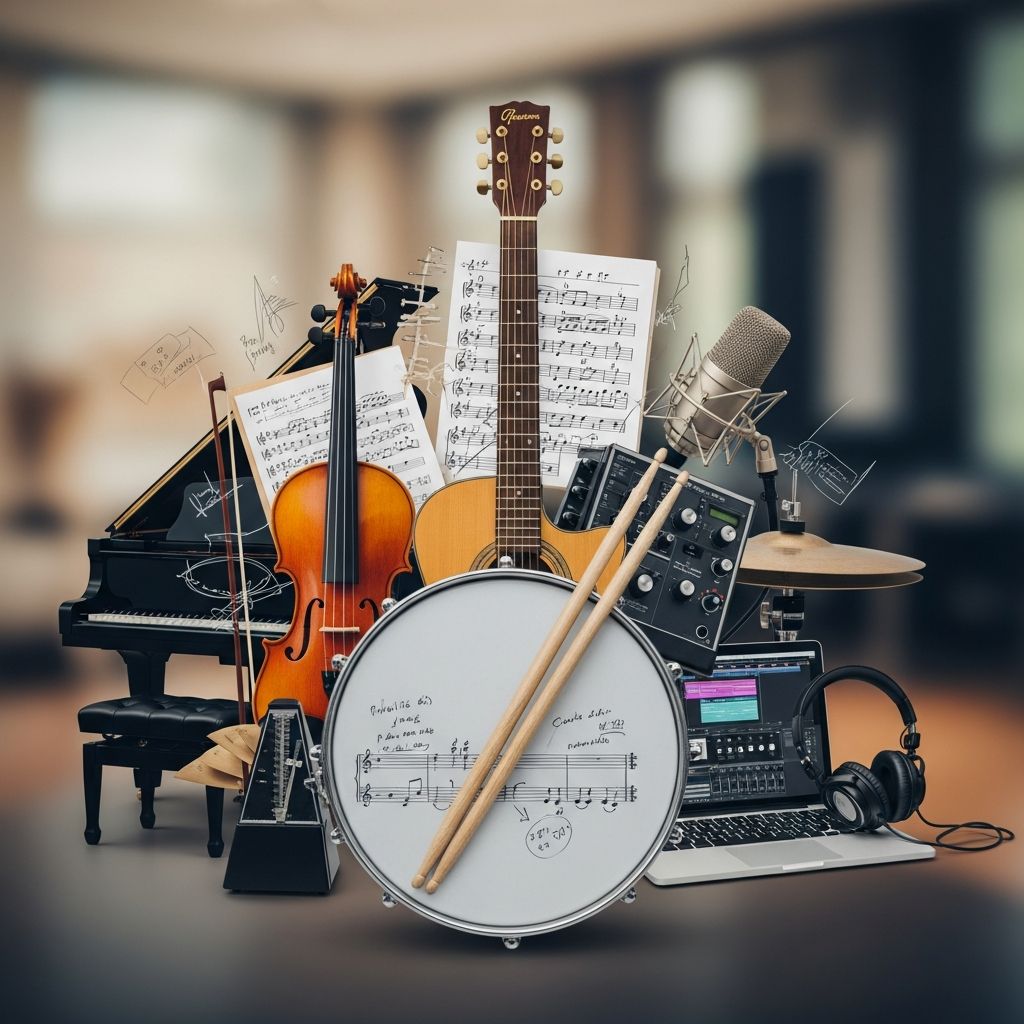
Teaching music is a profession that exists in a unique space between artistry, pedagogy, and patience. While many people enjoy playing instruments recreationally or attending musical performances, few understand the intricate challenges that music educators navigate daily. Those who teach instrumental music occupy a special category of professionals—they are simultaneously performers, psychologists, technicians, and motivators. The experiences they accumulate throughout their careers create a shared understanding that transcends casual observation. This article explores the distinctive realities that shape the lives of music instructors and the profound truths that only those in the profession truly comprehend.
The Paradox of Hearing Everything and Being Heard by No One
Music teachers possess an acute sensitivity to sound that distinguishes them from most other educators. Their ears are trained to detect minute variations in pitch, timing, and tone quality that untrained listeners might never notice. A slightly flat note, an irregular rhythm, or improper breath support becomes immediately apparent to an experienced instructor. This heightened auditory awareness is both a blessing and a curse.
On one hand, this sensitivity allows teachers to provide precise corrective feedback that accelerates student learning. On the other hand, it means that music educators are constantly surrounded by imperfect sound in their professional environments. In group settings, particularly in schools where multiple students play simultaneously, the acoustic environment can become overwhelming. What students hear as acceptable group sound, their instructor hears as a cacophony of individual errors waiting to be addressed. This creates an internal tension between accepting the progress students have made and recognizing the vast distance remaining to genuine musical proficiency.
Managing Vastly Different Student Motivations Within Single Classrooms
Perhaps no reality challenges music instructors more profoundly than the diversity of student motivation levels. In a typical classroom or lesson group, instructors encounter students representing an enormous spectrum of commitment levels. Some students arrive with genuine passion for music, having made deliberate choices to pursue instrumental study. Others are present because school curricula require music education, and their participation is mandatory rather than voluntary.
This heterogeneity extends beyond mere interest levels. Students come from different musical backgrounds—some have parents who are musicians, others have no exposure to music whatsoever. Cultural preferences influence which instruments appeal to different students, and preconceived notions about what music “should” sound like can create friction in ensemble settings. A teacher’s responsibility includes finding ways to kindle interest in reluctant students while simultaneously challenging motivated ones, all within the constraints of a single lesson or class period.
The emotional labor of managing these disparate motivations cannot be overstated. Teachers must remain enthusiastic and encouraging regardless of how many students show little interest in the material. They develop psychological skills that rival professional counselors, learning to read subtle cues about student engagement and adjusting their approach accordingly.
The Invisible Nature of Technical Error in Wind Instruments
Instructors who teach wind instruments—recorders, flutes, clarinets, saxophones, and similar instruments—face a particularly vexing challenge: many critical technical errors occur completely out of sight. Proper embouchure, breath support, air speed, and tongue positioning all happen inside the player’s mouth or within their body cavity. These invisible techniques directly determine whether a student produces quality sound, but the instructor cannot visually verify their execution.
This creates a diagnostic puzzle. When a student produces poor tone quality or intonation problems, determining the root cause requires careful listening and questioning rather than direct observation. A student might genuinely be trying to execute proper technique without realizing they are doing something fundamentally incorrect. The teacher must hear the error, identify its likely cause based on acoustic evidence, formulate a hypothesis about the internal mechanics causing the problem, and then communicate a correction to a student who cannot see what they are doing wrong.
This challenge intensifies in group settings where multiple wind instruments play simultaneously. The collective sound masks individual errors, making it nearly impossible to isolate and address technique problems with specific students. Teachers often must ask students to play individually or in small groups to properly diagnose and correct technical deficiencies.
The Frustration of Limited Practice Time Outside Lessons
Music instruction operates under a fundamental constraint that most academic subjects avoid: meaningful skill development requires extensive practice between lessons. Reading about mathematics or history can advance understanding significantly, but reading about how to play violin provides almost no benefit. Students must physically practice, repeatedly engaging with the instrument to develop muscle memory, technique, and familiarity.
Many music instructors face the sobering reality that students practice far less than necessary for meaningful progress. A one-hour lesson per week represents only a tiny fraction of available practice time, yet many students complete minimal additional practice. The reasons are complex: some students lack motivation, others face scheduling challenges, and many simply do not understand why consistent practice matters. Young students especially struggle to grasp the connection between daily practice and eventual competence.
Instructors find themselves in an awkward position—they cannot control student practice habits, yet student progress depends almost entirely upon how seriously students take practice assignments. This dynamic can be deeply frustrating. An instructor might work brilliantly during a lesson, successfully teaching a new concept or technique, only to discover that the student made no attempt to practice the material before the next lesson. The carefully built foundation crumbles.
Balancing Standardized Curriculum with Individual Learning Styles
Educational institutions typically establish standardized curricula and learning objectives that apply uniformly across all students. For music teachers in school settings, this creates significant tension with the reality that students learn music at vastly different rates and through different modalities.
Some students grasp concepts immediately by listening and watching, while others require hands-on experimentation or detailed verbal explanation. Some progress rapidly through beginner material and desperately want to explore advanced techniques or different musical genres, but rigid curricula prevent this acceleration. Other students struggle with foundational concepts and need considerably more time and repetition than the standardized pacing allows.
Teachers must somehow accommodate these individual differences within predetermined structures. They develop strategies such as assigning supplemental material to advanced students or providing additional support during other class periods for struggling learners. However, these accommodations require time and energy that extend far beyond formal instruction hours.
The Challenge of Correcting Technical Mistakes Without Discouraging Students
Effective instrumental instruction requires frequent correction of student errors. However, music teachers quickly discover that criticism can easily demoralize young learners, particularly if it is poorly delivered. The same observation—”Your fingering is incorrect”—can either motivate a student to improve or discourage them from practicing that passage again.
Teachers develop sophisticated communication strategies to balance honesty with encouragement. They learn to frame corrections as information rather than judgment, emphasizing what students should do rather than dwelling on what they did incorrectly. They celebrate progress, however incremental, to maintain student confidence.
This emotional labor compounds throughout the day. A teacher might deliver hundreds of individual corrections, each one requiring careful calibration of tone, timing, and framing. The cumulative effort of maintaining an encouraging environment while still addressing technical deficiencies represents a significant professional challenge.
Equipment Management and Safety Concerns Unique to Instrumental Teaching
Music instructors must manage considerable equipment while maintaining classroom safety and organization. Valuable instruments must be distributed carefully, used responsibly, and then collected and stored securely. Different instruments present specific hazards and management challenges that other teachers never encounter.
Wind instruments must be assembled and disassembled properly, with vulnerable reeds and delicate mechanisms at risk of damage. Stringed instruments require careful handling to prevent neck damage or cracked bodies. Percussion instruments like xylophones are unwieldy and easily damaged if knocked over. Teachers develop specific protocols for each instrument type, and they must teach these protocols to students while simultaneously managing the acoustic chaos of instrumental learning.
The equipment management extends to maintenance. Teachers become part-time technicians, adjusting instrument straps, replacing worn pads, fixing loose mechanisms, and sometimes performing minor repairs. This maintenance work happens outside paid lesson time, yet students expect to receive instruments in working condition.
The Sound Problem: Acoustic Challenges in Educational Spaces
Music teachers quickly develop an intimate relationship with their acoustic environment. Many school music rooms have poor acoustics, are located near other classrooms, or are shared with other programs. These spaces present constant challenges for sound management.
When multiple students play simultaneously, the cumulative sound can become deafening, particularly with wind and percussion instruments. Teachers must project their voices above the instrumental sound to provide instruction, which often results in voice strain. They learn to conduct with exaggerated movements, use hand signals, and employ other non-verbal communication methods because speaking becomes ineffective during full-group playing.
Interestingly, many students cannot hear themselves playing within group contexts, leading them to play louder to achieve auditory feedback. This creates a feedback loop where the overall volume increases, students play even louder to distinguish their own sound, and the entire acoustic environment becomes unnecessarily harsh. Teachers must actively teach students to listen carefully to their individual tone and work with others to achieve balanced ensemble sound.
Instrument-Specific Teaching Complications
Different instruments present unique pedagogical challenges that require specialized knowledge and adapted teaching strategies. Teachers working with multiple instruments must master these distinct approaches.
Wind instruments demand attention to invisible embouchure and breathing techniques while addressing intonation challenges that students cannot easily self-correct. Stringed instruments require significant physical coordination and muscle development before students can produce acceptable sound. Keyboard instruments present the challenge of developing independent hand coordination. Percussion instruments demand rhythm precision and rhythmic independence from other ensemble members.
Some instruments are inherently easier to teach in group settings, while others present considerable challenges. Keyboards and xylophones feature visible finger placement and stable pitch, making group instruction feasible. Wind instruments require individual attention to correct invisible technique errors. Effective instructors understand these instrument-specific realities and adjust their teaching strategies accordingly.
The Emotional Rewards That Sustain the Profession
Despite significant challenges, music teachers persist in their profession because of profound emotional rewards that other professions rarely provide. Witnessing a struggling student suddenly master a difficult passage, watching a shy student gain confidence through musical achievement, or experiencing the joy of a successful ensemble performance—these moments sustain music educators through the frustrating periods.
The opportunity to introduce students to lifelong enrichment through music, to pass along techniques and knowledge refined over generations, and to participate in students’ artistic development creates deep meaning that transcends typical employment relationships. Music teachers report that their work provides purpose and fulfillment beyond what job descriptions typically acknowledge.
Professional Development and the Continuous Learning Imperative
Effective music instruction requires continuous professional development and skill enhancement. Teachers must maintain their own performance abilities, stay current with pedagogical research, learn new teaching techniques, and often develop proficiency with instruments or musical styles previously unfamiliar to them. This ongoing professional development typically occurs during personal time without additional compensation.
Many instructors dedicate significant time to attending workshops, taking masterclasses, studying new teaching methods, and expanding their musical repertoire. This commitment to professional growth reflects the realities of a profession where stagnation leads to outdated instruction and student dissatisfaction.
Frequently Asked Questions
Q: Why do music teachers emphasize practice so much?
A: Unlike most academic subjects, musical skill development depends almost entirely on physical practice. Playing an instrument requires developing specialized muscle memory and internalized technique that only emerges through consistent, focused practice. Without adequate practice between lessons, students make minimal progress regardless of lesson quality.
Q: How do teachers manage different skill levels in group instruction?
A: Experienced teachers use differentiation strategies including small group instruction, peer teaching, supplemental assignments for advanced students, and additional support for struggling learners. They also adjust repertoire complexity and provide varied roles within ensemble settings to accommodate diverse skill levels.
Q: What makes wind instrument instruction particularly challenging?
A: Many critical wind instrument techniques occur inside the player’s mouth or body, remaining completely invisible to observers. Teachers must diagnose problems based solely on acoustic evidence, then communicate corrections for techniques students cannot directly observe themselves.
Q: How do teachers handle student discouragement?
A: Effective instructors balance honest feedback with genuine encouragement. They frame corrections as helpful information, celebrate progress regardless of size, provide appropriate challenge levels, and maintain belief in each student’s potential even when progress seems slow.
Q: Why are school music rooms often so chaotic?
A: Multiple students playing instruments simultaneously creates significant acoustic challenges. Additionally, managing equipment, distributing instruments, teaching multiple skill levels, and addressing behavioral concerns all contribute to the organized chaos that characterizes instrumental music instruction.
References
- The Pitfalls of Teaching Musical Instruments in a Group — Pure O Carinas. Accessed January 19, 2026. https://pureocarinas.com/pitfalls-teaching-musical-instruments-group
- 6 Challenges To Learning A Musical Instrument As An Adult and How to Overcome Them — Antsy Labs. Accessed January 19, 2026. https://www.antsylabs.com/blogs/the-ant-hill/6-challenges-to-learning-a-musical-instrument-as-an-adult-and-how-to-overcome-them
- Overcoming Challenges in Learning an Instrument — SoundLife Music Lessons. Accessed January 19, 2026. https://www.soundlifelessons.com/blogs/soundlife-music-lessons-blog/posts/7276400/overcoming-challenges-in-learning-an-instrument
- Elementary Music Classroom Management for Instruments — Becca’s Music Room. Accessed January 19, 2026. https://beccasmusicroom.com/classroom-management-instruments/

Medha Deb is an editor with a master's degree in Applied Linguistics from the University of Hyderabad. She believes that her qualification has helped her develop a deep understanding of language and its application in various contexts. Medha specializes in the areas of beauty, health, sports, and wellness and is committed to ensuring that the content on the website is…