
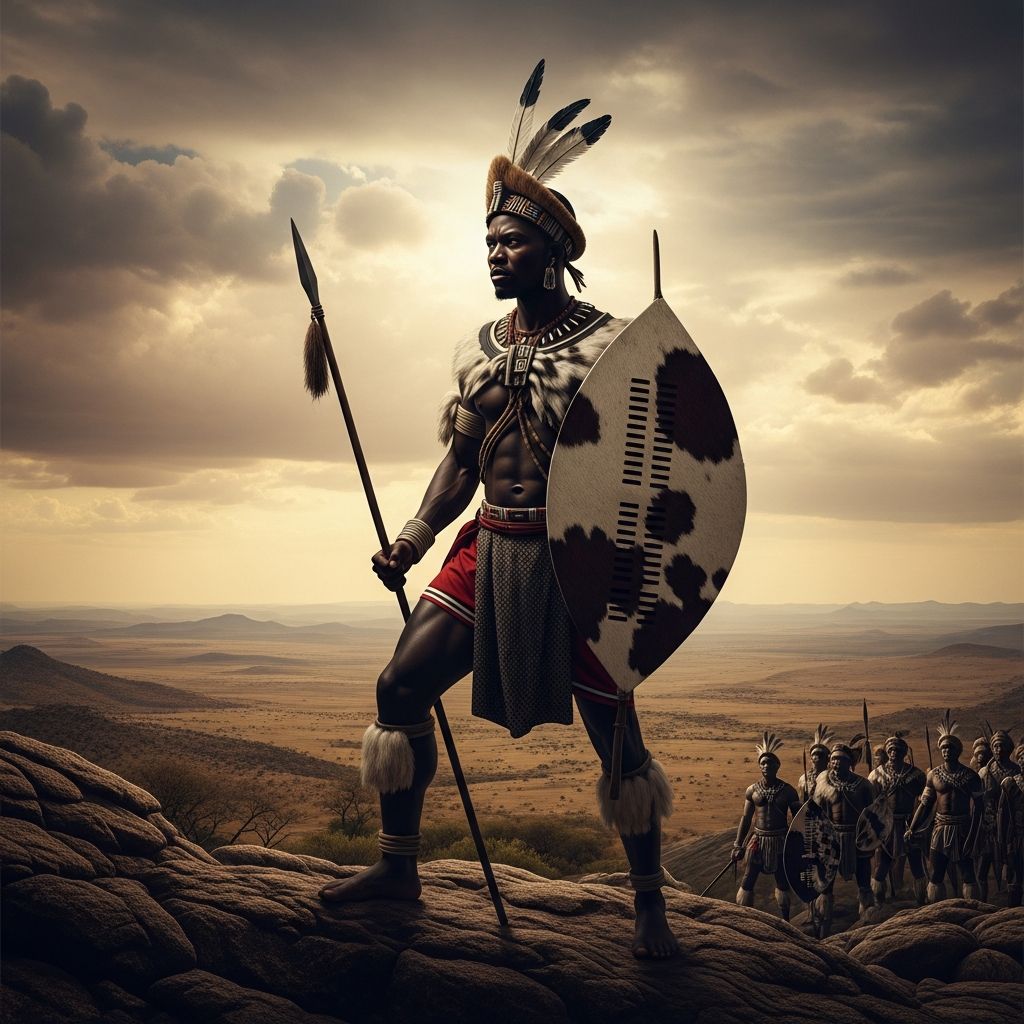
The Mfecane, often translated as ‘the crushing’ or ‘scattering,’ marked a profound chapter in Southern African history characterized by intense warfare, massive population displacements, and the emergence of new political entities. Spanning roughly from the 1810s to the 1840s, this period fundamentally altered the region’s demographic, social, and political landscape.
Origins of the Turmoil
Long before the height of the Mfecane, Southern Africa experienced gradual shifts in power dynamics. Political centralization among Bantu-speaking groups intensified from the late 18th century, fueled by the lucrative ivory trade and environmental challenges like droughts. These factors created pressures that exploded into widespread conflict when combined with the rise of militarized states.
The Delagoa Bay trade hub amplified competition, as inland leaders vied for control over ports to access European markets. This economic pull incentivized raids and alliances, setting the stage for escalation. Population growth and land scarcity further strained resources, pushing communities into confrontations.
Shaka Zulu and the Zulu Ascendancy
Central to the Mfecane narrative is Shaka (c. 1787–1828), whose innovations in warfare propelled the Zulu from a minor chiefdom to a dominant kingdom. Shaka introduced the iklwa short stabbing spear, regimented age-based armies, and encirclement tactics, revolutionizing Nguni combat from throwing spears to close-quarters melee.
By 1818, the Zulu decisively defeated the Ndwandwe at the Mhlatuze River, consolidating power over northern Nguni territories. Shaka’s expansion from the Pongola to Tugela Rivers created a vortex of violence, as defeated groups fled, clashing with neighbors and sparking chain reactions of migration and war.
- Key Zulu Military Reforms: Age-grade regiments (amabutho) for disciplined forces.
- Training emphasizing mobility and surprise attacks.
- Cattle-based economy supporting large standing armies.
Chain Reactions and Migrations
The Zulu conquests triggered a domino effect. Displaced groups like the Ndwandwe fragments under Zwide roamed destructively, while others formed new bands. Mzilikazi, a Zulu general, broke away to establish the Ndebele (Matabele) kingdom, first in the Highveld, then north of the Limpopo after clashes with Voortrekkers.
In the Sotho-Tswana regions, known as Difaqane or Lifaqane, refugees overwhelmed communities, leading to devastation in areas like modern KwaZulu-Natal and Orange Free State. Survivors sought refuge in mountains, depopulating vast zones.
| Migrating Group | Leader | Destination/Outcome |
|---|---|---|
| Ndebele | Mzilikazi | Zimbabwe (Matabele Kingdom) |
| Gaza | Soshangane | Mozambique |
| Swazi | Sobhuza | Modern Eswatini |
| Sotho | Moshoeshoe I | Lesotho highlands |
Devastation and Demographic Shifts
The human cost was staggering. Traditional estimates claim 1-2 million deaths from battle, famine, and disease, though recent scholarship revises this downward, emphasizing complex causes over simplistic genocide narratives. Regions south of the Zulu heartland and between Vaal and Caledon Rivers saw near-total societal collapse, with survivors scavenging in isolation.
Cattle raids by Griqua, Basters, and Khoekhoe groups, armed by Europeans, compounded the chaos from the 1820s-1830s, targeting slaves and livestock. This slave trade via Delagoa Bay intensified internal wars.
Birth of New Kingdoms
Amid destruction, resilience shone through state-building. Moshoeshoe I unified Sotho groups in Lesotho’s mountains, creating a fortified kingdom resistant to invaders. The Swazi under Sobhuza consolidated in modern Eswatini, while Gaza under Soshangane dominated southern Mozambique.
These entities, forged in Mfecane fires, later resisted European encroachment effectively. The Ndebele’s northward trek exemplified how migrations birthed enduring polities.
European Dimensions and the Great Trek
The Mfecane intersected with European expansion. Depopulated lands eased Boer Voortrekker settlement in Natal and Highveld post-1837. Mfengu refugees allied with Cape Colony settlers, straining Xhosa frontiers.
Griqua and Koranna raids, enabled by firearms from Europeans, blurred lines between African and settler violence, highlighting interconnected disruptions.
Historiographical Debates
The Mfecane concept, coined in the 1830s, initially blamed Shaka’s aggression, serving colonial narratives to justify land grabs by portraying Africans as savages. Modern historians like Julian Cobbing argue overemphasis on Shaka ignores slave trade and white frontier roles. Others defend a multi-causal view, integrating ecology, trade, and internal dynamics.
Debate persists on death tolls and whether ‘Mfecane’ implies a unified event or scattered disruptions.
Lasting Legacies
The Mfecane redrew ethnic maps, birthing identities like Zulu, Sotho, and Ndebele that persist today. It facilitated European interior penetration, shaping colonial boundaries. Culturally, it inspired literature like Solomon Plaatje’s Mhudi, depicting personal tragedies.
Economically, it shifted from dispersed chiefdoms to centralized cattle kingdoms, influencing modern South African states. Understanding the Mfecane reveals Africa’s pre-colonial dynamism and interconnected histories.
Frequently Asked Questions (FAQs)
What does ‘Mfecane’ mean?
In Nguni languages, it means ‘the crushing,’ reflecting the period’s intense disruptions. Sotho terms like Difaqane mean ‘forced migration’ or ‘scattering’.
Was Shaka solely responsible?
No. While pivotal, factors like trade, drought, and slave raiding contributed significantly.
How many died in the Mfecane?
Estimates range from hundreds of thousands to 2 million, but recent analyses suggest lower figures due to methodological issues.
Did the Mfecane aid European colonization?
Yes, by depopulating areas, it eased Boer and British expansion into fertile lands.
What new states emerged?
Zulu, Ndebele, Swazi, Lesotho (Sotho), and Gaza kingdoms formed, many enduring today.
References
- Mfecane — Wikipedia. 2023-10-01. https://en.wikipedia.org/wiki/Mfecane
- 5 Mfecane — Saint Mary’s University. N/A. http://smu-facweb.smu.ca/~wmills/course322/5_Mfecane.html
- Mfecane | Ethnic and Cultural Studies — EBSCO. N/A. https://www.ebsco.com/research-starters/ethnic-and-cultural-studies/mfecane
- Mfecane — Encyclopædia Britannica. 2023-09-15. https://www.britannica.com/event/Mfecane
- Mfecane (1815–1840) — Wiley Online Library (John Laband). 2011-01-01. https://onlinelibrary.wiley.com/doi/abs/10.1002/9781444338232.wbeow400
- The Zulu Kingdom and the Mfecane — War History Online. N/A. https://warhistory.org/@msw/article/the-zulu-kingdom-and-the-mfecane

- Integrated M.A. in Applied Linguistics, University of Hyderabad
- 5+ years in editorial, instructional, SEO, and research-based writing
Sneha is a relationships and lifestyle writer with a strong foundation in applied linguistics and certified training in relationship coaching. She brings over five years of writing experience to theskillvault, crafting thoughtful, research-driven content that empowers readers to build healthier relationships, boost emotional well-being, and embrace holistic living. Her writing and insights reflect the belief that beauty, happiness, and wellness…