
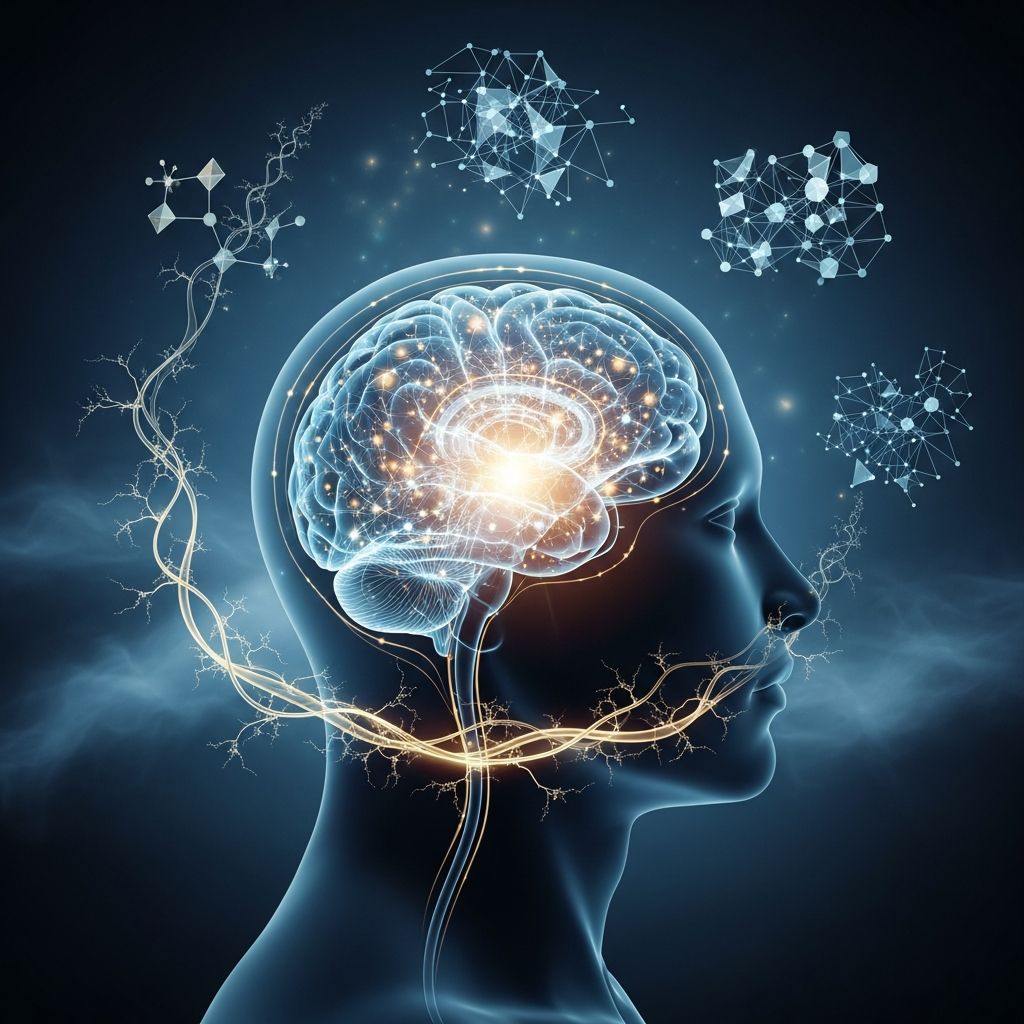
The Neuroscience Behind How We Remember
Memory is far more than a simple recording device that captures experiences like a video camera. Instead, it represents a sophisticated biological process involving billions of interconnected neurons working in concert to transform fleeting moments into lasting knowledge. When you recall an experience—whether it’s the taste of your favorite meal or a significant life event—your brain is actively reconstructing that memory from scattered neural patterns distributed across multiple brain regions.
The fundamental mechanism underlying memory is synaptic plasticity, which describes the ability of connections between neurons to strengthen or weaken over time. These connections, called synapses, form the physical basis of all memories. Understanding how memories work requires examining three key phases: encoding, storage, and retrieval—each involving distinct neural mechanisms and brain structures.
The Three Pillars of Memory Classification
Neuroscientists identify three major categories of memory, each serving different functions and relying on distinct neural networks. These classifications help explain why you can effortlessly recall your name but struggle to remember someone’s face after a single introduction.
- Working Memory: This temporary storage system allows you to hold and manipulate information for brief periods, typically seconds to minutes. Your prefrontal cortex enables this function through sustained neural firing patterns that maintain active representations. Working memory is essential for tasks like doing mental math or following directions.
- Declarative Memory: Also called explicit memory, this system stores facts, events, and knowledge you can consciously recall and describe. The hippocampus plays a crucial role in forming new declarative memories, which are eventually transferred to the neocortex for long-term storage.
- Non-Declarative Memory: Also known as implicit memory, this encompasses skills, habits, and conditioned responses that you perform automatically without conscious awareness. Riding a bicycle or playing a musical instrument exemplifies non-declarative memory.
Encoding: The Gateway to Memory Formation
Before any experience can become a memory, your brain must encode it—converting sensory information into a neural code that can be stored. This process is not passive; it requires active mental engagement and attention. Research identifies four critical components essential for effective encoding, summarized by the acronym FOUR.
- Focus Attention: Your brain processes vast amounts of sensory information continuously, but only attended information receives the neural resources necessary for encoding. When you concentrate on a particular experience or detail, your brain allocates more neural activity to processing and encoding that information.
- Organize Information: The brain doesn’t store information in isolation. Instead, it organizes new information into meaningful categories and structures. This organizational process makes retrieval more efficient and helps integrate new knowledge into existing mental frameworks.
- Understand the Information: Deep comprehension facilitates stronger encoding than shallow processing. When you grasp the meaning and significance of information, your brain creates more robust neural representations, leading to more reliable memory traces.
- Relate to Existing Knowledge: Connecting new information to what your brain already knows strengthens encoding. This process, called elaboration, creates additional neural pathways and associations that enhance memory retention and accessibility.
Encoding involves specific neural mechanisms. When an experience occurs, neurons fire in coordinated patterns, causing the influx of calcium ions that trigger molecular cascades. These cascades activate genes and produce proteins that physically reshape neural connections, creating what neuroscientists call a “memory engram”—the physical manifestation of a memory in the brain.
Storage and Consolidation: Building Lasting Memories
Cellular Consolidation: The Immediate Phase
Cellular consolidation occurs within hours of learning and involves structural changes to synapses. During this phase, repeated neural activity strengthens connections between neurons through processes called long-term potentiation (LTP) and long-term depression (LTD). LTP increases synaptic strength when neurons fire together, while LTD weakens connections that are less frequently activated. These synaptic modifications require the synthesis of new proteins and the remodeling of synaptic structures, creating physical changes that reflect the memory trace.
The synaptic tagging and capture hypothesis explains how memories are selectively strengthened during cellular consolidation. According to this theory, learning experiences create “tags” at activated synapses, marking them as important. Simultaneously, the brain synthesizes plasticity-related proteins that can be captured by these tagged synapses. This mechanism allows the brain to distinguish significant learning experiences from background neural noise, ensuring that important memories receive the biochemical resources necessary for strengthening.
System Consolidation: The Long-Term Process
While cellular consolidation unfolds within hours, system consolidation operates over days, weeks, or even years. This process gradually redistributes memories from the hippocampus—a seahorse-shaped structure crucial for new memory formation—to the neocortex, the brain’s outer layer, where long-term memories are stored.
During system consolidation, the hippocampus and neocortex engage in a dialogue. The hippocampus replays recent experiences multiple times, particularly during sleep, sending signals to the neocortex about what information should be preserved. These replayed memories gradually integrate with existing knowledge networks in the cortex. As memories become integrated into cortical networks, they become independent of the hippocampus—a phenomenon termed “standard memory consolidation.” This is why people with hippocampal damage can recall distant memories formed before their injury but struggle to form new long-term memories.
The Critical Role of Sleep in Memory
Sleep serves as a biological requirement for memory consolidation. During sleep, particularly deep slow-wave sleep, the hippocampus replays the day’s experiences in a time-compressed manner, replaying the same neurons that were active during waking hours. This replay process occurs exclusively during sleep, making adequate sleep essential for memory formation.
Recent research suggests sleep serves additional memory-related functions. During sleep, brain cells and synapses physically shrink, potentially allowing the brain to flush away metabolic waste products like amyloid beta proteins. These proteins accumulate during waking hours and are implicated in neurodegenerative diseases like Alzheimer’s. Sleep may thus serve a dual function: consolidating new memories while simultaneously clearing away cellular debris that could impair memory function.
Retrieval: Reconstructing Memory
Memory retrieval is not a simple playback of stored information. Instead, it’s an active reconstruction process where your brain reassembles memory components from distributed neural locations. When you recall a memory, different brain regions contribute different aspects: the visual cortex provides color and spatial information, the auditory cortex contributes sounds, and emotional centers provide affective tone.
The prefrontal cortex guides this reconstruction process, using existing knowledge and cognitive schemas to interpret and organize retrieved information. This reconstructive nature of memory explains why memories can be incomplete, distorted, or even false. Each retrieval modifies the memory slightly, integrating it with current context and knowledge in a process called reconsolidation.
Neural Networks and Associative Memory
Memories don’t exist as isolated entities in the brain. Instead, they’re integrated into vast neural networks connected by associations. Special cells called associative memory cells facilitate this integration, activating when related memories are retrieved. When you think about a particular person, associated memories—their voice, appearance, shared experiences—become accessible through these neural networks. This associative structure explains why one memory can trigger recall of related experiences and why context influences what we remember.
Neurogenesis: Creating New Neurons for Memory
For decades, scientists believed the adult brain couldn’t generate new neurons. This assumption has been overturned through research demonstrating that neurogenesis—the creation of new neurons—continues in the hippocampus throughout life. Studies in animals show that increased neurogenesis correlates with improved memory performance, while in humans, physical exercise increases hippocampal volume and enhances memory task performance, likely through neurogenesis.
This discovery has profound implications. It suggests that lifestyle factors influencing neurogenesis—including exercise, cognitive stimulation, and stress reduction—directly affect memory capacity and brain health.
Factors That Enhance or Impair Memory
| Factor | Effect on Memory | Mechanism |
|---|---|---|
| Physical Exercise | Enhances | Increases hippocampal volume and neurogenesis |
| Sleep Deprivation | Impairs | Prevents consolidation and hippocampal replay |
| Stress and Anxiety | Impairs | Disrupts prefrontal cortex function and hippocampal processing |
| Deep Attention | Enhances | Strengthens encoding through sustained neural activity |
| Cognitive Engagement | Enhances | Promotes synaptic plasticity and neural connections |
| Social Connection | Enhances | Provides meaningful context for memory integration |
Memory and the Aging Brain
As we age, memory processes undergo subtle changes. While older adults can form new memories, the encoding process may require more effort and attention, and retrieval can take longer. However, aging doesn’t uniformly impair all memory types. Semantic memory—knowledge of facts and concepts—often remains stable or improves with age, while episodic memory—recall of specific events—shows more age-related decline.
The prefrontal cortex and hippocampus show structural changes with aging, and neurotransmitter systems supporting memory become less efficient. However, cognitive engagement, physical activity, social interaction, and quality sleep remain powerful protective factors, helping maintain memory function throughout life.
Practical Applications of Memory Science
Understanding memory mechanisms has practical implications for optimizing learning and memory function. Techniques informed by neuroscience include:
- Spaced Repetition: Revisiting information at increasing intervals optimizes consolidation by repeatedly reactivating memory traces.
- Elaboration: Connecting new information to existing knowledge through explanation, teaching, or creative application strengthens encoding.
- Interleaving: Mixing different types of problems or subjects during practice prevents brain adaptation and promotes flexible memory retrieval.
- Active Recall: Retrieving information from memory rather than passively reviewing strengthens memory traces through reconsolidation.
- Sleep Prioritization: Ensuring adequate sleep enhances consolidation and supports memory retention.
- Stress Management: Reducing chronic stress protects hippocampal function and supports optimal memory processes.
The Future of Memory Research
Contemporary neuroscience continues uncovering memory’s mysteries. Researchers are investigating how specific molecules regulate consolidation, how memories interact with emotion, and whether memory processes can be enhanced through pharmacological or technological interventions. These advances may eventually lead to treatments for memory disorders while revealing methods to optimize memory in healthy individuals.
Frequently Asked Questions
Q: Can memories be permanently erased from the brain?
A: Memories can fade through disuse, but completely erasing established memories is extremely difficult because they involve physical changes to neural connections distributed across multiple brain regions. However, memories can be modified through reconsolidation, and certain neurological conditions or injuries can affect memory retrieval.
Q: Why do we forget things we studied just days ago?
A: Forgetting occurs when memories aren’t adequately consolidated or when retrieval cues are insufficient. Without rehearsal or retrieval practice, memories fade. Additionally, interference from similar information and lack of meaningful connections to existing knowledge increase forgetting rates.
Q: How reliable are eyewitness memories?
A: Eyewitness memories are surprisingly unreliable. Memory reconstruction is influenced by stress during encoding, post-event information, expectations, and schema. Witnesses can confidently recall events that didn’t occur as witnessed, demonstrating memory’s constructive nature.
Q: Can you improve memory at any age?
A: Yes, memory can be improved at any age through strategies targeting encoding and consolidation: maintaining physical fitness, prioritizing sleep, engaging cognitively, managing stress, and using evidence-based learning techniques like spaced repetition and elaboration.
Q: What’s the difference between remembering and knowing?
A: Remembering involves consciously recalling details associated with an experience (episodic memory), while knowing refers to familiarity or factual knowledge without conscious recall of the source (semantic memory). Both rely on different neural systems and consolidation processes.
References
- Cognitive neuroscience perspective on memory — PubMed Central, National Center for Biotechnology Information. 2023-08-31. https://pmc.ncbi.nlm.nih.gov/articles/PMC10410470/
- How are memories formed? — Queensland Brain Institute, University of Queensland. 2025. https://qbi.uq.edu.au/memory/how-are-memories-formed
- How Human Memory Works — HowStuffWorks Science. 2025. https://science.howstuffworks.com/life/inside-the-mind/human-brain/human-memory.htm
- Why we remember — and forget. And what we can do about it — Harvard Gazette, Harvard University. 2023-02-15. https://news.harvard.edu/gazette/story/2023/02/why-we-remember-and-forget-and-what-we-can-do-about-it/
- Memory: What It Is, How It Works & Types — Cleveland Clinic. 2025. https://my.clevelandclinic.org/health/articles/memory

Medha Deb is an editor with a master's degree in Applied Linguistics from the University of Hyderabad. She believes that her qualification has helped her develop a deep understanding of language and its application in various contexts. Medha specializes in the areas of beauty, health, sports, and wellness and is committed to ensuring that the content on the website is…