
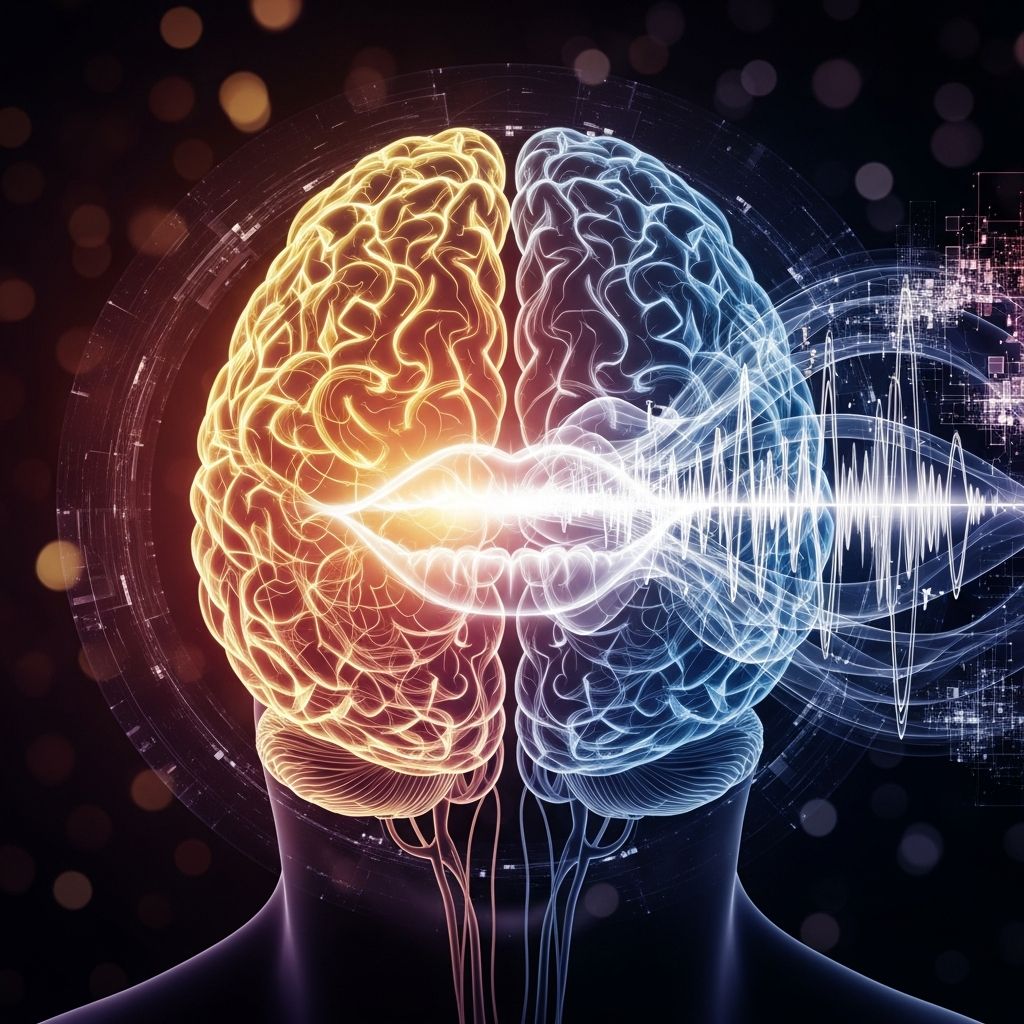
Understanding the Neuroscience of Language
For decades, researchers dismissed the idea that words hold transformative power over human experience. Yet contemporary neuroscience has fundamentally challenged this assumption, revealing that language operates as one of the most potent tools available for reshaping both our internal mental landscape and external life circumstances. The brain’s response to linguistic input operates at multiple levels simultaneously—affecting not only conscious thought patterns but also triggering biochemical cascades that influence stress hormones, emotional regulation, and behavioral outcomes.
When you speak or mentally rehearse words, you activate specific neural pathways within your brain. According to neuroscientific research, a single word possesses the capacity to regulate both physical and emotional responses within your body. This capability extends far beyond simple vocabulary recognition; instead, words function as switches that activate entire networks of neural activity, ultimately influencing how you perceive reality and respond to challenges.
The implications are substantial: if language can modify brain function, then deliberately selecting your words represents a concrete strategy for cognitive and emotional optimization. This understanding bridges the gap between abstract psychology and measurable biological change, grounding personal development in hard science rather than wishful thinking.
The Stress-Reduction Mechanism: Negative Language and Your Physiology
Before exploring how positive language creates transformation, understanding the damage inflicted by negative language provides crucial context. Scientific investigation into negative word exposure reveals a troubling pattern: harmful language directly triggers the release of stress hormones and anxiety-inducing neurochemicals within your system.
In landmark neuroscience experiments examining word impact, researchers monitored subjects’ brain responses while they encountered negative words—either through auditory input or mental visualization. The results demonstrated that painful or negative words activate Implicit Processing (IMP) within the subgenual anterior cingulate cortex (sACC), a brain region critical for emotional processing. More concerning, research shows that negative words—whether spoken aloud, overheard, or internally generated through self-talk—contribute not merely to temporary stress but to sustained, long-term anxiety patterns.
Children exposed to elevated levels of negative self-talk demonstrate significantly increased anxiety levels, a correlation that persists even when controlling for environmental stressors. This neurological vulnerability during developmental years underscores how early linguistic patterns become embedded within neural architecture, potentially influencing psychological health trajectories for years.
The mechanism operates through a straightforward pathway: negative language activates your amygdala, the brain region specializing in threat detection and emotional reactivity. Once activated, the amygdala triggers your sympathetic nervous system—your fight-or-flight response—flooding your body with cortisol and adrenaline. Chronic activation of this system through habitual negative language creates a persistent state of physiological stress, degrading immune function, impairing sleep quality, and accelerating cognitive aging.
Activating Your Brain’s Potential: The Positive Language Protocol
If negative language creates measurable neurological damage, positive language operates as the counterbalance—actively strengthening neural circuits associated with resilience, optimism, and effective action. According to Dr. Andrew Newberg, a neuroscientist at Thomas Jefferson University, and Mark Robert Waldman, a communications expert, a single word possesses the power to influence the expression of genes that regulate physical and emotional stress.
When you deliberately hold a positive and optimistic word within your consciousness, you stimulate frontal lobe activity—the region housing language centers that connect directly to your motor cortex, the brain region responsible for initiating physical action. This neurological pathway explains why positive language doesn’t merely feel better; it functionally rewires your capacity to move toward your goals. The extended concentration on positive words amplifies this effect, gradually training additional brain regions to operate in alignment with your affirmed intentions.
Remarkably, positive words exert influence equivalent to the damage caused by negative language—meaning the stakes are symmetrical. Just as negative self-talk undermines your resilience, strategic deployment of positive language actively constructs the neural substrate supporting confident, decisive action.
Five Strategic Applications of Language Transformation
1. Reframing Limitations into Learning Opportunities
The words you choose to describe your circumstances crystallize your interpretation of those circumstances within your brain. When facing difficulty, substituting “I can’t do this” with “I’m still learning how to approach this” accomplishes far more than semantic substitution. You’re literally restructuring your neurological response to challenge, replacing the amygdala’s threat response with the prefrontal cortex’s problem-solving engagement.
Therapeutic interventions routinely employ this technique because the evidence supporting its efficacy is overwhelming. By reframing setbacks as learning experiences rather than fundamental limitations, you prevent negative interpretations from crystallizing into fixed beliefs about your capabilities. This linguistic flexibility maintains cognitive adaptability—the capacity to contemplate multiple coping strategies rather than defaulting to resignation.
2. Establishing Identity Through Affirmative Language
Your self-concept develops through accumulated linguistic reinforcement. The words you repeatedly use to describe yourself—whether internally or aloud—gradually become neurologically encoded as self-definition. Language mirrors how you feel and think, establishing reciprocal feedback loops between your linguistic patterns and your psychological identity.
Rather than passively accepting default self-descriptions, strategically constructing affirmations that reflect your aspirational identity creates competing neural narratives. When practiced consistently, these affirmations gradually strengthen neural pathways supporting your desired identity, eventually making the affirmed characteristics feel increasingly natural and authentic.
3. Emotional Regulation Through Linguistic Labeling
When you assign language to emotional experiences, something neurologically significant occurs: the amygdala’s reactivity to emotional stimuli decreases. This process—labeling emotions—creates a regulatory effect that scientists still don’t fully understand, though reducing uncertainty appears to be one mechanism. By translating diffuse emotional states into specific linguistic categories, you transition from emotional immersion to observational distance, a shift that enables more effective emotional management.
Rather than remaining trapped within an emotional state’s intensity, naming the emotion creates psychological space for deliberate response rather than automatic reaction. This linguistic intervention represents one of the most accessible yet powerful emotional regulation tools available.
4. Shifting Professional Vocabulary Toward Empowerment
The language ecosystem within organizations directly influences employee psychology and organizational outcomes. Substituting disempowering language with affirming alternatives—replacing “process” with “capability” or “accountability” with “shared ownership”—creates meaningful shifts in psychological engagement and perceived agency.
These linguistic adjustments extend beyond semantics into organizational culture. When leaders consistently model empowering language, team members internalize these linguistic patterns, developing more resilient and proactive psychological orientations toward their responsibilities. The cumulative effect across an organization represents genuine structural change anchored in linguistic practice.
5. Constructing Reality Through Intentional Communication
The moment you speak something aloud, you begin shaping reality—at minimum, you’re shaping your own perception of reality, which subsequently influences your actions and the opportunities you pursue. This principle explains why journalists, leaders, and communicators wielding language in public contexts bear particular responsibility: they’re providing their audiences with interpretive frameworks for understanding reality itself.
By consciously selecting language that emphasizes possibility, agency, and growth, you don’t merely describe your circumstances differently—you activate neural systems oriented toward effective action within those circumstances. Your linguistic framework becomes your perceptual lens, filtering which opportunities you notice, which challenges you pursue, and ultimately which versions of yourself you become.
The Emotion-Intellect Balance in Communication
Research on decision-making reveals that 80 percent of human life operates through emotional processing, with only 20 percent driven by pure intellect. This imbalance explains why words alone—even factually accurate words—fail to change behavior or beliefs. The emotional resonance carried by language proves far more influential than informational content.
Understanding this dynamic allows you to deploy language more strategically. Rather than assuming people respond to logical arguments, recognizing that people primarily respond to emotional meaning permits more effective communication. This doesn’t advocate manipulation; instead, it suggests aligning your communication with how human cognition actually functions rather than how we wish it functioned.
When you speak with conviction rooted in genuine belief, listeners subconsciously detect this authenticity. The tone, pacing, and emotional intensity surrounding your words transmit meaning beyond semantic content, allowing listeners to perceive your psychological authenticity. This phenomenon explains why the same words spoken by different people in different emotional states produce entirely different effects.
Building Communication Mastery
Developing true mental agility with language requires deliberate practice extending across multiple dimensions. The most effective communicators recognize that they maintain only partial control over how others interpret their words. Acknowledging this limitation paradoxically increases communicative effectiveness by encouraging strategic consideration of audience psychology and contextual factors.
The personal benefits of refined communication extend beyond external influence. Speaking with honest conviction builds self-confidence while simultaneously alleviating anxiety. As you practice more intentional communication, you develop increasing awareness of your own linguistic patterns, enabling conscious modification of thoughts and behaviors previously operating beneath conscious awareness.
Practical Implementation Framework
Beginning your linguistic transformation requires no specialized equipment—only consistent awareness and deliberate practice:
- Audit your habitual language: For one week, notice your most frequent self-descriptions, explanations, and responses to challenge. Identify patterns of disempowering language without judgment.
- Construct replacement affirmations: For each disempowering pattern, create a specific alternative that reframes the situation toward learning, growth, or capability.
- Practice emotional labeling: When experiencing significant emotions, explicitly name them aloud or in writing. Notice how linguistic labeling shifts your emotional intensity.
- Cultivate listener awareness: Before communicating something important, consciously consider your audience’s emotional and intellectual processing patterns. Select language addressing their actual decision-making process rather than abstract logic.
- Monitor your brain’s response: Pay attention to how different linguistic environments affect your mood, energy, and behavioral inclinations. Let observable effects guide your linguistic choices.
Frequently Asked Questions
Q: How long does it take for changed language to produce observable effects?
A: Neuroplastic changes begin immediately at the neurological level, though subjective experience of transformation typically becomes noticeable within 2-4 weeks of consistent practice. More substantial personality and behavioral changes emerge across months as neural pathways strengthen through repeated activation.
Q: Can positive language genuinely overcome objective difficulties?
A: Positive language doesn’t eliminate difficulties, but it functionally modifies your neurological capacity to identify solutions and persist through challenges. This enhanced problem-solving orientation produces measurable differences in outcomes even when facing identical obstacles.
Q: Does this approach work equally for everyone?
A: Individual neuroplasticity varies based on age, baseline mental health, and existing cognitive patterns. However, neuroscientific research demonstrates language’s transformative capacity across diverse populations, though specific implementation may require personalization.
Q: What’s the difference between affirmations and self-deception?
A: Authentic affirmations reflect genuine aspirations and potential rather than denying reality. The distinction lies in affirming capabilities you’re actively developing through practice rather than claiming abilities you haven’t cultivated.
Q: Can modifying my language affect others’ perceptions of me?
A: Yes. As your linguistic patterns change, your behavior, confidence, and psychological state shift correspondingly, influencing how others perceive and respond to you. This creates positive feedback loops amplifying your transformation.
References
- The Psychology of Word Power in Communication — Wordela. 2024. https://www.wordela.com/blog/the-psychology-of-word-power-in-communication/
- The Neuroscience Behind Our Words — BRM Institute. 2024. https://brm.institute/neuroscience-behind-words/
- The Power of Language: How Words Shape Thoughts and Emotions — Bonn Institute. 2024. https://www.bonn-institute.org/en/news/psychology-in-journalism-2
- The Power Of Communication: Psychology Of Words And Language Revealed — Science20. 2024. http://www.science20.com/erin039s_spin/power_communication_psychology_words_and_language_revealed
- The Power of Words — Management Consulted. 2024. https://managementconsulted.com/the-power-of-words/

- Integrated M.A. in Applied Linguistics, University of Hyderabad
- 5+ years in editorial, instructional, SEO, and research-based writing
Sneha is a relationships and lifestyle writer with a strong foundation in applied linguistics and certified training in relationship coaching. She brings over five years of writing experience to theskillvault, crafting thoughtful, research-driven content that empowers readers to build healthier relationships, boost emotional well-being, and embrace holistic living. Her writing and insights reflect the belief that beauty, happiness, and wellness…