
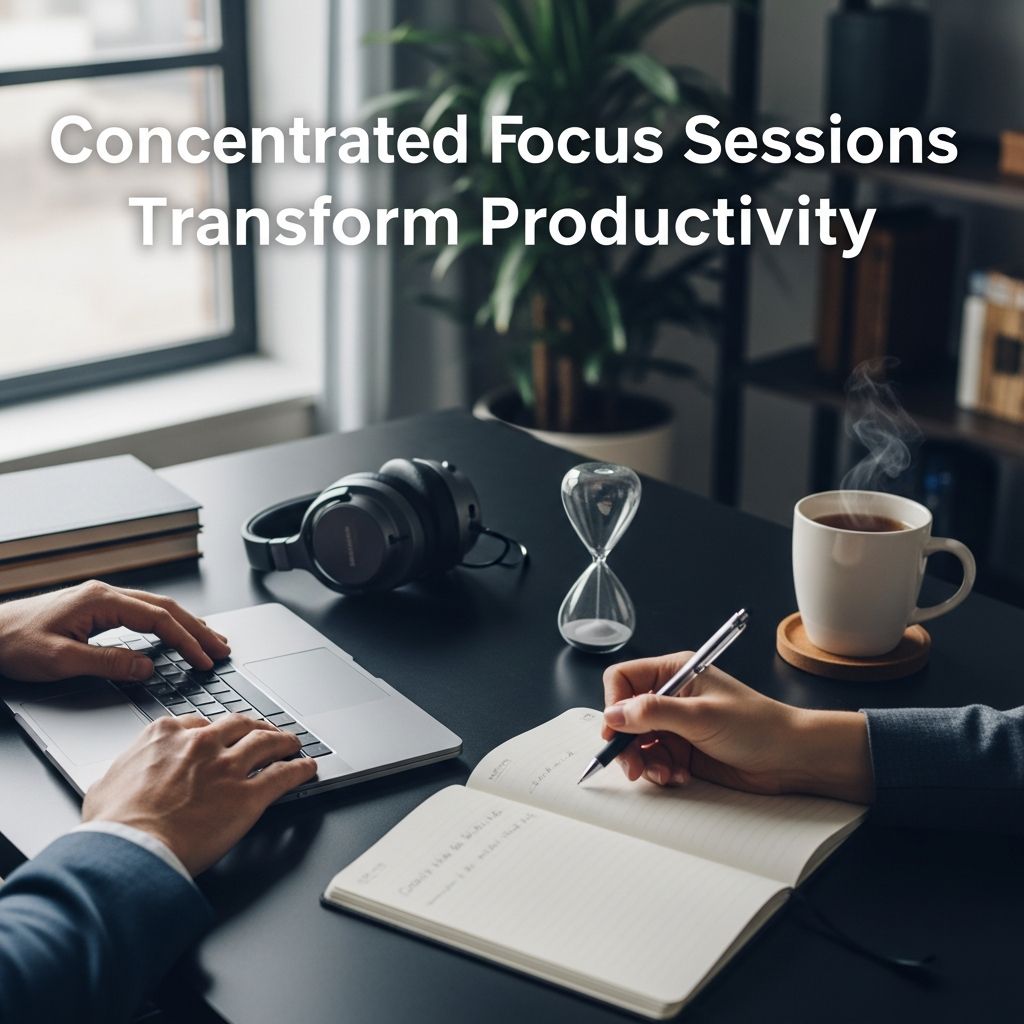
The Power of Concentrated Work Periods
In an era of constant digital interruptions and fragmented attention spans, the concept of dedicating extended periods to concentrated work has emerged as one of the most transformative productivity approaches. Rather than spreading effort thinly across numerous distractions, professionals who intentionally schedule substantial blocks of uninterrupted time experience remarkable improvements in output quality and volume. This fundamental shift in how we organize our work directly challenges the modern myth that staying perpetually busy translates to meaningful progress.
The science behind focus-intensive work reveals that our brains require a significant warm-up period to enter what researchers call a flow state. Research indicates that reaching optimal cognitive engagement typically takes between 40 to 50 minutes of uninterrupted concentration. This physiological reality means that fragmented work schedules, punctuated by meetings and notifications, prevent us from accessing the deeper mental resources required for truly valuable work. By contrast, professionals who protect substantial focus blocks unlock cognitive capabilities that remain inaccessible in interrupted environments.
Understanding the Neurological Foundation of Deep Focus
The human brain operates most efficiently when dedicated to single tasks without switching contexts. Each time our attention shifts from one activity to another, our brains must reload relevant information, recall priorities, and re-establish cognitive patterns. This switching penalty, known as attention residue, creates measurable productivity losses that compound throughout the day. A professional who interrupts their work every 15 minutes experiences cumulative cognitive costs that extend far beyond the interruption duration itself.
When we commit to extended focus periods, our neural networks stabilize around the task at hand. This neurological alignment enables us to access deeper analytical capabilities, make more sophisticated connections between ideas, and produce work of substantially higher quality. The distinction between work produced during fragmented attention versus focused immersion is often the difference between competent output and exceptional contribution.
Strategic Planning: The Foundation of Effective Focus Time
Before implementing any focus strategy, professionals must establish clear objectives for their concentrated work periods. Vague intentions to “work hard” during a focus block produce inferior results compared to specifically identified targets. The process begins with answering a fundamental question: which single task, if completed successfully, would create the most meaningful impact on current priorities?
This prioritization process naturally filters the overwhelming array of potential activities into a manageable set of high-impact targets. By identifying three to five essential tasks that merit protected focus time, professionals create intentional work sessions aligned with strategic objectives rather than reactive responses to immediate pressures.
Establishing Monthly Focus Objectives
- Identify two to three major projects requiring concentrated attention
- Break ambitious goals into smaller components achievable within focus blocks
- Assess which tasks demand creative or analytical thinking versus routine execution
- Reserve focused time for work requiring fresh cognitive energy
- Establish clear success criteria for each focus session
Structuring Optimal Focus Sessions
The duration of focus periods directly influences their effectiveness. Research and practical experience suggest that 60 to 90 minutes represents an optimal window for most professionals. This timeframe allows sufficient duration to overcome initial cognitive warm-up periods while remaining sustainable without diminishing returns from fatigue. Shorter sessions, while beneficial, may not provide adequate time to reach peak cognitive performance. Conversely, sessions extending beyond two hours frequently encounter productivity plateaus as mental stamina declines.
The timing of focus sessions matters considerably. Morning hours typically offer superior cognitive conditions, particularly the two to three hour window following wake time when mental clarity remains highest. Professional demands on calendars make morning focus blocks significantly more sustainable than afternoon attempts, when competing obligations and decision fatigue have accumulated.
Implementing Focus Time Throughout Your Month
A practical monthly approach involves scheduling three to four substantial focus sessions per week. This frequency allows professionals to make meaningful progress on significant initiatives while maintaining flexibility for unexpected demands. Consistency matters more than marathon sessions; regular weekly focus periods create sustainable productivity patterns superior to occasional intense work bursts.
Eliminating Interruption Sources During Focus Periods
The architectural challenge of focus time involves removing competing stimuli that fragment concentration. Notifications from communication platforms, email alerts, and social media represent the primary modern threats to sustained attention. Professionals practicing deep focus must establish clear protocols for managing these interruption sources.
Practical elimination strategies include disabling non-essential notifications, closing email and messaging applications, and using physical barriers to reduce accessibility. Some professionals employ website blockers to prevent unintended digital wandering during focus periods. These technical measures complement social protocols where colleagues understand that focus blocks represent genuinely unavailable time, not partially available periods for urgent matters.
Creating a Distraction-Free Environment
| Interruption Source | Mitigation Strategy | Implementation Method |
|---|---|---|
| Digital Notifications | Disable all non-critical alerts | Use “Do Not Disturb” mode or app settings |
| Email Communication | Close email application entirely | Set auto-reply indicating focus time availability |
| Social Media | Block access to distracting websites | Use productivity apps or browser extensions |
| Physical Interruptions | Secure private workspace or use headphones | Signal unavailability to colleagues visually |
| Meeting Conflicts | Block calendar time as genuinely unavailable | Use calendar tools to prevent meeting scheduling |
Tactical Techniques for Sustaining Concentration
Beyond environmental controls, specific methodologies enhance the quality of focus periods. The Pomodoro Technique offers a structured approach to maintaining engagement by breaking extended periods into focused work intervals punctuated by brief breaks. While traditionally using 25-minute cycles, professionals pursuing deep work often extend this to 90-minute periods, recognizing that deeper cognitive engagement requires longer sustained effort.
The fundamental principle underlying these techniques involves preventing both the mental exhaustion that accompanies unbroken focus and the attention decay that occurs with inadequate engagement duration. Strategic breaks serve a restorative function, allowing the brain to process information and reset attention resources for subsequent focus periods.
The Momentum Principle in Focus Sessions
Beginning a focus session often presents the greatest initial friction. Professionals frequently experience procrastination at the outset of dedicated work time, despite clear intentions. Overcoming this activation energy barrier requires commitment to starting work regardless of initial motivation levels. Research on motivation indicates that action frequently precedes motivation; beginning work creates psychological and neurological momentum that sustains engagement.
This principle explains why protected focus blocks become progressively easier to implement. The first session requires substantial willpower to overcome resistance. Subsequent sessions, by contrast, develop automatic qualities as routines solidify. After implementing consistent focus periods for several weeks, professionals report that dedicating time to concentrated work becomes increasingly natural.
Measuring Progress and Adjusting Focus Strategies
Monthly reassessment of focus approaches ensures ongoing optimization and sustained effectiveness. Professionals should evaluate whether scheduled focus periods aligned with actual priorities, whether protected time produced anticipated results, and whether environmental controls successfully minimized distractions. This monthly review process creates feedback mechanisms for continuous improvement.
Progress metrics extend beyond simple task completion; professionals should assess the quality of work produced during focus periods and the degree to which concentrated sessions advanced significant goals. Some professionals track focus session duration and compare output quantity, providing quantitative data about personal productivity patterns. This evidence-based approach reveals individual circumstances that generic productivity advice cannot address.
Monthly Productivity Assessment Framework
- Calculate the percentage of scheduled focus sessions actually completed
- Evaluate the quality of work produced compared to regular work conditions
- Identify interruption patterns and sources requiring different mitigation strategies
- Assess alignment between focus time allocation and strategic priorities
- Determine whether focus session duration and frequency require adjustment
- Review goal progress and whether focus periods effectively supported completion
Integrating Focus Time with Organizational Demands
Professionals operating within organizational structures face distinctive challenges when protecting focus time. Cultures emphasizing constant availability and rapid response times actively undermine individual focus efforts. Sustainable implementation requires explicit communication with supervisors and colleagues about focus block purposes and unavailability during these periods.
Organizations recognizing productivity benefits sometimes implement company-wide focus time protocols where entire teams maintain concurrent focus periods. This systemic approach eliminates the individual sacrifice of reduced availability because interruption reduction becomes universal rather than personal. Progressive organizations increasingly recognize that protecting employee focus periods directly improves organizational output quality and innovation capacity.
Overcoming Psychological Barriers to Focused Work
Beyond organizational obstacles, professionals encounter internal resistance to sustained concentration. Anxiety about missing communications, fear of appearing unavailable, and the addictive nature of digital interruptions all undermine focus commitments. These psychological barriers often prove more formidable than practical scheduling challenges.
Addressing these internal obstacles requires deliberately reprogramming responses to interruption impulses. Professionals might schedule specific times for email review and communication checking, transforming constant monitoring into bounded activities. This approach provides controlled access to information while protecting focus periods from fragmentary attention.
Scaling Focus Capacity Over Time
Initial focus implementations often commence conservatively with shorter sessions or lower frequencies. As professionals develop focus habits and experience productivity benefits, capacity naturally expands. A professional beginning with two 60-minute weekly sessions might gradually increase to three or four sessions of 90 minutes. This progressive scaling prevents overwhelm while building sustainable practices.
The cumulative impact of regular focus sessions compounds substantially across monthly and annual timeframes. A professional dedicating four hours monthly to concentrated work on significant initiatives generates remarkable progress accumulation. Extended across an entire year, these focused periods accumulate to approximately 50 hours of deep work impossible to achieve through fragmented daily efforts.
Creating Accountability and Commitment Structures
Implementation intentions prove significantly more effective than passive goal-setting for establishing new productivity practices. Professionals who create specific commitments about when, where, and how they will conduct focus sessions demonstrate substantially higher follow-through rates. These commitments function optimally when documented and shared with accountability partners who provide social reinforcement.
Some professionals schedule focus sessions as calendar appointments treated with identical permanence as external meetings. Others establish accountability partnerships where colleagues verify mutual focus time completion. These commitment structures transform focus blocks from aspirational intentions into actual practices embedded within professional routines.
Frequently Asked Questions About Focus Time
Q: How much focus time should I dedicate monthly to see meaningful productivity improvements?
A: Research suggests that four hours monthly of protected focus time can generate noticeable improvements, though greater frequency and duration produce proportionally larger results. Most professionals see significant benefits with eight to twelve hours monthly distributed across weekly sessions.
Q: What should I do if my role involves constant interruptions?
A: Work with supervisors to establish specific focus blocks where interruptions are minimized to genuine emergencies. Early morning hours often prove most feasible. Alternatively, batch high-focus work for low-interruption periods or discuss role restructuring that permits more concentrated work periods.
Q: How do I maintain focus when my mind feels unfocused?
A: Starting with brief sessions and progressively extending duration reduces overwhelm. Using techniques like the Pomodoro method provides structure. Some professionals find that light physical activity before focus sessions improves cognitive engagement.
Q: Can focus time strategies work for creative versus analytical work?
A: Yes, both work types benefit from protected focus periods, though the specific duration and break structures may require adjustment. Creative work sometimes benefits from longer sessions, while analytical work may respond well to structured interval techniques.
Q: What represents realistic progress from focus time implementation?
A: Most professionals report improved work quality within one to two weeks. Measurable progress on significant projects typically becomes evident within one to two months of consistent implementation.
References
- 12 Monthly Tasks to Boost Your Productivity — Week Plan. 2024. https://weekplan.net/12-monthly-tasks-to-boost-your-productivity
- 10 Deep Work Techniques To Help You Focus — The Digital Project Manager. 2024. https://thedigitalprojectmanager.com/productivity/deep-work-techniques/
- 30 Productivity Tips for Work and Life — Clockwise. 2024. https://www.getclockwise.com/blog/productivity-tips-work-life

- Integrated M.A. in Applied Linguistics, University of Hyderabad
- 5+ years in editorial, instructional, SEO, and research-based writing
Sneha is a relationships and lifestyle writer with a strong foundation in applied linguistics and certified training in relationship coaching. She brings over five years of writing experience to theskillvault, crafting thoughtful, research-driven content that empowers readers to build healthier relationships, boost emotional well-being, and embrace holistic living. Her writing and insights reflect the belief that beauty, happiness, and wellness…