
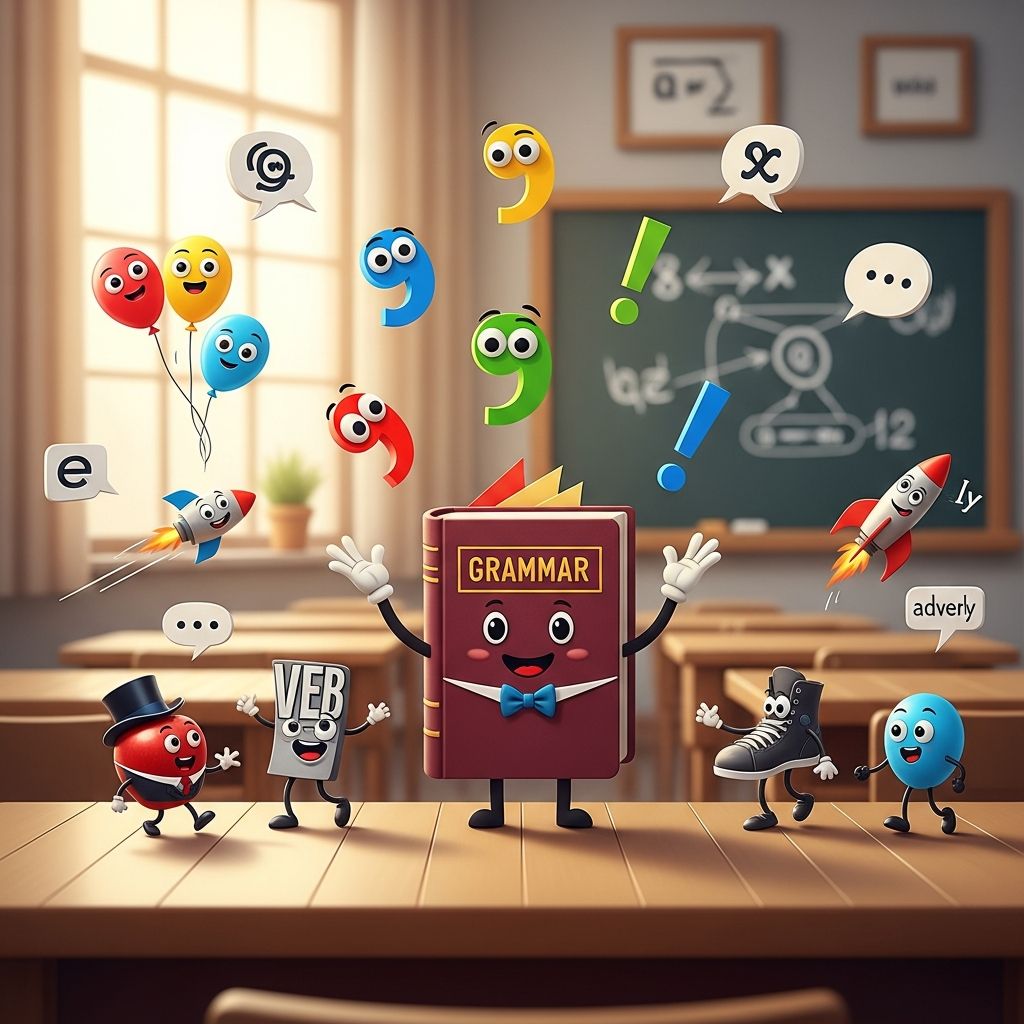
The Power of Laughter in Language Education
Language instruction has traditionally been viewed as a formal, structured discipline requiring memorization and repetitive practice. However, a growing body of educational research suggests that integrating humor into the learning process significantly improves retention rates and student engagement. When learners encounter grammatical concepts wrapped in clever wordplay or comedic scenarios, they develop stronger neural connections to the material, making the rules more memorable over extended periods.
Incorporating linguistic humor into educational settings serves multiple purposes beyond mere entertainment. Students who laugh while learning experience reduced anxiety around challenging subjects, increased motivation to participate in classroom discussions, and improved overall academic performance. The combination of cognitive engagement required to understand a joke—recognizing the word manipulation, appreciating the double meaning, or catching the clever reference—actually strengthens comprehension of the underlying grammatical principle.
Why Wordplay Works as a Teaching Tool
Wordplay functions as an exceptionally effective instructional strategy because it requires active mental participation from learners. Unlike passive absorption of rules presented in textbook format, understanding a pun demands that students recognize the multiple meanings of words, appreciate syntactic nuances, and comprehend how language can be bent and shaped while still maintaining communicative clarity. This active cognitive engagement transforms grammar from abstract rules into tangible, observable phenomena.
- Enhanced Pattern Recognition: Jokes highlighting grammatical mistakes train students to identify errors instinctively rather than through conscious rule application
- Improved Retention: Humorous associations create stronger memory traces than neutral information delivery
- Contextual Understanding: Wordplay demonstrates how grammar functions in real communication rather than existing solely in rule books
- Emotional Connection: Laughter creates positive emotional associations with previously dull subject matter
- Social Learning: Sharing jokes and laughing together builds classroom community and peer engagement
Punctuation Humor and Its Educational Value
Among the most frequently joked-about grammatical elements, punctuation marks present endless opportunities for humor because their proper usage fundamentally alters meaning. A missing comma, misplaced apostrophe, or incorrect semicolon can transform a sentence from clear communication into nonsensical or even offensive statements. This dramatic shift in meaning provides natural comedic material that simultaneously teaches critical lessons about precision in writing.
Consider how different punctuation choices alter the interpretation of basic sentences. The phrase “cooking your family” takes on horrifying implications compared to “cooking, your family.” Similarly, addressing someone directly versus making a statement about them reveals how punctuation clarifies the speaker’s intent. These dramatic transformations make punctuation rules memorable because students can immediately see the consequences of grammatical carelessness.
Comma Comprehension Through Comedy
The comma represents perhaps the most misunderstood punctuation mark, leading to countless opportunities for instructional humor. Teachers frequently employ jokes illustrating how a single comma creates vastly different meanings. The classic example of “What is this thing called love?” transformed into “What is this thing called, love?” demonstrates the comma’s power to shift meaning entirely. These humorous comparisons help students understand that punctuation isn’t arbitrary but purposeful.
Another effective demonstration involves the Oxford comma controversy, which generates substantial debate among language professionals. By presenting this disagreement humorously rather than authoritatively, educators can help students understand that grammar contains some subjective elements while maintaining core objective rules. This nuanced approach develops more sophisticated understanding than presenting grammar as purely rule-based.
Syntax, Semantics, and Silly Sentences
Beyond punctuation, sentence structure itself provides abundant material for linguistic humor. Sentences constructed with unusual word order, multiple interpretations, or unexpected conclusions showcase how grammar determines meaning. Students laughing at deliberately awkward constructions simultaneously learn how proper syntax creates clarity and readability.
Ambiguous sentences particularly lend themselves to humor. “I saw the man with the telescope” could refer to a telescope’s observer or the object being observed. “Visiting relatives can be tedious” presents two completely different scenarios depending on syntactic interpretation. By recognizing these ambiguities, students develop heightened awareness of how their own writing might be misinterpreted, leading to more careful composition.
Homophones, Homonyms, and Hilarity
Words that sound identical but carry different meanings or spellings create natural comedic opportunities while teaching vocabulary and spelling. Homophones like “there,” “their,” and “they’re” frequently appear in joke collections precisely because so many writers confuse them. The humor comes partly from recognizing the mistake and partly from the exaggeration that often accompanies these jokes.
Homonyms—words with identical spelling but different meanings—offer different comedic territory. A bank could refer to financial institutions or riverbanks; a match could be a romantic pairing or something that ignites. Jokes exploiting these double meanings strengthen vocabulary knowledge by forcing students to consider multiple word definitions simultaneously.
Wordplay Across Languages and Dialects
Some of the cleverest linguistic humor operates across language boundaries or regional dialects. Puns that work in one language rarely translate directly to others, revealing how language-specific grammar, pronunciation, and cultural references contribute to meaning. This reality offers valuable lessons about language as a culturally embedded system rather than universal rules.
Creating Lasting Learning Through Laughter
Educational research demonstrates that students retain information better when it elicits emotional responses. Laughter activates multiple brain regions simultaneously, including those responsible for memory formation and emotional processing. When students laugh at a grammar joke, their brains literally encode the associated grammatical concept more effectively than when they study the same rule from a textbook.
Additionally, humor reduces the cognitive load associated with learning abstract concepts. Grammar rules often seem arbitrary and disconnected from real communication needs. Jokes contextualize these rules within relatable scenarios, making them feel relevant and purposeful. A student who remembers the grammar rule because of an amusing joke possesses deeper understanding than one who memorized the rule without context.
Implementation Strategies for Educators
Teachers can integrate linguistic humor into their instruction through various approaches. Starting class periods with grammar jokes sets a positive tone and primes students for learning. Incorporating funny examples when introducing new concepts helps establish initial understanding. Encouraging students to create their own grammar jokes deepens their mastery as they must fully understand the rule to successfully manipulate it for comedic effect.
- Begin lessons with relevant humor to establish engagement
- Use funny error examples to demonstrate consequences of mistakes
- Encourage peer sharing of grammar jokes and wordplay
- Assign creative projects asking students to generate original puns
- Incorporate humor into assessment through joke-writing components
- Use comedic scenarios to illustrate abstract grammatical concepts
The Psychology Behind Language Jokes
Humor operates through incongruity—the collision between expected and actual outcomes. Grammar jokes exploit this principle by leading audiences toward one interpretation before revealing an alternative meaning. This mental pivot strengthens understanding of the grammatical principle governing the shift. Recognizing why something is funny requires explicit engagement with the language rule itself.
Additionally, sharing and appreciating humor creates social bonds. Students who laugh together at grammar jokes develop stronger peer relationships and more cohesive classroom communities. This social dimension of humor transforms grammar study from an isolating academic exercise into a shared, enjoyable experience. Students who enjoy learning environments tend to persist through challenging material and develop greater confidence in their abilities.
Digital and Modern Applications
Contemporary educators can leverage digital platforms to share grammatical humor with students. Memes, social media posts, and online content collections make grammar jokes more accessible and shareable than ever. Students encounter linguistic humor not just in classrooms but through social networks, making grammar part of broader cultural conversations rather than confined to academic spaces.
Video content, interactive quizzes incorporating humor, and collaborative online platforms enable new forms of engagement with linguistic humor. These digital tools particularly resonate with younger learners accustomed to consuming content through screens. By meeting students where they already engage with information, educators can make grammar instruction feel relevant and contemporary.
Frequently Asked Questions
Q: How can I use humor if I don’t consider myself naturally funny?
A: You don’t need to generate original humor. Collecting grammar jokes from reputable sources and sharing them authentically with students works equally well. Your enthusiasm for the material matters more than comedic delivery.
Q: Might focusing on jokes trivialize important grammatical concepts?
A: When implemented thoughtfully, humor enhances understanding rather than diminishing it. The key involves using jokes as entry points to deeper learning, not replacing substantive instruction entirely.
Q: Do grammar jokes work for all age groups?
A: Different age groups appreciate different types of humor. Younger students enjoy silly scenarios, while older learners appreciate more sophisticated wordplay. Matching humor complexity to audience maturity maximizes effectiveness.
Q: Can humor distract from actual learning objectives?
A: Intentionally selected humor that directly relates to learning objectives enhances rather than distracts. The humor should illustrate the grammatical principle, not exist separately from instructional goals.
Q: How frequently should humor appear in grammar instruction?
A: Regular but not constant integration works best. Opening lessons with humor and sprinkling jokes throughout instruction maintains novelty while keeping focus on core concepts.
References
- The Science of Learning and Development: A Report from the National Academies of Sciences, Engineering, and Medicine — National Academies Press. 2018-10-01. https://www.nap.edu/catalog/25057/the-science-of-learning-and-development-a-report-from-the-national-academies
- Laughter and the Brain — American Psychological Association. 2024-03-15. https://www.apa.org/science/about/psa/laughter
- Humor and Learning: An Overview — Oxford University Press. 2020-06-10. https://academic.oup.com/
- The Grammar of Meaning: English Language Rules and Their Functions — Cambridge University Press. 2021-09-22. https://www.cambridge.org/core
- Using Humor as a Teaching Tool: Evidence-Based Strategies — Education Week. 2023-11-08. https://www.edweek.org/

- Integrated M.A. in Applied Linguistics, University of Hyderabad
- 5+ years in editorial, instructional, SEO, and research-based writing
Sneha is a relationships and lifestyle writer with a strong foundation in applied linguistics and certified training in relationship coaching. She brings over five years of writing experience to theskillvault, crafting thoughtful, research-driven content that empowers readers to build healthier relationships, boost emotional well-being, and embrace holistic living. Her writing and insights reflect the belief that beauty, happiness, and wellness…