
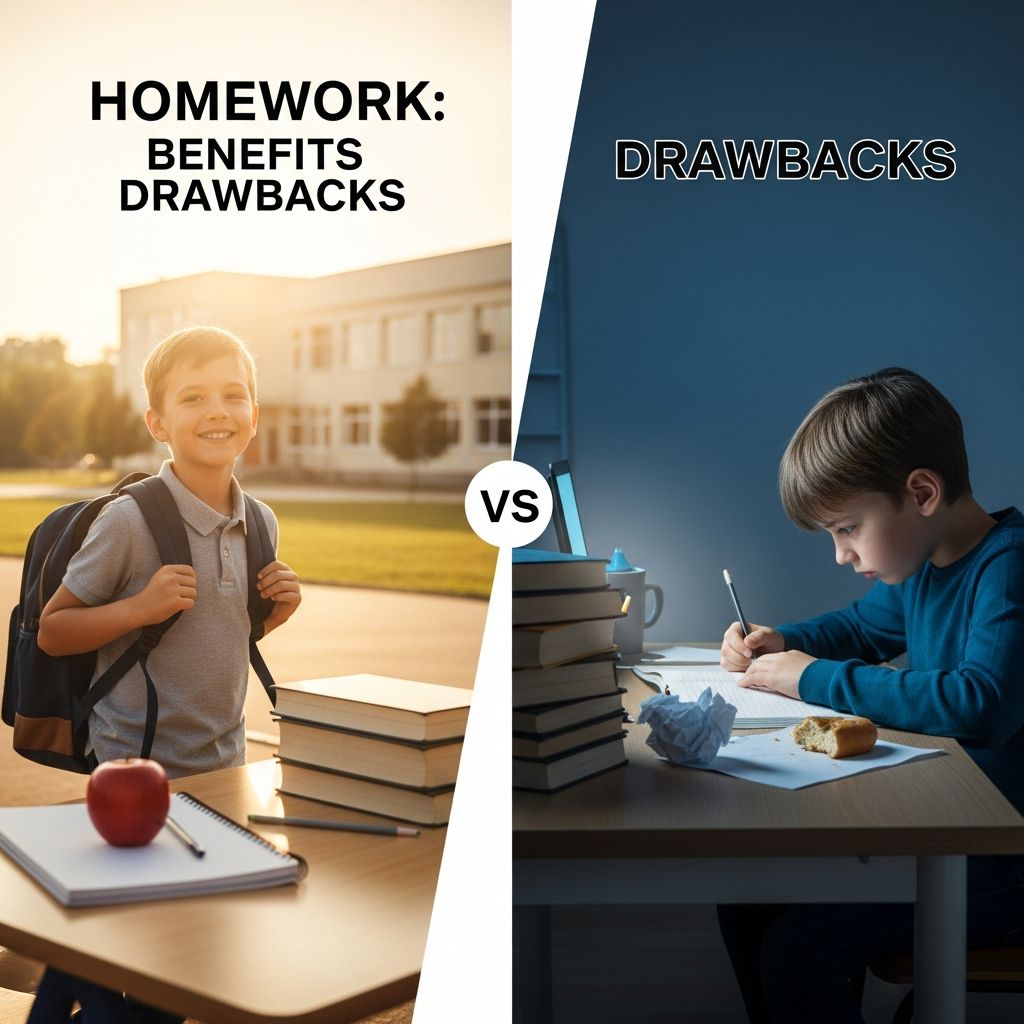
Homework remains a cornerstone of modern education, intended to bridge classroom instruction with independent practice. Yet its value sparks ongoing debate among educators, parents, and researchers. While thoughtfully assigned tasks can enhance retention and skill-building, excessive or poorly designed homework often leads to burnout and diminished returns. This exploration draws from empirical studies to outline when homework succeeds and where it falters, offering guidance for balanced implementation.
Enhancing Academic Performance Through Practice
One of the strongest arguments for homework lies in its capacity to solidify classroom concepts. Research indicates that targeted assignments help students retain up to twice the information compared to class time alone, as repetition in varied contexts strengthens neural pathways. For instance, second-grade students engaging in home literacy exercises showed sustained gains in grammar and spelling four months later, unlike rote math drills that yielded minimal benefits.
This reinforcement proves especially potent in older grades. A synthesis of studies found consistent positive links between homework completion and achievement scores, particularly in math and science where application is key. High schoolers practicing problem-solving independently not only score higher on exams but also develop resilience against complex challenges.
- Key mechanisms: Repetition embeds facts; application fosters understanding.
- Daily reading at home correlates with long-term literacy boosts.
- Structured tasks promote accountability and self-motivation.
Building Lifelong Skills Beyond the Classroom
Homework cultivates habits essential for future success. Students learn time management by juggling assignments with routines, fostering discipline that extends to careers. Independent problem-solving emerges as they navigate tasks without teacher oversight, boosting confidence and metacognition— the ability to self-assess learning.
Parental involvement often increases, as families discuss concepts, leading to greater appreciation of education. A 2006 review highlighted nonacademic gains like improved self-direction and inquisitiveness, applicable across life domains. In one experiment, university students self-grading elaborate homework improved exam performance by a half-letter grade while honing error-recognition skills.
| Skill | Homework Contribution | Long-term Impact |
|---|---|---|
| Time Management | Prioritizing tasks under deadlines | Career productivity |
| Self-Discipline | Completing work autonomously | Personal goal achievement |
| Critical Thinking | Applying concepts creatively | Innovation in professions |
The Hidden Costs: Stress and Health Impacts
Despite benefits, excessive homework extracts a toll. Stanford researchers surveyed students, finding 56% cited it as their top stressor, linked to sleep deprivation, headaches, and exhaustion. High-achievers in rigorous schools reported weight loss and stomach issues from overloaded schedules.
This burden peaks in secondary years, where long sessions erode well-being. A PMC analysis notes diminishing returns: performance rises with moderate time but declines beyond optimal thresholds due to fatigue. Overworked students arrive tired to class, undermining readiness for new material.
- Health effects: Sleep loss (common in 43% of cases), physical symptoms.
- Mental strain: Anxiety from “pointless” busywork.
Encroaching on Essential Downtime
Childhood demands balance. Homework crowds out play, family interactions, and hobbies—vital for holistic growth. Students forgo sports, friendships, and relaxation, stunting social skills and creativity. Leisure fosters unstructured exploration, like biking or reading for pleasure, which sharpens cognition differently than sedentary study.
Exercise, often sidelined, enhances brain function; its absence from heavy homework loads compounds cognitive dips. Researchers warn that isolated study time reduces community ties, leaving youth “spending more time alone”.
Effectiveness Varies by Design and Age
Not all homework equates to progress. Elementary tasks show negligible impact if unrelated to classwork, as young minds thrive on less, more focused practice. Rote repetition wastes time, while elaborate assignments—like mini-lessons or debates—spark engagement and deeper learning.
Quality trumps quantity: A 2024 study of 1,000 middle-schoolers found “worthwhile” tasks outperformed rote ones in motivation and outcomes. Policies mandating uniform loads ignore individual needs, frustrating low and high performers alike. Optimal approaches tailor by grade: foundational for youngers, expansive for olders.
Optimal Strategies for Meaningful Homework
To harness upsides while mitigating downsides, educators should prioritize purpose. Assign tasks extending thinking, not echoing class verbatim. Limit volume—research suggests 10 minutes per grade level nightly as a guideline, adjusting for feedback.
Self-assessment tools empower students, as seen in improved metacognition. Involve parents for support, not completion, to build true independence. Schools fostering flexibility see balanced gains without burnout.
| Grade Level | Recommended Focus | Time Guideline |
|---|---|---|
| Elementary | Short, skill-building practice | 10-30 min |
| Middle | Application and extension | 30-60 min |
| High School | Project-based, real-world | 60-90 min |
Research Insights on Homework’s Net Effect
Meta-analyses affirm modest positives overall, strongest post-elementary. Johns Hopkins data links time spent to achievement, but only with quality. Contradictions abound: benefits coexist with harms, demanding nuanced policy. Heavy loads in elite schools paradoxically hinder development.
Mental health consensus urges restraint—heavy regimens risk more harm than good, yet elimination ignores proven aids. Balanced, evidence-based homework endures as a tool, not a panacea.
Frequently Asked Questions
How much homework is too much?
Studies suggest beyond 2 hours nightly for high schoolers yields diminishing returns and stress; aim for age-appropriate limits.
Does homework help young children?
Minimal for primaries if rote; opt for reading to build foundations without overload.
Can homework cause burnout?
Yes, via sleep loss and isolation—56% of students report it as primary stress.
What makes homework effective?
Relevance, creativity, and feedback; elaborate tasks outperform busywork.
Should parents help with homework?
Guide, don’t do—promotes ownership and family bonds.
References
- The Pros and Cons of Homework (in 6 Charts) — Edutopia. 2024. https://www.edutopia.org/visual-essay/the-pros-and-cons-of-homework-in-6-charts/
- Stanford research shows pitfalls of homework — Stanford News. 2014-03-10. https://news.stanford.edu/stories/2014/03/too-much-homework-031014
- Does Homework Improve Academic Achievement? A Synthesis of Research, 1987–2003 — Cooper, Robinson, Patall (PDF via UCR). 2006. https://assess.ucr.edu/sites/default/files/2019-02/cooperrobinsonpatall_2006.pdf
- PROTOCOL: The relationship between homework time and academic performance — PMC (NIH). 2022. https://pmc.ncbi.nlm.nih.gov/articles/PMC8988773/
- How Homework Affects Students: The Pros And Cons — NSHSS. Recent. https://www.nshss.org/resources/blog/blog-posts/how-homework-affects-students-the-pros-and-cons/
- Key Lessons: What Research Says About the Value of Homework — Reading Rockets. Recent. https://www.readingrockets.org/topics/curriculum-and-instruction/articles/key-lessons-what-research-says-about-value-homework
- Does homework still have value? A Johns Hopkins education expert weighs in — Johns Hopkins Hub. 2024-01-17. https://hub.jhu.edu/2024/01/17/are-we-assigning-too-much-homework/

Medha Deb is an editor with a master's degree in Applied Linguistics from the University of Hyderabad. She believes that her qualification has helped her develop a deep understanding of language and its application in various contexts. Medha specializes in the areas of beauty, health, sports, and wellness and is committed to ensuring that the content on the website is…