
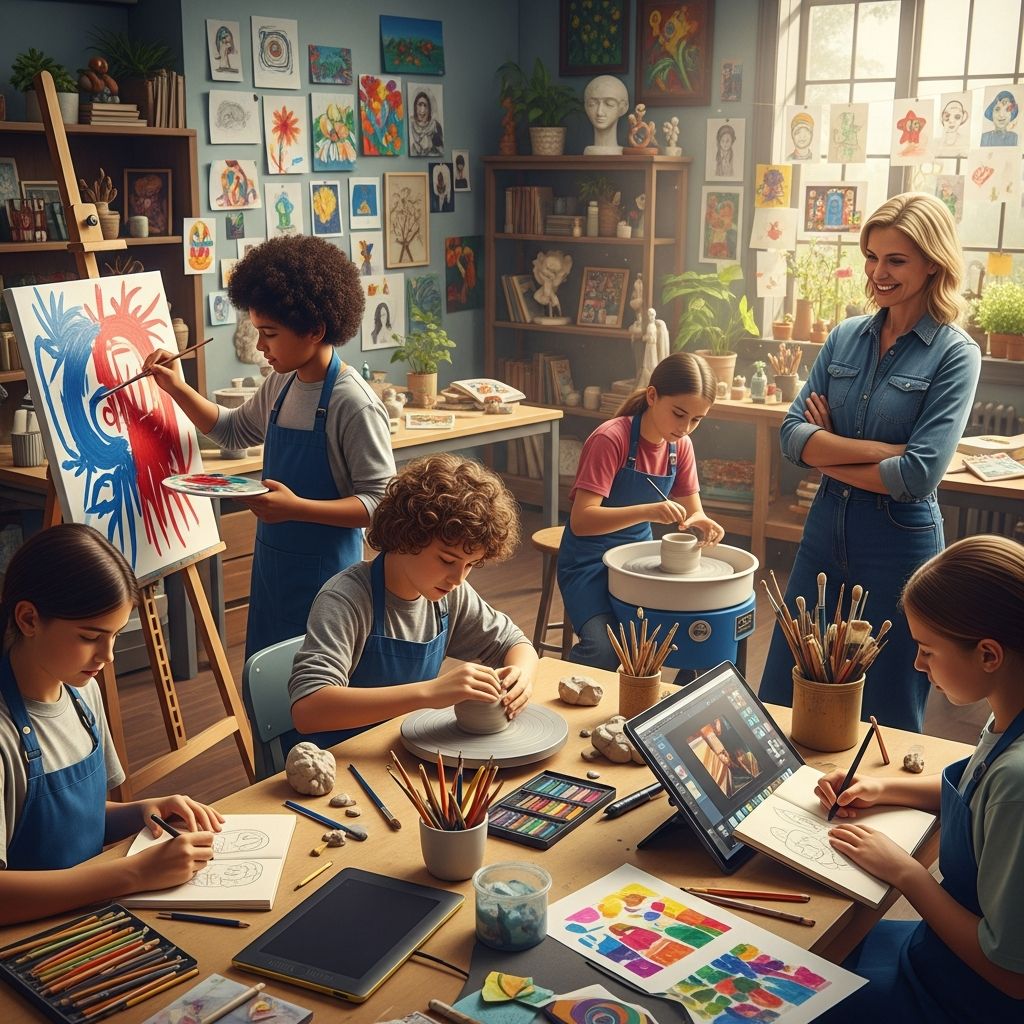
Teaching visual arts represents a distinctive professional journey that differs significantly from other educational disciplines. Art educators operate within a specialized framework that combines creative instruction with institutional constraints, student behavioral dynamics, and resource limitations. Understanding the lived experiences of those who teach art provides insight into why this profession demands particular skill sets, adaptability, and unwavering commitment to fostering creative expression.
The Constant Battle for Adequate Funding and Materials
One of the most persistent challenges confronting art educators is the perpetual scarcity of financial resources allocated to visual arts programs. Unlike core academic subjects that often receive prioritized funding, art departments frequently operate with minimal budgets that constrain their ability to procure quality materials, maintain equipment, and invest in professional development opportunities. This limitation forces creative educators to become resourceful problem-solvers who improvise solutions within their existing constraints.
Art teachers routinely develop systems for maximizing the utility of available materials. They repurpose household items, solicit donations from community members and local businesses, and teach students to work with non-traditional art supplies. This limitation paradoxically cultivates innovation, as educators develop projects that accommodate material shortages while maintaining educational rigor and student engagement. The shortage extends beyond physical supplies to include inadequate funding for technology integration, professional conferences, and continuing education opportunities that would enhance instructional delivery.
Managing Diverse Skill Levels Within Single Classrooms
Art education uniquely presents the challenge of accommodating students with vastly different artistic abilities, interests, and backgrounds within the same instructional environment. A typical art class might include students experiencing their first artistic endeavor alongside those with years of practice, students pursuing art as a serious discipline, and those simply fulfilling general education requirements. This heterogeneity demands differentiated instruction strategies that simultaneously challenge advanced students while providing appropriate scaffolding for novices.
Effective art teachers develop flexible frameworks that allow multiple entry points and exit pathways within project-based learning experiences. They might offer choice-based instruction where students select their medium and subject matter, enabling self-directed learning aligned with individual interests and skill development. This approach requires sophisticated classroom management that accommodates simultaneous engagement with diverse materials, techniques, and conceptual frameworks. Teachers must circulate continuously, providing targeted feedback that addresses each student’s specific developmental stage while maintaining overall class cohesion and safety protocols.
Balancing Creative Expression Against Standardized Curriculum Requirements
Art educators navigate the inherent tension between fostering authentic creative expression and meeting standardized curriculum mandates and assessment requirements. Many schools mandate specific learning objectives, standards compliance, and measurable outcomes that can feel at odds with the exploratory, open-ended nature of authentic artistic practice. This creates a pedagogical dilemma where teachers must structure creative experiences that simultaneously develop technical skills, conceptual understanding, and demonstrate measurable competency.
Successful art teachers develop integrated approaches that frame curriculum standards as frameworks for creative exploration rather than restrictive boundaries. They design projects where students must demonstrate proficiency with specific techniques or conceptual understanding while maintaining agency over subject matter, personal expression, and creative direction. This requires sophisticated instructional design that aligns rigorous academic standards with genuine opportunities for creative risk-taking and artistic voice development.
The Classroom Management Complexity in Creative Spaces
Maintaining productive learning environments in art classrooms presents distinct management challenges that differ from traditional instructional settings. Art spaces inherently involve movement, access to materials that require supervision, noise associated with creative work, and the need to balance structure with creative freedom. Students expect art class to be more permissive and expressive than other subjects, yet educational objectives require focused attention and behavioral accountability.
Art teachers must establish clear protocols that enable creative exploration while preventing chaos or safety violations. This includes systems for material distribution and collection, expectations for workspace organization, protocols for equipment usage, and behavioral standards that protect both physical safety and the psychological safety necessary for creative risk-taking. The most effective approaches involve students in co-creating classroom agreements and procedures, fostering ownership over the learning environment while clearly delineating expectations and consequences.
Addressing Student Behavior and Post-Pandemic Social-Emotional Impacts
Contemporary art educators address heightened student behavioral challenges stemming from pandemic-related disruptions to social-emotional development. Many students exhibit reduced attention spans, increased anxiety around collaborative work, and difficulty with independent thinking and social engagement. Art classes provide valuable opportunities for addressing these developmental needs through visual expression, peer interaction, and structured creative experiences.
Art teachers increasingly incorporate social-emotional learning frameworks into their instruction, using visual journaling prompts to help students process emotions and develop self-awareness. They design low-pressure collaborative experiences that build social skills without creating performance anxiety around grades. These approaches recognize that art education extends beyond technical skill development to encompass holistic student development, including emotional regulation, social competence, and psychological resilience.
Navigating Technology Integration Without Diminishing Human Creativity
The emergence of artificial intelligence and digital tools presents contemporary art educators with novel pedagogical considerations. While these technologies offer innovative possibilities for artistic exploration and learning, they simultaneously raise concerns about maintaining authentic human creativity and critical thinking. Art teachers must help students understand how to leverage technology as a tool for expression while developing the capacity to think critically about technology’s role in art-making.
This involves teaching students about ethical considerations surrounding digital art creation, including questions of originality, copyright, attribution, and the distinction between human-generated and machine-generated content. Art educators guide students in exploring how AI and digital tools can augment rather than replace human creativity, helping them develop personal artistic voices that cannot be replicated by technology. The challenge involves balancing exposure to innovative tools with maintaining emphasis on traditional techniques and the irreplaceable value of human artistic expression.
Professional Development and Isolation Within Educational Systems
Art teachers often encounter limited access to specialized professional development opportunities compared to educators in core academic subjects. While general education programs offer abundant resources and training, art educators struggle to find specialized content addressing the unique needs of visual arts instruction. This isolation creates barriers to accessing contemporary methodologies, staying current with technological advances, and connecting with professional networks that support continuous improvement.
Many art educators address this challenge by developing informal professional learning communities, attending regional and national art education conferences, and engaging with online networks of practice. However, this frequently occurs through personal initiative and financial investment rather than systemic institutional support. The gap in institutionalized professional development creates disparities in access to ongoing learning opportunities and can contribute to professional stagnation, particularly for early-career educators who lack established networks and resources.
The First-Year Teacher Experience and Feelings of Inadequacy
Beginning art teachers frequently experience self-doubt and imposter syndrome as they develop their instructional identity and classroom presence. Even experienced educators transitioning into art instruction question their efficacy and wonder whether they possess adequate subject matter expertise. This uncertainty compounds the typical challenges of beginning teachers, including classroom management, instructional design, and student relationship development.
New art teachers benefit significantly from mentorship relationships with experienced colleagues, participation in online communities connecting art educators, and access to curated resources demonstrating effective instructional practices. Seeking inspiration from veteran teachers through social media, professional websites, and conference sessions helps new educators contextualize their challenges as normal developmental experiences rather than personal failures. Building confidence involves early success experiences, positive feedback from colleagues and students, and gradual expansion of instructional approaches as competence develops.
Engaging Students in Meaningful Artistic Processes
Capturing genuine student engagement presents particular complexity in art classrooms where students arrive with preconceived notions about artistic ability and creativity. Many students harbor limiting beliefs that talent represents an innate quality rather than a developmental capacity, leading them to disengage from artistic endeavor when faced with challenge or perceived inadequacy. Art teachers must address these mindset barriers while simultaneously fostering authentic engagement with artistic processes and conceptual exploration.
Effective approaches involve reframing challenges as opportunities for creative problem-solving rather than indicators of failure. Teachers emphasize process over product, celebrate experimentation and risk-taking, and help students recognize growth in their artistic thinking and technical capability. Projects incorporating self-directed constraints and limitations can paradoxically increase creative engagement by providing clear creative challenges that channel student energy toward focused artistic exploration. When students understand that struggle and iteration represent normal components of artistic development, engagement and persistence increase substantially.
Advocating for Program Visibility and Institutional Prioritization
Art educators frequently find themselves advocating for the legitimacy and importance of visual arts education within schools that prioritize measurable outcomes in traditional academic subjects. This requires articulating the intrinsic and instrumental value of art education, documenting student learning outcomes, and demonstrating connections between artistic instruction and broader educational objectives including critical thinking, collaboration, and communication skill development.
Art teachers document student growth through portfolios, exhibition events, and presentations that showcase artistic thinking and technical development. They connect art instruction to interdisciplinary learning, demonstrating how visual arts complement and enhance learning in science, social studies, language arts, and mathematics. These advocacy efforts require persistent communication with administrators, parents, and community members, helping stakeholders understand that art education develops capacities essential for success in contemporary society beyond traditional academic achievement metrics.
Building Community Through Shared Artistic Experience
Despite the numerous challenges they navigate, art educators consistently report that the most rewarding aspect of their profession involves facilitating transformative experiences where students discover and develop their creative capabilities. Art teachers cultivate inclusive communities where diverse learners feel valued, express themselves authentically, and recognize the power of visual communication. These experiences extend beyond individual student development to encompass classroom culture, where students learn to appreciate diverse perspectives, support peer creativity, and understand art as a universal human capacity rather than an elite skill reserved for the naturally talented.
References
- Elementary School Art Teachers & The Key Challenges They Face — I Paint My Mind. 2024. https://ipaintmymind.org/blog/elementary-school-art-teachers-professional-development-challenges/
- 8 Challenges This Year and How Art Teachers Overcame Them — The Art of Education. May 2023. https://theartofeducation.edu/2023/05/8-challenges-this-year-and-how-art-teachers-overcame-them/
- What is the biggest challenge, if any, to become an art teacher? — CareerVillage. 2024. https://www.careervillage.org/questions/942301/what-is-the-biggest-challenge-if-any-to-become-an-art-teacher

Medha Deb is an editor with a master's degree in Applied Linguistics from the University of Hyderabad. She believes that her qualification has helped her develop a deep understanding of language and its application in various contexts. Medha specializes in the areas of beauty, health, sports, and wellness and is committed to ensuring that the content on the website is…