
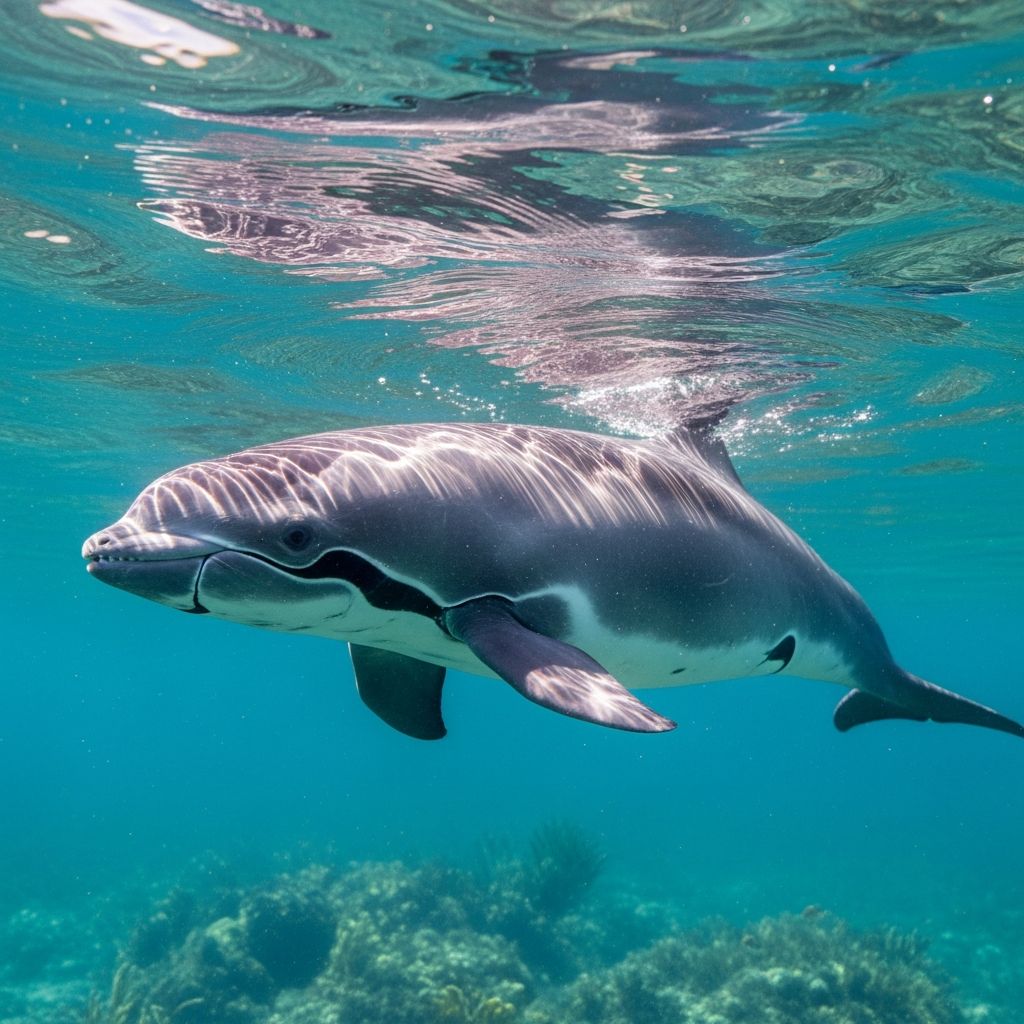
The ocean teems with extraordinary life forms, but few captivate as much as the smallest marine mammal. These diminutive creatures challenge our perceptions of oceanic giants, showcasing remarkable adaptations for survival in vast saltwater realms. Defining a marine mammal involves species that spend most of their lives in the sea, possessing traits like warm-bloodedness, live birth, and milk production for offspring. Among them, contenders for the tiniest title include the vaquita porpoise and marine otter, each with unique claims based on size metrics and lifestyle.
Defining Marine Mammals and Their Tiny Representatives
Marine mammals encompass cetaceans (whales, dolphins, porpoises), pinnipeds (seals, sea lions), sirenians (manatees, dugongs), and select carnivores like otters. They share core mammalian features: endothermy, fur or hair at some stage, air-breathing lungs, and nurturing young via mammary glands. Yet, ocean dwelling demands innovations like blubber insulation, streamlined bodies, and specialized flippers.
The quest for the smallest hinges on definitions. If strictly sea-bound, the vaquita (*Phocoena sinus*), a porpoise from Mexico’s Gulf of California, measures about 1.4 meters long and weighs 42-54 kg, making it the tiniest cetacean. Alternatively, the marine otter (*Lontra felina*), roaming South America’s Pacific coast, spans 87-115 cm total length (body plus tail) and tips scales at under 5 kg, positioning it as the smallest fully marine mustelid. Forum discussions highlight debates: sea otters, larger at 1.2-1.4 m and 16-45 kg, spend much time ashore, disqualifying them from strict marine status.
| Species | Length (Adult) | Weight (Adult) | Habitat |
|---|---|---|---|
| Vaquita Porpoise | 1.4 m | 42-54 kg | Gulf of California |
| Marine Otter | 87-115 cm | ≤5 kg | South America Pacific Coast |
| Sea Otter (Comparison) | 1.2-1.4 m | 16-45 kg | North Pacific |
This table illustrates size disparities, underscoring why classifications vary.
Spotlight on the Vaquita: The Elusive Porpoise Contender
Vaquitas embody fragility in a massive ecosystem. Exclusive to the northern Gulf of California, these shy porpoises evade boats and humans, surfacing briefly for air. Adults reach 150 cm maximum but average shorter, with females slightly larger. Their spade-shaped dorsal fin and dark eye patches distinguish them from dolphins, despite superficial similarities.
Behaviorally, vaquitas form small groups or pairs, foraging on fish, squid, and crustaceans via echolocation. They dive to 30-100 meters, though dives last mere minutes. Reproduction is slow: gestation around 10-11 months yields single calves biennially, hindering population recovery.
- Shy Nature: Avoid boats, complicating sightings.
- Diet: Small schooling fish, shrimp, octopus.
- Speed: Up to 25 km/h in bursts.
Once numbering thousands, vaquitas now teeter under 10 individuals due to illegal gillnet fishing for totoaba fish, whose swim bladders fetch high black-market prices.
Marine Otter: The Agile Coastal Hunter
Native to Peru, Chile, and Argentina’s rugged coasts, marine otters—also called sea cats—claim the smallest marine mammal crown by weight and length. Little larger than a house cat, their dense fur (up to 1 million hairs per square inch) repels water, trapping air for insulation sans blubber.
These mustelids devote 70% of time to diving, pursuing crabs, mollusks, fish, and occasional birds. Dives probe 40 meters, succeeding 26-32% of attempts. Unlike river otters, they rarely venture far inland, tying them firmly to marine life. Breeding occurs year-round on rocky shores, with mothers carrying pups on backs or in pouches of loose skin.
- Fur Adaptation: Exceptional density prevents hypothermia.
- Foraging: Uses sensitive whiskers to detect prey in murky waters.
- Sociality: Lives solitarily or in pairs, unlike gregarious sea otters.
Listed as Endangered by IUCN, populations plummeted from pelt hunting; now legally protected, though habitat loss and pollution persist.
Other Compact Marine Marvels Worth Noting
Beyond top contenders, several small marine mammals intrigue. Hector’s dolphin (*Cephalorhynchus hectori*), New Zealand’s endemic, grows to 1.5 m and 50-75 kg, nicknamed ‘Mickey Mouse’ for rounded dorsal fins. Two subspecies exist, both rare from bycatch.
Commerson’s dolphin (*Cephalorhynchus commersonii*), at 1.1-1.7 m and 35-75 kg, sports black-white piebald patterns, thriving in southern cool waters. Clymene dolphin, smallest in its genus at under 2 m, patrols Atlantic tropics. Dall’s porpoise, speedy at 55 km/h, reaches 2.3 m but qualifies among smaller cetaceans.
Galápagos fur seal, tiniest pinniped at 1.2-1.7 m and 20-30 kg, haunts equatorial isles. These species highlight biodiversity in compact forms.
Survival Strategies of Miniature Marine Mammals
Small size imposes challenges: higher surface-to-volume ratios accelerate heat loss, countered by fur (otters) or blubber (porpoises). High metabolisms demand constant foraging; vaquitas consume 6-8% body weight daily.
Echolocation aids cetaceans in dim depths, while otters rely on touch. Streamlined shapes and powerful tails propel efficient swimming. Parental care is intensive: otter moms teach diving, porpoise calves nurse 6-12 months.
Reproduction rates lag giants; low fecundity amplifies extinction risks from anthropogenic pressures.
Conservation Hurdles Facing Tiny Ocean Inhabitants
Humanity’s footprint overshadows these species. Bycatch in fishing gear devastates vaquitas—gillnets drown them incidentally. Marine otters suffer from prey depletion, oil spills degrading fur, and rocky habitat encroachment.
Climate change alters prey distributions, warming waters stress cold-adapted kin like Hector’s dolphins. Pollution, from plastics ingested to toxins bioaccumulating, impairs health. IUCN statuses: vaquita Critically Endangered (under 10 left), marine otter Endangered.
Efforts include Mexico’s vaquita refuge, gillnet bans (poorly enforced), acoustic monitoring. For otters, protected areas in Chile/Peru aid recovery. International collaboration via CMS and IUCN drives anti-poaching. Public awareness via ecotourism and citizen science bolsters funds.
Frequently Asked Questions (FAQs)
What truly is the smallest marine mammal?
Debate persists: vaquita porpoise by cetacean standards (1.4m, 50kg), marine otter overall (under 1m body, 5kg).
Why are vaquitas nearing extinction?
Illegal gillnets for totoaba doom them; fewer than 10 remain.
How do marine otters stay warm without blubber?
Dense waterproof fur traps insulating air bubbles.
Can small marine mammals recover from endangerment?
Possible with strict protections, habitat restoration, though slow breeding hampers pace.
What role does diet play in their size?
High-energy needs from abundant small prey sustain compact builds.
Future Prospects for the Ocean’s Littlest Mammals
These tiny titans symbolize marine health. Protecting them demands global action: sustainable fishing, marine protected areas, pollution curbs. Advances like drone surveillance and AI population modeling offer hope. Engaging communities in conservation fosters stewardship, ensuring these remarkable adapters endure. Their survival underscores our capacity to harmonize with oceans.
References
- Smallest marine mammal | Guinness World Records — Guinness World Records. 2023. https://www.guinnessworldrecords.com/world-records/603255-smallest-marine-mammal
- What’s the smallest marine mammal? – Straight Dope Message Board — Straight Dope. N/A. https://boards.straightdope.com/t/whats-the-smallest-marine-mammal/506967
- Four Lesser-Known Marine Mammals – Ocean Conservancy — Ocean Conservancy. 2023-03-27. https://oceanconservancy.org/blog/2023/03/27/four-lesser-known-marine-mammals/
- Dolphin Species Spotlight | Office of National Marine Sanctuaries — NOAA. N/A. https://sanctuaries.noaa.gov/education/teachers/dolphins/species-spotlight.html
- Porpoise – Wikipedia — Wikipedia. N/A. https://en.wikipedia.org/wiki/Porpoise
- Learn About Marine Mammals — The Marine Mammal Center. N/A. https://www.marinemammalcenter.org/animal-care/learn-about-marine-mammals

Medha Deb is an editor with a master's degree in Applied Linguistics from the University of Hyderabad. She believes that her qualification has helped her develop a deep understanding of language and its application in various contexts. Medha specializes in the areas of beauty, health, sports, and wellness and is committed to ensuring that the content on the website is…