
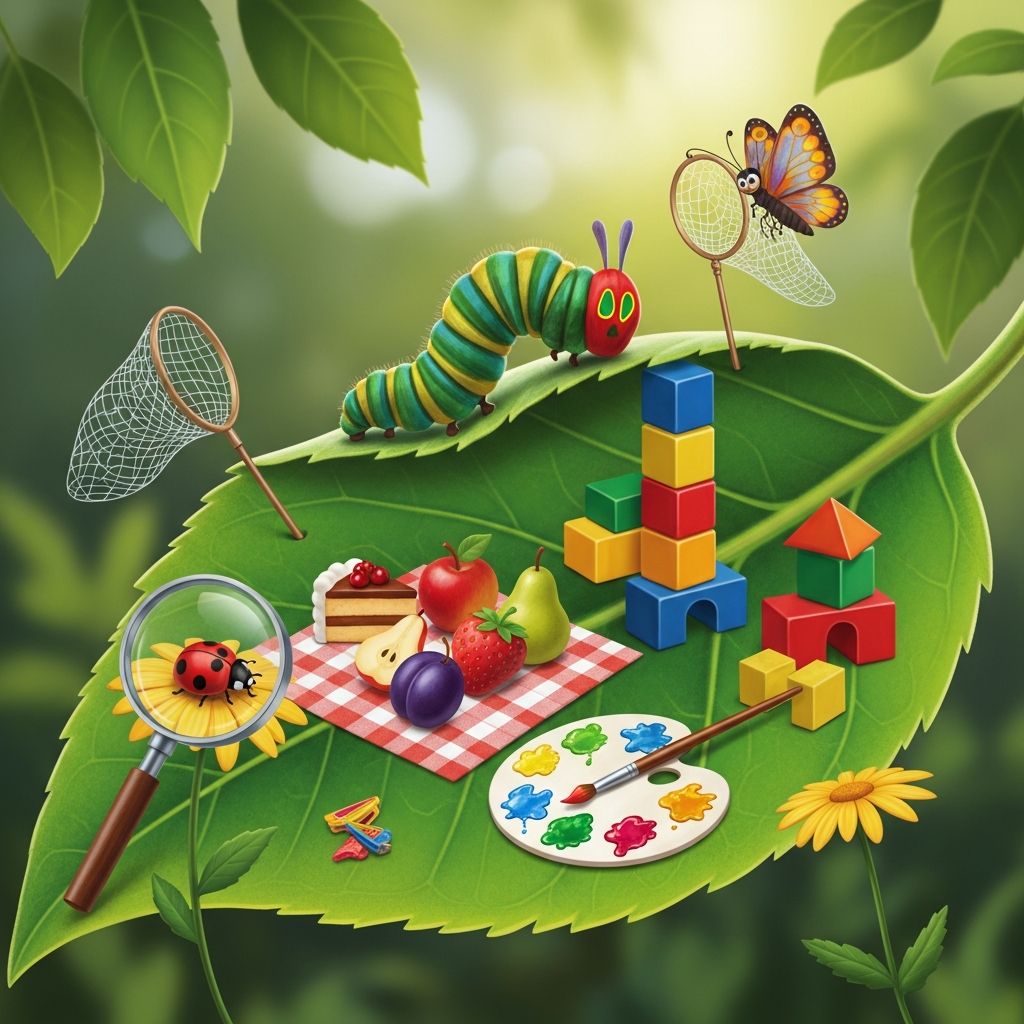
Eric Carle’s timeless children’s book The Very Hungry Caterpillar captivates young minds with its vibrant illustrations, simple narrative, and themes of growth, healthy eating, and transformation. This guide offers a fresh collection of engaging activities designed for preschoolers and kindergarteners. These ideas promote key developmental skills like fine motor control, numeracy, literacy, and scientific curiosity while tying directly into the story’s elements of munching fruits, building a cocoon, and emerging as a butterfly. Whether in a classroom or at home, these activities encourage interactive learning through play.
Understanding the Butterfly Life Cycle Through Movement and Play
One of the most magical aspects of the book is the caterpillar’s metamorphosis. Help children internalize this process with dynamic, body-based activities that build gross motor skills and comprehension.
- Egg to Butterfly Relay: Divide kids into small groups. Start with ‘egg’ pose: children curl into balls on the floor. Transition to ‘caterpillar crawl’ across the room, wiggling on bellies. Next, they roll into colorful fabric ‘chrysalises’ (use scarves or mats). Finally, burst out flapping arms as butterflies. Repeat for reinforcement, discussing each stage.
- Puppet Show Dramatization: Create simple paper bag puppets for egg, larva, pupa, and butterfly. Children narrate and act out the transformation, enhancing storytelling skills and sequencing understanding.
These movements not only make abstract biology concrete but also boost physical coordination and group cooperation.
Counting and Sorting with Storybook Foods
The caterpillar’s escalating feasts provide perfect fodder for math lessons. Use real or play foods to practice one-to-one correspondence, addition, and classification.
| Day in Story | Food Eaten | Activity Idea | Skill Focus |
|---|---|---|---|
| Monday | 1 apple | Sort red items into baskets | Color recognition, number 1 |
| Tuesday | 2 pears | Thread beads on strings (2 per side) | Number 2, fine motor |
| Wednesday | 3 plums | Pearl counting game with dice | Number 3, subitizing |
| Thursday | 4 strawberries | Strawberry stamp painting (4 prints) | Number 4, patterning |
| Friday | 5 oranges | Orange segment graphing | Number 5, data collection |
Extend by tallying total fruits (15) before the junk food binge, introducing basic addition. This table scaffolds progression matching the book’s daily structure.
Sensory Exploration Stations for Immersive Learning
Sensory bins immerse children in tactile experiences mimicking the caterpillar’s world, fostering sensory processing and imaginative play.
- Forest Floor Bin: Fill a shallow tray with green shredded paper (leaves), silk worms or pom-poms (caterpillars), and pastel gems (eggs). Add scoops, tweezers for transferring, and mini mirrors for ‘puddles.’ Hide letter cards shaped like C for caterpillar.
- Fruit Feast Sensory Tub: Layer dyed rice (greens), real fruit slices (supervised), and edible ‘junk foods’ like mini pretzels. Include butterfly-shaped cookie cutters for pressing shapes, promoting texture discrimination and healthy choice discussions.
- Cocoon Dig: Bury toy butterflies in playdough ‘chrysalis’ mounds. Children excavate, linking to the story’s climax.
Rotate stations weekly to maintain engagement, aligning with multisensory learning principles.
Creative Crafts to Personalize the Tale
Hands-on crafting reinforces story recall while developing dexterity and creativity.
- Paper Plate Caterpillar: Cut plate into segments, paint each a different color, add pipe cleaner legs and googly eyes. Connect with brads for a posable body. Children ‘feed’ it by clipping paper fruits.
- Footprint Butterfly: Dip feet in washable paint for wings, add body from handprint. Display as a class ‘garden’ to celebrate transformations.
- Collage Story Wheel: Spin a cardboard wheel revealing daily foods; glue matching pictures. Builds vocabulary and narrative sequencing.
These crafts double as take-home keepsakes, extending learning beyond the session.
Healthy Eating Discussions with Edible Creations
Contrast the caterpillar’s healthy fruits with its Saturday spree to teach nutrition basics.
- Fruit Kabob Towers: Skewer fruits in story sequence (1 apple, 2 pears, etc.). Compare heights, discuss vitamins vs. ‘tummy ache’ foods like cake and ice cream.
- Caterpillar Roll-Ups: Spread cream cheese on whole wheat tortillas, top with veggie strips and fruit bits, roll and slice into ‘segments.’ A nutritious snack tying literacy to life skills.
- Butterfly Veggie Plates: Arrange carrot sticks as wings, cucumber body, cherry tomato head. Dip in hummus for ‘nectar.’
Incorporate charts tracking ‘good’ vs. ‘not-so-good’ foods, promoting balanced habits.
Printable Worksheets and Games for Skill Building
Supplement play with low-prep printables for independent practice.
- Dot-to-dot caterpillars numbering 1-10.
- Shadow matching for life cycle stages.
- Color-by-number butterfly wings revealing hidden patterns.
- Simple mazes from leaf to flower.
These reinforce concepts during quiet time or centers.
Outdoor Adventures: Nature Observation
Take learning outside to observe real metamorphosis.
- Butterfly Garden Hunt: Plant milkweed or nectar flowers; journal sightings with drawings.
- Caterpillar Scavenger: Search for larvae on host plants, sketch and discuss camouflage.
Connects fiction to real science, encouraging environmental stewardship.
Frequently Asked Questions (FAQs)
What age group are these activities best for?
Ideal for ages 2-5, with adaptations for older kids like adding writing prompts.
Do I need special materials?
Most use household recyclables; budget options provided throughout.
How do these tie into curriculum standards?
Align with early learning goals in math (counting), science (life cycles), literacy (sequencing), and health.
Can these be done virtually?
Yes, share printable PDFs and demo videos for remote learning.
What if a child has food allergies?
Substitute playdough fruits or drawings; focus on non-edible alternatives.
These FAQs address common concerns for seamless implementation.
References
- National Science Teaching Association Standards for Early Childhood Science Education — NSTA. 2019-10-15. https://www.nsta.org/early-childhood-science-education
- Common Core State Standards Initiative: Kindergarten Math — National Governors Association. 2010-06-02. http://www.corestandards.org/Math/Content/K/counting-and-cardinality/
- Head Start Early Learning Outcomes Framework — U.S. Department of Health & Human Services. 2022-05-20. https://eclkc.ohs.acf.hhs.gov/children-disabilities/article/head-start-early-learning-outcomes-framework-ages-birth-three
- Eric Carle Official Website: The Very Hungry Caterpillar — Eric Carle Estate. 2023-01-01. https://www.eric-carle.com/the-very-hungry-caterpillar/
- USDA MyPlate for Preschoolers — United States Department of Agriculture. 2024-03-12. https://www.myplate.gov/life-stages/preschoolers

- Integrated M.A. in Applied Linguistics, University of Hyderabad
- 5+ years in editorial, instructional, SEO, and research-based writing
Sneha is a relationships and lifestyle writer with a strong foundation in applied linguistics and certified training in relationship coaching. She brings over five years of writing experience to theskillvault, crafting thoughtful, research-driven content that empowers readers to build healthier relationships, boost emotional well-being, and embrace holistic living. Her writing and insights reflect the belief that beauty, happiness, and wellness…