
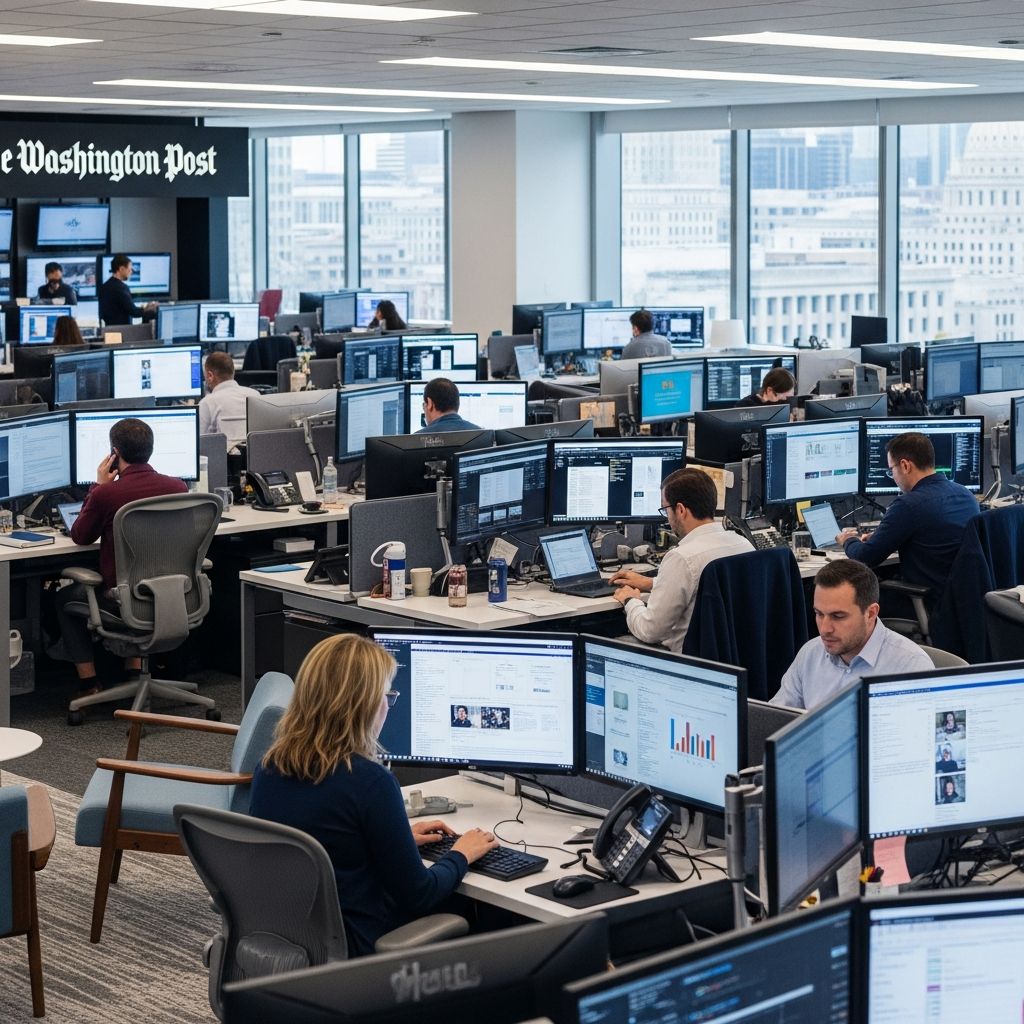
The Washington Post’s headquarters in Washington, DC is more than just the home of a major American newspaper. It is a fast-paced workplace where journalists, engineers, designers, product managers, and business professionals collaborate to cover national and global events in real time while building the digital tools that power modern storytelling.
From Historic Newspaper to Modern DC Hub
Founded in 1877, The Washington Post has grown from a local daily into an influential national and international news organization. Its DC headquarters reflects this evolution: it is a space where legacy journalism and cutting-edge technology meet.
- Deep local roots: The paper has been based in Washington, DC since its founding, covering Congress, the White House, and federal agencies from the capital’s doorstep.
- National reputation: The Post gained global prominence with its coverage of major stories such as the Pentagon Papers and Watergate, solidifying its role as a watchdog of government and public institutions.
- Digital transformation: Since the mid-1990s, the organization has expanded into digital news and multimedia, investing heavily in online platforms, apps, and audience engagement tools.
This blend of history and innovation shapes the everyday experience of working at the DC office.
The DC Headquarters Environment
The Washington Post’s Washington, DC office is designed to support rapid news production and cross-functional collaboration while giving employees space to think deeply about complex stories.
- Newsroom-centric layout: Editors, reporters, photographers, and visual journalists sit close together so they can quickly coordinate coverage during breaking news.
- Technology woven into the floorplan: Engineering and product teams often work near newsroom desks to support publishing systems, analytics, and reader-facing tools.
- Flexible work zones: Focus rooms, small meeting spaces, and informal lounges give staff room for interviews, writing, coding, and brainstorming.
- Proximity to power: Being minutes from the Capitol, the White House, and federal agencies allows rapid on-the-ground reporting and in-person source meetings.
Teams You’ll Find in the Washington, DC Office
Many of The Washington Post’s core departments are based in the DC headquarters, creating a dense network of expertise under one roof.
| Team | Primary Focus | Typical Roles |
|---|---|---|
| Newsroom | Reporting, editing, investigations, visual storytelling | Reporters, editors, producers, photojournalists, data reporters |
| Digital & Engineering | News apps, site reliability, content management, tools | Software engineers, data engineers, QA, SREs |
| Product & Design | User experience, reader journeys, feature development | Product managers, UX/UI designers, researchers |
| Audience & Growth | Subscriptions, newsletters, search and social strategy | Audience editors, growth marketers, SEO specialists |
| Business, Sales & Operations | Revenue, corporate strategy, HR, finance | Sales managers, analysts, HR business partners, accountants |
Day-to-Day Life in a Capital-City Newsroom
Working from The Washington Post’s DC headquarters means being close to the stories that define national and international debate. The pace can shift drastically depending on the news cycle.
- Rhythm of the day: Mornings often focus on planning, assigning stories, and scanning overnight developments; afternoons and evenings can be dominated by live coverage, updates, and deadlines.
- Breaking news intensity: Major events—such as elections, Supreme Court rulings, or international crises—can turn the entire office toward a unified coverage plan, with teams extending hours to provide constant updates.
- Deep reporting in between: When the cycle slows, staff often turn to long-term investigative projects, data analysis, and explanatory work that gives readers context beyond the headlines.
- Cross-team check-ins: Editorial, engineering, and product staff frequently hold short standups to address tool performance, user feedback, and new storytelling formats.
Collaboration Across Journalism and Technology
A key characteristic of The Washington Post’s DC office is the way editorial and technical teams work together to create and distribute journalism.
- Joint project squads: For big investigations or special features, small groups of reporters, designers, developers, and visual journalists collaborate on interactive stories, data visualizations, and multimedia packages.
- Shared tools and platforms: Engineers build and maintain content management and analytics systems tailored to newsroom needs, while editors and reporters provide direct feedback to improve performance.
- Experimentation culture: Teams test new formats—such as live blogs, explainers, or interactive timelines—and use audience data to refine what best serves readers.
Benefits and Support for Employees
While specific benefits can vary by role and change over time, major news organizations like The Washington Post typically offer a competitive package designed to attract and retain top talent in journalism and technology.
- Health and wellness: Comprehensive medical, dental, and vision plans are common among large US employers, along with wellness initiatives and mental health resources.
- Retirement and financial security: Many media companies offer retirement savings plans such as 401(k)s, sometimes with employer contributions or matching components, to help staff plan for long-term financial stability.
- Paid time off: Vacation, sick leave, and holidays are standard, with additional time off sometimes granted for parental leave or family care depending on role and tenure.
- Professional development: Opportunities may include workshops, conferences, newsroom training, or mentorship aimed at strengthening writing, editing, data, or technical skills.
- Union representation: Many newsroom employees at major US newspapers—including The Washington Post—are represented by unions that negotiate pay scales, benefits, and workplace protections.
Candidates should always check the most recent job postings or HR information for up-to-date details on specific benefits.
Career Paths Based in Washington, DC
The DC headquarters offers entry points and growth opportunities for people at many career stages.
Editorial and Reporting Roles
Journalists at The Washington Post work across beats, platforms, and formats.
- Beat reporting: Covering specialized areas like Congress, the White House, national security, economics, climate, or local DC issues.
- Investigative journalism: Pursuing long-term projects that examine public records, data, and confidential sources to uncover stories of public importance.
- Visual and multimedia roles: Photojournalists, graphics reporters, and video producers help bring complex stories to life through images, motion, and design.
- Early-career pathways: Internships, fellowships, and entry-level roles give aspiring journalists exposure to professional editing standards, ethics, and reporting craft.
Technology, Product, and Data Careers
As digital readership has grown, the Post’s need for technical expertise has increased substantially.
- Engineering: Software engineers work on everything from content management and publishing pipelines to real-time analytics and personalization systems.
- Product management: Product managers help prioritize features, shape roadmaps, and coordinate between editorial teams, engineering, design, and business stakeholders.
- Data science and analytics: Specialists analyze audience behavior, subscription trends, and engagement data to support both editorial decisions and business strategy.
- UX and design: Designers craft user experiences for apps, websites, newsletters, and interactive features to make the news easier to navigate and understand.
Business and Operations Opportunities
Behind the journalism and platforms is an extensive business operation that keeps the organization sustainable.
- Advertising and partnerships: Sales and account teams work with brands to develop advertising and sponsorship solutions that align with editorial standards.
- Subscriptions and marketing: Teams focus on subscriber growth, retention, pricing strategy, and promotional campaigns.
- Corporate functions: Human resources, legal, finance, and communications professionals provide strategic and operational support for the entire company.
Core Values and Mission in the DC Office
The Washington Post’s Washington, DC workplace is grounded in the institution’s broader mission and standards.
- Commitment to factual reporting: The Post emphasizes accuracy, verification, and fairness in its news coverage.
- Public service journalism: A central purpose is to hold powerful institutions accountable and provide readers with the information they need to make informed decisions in a democracy.
- Editorial independence: News decisions are made separately from business and advertising interests, a principle that has guided the paper through its modern history.
- Ethical standards: Staff are expected to follow guidelines on conflicts of interest, sourcing, corrections, and transparency.
What Makes the DC Location Unique?
While The Washington Post has bureaus and staff in multiple cities and countries, the DC headquarters has distinct advantages and characteristics.
- Access to sources: Lawmakers, policy experts, diplomats, and advocacy groups frequently hold events, briefings, and meetings in the capital, making it a rich environment for original reporting.
- Policy and politics focus: Many beats intersect with federal policy, regulation, and politics, giving DC-based reporters a front-row seat to national decision-making.
- Concentration of expertise: Specialists in law, economics, defense, climate, and technology policy are often available for in-person interviews and panel discussions.
- Civic and cultural life: Museums, universities, think tanks, and cultural institutions in the region add context and depth to coverage and provide additional professional networks.
Remote and Hybrid Work Considerations
Like many media organizations, The Washington Post has adapted work practices over time, including incorporating remote collaboration tools and flexible arrangements, particularly in response to public health and workplace trends.
- Digital-first workflows: Conference calls, shared documents, and project tools allow cross-bureau teams to collaborate regardless of location.
- Hybrid possibilities: Some roles may combine in-office presence with remote days, especially for positions that do not require constant on-site reporting.
- Global coordination: With international bureaus and correspondents, staff in DC often work across time zones to coordinate coverage and publish updates around the clock.
Specific schedules and flexibility depend on team needs, job function, and company policies at any given time.
Frequently Asked Questions (FAQs)
Q: What types of roles are most common at The Washington Post’s DC headquarters?
A: The DC office hosts a wide range of roles, including reporters, editors, photographers, video producers, software engineers, product managers, UX designers, data analysts, marketers, and business operations staff. Many leadership positions across editorial, technology, and business are also based in Washington, DC.
Q: How fast-paced is the work environment in the DC newsroom?
A: The pace can be intense, particularly during breaking news or major political events. Staff may work under tight deadlines, adjust plans quickly, and collaborate across departments to produce accurate coverage in real time. Between major events, there is more room for in-depth reporting, analysis, and long-term projects.
Q: Does The Washington Post offer opportunities for early-career journalists and technologists in DC?
A: Yes. Large news organizations like The Washington Post frequently offer internships, fellowships, and entry-level positions in areas such as reporting, editing support, production, audience engagement, engineering, and design. These roles give early-career professionals exposure to high editorial standards and large-scale digital platforms.
Q: What skills are valuable for working at The Washington Post’s DC office?
A: For editorial roles, strong reporting, writing, verification, and ethical judgment are crucial. Technical roles benefit from expertise in software development, data analysis, user experience design, or product management. Across disciplines, collaboration, adaptability, and a commitment to public service journalism are highly valued.
Q: How does the DC location influence the kind of journalism The Washington Post produces?
A: Being based in Washington, DC allows The Post to closely follow federal policy, elections, and global diplomacy, and to report swiftly from the centers of power. This proximity helps the newsroom break national stories, provide nuanced political coverage, and offer readers insight into how government decisions affect their lives.
References
- The Washington Post — The Washington Post / Wikipedia summary of institutional history. 2024-01-01 (approx., last major update). https://en.wikipedia.org/wiki/The_Washington_Post
- A History of The Washington Post — Historic Newspapers. 2020-07-20. https://www.historic-newspapers.com/blogs/article/washington-post-history
- History of The Washington Post Company — FundingUniverse. 2002-01-01. https://www.fundinguniverse.com/company-histories/the-washington-post-company-history/
- Washington Post: a brief history — Columbia University, Case Consortium. 2010-01-01. https://ccnmtl.columbia.edu/projects/caseconsortium/casestudies/147/casestudy/www/layout/case_id_147_id_1014.html
- The Washington Post — Roper Center for Public Opinion Research (Cornell University). 2019-05-10. https://ropercenter.cornell.edu/washington-post

Medha Deb is an editor with a master's degree in Applied Linguistics from the University of Hyderabad. She believes that her qualification has helped her develop a deep understanding of language and its application in various contexts. Medha specializes in the areas of beauty, health, sports, and wellness and is committed to ensuring that the content on the website is…