
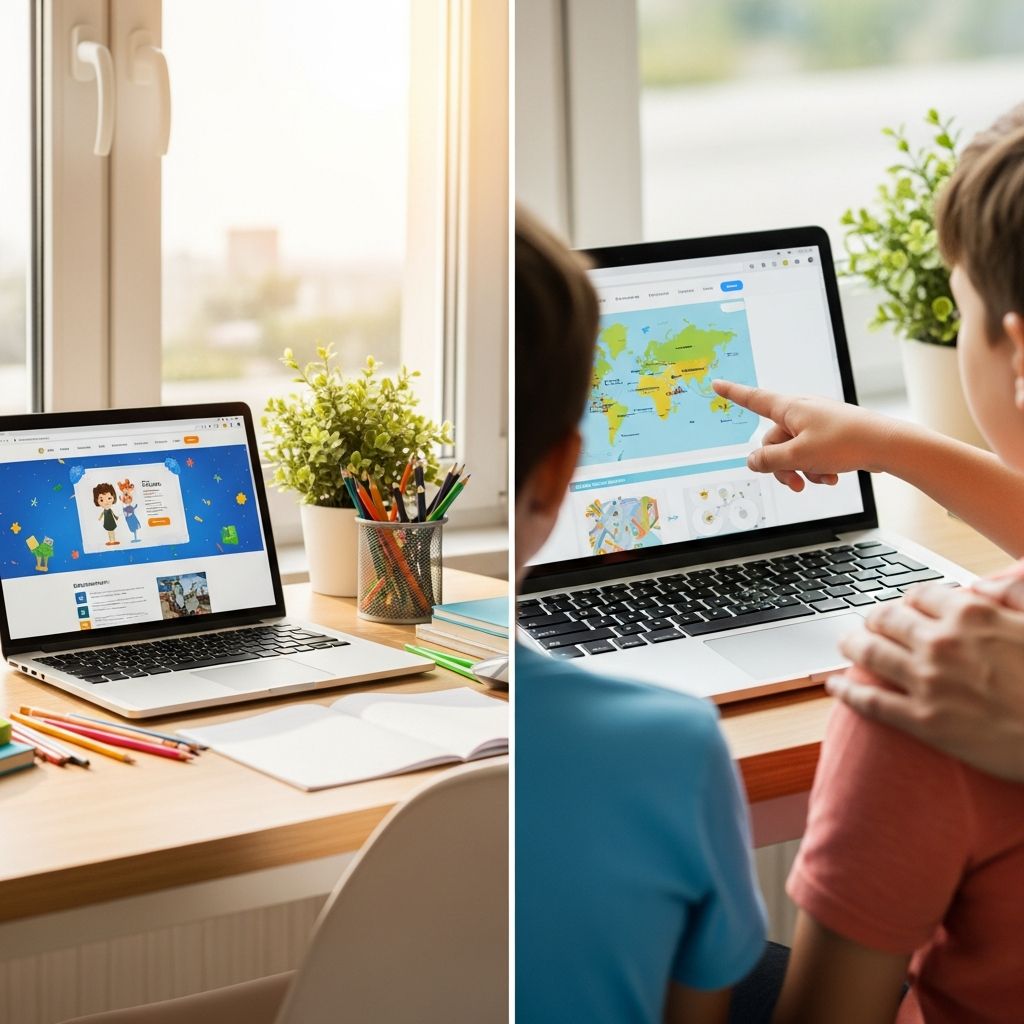
Third grade marks a pivotal year in a child’s education, where students transition toward greater independence while deepening their understanding across core subjects. Online programs offer flexible, engaging curricula that blend interactive lessons, multimedia resources, and hands-on activities to build critical thinking and foundational skills. This guide outlines key components of a robust third-grade online curriculum, emphasizing personalized pacing and real-world application.
Building Strong Foundations in Mathematics
Mathematics in third grade shifts focus from basic counting to advanced operations, geometry, and data handling. Students master addition and subtraction with multi-digit numbers, introduce multiplication and division facts up to 10, and explore fractions through visual models. Online platforms provide animated videos, practice quizzes, and printable worksheets to reinforce concepts like place value—reading, writing, comparing, and rounding numbers up to 10,000.
Key topics include:
- Number Sense and Operations: Properties of addition, estimating sums, mental math strategies, and solving word problems with regrouping.
- Patterns and Algebra: Identifying numeric patterns, understanding fact families, and using symbols for greater than, less than, and equals.
- Geometry and Measurement: Recognizing shapes, measuring length in metric and U.S. units, telling time to the minute, and counting money with change-making.
- Data and Fractions: Creating bar graphs, pictographs, and introducing equivalent fractions.
Interactive tools, such as virtual manipulatives, help students visualize concepts like multiplying three-digit numbers by one digit or dividing with remainders, promoting logical reasoning.
| Math Topic | Core Skills | Online Tools |
|---|---|---|
| Place Value | Compare/order numbers to 10,000 | Interactive number lines |
| Multiplication/Division | Facts to 10×10, word problems | Animated drills, games |
| Fractions | Represent/compare unit fractions | Visual models, quizzes |
| Geometry | Perimeter, area basics | Drag-and-drop shapes |
Enhancing Literacy and Communication Skills
Language arts expands reading comprehension, writing proficiency, and vocabulary in third grade. Students analyze narratives and informational texts, distinguishing main ideas from details, and using strategies like previewing with headings and images. Phonics, grammar, and spelling build through context clues, synonyms, multiple-meaning words, and rules for plurals and suffixes.
Writing evolves from personal narratives to opinion pieces and reports, incorporating dialogue, reasons, and facts. Poetry introduces rhyme, rhythm, and imagery, while integrated literature units explore themes in folktales, tall tales, and stories about family and friendship.
- Reading Strategies: Summarizing sequences, inferring cause/effect, identifying character traits and themes.
- Grammar and Vocabulary: Nouns, verbs, adjectives, adverbs; using dictionaries and thesauruses.
- Writing Genres: Personal stories, opinions, informational texts, and creative poetry.
Online curricula feature audio books, comprehension quizzes, and peer-sharing tools to encourage discussion and manuscript-to-cursive transitions.
Exploring Science Through Inquiry and Discovery
Third-grade science emphasizes hands-on experiments in physical, life, and earth sciences. Topics cover force and motion, energy forms (heat, light, sound), life cycles of plants/animals, ecosystems, and weather patterns. Students conduct virtual labs on energy transfer, food chains, adaptations, and celestial bodies like the sun, moon, and Earth.
The scientific method—observing, hypothesizing, experimenting—is central, with activities like building simple circuits or tracking weather data. Safety and environmental respect are integrated.
- Physical Science: Forms of energy, properties of matter.
- Life Science: Inherited traits, habitats.
- Earth Science: Weather, ecosystems, space.
Multimedia simulations make abstract concepts tangible, fostering curiosity and problem-solving.
Navigating Social Studies and Global Awareness
Social studies introduces communities (urban, suburban, rural), geography (landforms like oceans, mountains), history (ancient civilizations), civics (government branches), and economics (resources and goods). Map skills, timelines, and diverse perspectives build cultural understanding.
Inquiry-based learning uses stories and virtual tours to explore how geography influences life.
Arts, Physical Education, and Holistic Development
Beyond cores, electives nurture creativity and health. Art involves drawing, painting, and cultural crafts; music covers rhythm and instruments; PE builds motor skills through games, dance, and sportsmanship. STEAM projects integrate design thinking for collaborative problem-solving.
Benefits of Online Third-Grade Programs
Virtual learning offers pacing flexibility, parental dashboards, and anytime access. Programs like those inspired by Connections Academy provide state-aligned standards, certified teacher support, and progress tracking. Hands-on kits and community events enhance engagement.
Frequently Asked Questions (FAQs)
Is third-grade online curriculum aligned with state standards?
Yes, reputable programs follow Common Core and state benchmarks for math, ELA, and science.
How much time does a typical day require?
About 4-5 hours, with 1 hour per core subject plus electives, adjustable for homeschool needs.
Are there assessments and progress reports?
Quizzes, unit tests, and automated reports track mastery and inform instruction.
Can students with special needs participate?
Adaptive tools, IEPs, and support services accommodate diverse learners.
What devices are needed?
A computer or tablet with internet; printable materials support offline work.
Implementing a Successful Online Routine
Start with a dedicated space, blend screen time with activities, and incorporate read-alouds. Weekly goals and family involvement boost retention.
Third-grade online education empowers students to thrive academically and personally, preparing them for future challenges.
References
- Third Grade Curriculum – Online Homeschool — Time4Learning. 2023. https://www.time4learning.com/products/third-grade-curriculum
- 3rd Grade – Core Curriculum — LGUSD. 2022. https://daves.lgusd.org/apps/pages/index.jsp?uREC_ID=220325&type=d&pREC_ID=485366
- Grade 3 – PK-12 Education — ISD742. 2024. https://academics.isd742.org/curriculum-k-5/grade-3
- Grade 3 Curriculum Guide 2025-26 — Dedham Country Day School. 2025-06-01. https://www.dedhamcountryday.org/wp-content/uploads/2025/06/Grade-3-Curriculum-Guide-2025-26.pdf
- Complete Third-Grade Curriculum — CSUSB. 2023. https://www.csusb.edu/sites/default/files/glc3rdgradecurriculum.pdf

- Integrated M.A. in Applied Linguistics, University of Hyderabad
- 5+ years in editorial, instructional, SEO, and research-based writing
Sneha is a relationships and lifestyle writer with a strong foundation in applied linguistics and certified training in relationship coaching. She brings over five years of writing experience to theskillvault, crafting thoughtful, research-driven content that empowers readers to build healthier relationships, boost emotional well-being, and embrace holistic living. Her writing and insights reflect the belief that beauty, happiness, and wellness…