
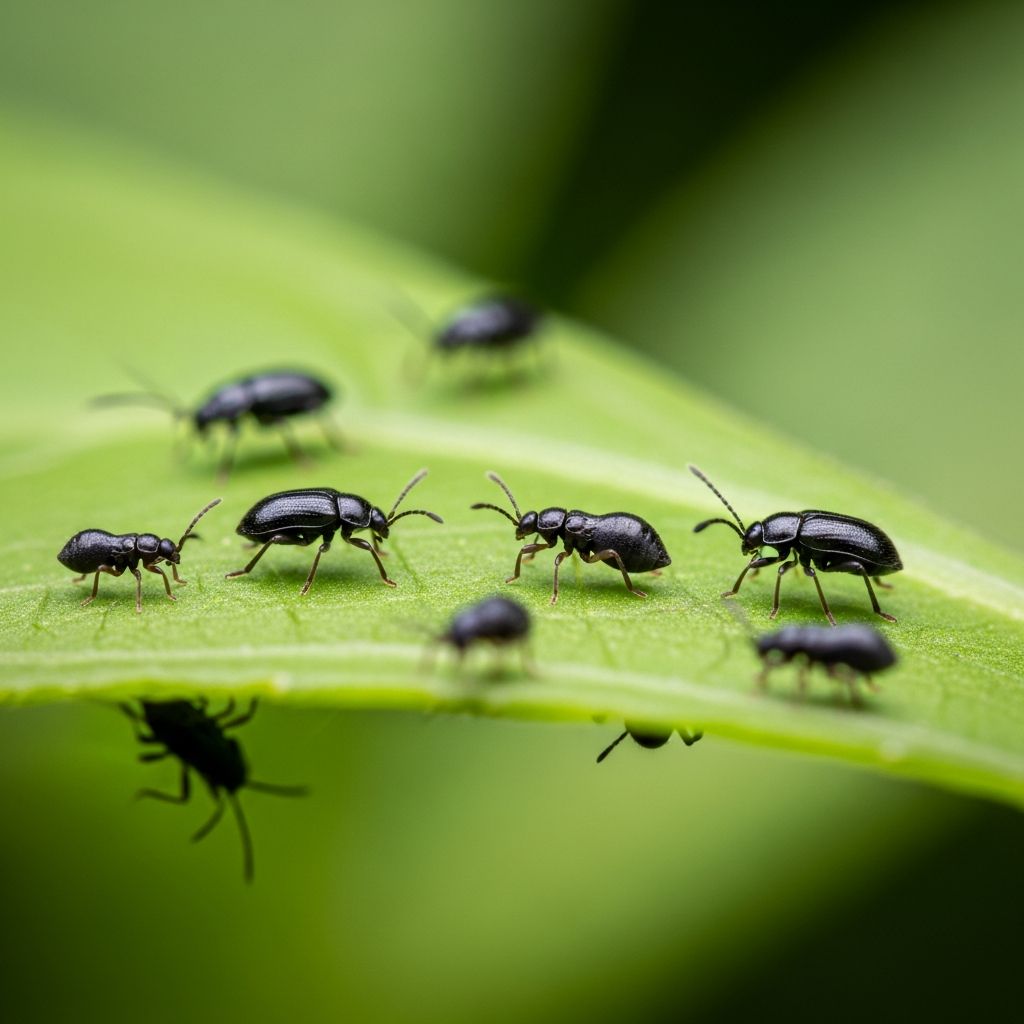
Encountering small black insects that leap unexpectedly around your sink or bathtub can be alarming. These **tiny jumping black bugs** are typically springtails, harmless yet persistent invaders drawn to moisture. Understanding their nature helps in managing infestations effectively without unnecessary worry.
Understanding the Nature of Jumping Household Pests
Household pests that jump are rare compared to crawling or flying ones, making their appearance particularly noticeable. Homeowners often spot them in damp areas like bathrooms during humid seasons. These insects measure about 1/16 to 1/4 inch, with soft, elongated or oval bodies in dark hues. Their signature trait is a tail-like furcula that catapults them up to 10 cm in a single bound, aiding escape from threats.
Springtails belong to the Collembola order, primitive wingless hexapods abundant in nature. Unlike true insects, they lack certain body segments but share similar ecological roles. They feed on decaying organic matter, molds, and algae, thriving where humidity exceeds 75%. Indoors, they signal excess moisture rather than structural damage.
Common Habitats and Seasonal Patterns
**Springtails** flourish in saturated environments. Outdoors, seek them in shaded mulched gardens, under leaf litter, or near decaying wood. They aggregate in thousands during spring, building populations that migrate inside as summer heat dries soil.
Indoors, prime spots include:
- Clogged drains and sink overflows
- Bathtub corners and shower crevices
- Basement sump pumps and crawl spaces
- Under leaky pipes or around window sills
Peak sightings occur in July-August in temperate regions, aligning with hot, humid weather that pushes them toward artificial water sources. Even in winter, ‘snow fleas’—another name for springtails—emerge from soil under melting snow, appearing as dark specks.
Distinguishing Springtails from Other Jumpers
Misidentification leads to misguided treatments. Use this table to compare key jumpers:
| Feature | Springtails | Fleas | Fungus Gnats |
|---|---|---|---|
| Size | 0.25-6mm | 1-3mm | 2-5mm |
| Jump Style | Backward flip via furcula | Forward leap up to 8 inches | Fly, rarely jump |
| Bite? | No | Yes, itchy welts | No |
| Habitat | Moist soil/mulch | Pet fur/carpets | Overwatered plants |
| Damage | Nuisance only | Bites, transmits disease | Plant roots |
Fleas target hosts like pets, jumping onto skin. Springtails evade without biting, preferring damp hideouts. Fungus gnats hover near houseplants, lacking the spring mechanism.
Biological Traits and Reproduction
Springtails exhibit rapid life cycles. Females deposit eggs in moist clusters, hatching in days under ideal conditions. Nymphs resemble mini-adults, molting repeatedly without a pupal stage. Development completes in weeks, enabling explosive population growth.
They sense humidity via hygroreceptors, migrating en masse when outdoor conditions worsen. No wings mean entry via cracks under doors, utility lines, or vents. Their diet—fungi, pollen, algae—harms no structures but indicates mold risks.
Health and Property Impacts
Good news: springtails pose no direct threats. They neither bite, sting, nor carry pathogens. No allergies or structural damage reported. Their presence, however, flags moisture issues promoting mold growth, a respiratory hazard.
Large swarms distress residents psychologically, mimicking flea infestations. Prompt action prevents escalation, as unchecked groups multiply swiftly.
Effective Detection Strategies
Spotting requires vigilance:
- Visual Inspection: Shine flashlight into drains at night; watch for leaps.
- Trap Test: Place wet paper towel in suspected area overnight; check for clusters.
- Sticky Cards: Yellow cards capture jumpers near moisture sources.
- Humidity Meter: Readings over 60% confirm conducive conditions.
Professional inspections use aspirators for sampling without dispersal.
Step-by-Step Removal Methods
Elimination targets moisture denial:
- Dry Sources: Fix leaks, ventilate bathrooms, use dehumidifiers below 50% RH.
- Clean Thoroughly: Scrub drains with bleach solution (1:10); vacuum surfaces.
- Seal Entries: Caulk cracks, weatherstrip doors, screen vents.
- Outdoor Barriers: Rake mulch 6 inches from foundation; reduce shaded watering.
- Insecticides (Last Resort): Apply diatomaceous earth or pyrethrin sprays labeled for springtails.
Results appear in 1-2 weeks with consistency. Avoid broad-spectrum chemicals, as springtails benefit ecosystems by decomposing organics.
Preventing Future Invasions
Long-term control emphasizes environmental tweaks:
- Maintain yard drainage; grade soil away from house.
- Store firewood elevated and dry.
- Monitor potted plants for soggy soil.
- Install exhaust fans in high-humidity rooms.
Annual spring cleanups reduce outdoor breeding sites.
Frequently Asked Questions (FAQs)
Are tiny jumping black bugs dangerous to pets or children?
No, springtails do not bite, sting, or transmit diseases. They are purely a nuisance.
Why do they appear suddenly in large numbers?
Populations boom in moist spring soil, then migrate indoors as it dries in summer heat.
Can I use flea treatments on springtails?
Do not; they are ineffective and unnecessary. Focus on moisture control instead.
How long until they disappear after treatment?
1-2 weeks if humidity is reduced; survivors die without water.
Do springtails damage plants or homes?
No structural harm; they aid decomposition outdoors without affecting buildings.
Professional Intervention: When to Call Experts
DIY fails if moisture persists or swarms exceed hundreds. Pest pros assess with moisture meters, apply targeted baits, and guarantee results. Early calls prevent reinfestation cycles.
In summary, these **tiny jumping black bugs**—springtails—thrive on neglect but yield to diligence. Prioritize dryness for lasting relief.
References
- What Are Springtails? All About the Tiny Jumping Bugs in the Sink — Preferred Pest Control. 2023-07-15. https://www.preferredpest.com/education/blog/what-are-springtails-all-about-the-tiny-jumping-bugs-in-the-sink
- What Are Springtails? Tiny Jumping Black Bugs — Orkin Pest Control. 2024-02-10. https://www.orkin.com/pests/springtails
- Tiny, Black, Jumping Bugs — BugGuide.Net. 2022-11-05. https://www.bugguide.net/node/view/24149
- Fleas, Springtails, and Fungus Gnats: What Small Bugs Live in Your House — Cooper Pest Solutions. 2023-09-20. https://www.cooperpest.com/blog/what-are-the-tiny-jumping-bugs-in-my-house

- Integrated M.A. in Applied Linguistics, University of Hyderabad
- 5+ years in editorial, instructional, SEO, and research-based writing
Sneha is a relationships and lifestyle writer with a strong foundation in applied linguistics and certified training in relationship coaching. She brings over five years of writing experience to theskillvault, crafting thoughtful, research-driven content that empowers readers to build healthier relationships, boost emotional well-being, and embrace holistic living. Her writing and insights reflect the belief that beauty, happiness, and wellness…