
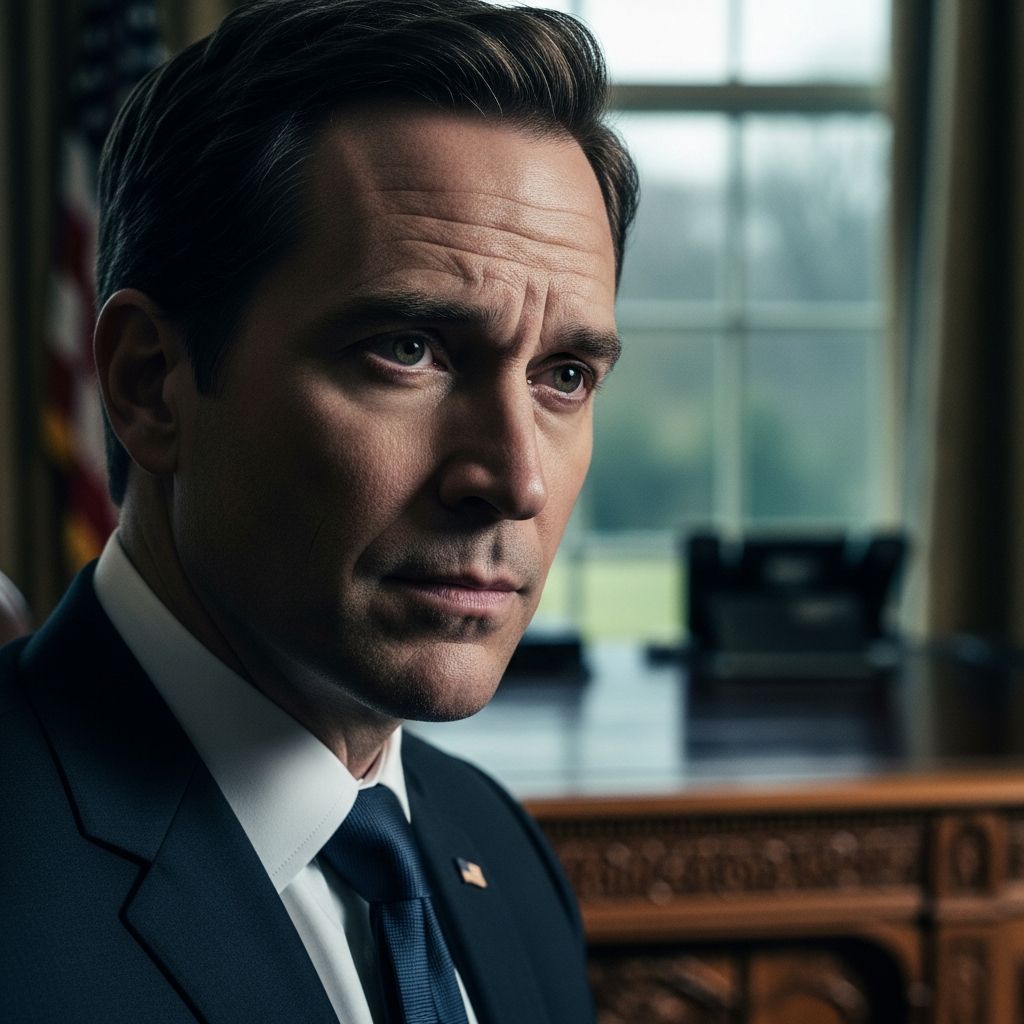
The Unlikely President: A Study in Reluctant Leadership
When a sudden catastrophe wipes out the entire presidential line of succession, the burden of leadership falls not on a seasoned politician or a charismatic war hero, but on Tom Kirkman, a low-profile cabinet secretary with no real power base. In the television series Designated Survivor, Kirkman’s journey from obscurity to the Oval Office becomes a compelling case study in how personality, values, and inner resilience shape leadership under extreme pressure.
What makes Kirkman compelling is not his political genius or military background, but his humanity. He is visibly unprepared, emotionally overwhelmed, and morally conflicted. Yet, over time, he evolves into a leader who commands respect not through force of personality alone, but through consistency, integrity, and a quiet determination to do what he believes is right. His leadership style is not one of dominance, but of endurance, shaped by deep personal convictions and a strong internal compass.
Core Traits of a Reluctant Leader
Kirkman’s leadership is defined by a set of psychological traits that set him apart from traditional political figures. These are not flashy or performative qualities, but rather a combination of humility, moral clarity, and a strong need for internal coherence.
- Integrity as a North Star: Kirkman operates from a place of deep personal honesty. He is not interested in political gamesmanship for its own sake. His decisions are guided less by polling or party loyalty and more by a sense of what feels ethically sound.
- Reluctance, Not Ambition: Unlike many leaders who crave power, Kirkman is thrust into leadership against his will. His initial hesitation is not weakness, but a realistic acknowledgment of his limitations. This reluctance becomes a strength, as it keeps him grounded and prevents him from becoming intoxicated by authority.
- Internal Locus of Control: When faced with chaos, Kirkman repeatedly turns inward. He does not rely solely on external validation or approval. Instead, he asks himself: Who am I? What do I stand for? What would I regret not doing? This introspective habit becomes his anchor in crisis.
The Role of Idealism in Crisis Leadership
One of the most striking aspects of Kirkman’s character is his idealism. In a world of political maneuvering and realpolitik, he clings to principles that many would consider naive: honesty, transparency, and a belief that leadership should serve the public good, not personal or partisan interests.
This idealism is not without cost. Early in his presidency, his refusal to engage in typical political bargaining or backroom deals frustrates allies and emboldens enemies. He is often criticized for being too rigid, too moralistic, or too slow to act. Yet, over time, this same idealism becomes his greatest asset.
Consider the following dynamics:
- Trust as a Strategic Resource: In a post-crisis environment where institutions are weakened and trust is scarce, Kirkman’s consistency makes him a rare figure people can believe in. Whistleblowers, career civil servants, and even some political opponents turn to him because they perceive him as incorruptible.
- Cost of Principle: Idealism often comes with short-term setbacks. Kirkman makes decisions that are politically unpopular, alienates powerful figures, and sometimes appears indecisive because he is weighing moral implications. But these choices build long-term credibility.
- Flexibility Within Framework: Kirkman is not dogmatic in the sense of refusing to adapt. He listens, learns, and adjusts tactics. What he does not compromise is his core framework: that leadership must be grounded in truth and service, not manipulation or self-interest.
Decision-Making Under Pressure: The Inner Conflict
Leadership in crisis is less about having all the answers and more about making decisions with incomplete information while managing intense emotional and political pressure. Kirkman’s decision-making process reveals a mind that is both thoughtful and deeply conflicted.
He does not make snap judgments out of bravado. Instead, he:
- Seeks input from trusted advisors, but ultimately reserves the final call for himself.
- Struggles with self-doubt, especially when the stakes are life and death.
- Experiences physical and emotional reactions to stress—moments of nausea, sleeplessness, and private breakdowns—before regaining composure.
What is notable is not the presence of doubt, but how he manages it. Kirkman does not let uncertainty paralyze him. He makes the best decision he can with the information available, accepts that he may be wrong, and then moves forward. This pattern reflects a mature, adaptive leadership style: one that acknowledges human limitations while still demanding action.
Emotional Intelligence and Relational Leadership
While Kirkman is often portrayed as reserved or even awkward in high-stakes political settings, he demonstrates a high degree of emotional intelligence in his relationships. His leadership is relational, not transactional.
Key aspects of his relational style include:
- Empathy for Subordinates: He treats staff with respect, acknowledges their mistakes without humiliating them, and often shields them from political fallout. This fosters loyalty and a sense of psychological safety within his team.
- Respect for Honest Disagreement: Kirkman does not demand blind loyalty. He values advisors who challenge him, as long as they do so respectfully and in good faith. He distinguishes between dissent and disloyalty, which allows for more robust decision-making.
- Personal Vulnerability as Strength: By occasionally showing his fear, exhaustion, or moral struggle, Kirkman humanizes himself. This vulnerability does not undermine his authority; instead, it makes his leadership feel authentic and relatable.
The Tension Between Idealism and Pragmatism
No leader, no matter how principled, can govern in a vacuum. Kirkman’s presidency is defined by the ongoing tension between his ideals and the messy realities of power.
This tension manifests in several ways:
- Compromise vs. Integrity: He is often forced to make politically expedient choices that conflict with his personal ethics. For example, appointing a chief of staff based on political necessity rather than personal alignment forces him to accept a more pragmatic, sometimes ruthless, approach to governance.
- Security vs. Liberty: In the aftermath of a national crisis, there is immense pressure to expand executive power, restrict civil liberties, and prioritize security. Kirkman wrestles with these trade-offs, often leaning toward restraint, but not always succeeding in maintaining his ideal balance.
- Public Image vs. Private Conviction: He is acutely aware of how his actions are perceived, but he resists the temptation to perform leadership for the cameras. His focus remains on doing what he believes is right, even when it is unpopular.
This internal negotiation between idealism and pragmatism is not a flaw, but a hallmark of mature leadership. It shows that Kirkman is not naive; he understands the constraints of power, but he refuses to let those constraints erase his moral boundaries.
Resilience and the Psychology of Survival
Surviving in high-stakes leadership is not just about making good decisions; it is about enduring psychological and emotional strain over time. Kirkman’s resilience is not the result of invulnerability, but of a specific psychological strategy.
His resilience is built on:
- Self-Reflection as a Coping Mechanism: When overwhelmed, Kirkman retreats into introspection. He revisits his values, his identity, and his purpose. This internal dialogue helps him regain clarity and composure.
- Support Systems: While he often makes decisions alone, he relies on a small circle of trusted individuals—his wife, a few close advisors, and sometimes even political opponents who share his commitment to the rule of law. These relationships provide emotional grounding and reality checks.
- Acceptance of Imperfection: Kirkman makes mistakes, reverses decisions, and sometimes fails. But he does not collapse under the weight of failure. Instead, he acknowledges it, learns from it, and continues. This capacity to tolerate imperfection is crucial for long-term resilience.
Leadership Lessons from a Reluctant President
Kirkman’s journey offers several practical lessons for leadership in any high-pressure environment, whether in politics, business, or crisis management.
| Leadership Challenge | Kirkman’s Approach | Key Takeaway |
|---|---|---|
| Sudden, overwhelming responsibility | Focuses on core values and small, manageable actions | When everything is uncertain, anchor yourself in what you know is right |
| High-stakes decision-making | Seeks input, then decides; accepts uncertainty | Good decisions are not always perfect; they are timely and principled |
| Political opposition and betrayal | Distinguishes between disagreement and disloyalty; responds firmly to betrayal | Protect your integrity, but don’t confuse criticism with threat |
| Personal and emotional strain | Uses introspection, trusted relationships, and self-compassion | Resilience is not about never breaking; it’s about how you put yourself back together |
Frequently Asked Questions
What personality type is Tom Kirkman?
While fictional characters cannot be formally typed, Kirkman exhibits traits commonly associated with idealistic, principled, and introspective types—such as a strong internal moral compass, a preference for authenticity, and a tendency to make decisions based on values rather than pure pragmatism. He functions best when aligned with a clear sense of purpose and integrity.
Is Tom Kirkman a strong leader despite his reluctance?
Yes. His reluctance does not indicate weakness; rather, it reflects a realistic awareness of the burden of leadership. His strength lies in consistency, moral clarity, and the ability to endure pressure without abandoning his core values. Over time, he grows into the role, not by becoming someone else, but by deepening his existing strengths.
How does Kirkman handle betrayal?
Kirkman is generally forgiving of honest disagreement, but he has a clear line when it comes to betrayal of trust, especially when it involves undermining constitutional authority or lying directly to him. In such cases, he can be firm and decisive, taking strong action to protect the integrity of his office and the rule of law.
What makes Kirkman different from typical political leaders?
Unlike many leaders driven by ambition, power, or party loyalty, Kirkman is motivated primarily by a sense of duty and moral responsibility. He is not a natural politician; he is a reluctant leader who leads from principle rather than strategy. This makes him both vulnerable in the short term and uniquely credible in the long term.
Can idealism work in real-world leadership?
Idealism alone is not enough, but when combined with pragmatism, emotional intelligence, and resilience, it can be a powerful foundation for leadership. Kirkman’s story suggests that leaders who stay grounded in core values, even while adapting to reality, can build trust, inspire loyalty, and navigate crises more effectively than those who abandon principle for expediency.
References
- Designated Survivor – Character Profile: Tom Kirkman — ABC / Netflix. 2016–2019. https://www.netflix.com/title/80097140
- Leadership in Crisis: A Psychological Perspective — American Psychological Association. 2022. https://www.apa.org/topics/leadership/crisis
- The Role of Integrity in Public Leadership — Harvard Kennedy School, HKS Case Program. 2021. https://www.hks.harvard.edu/centers/case

Medha Deb is an editor with a master's degree in Applied Linguistics from the University of Hyderabad. She believes that her qualification has helped her develop a deep understanding of language and its application in various contexts. Medha specializes in the areas of beauty, health, sports, and wellness and is committed to ensuring that the content on the website is…