
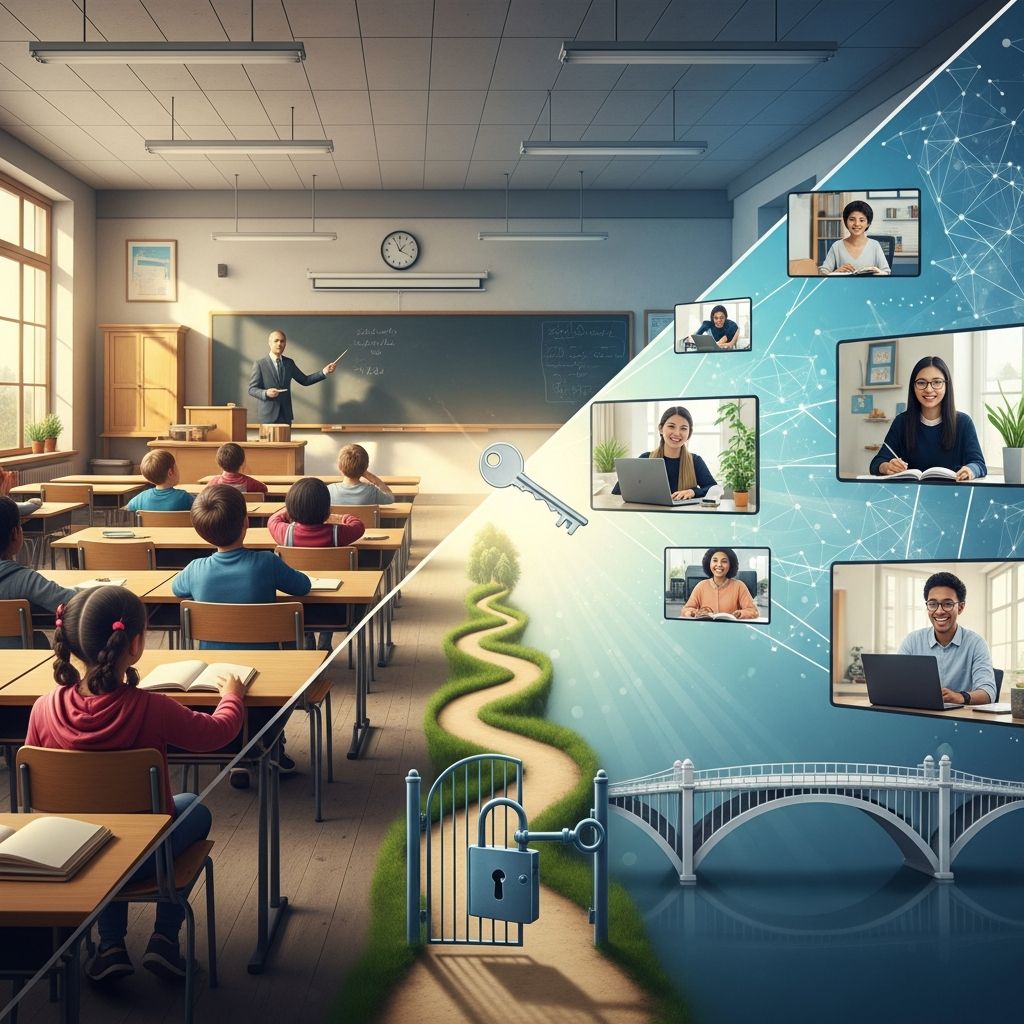
Reimagining Education Beyond Campus Walls
The landscape of education has undergone profound transformation over the past decade, with distance learning emerging as a powerful alternative to conventional classroom instruction. While traditional educational models have dominated for centuries, remote and online learning platforms now offer distinct advantages that address contemporary learner needs. Students and professionals increasingly recognize that distance education transcends the limitations of brick-and-mortar institutions, providing unprecedented access to quality instruction regardless of geographical location or personal circumstances.
The shift toward distance learning reflects broader changes in how society values flexibility, inclusivity, and self-directed development. Unlike traditional settings that require physical presence at scheduled times, distance education accommodates diverse life situations, learning styles, and career trajectories. This fundamental difference creates opportunities that traditional learning environments struggle to provide, making remote education an increasingly compelling choice for millions worldwide.
Unrestricted Geographic Accessibility and Global Learning Communities
One of the most transformative aspects of distance education is its ability to eliminate geographical barriers that traditionally limited educational opportunities. Students living in remote areas, developing nations, or regions with limited educational infrastructure can now access courses from world-class institutions without relocating or incurring substantial travel expenses. This democratization of access fundamentally changes who can pursue higher education and professional development.
Additionally, distance learning enables educational institutions to assemble diverse, global cohorts of learners. Rather than being confined to students within commuting distance, online programs attract participants from multiple countries and cultures. This diversity enriches classroom discussions, exposes learners to international perspectives, and creates networking opportunities that transcend local markets. Faculty can similarly invite guest lecturers and experts from anywhere globally, providing students with insights from thought leaders they might never encounter in traditional classroom settings.
Temporal Flexibility Enabling Personalized Learning Schedules
Traditional education operates on fixed schedules that assume all learners have identical availability patterns. Distance education fundamentally reimagines this approach by separating instruction from temporal constraints. Asynchronous learning models allow students to access course materials, lectures, and assignments whenever their circumstances permit—whether early morning, late evening, or weekend hours.
This scheduling flexibility proves particularly valuable for working professionals, parents managing childcare responsibilities, and individuals with complex life circumstances. Rather than choosing between career advancement and educational development, distance learners can strategically integrate both. They can listen to recorded lectures during commutes, complete assignments during optimal cognitive hours, and participate in discussions when they achieve maximum focus.
Furthermore, self-paced learning models allow students to spend more time on challenging topics while progressing quickly through material they grasp readily. This differentiated approach respects individual learning speeds and comprehension patterns, often resulting in deeper understanding than traditional lecture-based instruction where everyone must maintain identical pacing regardless of prior knowledge or learning needs.
Technological Innovation Enhancing Engagement and Comprehension
Distance education platforms leverage sophisticated technology that creates interactive learning experiences impossible in traditional classrooms. Rather than relying solely on textbooks and passive lectures, online courses incorporate multimedia elements—video demonstrations, interactive simulations, virtual laboratories, and gamified assessments—that engage learners through multiple modalities.
These technological tools serve pedagogical purposes beyond novelty. Virtual laboratory environments allow students to conduct experiments safely and repeatedly without expensive physical infrastructure. Interactive simulations make abstract concepts tangible and observable. Embedded quizzes with immediate feedback help learners identify knowledge gaps in real-time rather than discovering misunderstandings only during summative assessments.
The technology also facilitates diverse communication formats that traditional classrooms rarely accommodate. Discussion boards allow thoughtful, asynchronous dialogue where participants can craft considered responses rather than speaking impromptu. Chat functions enable real-time interaction. Video conferencing creates face-to-face connection despite physical distance. These varied communication channels accommodate different communication preferences and accessibility needs.
Meaningful Accessibility for Learners with Disabilities and Diverse Needs
While traditional campuses increasingly emphasize accessibility, distance education fundamentally redesigns the learning environment in ways that naturally accommodate diverse physical and cognitive needs. Students with mobility challenges participate fully without navigating sprawling campuses or inaccessible buildings. Those with hearing impairments benefit from text-based discussion forums and captioned videos. Learners with visual impairments can utilize screen readers and audio-enhanced content. Individuals managing chronic health conditions avoid transportation stress and fatigue that campus attendance entails.
Distance learning also benefits students with learning disabilities by allowing personalized instructional approaches. The self-paced environment means students can spend extended time on challenging concepts without pressure to keep pace with classmates. They can access recordings repeatedly, review explanations in different formats, and take breaks without disrupting classroom dynamics. The reduced sensory overstimulation of classroom environments benefits neurodivergent learners who find traditional settings overwhelming.
Comprehensive Course Variety and Specialized Program Access
Traditional institutions limit course offerings based on local demand, available faculty, and physical facilities. Distance education removes these constraints, enabling students to access specialized programs regardless of whether such programs exist locally. A student in a small town can pursue advanced degrees in niche fields. Someone interested in emerging technologies can study with leading experts even if their region has no local programs in that specialty.
Furthermore, distance students can strategically combine courses across multiple institutions, creating customized educational pathways impossible in traditional settings. Rather than accepting whatever major and electives a single institution offers, distance learners can cherry-pick courses from various providers, tailoring their education to specific career goals and intellectual interests.
This variety also accommodates changing educational needs. If a student’s interests or career direction shifts mid-degree, they can easily add or substitute courses without the administrative complexity and financial penalties traditional transfers often entail. This flexibility encourages exploration and reduces the anxiety of making irreversible educational choices.
Emotional Well-Being and Reduced Social Anxiety
Growing awareness of mental health challenges has highlighted how traditional classroom environments inadvertently amplify anxiety for some learners. The pressure of speaking in front of dozens of peers, the visibility of struggling with material, and the sensory intensity of crowded lecture halls trigger significant stress for many students. Distance learning mitigates these pressures by creating lower-stakes communication opportunities.
Online discussion forums and asynchronous communication allow students to participate in academic conversations without the immediate pressure of classroom participation. Quieter, more introverted learners often find they contribute more meaningfully in written formats where they can carefully compose thoughts. Less assertive students feel empowered to share ideas when physical anonymity and temporal space reduce the anxiety of spontaneous speaking.
Research demonstrates that distance education can substantially reduce social anxiety for many learners. The ability to control one’s learning environment—managing lighting, sound, interruptions, and social demands—creates psychological safety that supports better engagement and risk-taking in academic work.
Financial Accessibility and Reduced Overall Education Costs
The financial barriers to traditional higher education have become increasingly prohibitive, with tuition, housing, transportation, and living expenses creating substantial debt burdens. Distance education typically offers significantly lower tuition rates than residential programs. Students eliminate commuting costs by learning from home. They avoid dormitory housing, meal plans, and campus-based expenses. For working adults, they avoid lost income from leaving employment to attend classes.
This financial accessibility matters profoundly for low-income students, international learners, and those from underprivileged backgrounds. Distance education transforms higher education from a privilege available primarily to affluent families into an achievable goal for broader populations. The reduced financial burden also means students can focus on learning rather than simultaneously working multiple jobs to cover education costs.
Professional Skill Development and Career Advancement Integration
Distance learning environments naturally integrate professional development with formal education. Students develop technical competencies required in contemporary workplaces—proficiency with specialized software, online research methods, digital communication platforms, and remote collaboration tools. These skills directly transfer to employment contexts, making distance graduates particularly prepared for modern work environments.
Additionally, distance education allows professionals to advance their credentials without career interruption. An employee can pursue an advanced degree while maintaining employment, accumulating practical experience that enriches coursework while earning income. This integration of learning and working creates a more holistic professional development trajectory than traditional education allows. Employers increasingly recognize that distance-educated employees bring both current credentials and relevant work experience.
Continuous Access to Learning Resources and Extended Engagement
Traditional courses end after a semester, after which students lose access to lectures, materials, and instructor support. Distance education platforms provide continuous access to course content. Students can review lectures repeatedly as needed for reinforcement, study aids in later courses requiring prerequisite knowledge, or professional application months after completing formal instruction. This permanent access extends the value and longevity of educational investment.
Furthermore, learning management systems create searchable repositories of course discussions, clarifications, and resources. Students benefit from questions peers asked in previous cohorts and instructor responses to those questions. This accumulation of knowledge resources means each subsequent cohort enjoys richer learning material than previous participants, creating a compounding knowledge advantage unique to distance platforms.
Personalized Learning Pathways and Adaptive Instruction
Distance education platforms increasingly employ adaptive learning technologies that personalize instruction based on individual performance and preferences. Rather than everyone receiving identical content at identical pace, systems can recommend resources matching specific learning styles, adjust difficulty based on demonstrated mastery, and suggest supplementary materials addressing individual knowledge gaps.
This personalization acknowledges fundamental reality that learners have different starting points, prior knowledge, learning preferences, and pacing needs. Traditional classrooms force compromise between these differences, often leaving advanced learners bored and struggling learners frustrated. Distance education eliminates this compromise by tailoring instruction to individual needs.
Comparison: Distance vs. Traditional Learning Models
The following table illustrates key differences between distance and traditional educational approaches:
| Factor | Distance Learning | Traditional Learning |
|---|---|---|
| Schedule Flexibility | Asynchronous and flexible timing | Fixed class times and days |
| Geographic Access | Global accessibility from anywhere | Limited to local commuting radius |
| Cost Structure | Lower tuition, no commute expenses | Higher tuition, housing, transportation |
| Course Variety | Access to specialized programs globally | Limited to local institutional offerings |
| Technology Integration | Multimedia, simulations, interactive tools | Primarily textbooks and lectures |
| Accessibility Support | Inherently accommodates diverse needs | Often requires special accommodations |
| Learning Pace | Self-directed and individualized | Group-paced curriculum |
Key Considerations and Frequently Asked Questions
Q: Does distance learning provide equivalent educational quality to traditional programs?
A: Research indicates that quality distance education produces learning outcomes comparable to traditional instruction, particularly when programs employ interactive technology, regular instructor engagement, and structured coursework. Quality varies by program, making institution and program selection important regardless of format.
Q: How do distance learners develop professional networks?
A: Distance programs facilitate networking through online cohorts, alumni networks, discussion boards, virtual events, and professional associations. Many distance students report building meaningful professional relationships despite physical distance.
Q: Is distance learning suitable for all academic disciplines?
A: While most disciplines can incorporate distance delivery, some fields requiring hands-on laboratory work, clinical practice, or specialized equipment may combine distance and in-person components. Hybrid models increasingly address these requirements.
Q: What challenges might distance learners encounter?
A: Distance learning requires greater self-motivation, reliable technology access, and strong time management than traditional settings. Some learners struggle with isolation or accountability in less-structured environments. Success depends on individual learning preferences and circumstances.
Q: How do employers perceive distance education credentials?
A: Employer perception varies significantly by institution and program quality. Degrees from established, accredited distance programs earn equivalent respect to traditional degrees, though employer familiarity with specific programs influences hiring decisions.
Conclusion: The Expanding Educational Landscape
Distance education represents not merely an alternative to traditional learning but a fundamentally different educational paradigm addressing contemporary learner needs and circumstances. By eliminating geographical barriers, providing temporal flexibility, incorporating advanced technology, and reducing financial obstacles, remote learning creates educational opportunities previously unavailable to millions. The advantages extend beyond convenience—distance education enables personalized learning, accommodates diverse needs, and integrates professional development with academic advancement in ways traditional institutions struggle to match.
As technology continues advancing and educational institutions refine distance delivery models, the distinction between distance and traditional education will continue blurring. Rather than viewing them as competing approaches, recognizing their complementary strengths allows learners to select educational formats matching their individual circumstances, preferences, and goals. The future of education increasingly acknowledges that one model cannot serve all learners equally—distance education provides the flexibility, accessibility, and innovation necessary to ensure that quality instruction reaches learners wherever they are and whenever they need it.
References
- 7 Top Benefits of Remote Learning — Echo360. 2024. https://echo360.com/articles/7-top-benefits-of-remote-learning/
- The benefits of distance learning for students and teachers — Promethean World. 2024. https://www.prometheanworld.com/resource-center/blogs/the-benefits-of-distance-learning-for-students-and-teachers/
- The 10 Benefits of Online Learning — Drexel University School of Education. 2024. https://drexel.edu/soe/resources/student-teaching/advice/benefits-of-online-and-virtual-learning/
- Advantages of Online Learning vs. Classroom — University of Phoenix. 2024. https://www.phoenix.edu/articles/online-college/advantages-of-online-learning-vs-traditional-classroom.html
- 7 Advantages to Taking Online Classes — OEDb. 2024. https://www.oedb.org/ilibrarian/10-advantages-to-taking-online-classes/
- Strengths and Weaknesses of Online Learning — University of Illinois Springfield. 2024. https://www.uis.edu/ion/resources/tutorials/overview/strengths-weaknesses
- Distance Learning vs. Traditional Learning: Pros and Cons — Western Governors University. 2024. https://www.wgu.edu/blog/distance-learning-traditional-learning-pros-cons2210.html

- Integrated M.A. in Applied Linguistics, University of Hyderabad
- 5+ years in editorial, instructional, SEO, and research-based writing
Sneha is a relationships and lifestyle writer with a strong foundation in applied linguistics and certified training in relationship coaching. She brings over five years of writing experience to theskillvault, crafting thoughtful, research-driven content that empowers readers to build healthier relationships, boost emotional well-being, and embrace holistic living. Her writing and insights reflect the belief that beauty, happiness, and wellness…