
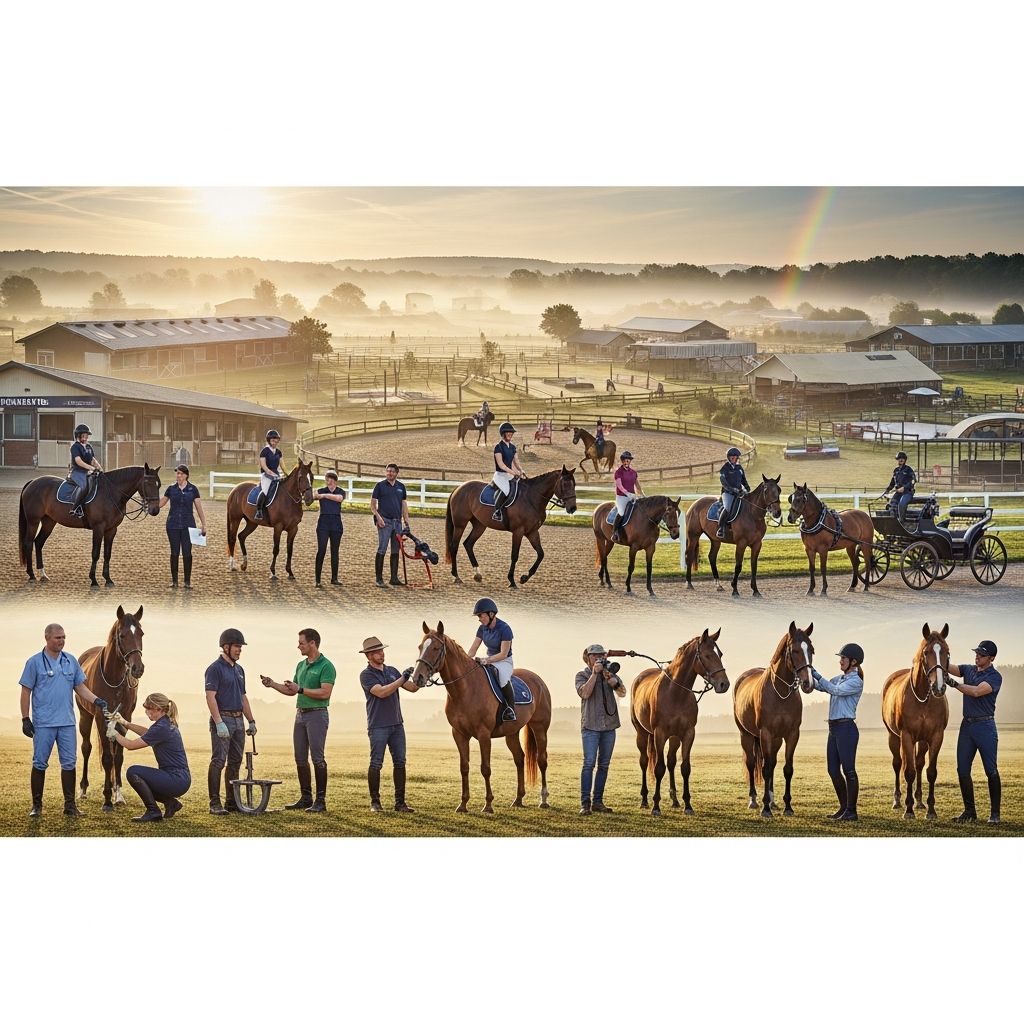
The equine industry offers a vibrant array of professional opportunities for individuals passionate about horses. From direct animal care to advanced scientific research and entrepreneurial ventures, these careers combine hands-on work with intellectual challenges. With the broader animal care sector projected to expand significantly, now is an ideal time to pursue a path in this dynamic field.
Hands-On Horse Care Roles
Entry-level positions in equine care provide foundational experience, often serving as gateways to advanced careers. These jobs demand physical stamina, attention to detail, and a deep affinity for horses.
- Stable Hand: Assist with daily stable operations, including feeding, cleaning stalls, and basic horse handling. This role builds essential skills for progression in the industry.
- Horse Groom: Focus on horse hygiene, grooming, mane and tail care, and preparing animals for events or training. Grooms ensure horses maintain peak condition for performance.
- Ranch Hand: Perform multifaceted farm duties such as fence repairs, pasture management, and general livestock support on larger equine properties.
Specialized Health and Wellness Professions
Equine health roles require technical expertise and often formal education, addressing the medical and therapeutic needs of horses.
| Career | Key Responsibilities | Salary Range |
|---|---|---|
| Equine Veterinarian | Diagnose illnesses, perform surgeries, and manage preventive health for competition and production horses. | $80,000 – $150,000+ |
| Farrier | Trim hooves, apply shoes, and balance limbs every 6-8 weeks using specialized tools. | $50,000 – $100,000+ |
| Veterinary Assistant | Support vets with exams, treatments, and lab work in equine clinics. | $30,000 – $45,000 |
These positions highlight the physical demands alongside rewarding financial potential, especially for farriers who enjoy schedule flexibility.
Training and Instruction Opportunities
For those skilled in riding and communication, training roles allow shaping horse and rider abilities across disciplines.
- Horse Trainer: Develop customized programs for young or problem horses in racing, showing, or riding, requiring patience and psychological insight.
- Horseback Riding Instructor: Deliver lessons in dressage, western, or therapeutic riding, certified by organizations like CHA or PATH.
- Professional Rider: Compete on show or polo circuits, earning through prizes, client services, or clinics.
- Racehorse Exercise Rider: Condition thoroughbreds at high speeds under trainer guidance, demanding elite fitness and reflexes.
Instructors adapt to diverse student needs, fostering confidence while prioritizing safety.
Scientific and Research-Driven Careers
Science-oriented paths leverage biology and data for equine advancement, often necessitating advanced degrees.
- Equine Nutritionist: Formulate diets based on research to optimize health and performance.
- Equine Geneticist: Analyze DNA for traits, diseases, and breeding advice using genetic mapping.
- Veterinary Behaviorist: Apply behavioral science for therapy and welfare improvement.
A bachelor’s in equine science or animal biology is typically required, with master’s or PhDs enhancing prospects in research.
Management and Operational Leadership
Overseeing facilities and teams combines equine knowledge with administrative prowess.
- Barn Manager: Supervise staff, budgets, and daily operations at stables or farms.
- Horse Facility Manager: Handle finances, maintenance, and staffing for equine centers.
These roles ensure seamless operations, blending passion with business acumen.
Business and Marketing Ventures
Commercial aspects of the industry open doors for sales, consulting, and innovation.
| Career | Education/Experience | Salary Range |
|---|---|---|
| Sales Representative | Marketing skills + equine knowledge | $50,000 – $120,000+ |
| Equine Industry Consultant | Bachelor’s + experience | $60,000 – $120,000 |
| Equine Product Development Manager | Business/engineering degree | $65,000 – $110,000 |
| Equine Human Resources Manager | HR/business degree | $55,000 – $95,000 |
Entrepreneurs might launch mobile services or equine dentistry practices, merging expertise with market savvy.
Extension and Educational Outreach
- Equine Extension Agent: Disseminate research on advances in management, marketing, and production to local producers.
These roles bridge academia and practical application, supporting community-level improvements.
Industry Outlook and Preparation Strategies
While U.S. equine employment shows slight contraction, animal care growth of 22% through 2026 signals robust opportunities. Median salaries start at $24,990 for general roles but rise with specialization.
To succeed:
- Gain hands-on experience and certifications early.
- Pursue degrees in equine science, business, or veterinary fields.
- Network via events, associations like American Horse Council, and platforms.
- Blend science, business, and equine passion for adaptability.
Frequently Asked Questions (FAQs)
What education is needed for most equine careers?
Entry-level roles require experience; specialized positions like veterinarians or geneticists need bachelor’s, master’s, or doctoral degrees in relevant fields.
What are typical salaries in the equine industry?
Ranges vary: grooms earn $25,000-$40,000, while veterinarians and consultants can exceed $100,000 annually.
Is the equine job market growing?
Specific equine roles are stable with minor dips, but animal care overall grows 22% through 2026.
How to start a career working with horses?
Begin as a stable hand or groom, pursue certifications, and network through fairs and councils.
Are there remote or flexible equine jobs?
Yes, sales, consulting, and some extension roles offer flexibility; internships like AHC’s provide remote options.
References
- Explore Thriving Career Opportunities in the Equine Industry — Just Horse Riders. 2023. https://www.justhorseriders.co.uk/blogs/news/explore-thriving-career-opportunities-in-the-equine-industry-from-equine-science-to-business-mavericks
- Modern Careers in the Horse Industry — AQHA. 2024. https://www.aqha.com/-/modern-careers-in-the-horse-industry
- The Right College Degree for a Horse Career — Practical Horseman. 2023. https://practicalhorsemanmag.com/news/the-right-college-degree-for-a-horse-career-22984/
- The Ultimate Equine Career List — EquineHire. 2024. https://equinehire.com/blog/the-ultimate-equine-career-list
- Equine Career Exploration — Midwest Horse Fair. 2025. https://midwesthorsefair.com/features/around-the-grounds/equine-career-exploration
- 15 Popular Careers With Horses — Indeed.com. 2024. https://www.indeed.com/career-advice/finding-a-job/careers-with-horses

Medha Deb is an editor with a master's degree in Applied Linguistics from the University of Hyderabad. She believes that her qualification has helped her develop a deep understanding of language and its application in various contexts. Medha specializes in the areas of beauty, health, sports, and wellness and is committed to ensuring that the content on the website is…