
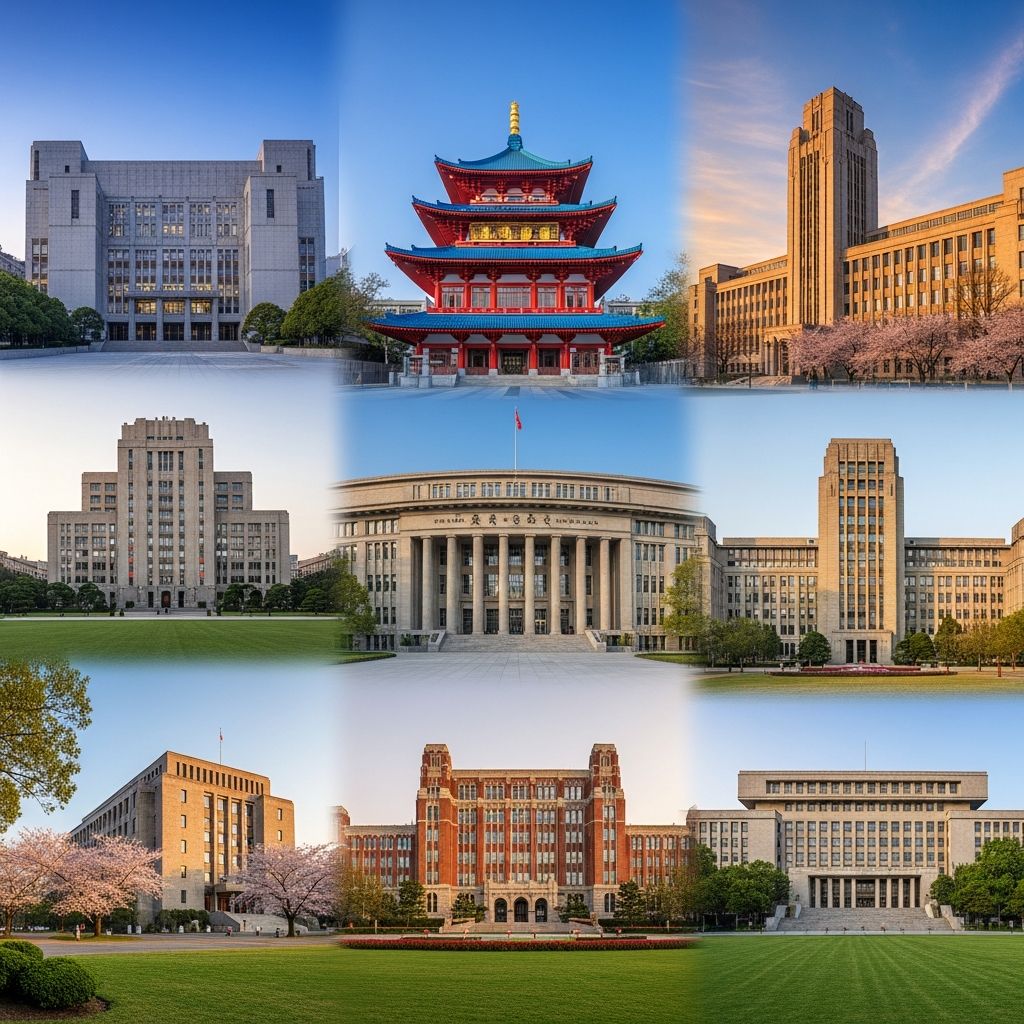
Navigating Higher Education Excellence in Asia
The Asian continent has emerged as a global powerhouse in higher education, hosting some of the world’s most innovative and academically rigorous institutions. As international student enrollment continues to grow across the region, understanding the landscape of premier universities becomes increasingly valuable for prospective scholars. The diversity of academic offerings, combined with world-class research facilities and faculty expertise, positions Asian universities as compelling alternatives to traditional Western educational destinations.
Asia’s higher education sector encompasses institutions that consistently rank among the world’s finest, drawing talented students from across the globe. The region’s commitment to advancing knowledge, fostering innovation, and maintaining academic integrity has resulted in universities that contribute significantly to global research output and technological advancement. These institutions serve not only their local communities but also position themselves as leaders in addressing international challenges through education and research.
The Leaders of East and Southeast Asia
East Asia represents the strongest concentration of world-class universities on the continent, with institutions recognized for their research productivity and academic prestige. The University of Hong Kong stands as the region’s premier institution, earning recognition for its comprehensive excellence across all academic metrics. This university combines traditional scholarly values with cutting-edge research facilities, creating an environment where students engage with some of the most advanced learning resources available globally.
Peking University, located in mainland China’s capital, ranks as the second-highest performing institution in Asia and represents China’s contribution to world-class academic excellence. With its extensive research programs and distinguished faculty, Peking University has become a magnet for ambitious students seeking rigorous intellectual challenges and access to groundbreaking research opportunities.
Singapore’s educational ecosystem boasts two universities tied for third place: Nanyang Technological University and the National University of Singapore. Both institutions have cultivated reputations for excellence in engineering, business, and scientific research. Their strategic location in a global financial hub provides students with unparalleled networking opportunities and exposure to international business practices.
Emerging Excellence Beyond the Top Tier
The academic landscape extends well beyond the most visible institutions. Fudan University, located in Shanghai, ranks among Asia’s top five universities and specializes in numerous disciplines ranging from engineering to the humanities. The Hong Kong University of Science and Technology and City University of Hong Kong round out the region’s elite circle, each bringing distinct strengths to the higher education ecosystem.
Mainland China demonstrates remarkable depth in its higher education system, with 394 ranked institutions, including 13 in the regional top 50 and 25 in the top 100. This concentration of academic institutions creates an environment of intense intellectual competition and collaborative research opportunities. Chinese universities have made particularly strong advances in technology, engineering, and applied sciences, attracting students interested in these rapidly evolving fields.
Tsinghua University has established itself as a leader in engineering and technology education, contributing significantly to China’s technological innovation agenda. The institution represents the new generation of Chinese universities combining traditional academic rigor with modern research infrastructure and international collaboration.
South and Central Asia’s Academic Contributions
India’s higher education sector encompasses 294 ranked universities, with the Indian Institute of Technology Delhi emerging as the region’s leading institution, ranking 59th overall in Asia. This ranking reflects India’s substantial contribution to global research and education. Indian universities, particularly the IIT system, have gained recognition for their rigorous technical education and role in developing skilled professionals across engineering and technology sectors.
The Indian higher education landscape demonstrates significant improvement trajectories, with 36 universities climbing the rankings in recent assessment cycles. This upward movement indicates strengthening academic standards, enhanced research capabilities, and improved international collaboration among Indian institutions.
Beyond South Asia, Central Asian universities are beginning to establish prominence on the continental stage. Nazarbayev University in Kazakhstan achieved notable recognition as a new entrant to the rankings at the 201st position, signaling the region’s growing investment in higher education infrastructure and academic standards.
Southeast Asian Academic Expansion
Southeast Asia’s universities demonstrate increasing academic sophistication and regional influence. Thai, Malaysian, Vietnamese, and Indonesian institutions contribute to a diverse educational ecosystem serving the region’s growing student population. Van Lang University in Vietnam exemplifies the region’s potential for rapid academic advancement, achieving a remarkable 159-place improvement in recent assessments.
Malaysia hosts numerous universities with strong engineering and technology programs, particularly suited for students interested in applied sciences and technological innovation. These institutions benefit from Malaysia’s strategic economic positioning and investment in research and development infrastructure. The region’s universities increasingly offer specialized programs designed to meet the needs of rapidly industrializing economies.
Comparing Academic Strengths and Specializations
| Institution | Location | Regional Rank | Primary Strengths |
|---|---|---|---|
| University of Hong Kong | Hong Kong | 1st | Comprehensive excellence across all disciplines; strong in medicine, law, and business |
| Peking University | China | 2nd | Research output; humanities, social sciences, and natural sciences |
| NTU Singapore | Singapore | 3rd (Tied) | Engineering, technology, applied sciences, and business education |
| National University of Singapore | Singapore | 3rd (Tied) | Medicine, engineering, and research-intensive programs |
| Fudan University | China | 5th | Comprehensive disciplines; particularly strong in sciences and engineering |
| IIT Delhi | India | 59th | Engineering and technology education; highest-ranked South Asian institution |
Understanding Academic Excellence Metrics
Asian universities are evaluated across multiple dimensions, including research productivity, academic reputation, employer recognition, and international diversity. The research output metric examines the volume and quality of scholarly publications, demonstrating an institution’s contribution to advancing knowledge across disciplines. Universities excelling in this area create environments where scholarly inquiry is prioritized and supported through funding, facilities, and collaborative networks.
Academic reputation among peers serves as another crucial evaluation criterion, reflecting the recognition universities earn from international academic communities. This metric captures the respect that scholars and researchers worldwide hold for an institution’s programs, faculty, and intellectual culture. Institutions with strong reputational metrics have successfully positioned themselves as leaders in their respective fields.
Employer recognition indicates how well universities prepare students for professional success and how valued their graduates are in global job markets. Universities generating graduates sought after by multinational corporations, research organizations, and government agencies demonstrate their practical relevance to contemporary workforce needs.
Research Excellence and Innovation Ecosystems
Leading Asian universities have developed sophisticated research ecosystems that attract funding, talent, and collaborative partnerships. These institutions invest heavily in laboratory facilities, computational resources, and interdisciplinary research centers designed to address global challenges. The research conducted at these universities spans climate change, healthcare advancement, artificial intelligence, sustainable development, and numerous other fields critical to human progress.
Hong Kong’s universities, with five institutions in the top 10 regionally, demonstrate particularly strong research output and innovation capacity. This concentration of research-focused institutions creates networks of collaboration and intellectual exchange that enhance the region’s scientific capabilities. Faculty members at these universities frequently publish in top-tier international journals and lead funded research projects of significant scope and impact.
China’s universities increasingly dominate in specific research domains, with 260 institutions making their debut in recent rankings, indicating expanding research capacity and academic professionalization across the nation. Shanghai University of Finance and Economics exemplifies this trend, rising 103 places to establish itself among the region’s leading financial education institutions.
International Student Experience and Campus Diversity
Leading Asian universities actively recruit international students, creating diverse learning environments where students interact with peers from numerous countries and cultural backgrounds. This international composition enriches classroom discussions, exposes students to varied perspectives, and develops the cross-cultural competencies increasingly valuable in globalized professions. Many institutions offer programs taught entirely in English, facilitating access for international students who may not speak local languages fluently.
Campus facilities at premier Asian universities rival world-class institutions globally, featuring modern libraries, research laboratories, recreational centers, and student accommodation designed for contemporary university life. The student experience extends beyond classrooms into extracurricular activities, sports programs, cultural events, and professional development workshops that cultivate well-rounded graduates.
Living costs in many Asian university cities remain substantially lower than comparable institutions in North America or Europe, making high-quality education more accessible to international students with limited financial resources. This economic advantage, combined with geographic convenience for Asian and international students, positions these universities as attractive alternatives to traditional Western education centers.
Emerging Institutions Worth Monitoring
Beyond the most established universities, numerous emerging institutions demonstrate impressive trajectories and potential for future prominence. These universities, often located in rapidly developing economies, represent opportunities to access high-quality education at emerging institutions with strong growth momentum and ambitious academic agendas.
Universities experiencing significant ranking improvements often indicate enhanced research productivity, improved faculty credentials, better student outcomes, and strengthened international collaborations. Prospective students considering these institutions may find themselves at institutions on the cusp of broader international recognition, potentially offering advantages such as less competitive admission processes while accessing genuinely excellent academic programs.
The Education University of Hong Kong’s 60-place improvement exemplifies how institutions focused on specific missions—in this case, teacher education and educational research—can achieve substantial improvements through targeted excellence initiatives.
Choosing the Right University for Your Academic Goals
Selecting an appropriate university involves considering multiple factors beyond institutional rankings. Prospective students should evaluate program strengths in their chosen discipline, faculty expertise in specific research areas, available scholarship opportunities, living conditions, and career placement records for graduates in their field of interest.
Geographic location influences not only quality-of-life considerations but also career networking opportunities and internship availability. Universities located in major business hubs like Singapore, Hong Kong, and Shanghai provide natural advantages for students pursuing business, finance, and technology careers. Institutions in cities with strong manufacturing sectors serve engineering students particularly well, while universities in research-focused communities facilitate access to scientific research opportunities.
Financial considerations deserve careful attention, as tuition fees, living costs, and scholarship availability vary significantly across institutions and countries. Some universities offer generous scholarship programs for meritorious international students, effectively reducing net costs below comparable Western institutions even without financial aid.
Frequently Asked Questions
Q: Are Asian universities recognized internationally?
A: Yes, Asian universities, particularly those in Hong Kong, Singapore, and China, hold substantial international recognition. Their graduates work successfully in global organizations, and their research is published in top-tier international journals. However, recognition varies by discipline and specific institution, so prospective students should research their program of interest.
Q: What languages are used for instruction?
A: While many programs are taught in local languages, most leading Asian universities offer English-taught programs designed specifically for international students. Programs at institutions like the University of Hong Kong, NTU Singapore, and Peking University frequently conduct instruction in English, particularly at graduate levels.
Q: How do costs compare to Western universities?
A: Generally, tuition and living costs at Asian universities are significantly lower than comparable Western institutions. While top-ranked universities charge competitive tuition fees, overall expenses remain manageable, and many universities offer scholarships for international students demonstrating academic merit.
Q: What is the typical student experience at Asian universities?
A: Students experience rigorous academic environments with access to modern facilities, international classmate diversity, and strong career support services. Campus life includes clubs, sports, cultural events, and networking opportunities that complement formal academics.
Q: How competitive is admission to top Asian universities?
A: Admission to leading universities like the University of Hong Kong and Peking University is highly competitive, requiring strong academic records and English proficiency. However, emerging institutions with lower international profiles may offer more accessible admission while still providing quality education.
Q: Do Asian universities have strong research programs?
A: Yes, particularly top-ranked institutions conduct significant research across numerous disciplines. Many universities receive substantial research funding and contribute meaningfully to global academic literature and technological advancement.
References
- QS Asia University Rankings 2026 – Overall — Quacquarelli Symonds (QS). 2025. https://www.topuniversities.com/asia-university-rankings
- QS World University Rankings: Asia 2026 Results — Quacquarelli Symonds (QS). 2025. https://www.qs.com/insights/qs-world-university-rankings-asia

Medha Deb is an editor with a master's degree in Applied Linguistics from the University of Hyderabad. She believes that her qualification has helped her develop a deep understanding of language and its application in various contexts. Medha specializes in the areas of beauty, health, sports, and wellness and is committed to ensuring that the content on the website is…