
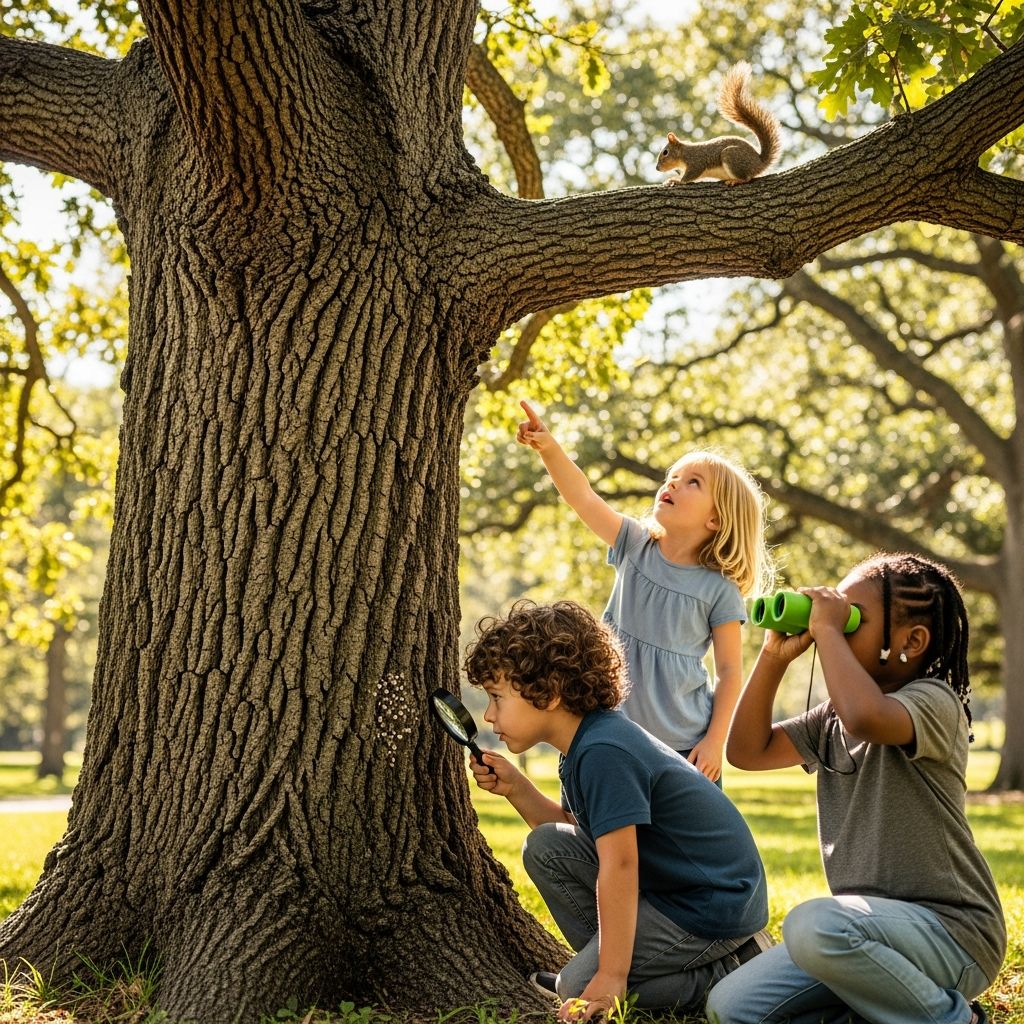
Trees stand as timeless symbols of nature’s resilience and beauty, offering endless opportunities for young children to engage with the world around them. In preschool settings, tree-themed activities provide a gateway to discovering science, art, math, and physical development through interactive play. These experiences not only teach children about tree anatomy and life cycles but also encourage sensory exploration, fine motor skills, and imaginative thinking. By incorporating real natural materials like leaves, bark, and pinecones, educators and parents can create immersive learning environments that connect kids to the outdoors, even indoors.
Understanding Tree Basics: Sensory Discovery Centers
Begin any tree unit by setting up a dedicated discovery area where children can touch, smell, and observe various tree elements. Collect safe, natural items such as bark samples, pine needles, acorns, and leaves from local trees. Arrange them on trays with magnifying glasses for close inspection. This setup helps preschoolers identify key parts like roots, trunks, branches, and leaves while stimulating their senses.
For added engagement, include sorting trays labeled with pictures of tree components. Children can categorize items, discussing textures—rough bark versus smooth leaves—and colors that change with seasons. Such activities build vocabulary and observational skills foundational to scientific inquiry. Extend this by adding nut sorting with tongs, integrating fine motor practice as kids transfer items between bowls.
Artistic Expressions: Crafting Nature-Inspired Masterpieces
Art activities transform tree knowledge into tangible creations, allowing children to express creativity while reinforcing concepts. One popular method involves bark rubbings: place paper against real tree bark outside (or textured replicas indoors) and use crayons sideways to capture patterns. Pair children for support, turning it into a collaborative adventure.
- Tape Resist Trees: Children tear masking tape into strips to form trunk and branch shapes on paper, paint boldly over it, then peel away for striking white silhouettes against colorful backgrounds.
- Collage Trees: Provide trunk outlines on sturdy paper; supply tissue scraps, buttons, pom-poms, and cut leaves for decorating branches in imaginative ways.
- Play Dough Impressions: Roll out dough flat and press leaves or pinecones into it, creating textured reliefs that reveal vein patterns when peeled back.
These crafts develop hand-eye coordination and scissor skills if edges are trimmed. Display finished works in a classroom “forest gallery” to celebrate individuality and inspire storytelling.
Seasonal Focus: Evergreen Wonders in Winter Play
Evergreen trees offer year-round vibrancy, ideal for winter themes. Fill sensory tables with fir branches, pinecones, and needles for tactile exploration. The fresh scent invigorates the room as children use tweezers to pluck needles or dissect cones.
Create “pine cone soup” in water tables: add pinecones, scoops, and pots for pretend cooking, extending playtime with bubbles or colored water. For art, fashion evergreen oobleck—a non-Newtonian fluid mixing cornstarch, water, and green food coloring with pine needle bits for squishy, sensory fun.
| Activity | Materials Needed | Skills Developed |
|---|---|---|
| Branch Sensory Bin | Fir branches, magnifying glasses, tweezers | Sensory processing, fine motor |
| Pine Cone Sorting | Pinecones by size/shape, trays | Classification, counting |
| Evergreen Collage | Green paper, glue, needle snippets | Creativity, sticking precision |
These activities maintain interest during colder months, linking to holidays or nature studies.
Mathematical Minds: Measuring and Counting with Trees
Trees provide concrete tools for early math concepts. Take children on a nature walk to estimate trunk circumferences: each child cuts string lengths based on guesses, then wraps and compares to reality. Discuss tallest versus shortest trees using unit blocks or yarn measures.
Indoors, arrange real branches from shortest to longest, challenging kids to sequence them. Count tree rings by drawing concentric circles on paper, estimating tree ages—”How old is this tree if it has 10 rings?”. Nut or leaf sorting by size integrates one-to-one correspondence.
- Graph favorite leaves: red, yellow, green columns on chart paper.
- Pattern pinecones with beads or buttons along branches.
- Shape hunts: find circles (rings), rectangles (leaves), lines (branches).
These hands-on math integrations make abstract numbers relatable and fun.
Life Cycles and Science: From Seed to Mighty Oak
Introduce tree growth through sequencing cards depicting acorn sprouting to mature oak. Children arrange photos or drawings: seed, sprout, sapling, adult tree bearing fruit. Plant bean seeds in clear cups to observe roots descending and shoots ascending, mirroring tree processes.
Explore cross-sections with play dough rings or wooden slices, counting growth layers. Discuss seasonal changes via leaf color sorts—green for spring, fiery hues for fall. Simple experiments like capillary action with celery stalks in colored water demonstrate how trees “drink”.
Gross Motor Adventures: Moving Like Nature
Physical activities channel tree energy into movement. “Leaf Dancing”: play music as children twirl like falling leaves, holding fabric or real ones. Create stump paths with wood slices for balancing and jumping obstacle courses.
Outdoor tree poses: stretch like tall trunks, sway branches in wind, burrow like roots. Follow-that-leaf paths with tape lines on floors mimic branch trails, collecting “leaves” at ends. These build coordination, spatial awareness, and body control.
Imaginative Play and Dramatic Extensions
Transform spaces into tree worlds. Dramatic play raking stations with silk leaves, toy rakes, and carpet “lawns” encourage role-play. Build small worlds with blocks as trunks, loose parts like twigs and beads for foliage. Cardboard box trees become climbable structures or squirrel homes.
Family tree murals on walls invite personal photos on branches, fostering community. Pretend soup kitchens with pinecones blend sensory and social skills.
Recommended Reading: Books to Branch Out Knowledge
Pair activities with stories: The Giving Tree for empathy; Trees factual overviews; seasonal picks like Leaf Man for creativity. Read-alouds spark discussions and extend themes.
Frequently Asked Questions
What age group are these tree activities best for?
Designed for 3-5-year-olds, with adaptations for toddlers (simpler sorting) or kindergartners (added writing labels).
Where can I source natural materials safely?
Forage from pesticide-free areas or ask families for yard clippings; avoid toxic plants like yew berries.
How do I adapt for indoor-only settings?
Use artificial leaves, bark photos, or store-bought kits; virtual tree tours via safe videos supplement.
Can these fit into a weekly curriculum?
Yes: Day 1 sensory/science, Day 2 art/math, Day 3 movement/play, Day 4 life cycles/books.
What safety precautions for outdoor tree hunts?
Supervise closely, teach no eating unknowns, avoid insects/poison ivy; use gloves for handling.
Integrating Trees Across the Curriculum
Beyond isolated activities, weave trees into literacy (leaf journals), music (tree shaker instruments from bottles, seeds, rice), and social studies (community trees’ roles). Track growth journals over months reinforce patience and change. Arbor Day ties into environmental stewardship, planting seeds for real impact.
These multifaceted approaches ensure holistic development, making trees memorable teachers. Parents report heightened nature interest post-unit, with kids pointing out trees on drives.
References
- Arbor Day – Tree Theme for Preschool — Child Care Lounge. Accessed 2026. https://childcarelounge.com/pages/arbor-day-tree-theme-for-preschool
- Tree Activities for Preschoolers — Tilly Tots Preschool. Accessed 2026. https://www.tillytotspreschool.com/post/tree-activities-for-preschoolers
- 10 Evergreen Tree Activities for Preschoolers — Fun-A-Day!. Accessed 2026. https://fun-a-day.com/preschool-winter-activities-evergreen-trees/
- Preschool Fall Leaves and Trees Theme — Pre-K Printable Fun. Accessed 2026. https://www.prekprintablefun.com/fall-leaves-and-trees-planning-page.html
- Tree & Leaf Science Activities — PreKinders. Accessed 2026. https://www.prekinders.com/tree-life-cycle/
- Tree Activities for Young Kids — Tot School Resources. Accessed 2026. https://totschoolresources.com/tree-activities-for-kids/

Medha Deb is an editor with a master's degree in Applied Linguistics from the University of Hyderabad. She believes that her qualification has helped her develop a deep understanding of language and its application in various contexts. Medha specializes in the areas of beauty, health, sports, and wellness and is committed to ensuring that the content on the website is…