
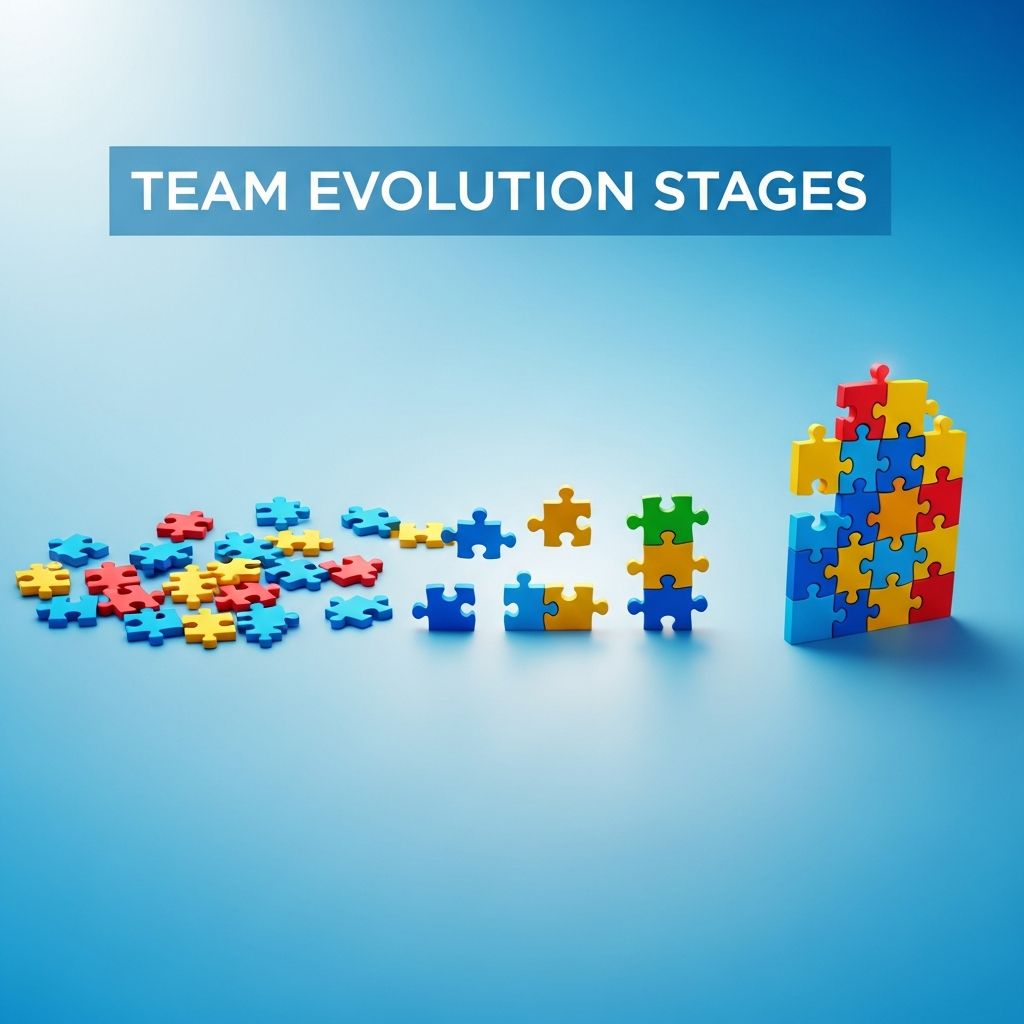
Teams do not form overnight into cohesive units capable of extraordinary results. Instead, they progress through distinct phases that shape their interactions, productivity, and ultimate success. Understanding these phases empowers leaders and members to anticipate challenges, foster unity, and maximize output. This article delves into the foundational model outlining these transformations, offering practical insights for real-world application.
Origins of the Team Development Framework
The concept of structured team progression gained prominence through the work of psychologist Bruce Tuckman in 1965. His model identifies five sequential stages that most groups experience: forming, storming, norming, performing, and adjourning. This framework, later refined with the adjourning phase in 1977 alongside Mary Ann Jensen, provides a roadmap for predicting and managing group behavior.
While not every team follows this path linearly—some revisit earlier stages due to changes in membership or goals—the model remains a cornerstone for organizational psychology and management training. It highlights how initial awkwardness evolves into seamless cooperation, emphasizing the need for adaptive leadership at each juncture.
Phase 1: Initial Assembly and Orientation
The journey begins when individuals first convene, often with a mix of excitement and apprehension. In this orientation phase, members focus on breaking the ice, clarifying objectives, and gauging expectations. Communication tends to be polite and superficial as people assess the group’s purpose and their place within it.
Leaders play a pivotal role here by defining goals, outlining roles tentatively, and encouraging open introductions. Without clear direction, confusion can linger, delaying progress. Common activities include team-building exercises or introductory meetings to build familiarity.
- Key behaviors: High dependence on the leader, low conflict, focus on logistics.
- Challenges: Uncertainty about contributions and interpersonal fit.
- Leadership tips: Provide structure, facilitate icebreakers, and communicate vision clearly.
This stage sets the tone; investing time in relationship-building yields dividends later. Research shows groups that prioritize early cohesion experience fewer disruptions downstream.
Phase 2: Emergence of Tensions and Clashes
As comfort grows, so does assertiveness. This tension phase brings underlying differences to the surface through debates over processes, ideas, or authority. Subgroups may form, and challenges to leadership are common, testing the group’s resilience.
Conflicts are not failures but necessary for growth—they reveal misalignments and force clarifications. unmanaged, however, they can derail momentum. Effective navigation involves active listening, mediation, and establishing decision-making protocols.
| Common Conflicts | Resolution Strategies |
|---|---|
| Role ambiguity | Clarify responsibilities via role-mapping sessions |
| Idea clashes | Use structured brainstorming to value all inputs |
| Power struggles | Reinforce shared goals and rotate facilitation |
Leaders must model emotional intelligence, viewing friction as a catalyst for stronger bonds. Teams that endure this phase emerge more robust, with deeper mutual understanding.
Phase 3: Establishing Harmony and Standards
With tensions resolved, the group shifts to creating shared guidelines. This harmony phase solidifies norms around communication, decision-making, and workflows. Roles crystallize, trust builds, and a sense of belonging strengthens cohesion.
Members self-organize, offering feedback constructively and supporting one another. Productivity rises as energy moves from internal squabbles to task focus. Leaders transition to coaching, empowering the group while monitoring for regression.
- Indicators of success: Consistent processes, open dialogue, mutual accountability.
- Potential pitfalls: Over-conformity stifling innovation—balance with flexibility.
- Enhancement tactics: Team charters documenting norms, regular check-ins.
This stage marks the pivot to efficiency, where the group’s culture takes root.
Phase 4: Optimal Execution and Results Delivery
At peak operation, the team functions interdependently, leveraging strengths to meet objectives. Focus sharpens on high-impact work, with minimal supervision needed. Innovation flourishes amid high morale and intrinsic motivation.
Trust is at its zenith, enabling risk-taking and creative problem-solving. Leaders delegate fully, intervening only for strategic alignment or external threats. Metrics like output quality and speed reflect maturity.
Real-world examples abound in project teams hitting deadlines flawlessly or agile squads iterating rapidly. Sustaining this requires ongoing recognition and adaptation to evolving demands.
Phase 5: Closure and Transition
All teams eventually face endings, whether through goal attainment or dissolution. This transition phase evokes mixed emotions—pride in achievements alongside sadness over separation. Reflection ensures lessons transfer to future endeavors.
Celebrations, retrospectives, and knowledge documentation aid closure. Members redistribute responsibilities, acknowledging contributions. For ongoing teams, this might mean onboarding successors seamlessly.
- Best practices: Debrief sessions, farewell events, individual feedback.
- Emotional management: Normalize grief, highlight legacies.
Proper closure prevents burnout and builds a positive alumni network for collaborations ahead.
Member Roles Across the Lifecycle
Beyond stages, individual roles evolve. Newcomers start as observers, progressing to contributors, then influencers. Full members mentor, innovate norms, and lead by example. Understanding this hierarchy aids integration.
In professional settings, like consulting firms, juniors absorb culture before shaping it. This progression mirrors career growth, reinforcing the model’s universality.
Strategies for Accelerating Team Maturity
While natural progression occurs, interventions hasten advancement:
- Clear goal alignment: Use OKRs from day one.
- Conflict training: Workshops on constructive disagreement.
- Feedback loops: Anonymous pulse surveys.
- Diversity leverage: Inclusive practices harnessing varied perspectives.
- Tech enablement: Tools for async collaboration.
Organizations like MIT emphasize stage-aware leadership training to boost outcomes.
Common Deviations and Recovery Tactics
Teams may loop back—e.g., new hires trigger re-storming—or stall in conflict. Recognize signs like declining engagement, then reset via offsites or restructures. Agile methodologies incorporate stage awareness for iterative refinement.
Applications in Modern Workplaces
Remote and hybrid teams adapt the model using virtual tools for forming (e.g., Zoom icebreakers) and norming (shared docs). Cross-functional squads in tech firms exemplify rapid performing. Nursing teams, per educational resources, apply it for patient care coordination.
In education, project groups follow similar arcs, underscoring the model’s broad relevance.
Frequently Asked Questions
What if a team skips a stage?
Possible but risky—skipping storming may hide unresolved issues surfacing later. Assess and retroactively address gaps.
How long does each stage last?
Variable: hours for ad-hoc teams, months for projects. Factors include size, stakes, and experience.
Can leaders shorten storming?
Yes, via experienced facilitators and prior norms from similar teams.
Is adjourning always emotional?
Often, especially for long-term groups. Proactively plan celebrations.
Does this apply to virtual teams?
Absolutely, with emphasis on digital trust-building.
Measuring Progress Through Stages
Track via KPIs:
| Stage | Productivity Level | Cohesion Score |
|---|---|---|
| Forming | Low | Emerging |
| Storming | Variable | Developing |
| Norming | Rising | Strong |
| Performing | High | Optimal |
| Adjourning | Wrap-up | Reflective |
Surveys and output analysis guide interventions.
Mastering team evolution transforms potential into performance. By anticipating phases, teams navigate turbulence toward triumph, fostering environments where collaboration thrives.
References
- Group Life Cycles and Member Roles — eCampus Ontario. 2023-10-15. https://ecampusontario.pressbooks.pub/commbusprofcdn/chapter/group-life-cycles-and-member-roles/
- Group Life-Cycle – Working in Groups — SkillsYouNeed. 2024-05-20. https://www.skillsyouneed.com/ips/group-life-cycle.html
- Group Life Cycles and Member Roles — Open Text BC. 2023-08-10. https://opentextbc.ca/provincialenglishabe/chapter/group-life-cycles-and-member-roles/
- Team Development Cycle: The 5 Stages of Team Growth — Teamhood. 2025-01-12. https://teamhood.com/team-performance-resources/team-development-cycle/
- Stages of Group Process — Open Educational Alberta. 2024-03-05. https://pressbooks.openeducationalberta.ca/foundationsforsuccessinnursing/chapter/13-2-small-group-development/
- What Are the Stages of Group Development? — Asana. 2025-01-08. https://asana.com/resources/stages-of-team-development

- Integrated M.A. in Applied Linguistics, University of Hyderabad
- 5+ years in editorial, instructional, SEO, and research-based writing
Sneha is a relationships and lifestyle writer with a strong foundation in applied linguistics and certified training in relationship coaching. She brings over five years of writing experience to theskillvault, crafting thoughtful, research-driven content that empowers readers to build healthier relationships, boost emotional well-being, and embrace holistic living. Her writing and insights reflect the belief that beauty, happiness, and wellness…