
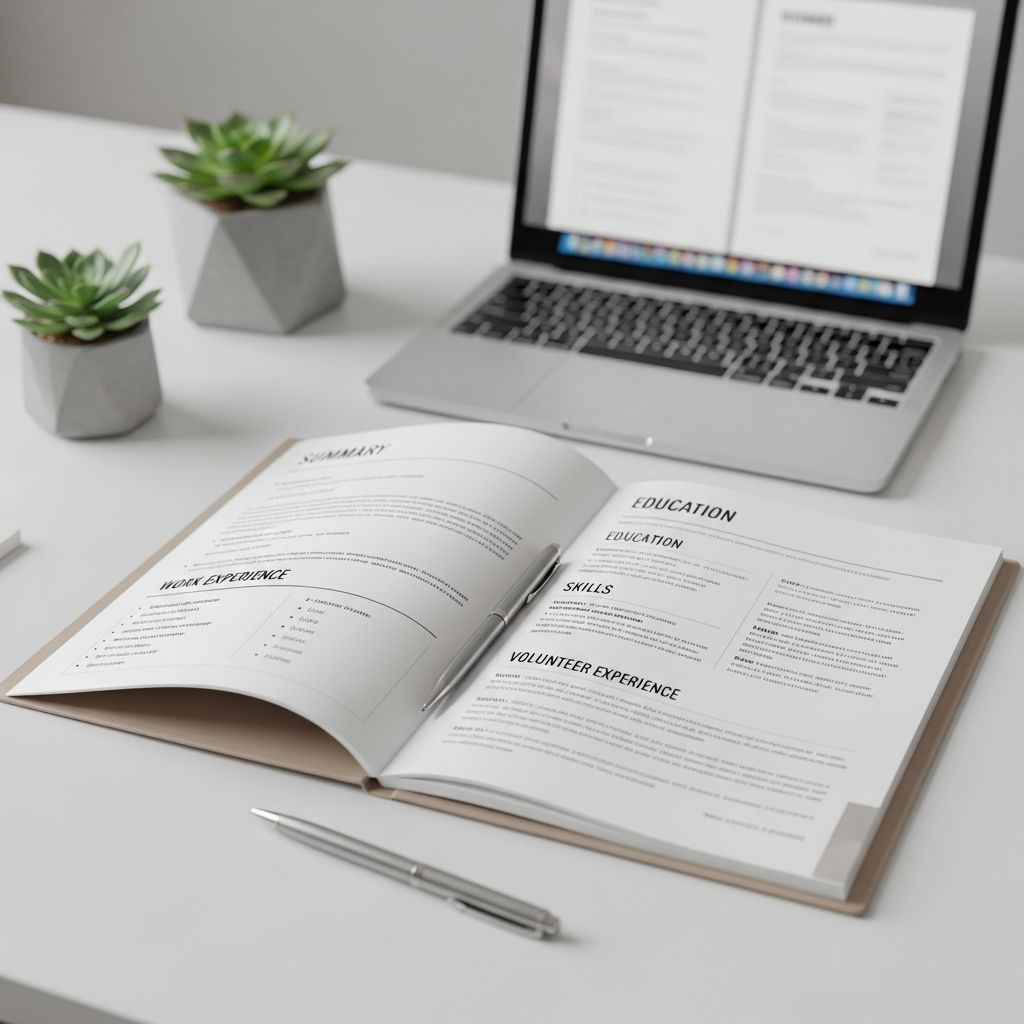
Reassessing Resume Length in the Modern Job Market
For years, job seekers have been told that a resume must be one page—no exceptions. That advice was rooted in the idea that recruiters are short on time and prefer brevity. But today’s hiring landscape is more nuanced. With evolving expectations, digital application systems, and a greater emphasis on measurable impact, the rigid one-page rule no longer fits every situation.
The real question isn’t whether a resume can be two pages, but whether it should be. A well-crafted two-page resume can actually improve your chances by giving your experience room to breathe, while a poorly executed one can dilute your message. The key lies in understanding when extra space adds value and how to use it strategically.
What Hiring Managers Actually Care About
Before deciding on length, it helps to understand what recruiters and hiring managers prioritize when reviewing resumes. Research and industry surveys consistently show that:
- Relevance to the role is more important than page count.
- Clear, scannable formatting is critical for readability.
- Quantified achievements and specific skills stand out more than generic descriptions.
- Time spent reviewing a resume tends to be longer when the content is substantive and well-organized.
A study by ResumeGo, which analyzed feedback from hundreds of recruitment professionals, found that two-page resumes were selected more frequently than one-page versions and received higher average scores. Recruiters also spent more time reviewing two-page resumes, suggesting that when the content is strong, length is not a barrier.
This doesn’t mean every candidate should default to two pages. Instead, it highlights that a resume’s effectiveness depends on how well it communicates your qualifications—not on how many pages it takes to do so.
When a Second Page Adds Real Value
A two-page resume makes sense when your experience, achievements, and skills cannot be meaningfully condensed into a single page without losing important context. Here are the main scenarios where a second page is not only acceptable but often preferable:
Mid-Career and Senior Professionals
If you have 7–10+ years of professional experience, especially in roles with increasing responsibility, promotions, or leadership, a one-page format can force you to oversimplify your background. Trying to compress a decade of work into one page often results in:
- Vague job descriptions instead of specific accomplishments.
- Omission of key projects, initiatives, or metrics.
- Loss of context about career progression and impact.
A second page allows you to present a fuller picture of your career trajectory, including promotions, expanded scope, and measurable results, without sacrificing clarity.
Technical, Specialized, or Highly Skilled Roles
Certain fields—such as engineering, IT, healthcare, research, and project management—often require detailed descriptions of skills, certifications, tools, and projects. In these cases, a one-page resume may not provide enough space to:
- List relevant technical proficiencies and tools.
- Describe complex projects or systems you’ve worked on.
- Include certifications, licenses, or specialized training.
A two-page format gives you the room to showcase depth of expertise while still keeping the content focused and relevant.
Leadership, Executive, or Strategic Roles
For leadership and executive positions, hiring managers expect to see evidence of scope, scale, and impact. A one-page resume may struggle to convey:
- The size of teams or budgets you’ve managed.
- Strategic initiatives you’ve led or contributed to.
- Organizational changes, transformations, or major outcomes.
A second page allows you to expand on leadership experience, major projects, and business impact in a way that aligns with the expectations for senior roles.
Multiple Relevant Roles or Diverse Experience
Some candidates have held several roles that are all relevant to the position they’re targeting. For example:
- A marketing professional with experience in digital, content, and product marketing.
- An operations leader who has worked across different industries or geographies.
- A consultant with a portfolio of client projects and measurable outcomes.
In these cases, a two-page resume can help you present a cohesive narrative of your experience without omitting important details that demonstrate versatility and depth.
When a One-Page Resume Is Still the Better Choice
While a two-page resume can be effective, it’s not the right choice for everyone. A one-page format remains ideal in several situations:
Early-Career Candidates and Recent Graduates
If you have fewer than 5–7 years of professional experience, a one-page resume is usually sufficient. At this stage, the focus should be on:
- Relevant internships, part-time roles, and academic projects.
- Key skills and coursework that align with the target role.
- Clear, concise descriptions of accomplishments and contributions.
Trying to stretch early-career experience to two pages often leads to filler content, which can weaken your credibility.
Entry-Level or Generalist Roles
For roles that don’t require extensive technical depth or a long work history, a one-page resume keeps the focus sharp. Hiring managers for these positions typically want to quickly see:
- Core qualifications and transferable skills.
- Recent, relevant experience.
- Clear alignment with the job description.
A concise, well-organized one-pager is often more effective than a longer resume that includes less relevant details.
When You Can’t Fill Two Pages with Relevant Content
If your resume is only slightly over one page—say, 1.2 to 1.5 pages—it’s usually better to tighten the content and condense it into a single page. A resume that’s barely over one page but stretched to two can appear padded, especially if it includes:
- Old or unrelated jobs.
- Generic responsibilities instead of achievements.
- Excessive white space or large margins.
In these cases, editing for brevity and impact is more effective than adding a second page.
Structuring a Two-Page Resume for Maximum Impact
If you decide a two-page resume is appropriate, how you structure it matters just as much as the length. The goal is to make both pages work hard for you, not just fill space.
Page One: The High-Impact Summary
The first page should capture attention immediately. It should include:
- A strong professional summary or profile that highlights your value proposition.
- Core competencies or key skills tailored to the role.
- Your most recent and relevant positions, with a focus on achievements and metrics.
- Major projects, leadership roles, or significant contributions that align with the job.
Think of page one as the “elevator pitch” of your career. If a hiring manager only reads this page, they should still understand your qualifications and why you’re a strong fit.
Page Two: Supporting Details and Depth
The second page should provide additional context and depth, not repeat what’s already on page one. It can include:
- Earlier but still relevant roles, especially if they demonstrate progression or transferable skills.
- Detailed project descriptions, especially for technical or complex initiatives.
- Certifications, licenses, or specialized training.
- Publications, presentations, or community involvement that are directly relevant.
Avoid repeating your summary or duplicating bullet points. Every line on page two should add new, valuable information that supports your candidacy.
Formatting and Readability
Even with two pages, readability is crucial. Follow these formatting guidelines:
- Use consistent fonts, spacing, and bullet styles throughout.
- Maintain adequate white space to avoid a cluttered appearance.
- Use 1–1.5 line spacing and standard margins (around 0.75–1 inch).
- Ensure page breaks don’t split sentences or bullet points.
- Include page numbers and your name on both pages for easy reference.
A clean, professional layout signals attention to detail and makes it easier for hiring managers to scan and absorb your information.
What to Avoid in a Two-Page Resume
A longer resume can backfire if it’s not carefully curated. Common pitfalls include:
- Irrelevant or outdated roles: Including every job you’ve ever had, especially those from 10–15+ years ago, can distract from your current qualifications.
- Generic responsibilities: Focusing on duties instead of achievements makes your resume feel like a job description rather than a showcase of impact.
- Excessive detail: Overloading with minor tasks, internal processes, or overly technical jargon can overwhelm the reader.
- Repetition: Repeating the same points across pages or using filler phrases like “responsible for” without adding value weakens your message.
Every line should serve a purpose: to demonstrate relevance, showcase impact, or highlight a skill that matters for the role.
How to Decide: One Page or Two?
When in doubt, ask yourself these questions:
- Does a one-page version force me to omit important achievements, projects, or skills?
- Would cutting content to fit one page make my experience seem less substantial or vague?
- Is the extra space on a second page filled with relevant, impactful information—not filler?
- Does the job description suggest a preference for a longer resume (e.g., “detailed work history” or “extensive experience”)?
If the answer to the first two questions is yes, and the last two are no, a two-page resume is likely justified. If not, a tighter one-page version is usually the better choice.
Practical Guidelines by Experience Level
To make the decision easier, here’s a practical framework based on career stage:
| Career Stage | Recommended Length | Key Considerations |
|---|---|---|
| Recent graduate / 0–5 years experience | One page | Focus on education, internships, projects, and transferable skills. |
| Mid-career / 5–10 years experience | One to two pages | Use two pages if you have multiple relevant roles, promotions, or major projects. |
| Senior / 10+ years experience | Two pages | Include leadership, strategic initiatives, and measurable impact; avoid very old roles. |
| Executive / leadership roles | Two pages | Emphasize scope, scale, and business outcomes; keep content highly relevant. |
These are guidelines, not rigid rules. The final decision should always be based on the quality and relevance of your content, not just your years of experience.
Frequently Asked Questions
Will a two-page resume hurt my chances because recruiters are short on time?
Not if it’s well-written and relevant. Studies show that recruiters often spend more time on two-page resumes when the content is strong. The key is to make every line count and keep the format scannable.
Should I always limit myself to one page if I have fewer than five years of experience?
Generally, yes. Early-career candidates usually don’t have enough relevant experience to justify two pages. If you’re close to one page, tighten the content rather than stretching it.
Does a two-page resume mean I should include every job I’ve ever had?
No. Even with two pages, focus on relevance. Trim older roles (10–15+ years) unless they provide essential context or demonstrate key skills. Quality matters more than quantity.
What if the job posting says “one-page resume only”?
Follow the instructions. If the employer explicitly requests a one-page resume, respect that requirement. Tailor your content to fit one page without sacrificing your most important qualifications.
Is it okay to have a resume that’s 1.5 pages?
Yes, but consider whether it can be condensed. If 1.5 pages are mostly white space or minor details, tightening it to one page is often better. If it’s packed with relevant, impactful content, 1.5 pages is acceptable.
References
- ResumeGo Research: Resume Length and Recruiter Preferences — ResumeGo. 2023. https://www.resumego.com/research
- Criteria: Hiring Manager Survey on Resume Length — Criteria Corp. 2023. https://www.criteriacorp.com/resources
- Indeed Career Guide: Resume Length Guidelines — Indeed. 2024. https://www.indeed.com/career-advice/resumes-cover-letters/resume-length

Medha Deb is an editor with a master's degree in Applied Linguistics from the University of Hyderabad. She believes that her qualification has helped her develop a deep understanding of language and its application in various contexts. Medha specializes in the areas of beauty, health, sports, and wellness and is committed to ensuring that the content on the website is…