
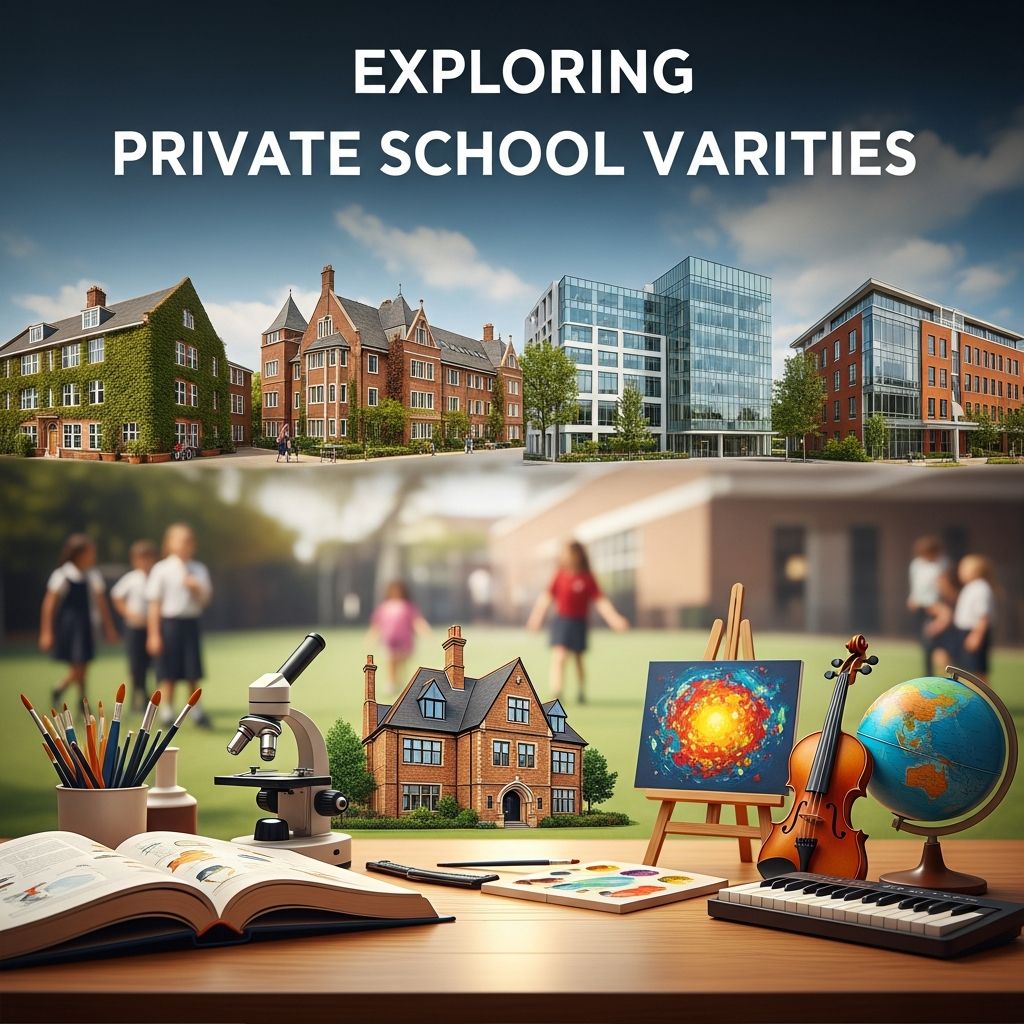
Private schools offer families a wide array of educational choices beyond public systems, each with distinct philosophies, structures, and benefits. These institutions, funded primarily through tuition and private sources, prioritize individualized learning, smaller classes, and specialized curricula to foster student success. With graduation rates often exceeding 96%, private schools emphasize holistic development and college preparation.
Why Consider Private Education?
Opting for private schooling stems from desires for tailored academics, moral guidance, or unique teaching methods. Unlike public schools bound by state standards, private options enjoy flexibility in curriculum design. Key advantages include average class sizes of 14 students, enabling personalized attention and higher engagement. Parents value these environments for building confidence, leadership, and lifelong skills.
- Academic Excellence: Rigorous programs with advanced placement and enrichment.
- Character Development: Emphasis on ethics, responsibility, and community.
- Extracurricular Depth: Abundant arts, sports, and clubs.
Grade Configurations in Private Settings
Private schools vary by age groups served, allowing continuity or specialization. Full K-12 programs provide seamless progression, while others focus on elementary or secondary levels for targeted support.
| Configuration | Description | Typical Focus |
|---|---|---|
| K-12 | Comprehensive from preschool to graduation | Long-term stability and college prep |
| PreK-5 or PreK-8 | Early years emphasis | Foundational skills and social growth |
| 6-12 or 9-12 | Secondary focus | Advanced academics and independence |
These spans cater to family needs, with many K-12 schools ranking highly for outcomes, like top Niche performers such as Brearley School.
Core Academic Institutions
Traditional independent schools form the backbone of private education, operating without religious ties under nonprofit or for-profit models. Governed by trustee boards, they stress core subjects, critical thinking, and extracurriculars for well-rounded graduates. Funding relies on tuition, endowments, and donations, granting curriculum autonomy.
These schools excel in college placement, with alumni attending elite universities. Examples include Rye Country Day School, praised for its multifaceted programs.
Faith-Inspired Learning Environments
Religious private schools integrate spiritual teachings with academics, drawing from Catholic, Protestant, Jewish, Islamic, or other traditions. Supported by congregations, they often feature lower tuitions and high moral standards. Catholic institutions boast 98.9% graduation rates, outperforming peers.
Curricula blend faith studies with standard subjects, promoting values like service and discipline. Organizations like the United States Conference of Catholic Bishops oversee many such schools.
- Catholic: Structured liturgy and ethics.
- Protestant: Bible-based instruction.
- Jewish Day Schools: Hebrew and cultural heritage.
Immersion and Bilingual Programs
Language immersion schools teach core content in a second language, such as Spanish or Mandarin, alongside English. Ideal for global-minded families, they enhance cognitive skills and cultural awareness. Students emerge bilingual, boosting career prospects in international fields.
These programs start early, with full or partial immersion, and often include cultural events. They differ from standard schools by prioritizing linguistic fluency from day one.
Child-Centered Philosophies
Montessori Approach
Montessori schools champion self-directed activity in prepared environments, guided by trained educators. Children choose tasks aligning with developmental stages, fostering independence and intrinsic motivation. Common in early years, this method uses mixed-age classrooms for peer learning.
Benefits include heightened creativity and focus, with lasting impacts on executive function.
Waldorf Method
Waldorf education, inspired by Rudolf Steiner, nurtures the whole child through arts, imagination, and rhythm. Nonprofits avoid early academics, delaying formal reading until age 7 to prioritize play and storytelling. The curriculum evolves with developmental phases: willpower (early), heart (middle), intellect (later).
All U.S. Waldorf schools are nonprofits, emphasizing teacher longevity and minimal technology.
Reggio Emilia Inspiration
Reggio Emilia views children as competent explorers, with curricula emerging from interests. Teachers document projects, involving parents as partners. This Italian-born approach thrives in preschools, stressing collaboration and expression through “hundred languages” like art and drama.
Residential Boarding Experiences
Boarding schools combine rigorous academics with 24/7 campus life, typically from grades 7-12. Day students may attend younger grades. These institutions build tight-knit communities, offering global diversity and extensive activities.
Renowned for leadership training, they feature house systems and advisors. Top examples like Riverdale Country School highlight immersive growth.
Specialized Support for Unique Needs
Private special education schools address learning differences, ADHD, or autism with customized plans. Smaller ratios and therapies ensure progress, contrasting public resource limits. These nurture strengths while accommodating challenges.
Gender-Specific Learning Models
Single-sex private schools separate boys and girls to reduce distractions and tailor instruction. Research suggests improved focus and confidence in these settings. Coeducational options promote diverse interactions, suiting varied preferences.
| Model | Advantages | Examples |
|---|---|---|
| Single-Sex | Gender-tailored teaching, fewer social pressures | Many elite prep schools |
| Coed | Real-world social prep, teamwork skills | Most K-12 privates |
Selecting the Ideal Private School
Choosing involves assessing philosophy alignment, class size, costs (averaging $12K-$30K/year), and location. Visit campuses, review outcomes, and consider financial aid. Factors like extracurriculars and diversity matter too.
- Match child’s learning style.
- Evaluate faculty qualifications.
- Check accreditation and alumni success.
Frequently Asked Questions (FAQs)
What distinguishes private from public schools?
Private schools rely on tuition, offer smaller classes (avg. 14 students), and have curriculum flexibility without state funding mandates.
Are religious schools only for believers?
Many welcome diverse families, focusing on academics with optional faith elements; check policies per school.
How do Montessori and Waldorf differ?
Montessori stresses self-choice and materials; Waldorf emphasizes arts, delayed academics, and holistic rhythms.
Is boarding suitable for younger kids?
Rarely; most start at grade 7+, prioritizing emotional readiness for residential life.
What about costs and aid?
Tuition varies; 60% offer aid. Merit, need-based grants common.
Future Trends in Private Education
Hybrid models blending online and in-person, plus STEM/STEAM focus, shape private schools. Post-pandemic, mental health support and inclusivity rise. Top-ranked schools like American Heritage integrate tech ethically.
Private education evolves, prioritizing equity and innovation for tomorrow’s leaders.
References
- The Ultimate Guide to 13 Different Types of Schools Across America — Rasmussen University. 2023. https://www.rasmussen.edu/degrees/education/blog/types-of-schools/
- Types of Private Schools and How to Choose the Right One — Think Academy. 2024. https://www.thethinkacademy.com/blog/types-of-private-schools-and-how-to-choose-the-right-one/
- From Traditional to Montessori, the 10 Different Types of Private Schools — Northern Virginia Magazine. 2018-11-09. https://northernvirginiamag.com/family/education/2018/11/09/from-traditional-to-montessori-the-10-different-types-of-private-schools/
- 2026 Best Private K-12 Schools in America — Niche. 2026. https://www.niche.com/k12/search/best-private-k12-schools/
- School Types 101 — Parents League of New York. Accessed 2026. https://www.parentsleague.org/school-types-101
- School Choice: Education Organizations — U.S. Department of Education. Accessed 2026. http://www.ed.gov/birth-grade-12-education/education-choice/school-choice-education-organizations
- What Are the Different Types of Private Schools? | Full Guide — Private School Village. 2024. https://www.privateschoolvillage.org/post/different-types-of-private-schools

Medha Deb is an editor with a master's degree in Applied Linguistics from the University of Hyderabad. She believes that her qualification has helped her develop a deep understanding of language and its application in various contexts. Medha specializes in the areas of beauty, health, sports, and wellness and is committed to ensuring that the content on the website is…