
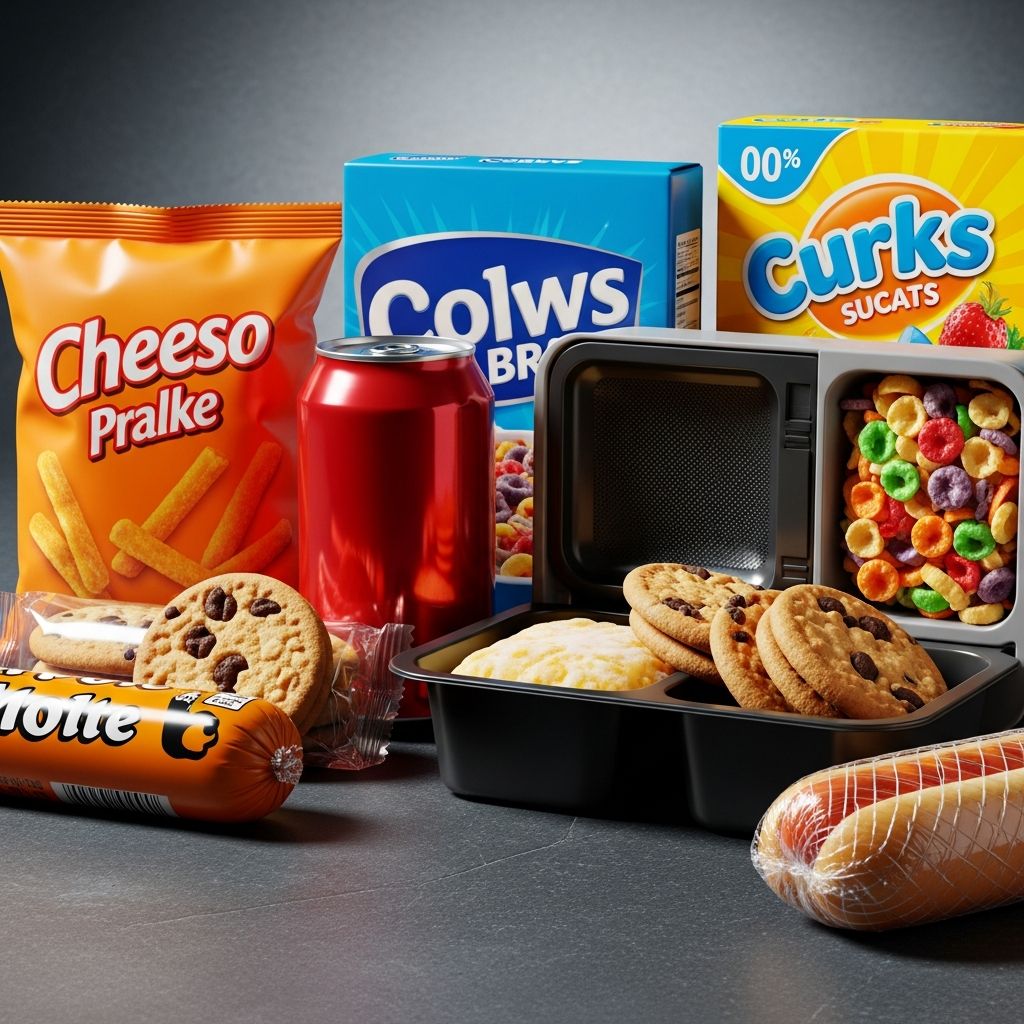
Ultra-processed foods, often labeled as UPF, have infiltrated everyday eating habits, making up a significant portion of many diets. These industrially formulated products go beyond simple preservation, incorporating additives, emulsifiers, and artificial flavors not found in home kitchens. Health authorities worldwide warn that high consumption correlates with serious conditions like obesity, type 2 diabetes, and cardiovascular disease.
Defining the Spectrum of Food Processing
Food processing exists on a continuum, from minimal handling to extensive industrial manipulation. Understanding this helps distinguish harmless convenience from potential health hazards.
- Unprocessed or minimally processed foods: These form the foundation of healthy diets, including fresh vegetables, fruits, grains, legumes, nuts, meats, seafood, eggs, milk, and herbs. They undergo basic steps like cleaning, freezing, or pasteurization to extend shelf life without altering nutritional integrity.
- Processed culinary ingredients: Items like oils, butter, sugar, honey, vinegar, and salt extracted from whole foods for cooking purposes.
- Processed foods: Simple combinations such as canned vegetables, salted nuts, cured meats, cheeses, or homemade-style breads achievable in a domestic kitchen.
- Ultra-processed foods: Complex formulations with five or more ingredients, including substances rare in home cooking like high-fructose corn syrup, hydrogenated oils, modified starches, protein isolates, emulsifiers, and artificial colors. They undergo extrusion, molding, pre-frying, and other industrial techniques for hyper-palatability and long shelf life.
This classification, popularized by the NOVA system from Brazilian researchers in 2009, focuses on production methods and ingredients rather than just nutritional content.
Spotting Ultra-Processed Foods in Disguise
Not all packaged items scream ‘junk food.’ Many staples hide under the ultra-processed umbrella due to hidden additives.
| Category | Examples of Ultra-Processed | Why It’s UPF |
|---|---|---|
| Beverages | Carbonated soft drinks, sweetened fruit drinks, some alcoholic spirits like flavored whiskies | High-fructose syrups, artificial sweeteners, preservatives |
| Bakery & Cereals | Mass-produced breads, most breakfast cereals, packaged cakes, biscuits | Emulsifiers, dough conditioners, added sugars, colors |
| Snacks & Sweets | Crisps, chocolate, candy, ice cream, flavored yogurts | Flavor enhancers, stabilizers, hydrogenated fats |
| Meals & Meats | Ready meals, instant soups, chicken nuggets, hotdogs, ham, sausages, meat pies | Mechanical separation, nitrates, thickeners |
| Dairy & Others | Cheese slices/spreads, some shredded cheeses, frozen pizzas, instant noodles | Added phosphates, artificial flavors |
Check ingredient lists: if you see items like maltodextrin, soy protein isolate, or ‘natural flavors,’ it’s likely UPF.
Why Ultra-Processed Foods Hook You In
UPF are engineered for addiction-like appeal. They blend optimal sugar-fat-salt ratios, soft textures, and high energy density to bypass satiety signals, promoting overeating. Unlike whole foods rich in fiber and protein, UPF cause rapid blood sugar spikes and crashes, fueling constant hunger. Studies show people consume 500 extra calories daily on UPF-heavy diets without realizing it.
Health Consequences: A Mounting Body of Evidence
Decades of research link high UPF intake to chronic diseases. These foods displace nutrient-dense options, delivering empty calories laden with harmful additives.
- Obesity and Weight Gain: Hyper-palatability overrides fullness cues, leading to excess intake. Diets with 50%+ UPF associate with faster BMI gains.
- Type 2 Diabetes: A 2023 meta-analysis of over 415,000 people found a 12% higher risk per 10% UPF increase in diet, especially from refined breads, sugary drinks, and ready meals.
- Heart Disease: Elevated saturated fats, sodium, and low fiber contribute to hypertension and atherosclerosis. UPF account for 60% of heart-unhealthy diets.
- Cancer: Processed meats in UPF like sausages raise colorectal cancer risk; overall UPF correlate with 10-20% higher all-cancer odds.
- Mental Health and Mortality: Links to depression, anxiety, and 14% higher all-cause death risk stem from inflammation and gut microbiome disruption.
These effects persist even after adjusting for total calories or socioeconomic factors, pointing to unique UPF traits.
The Science Behind the Damage
UPF trigger metabolic chaos. Their lack of fiber impairs gut health, fostering inflammation. Additives like emulsifiers erode intestinal barriers, mimicking effects of harmful bacteria. High glycemic loads strain insulin response, paving diabetes pathways. Long-term, this accelerates aging and organ stress.
Ultra-processed foods are industrial formulations with ingredients absent from home pantries, driving overconsumption through palatability.
Practical Strategies to Cut Back on UPF
Reducing UPF doesn’t require perfection. Start small for sustainable change.
- Audit Your Kitchen: Inventory items; swap UPF cereals for oats, sugary yogurts for plain Greek with fruit.
- Read Labels Ruthlessly: Aim for <5 ingredients, all recognizable. Apps like Yuka or Open Food Facts scan for UPF.
- Cook from Scratch: Batch-prep simple meals like stir-fries, soups, or salads using whole ingredients.
- Shop the Perimeter: Focus on produce, proteins, dairy; venture inside for canned beans or nuts only.
- Upgrade Snacks: Choose nuts, fruit, homemade popcorn over packets.
- Gradual Swap: Replace one UPF meal daily; track energy and mood improvements.
WHO recommends capping UPF at 10-20% of calories, prioritizing whole foods for 80%+ of intake.
Navigating Challenges and Myths
Myth: ‘It’s cheaper and faster.’ Home cooking saves money long-term and takes less time than assumed—prep grains in bulk.
Myth: ‘All packaged is bad.’ Minimally processed like frozen veggies are allies.
Challenge: Convenience. Stock frozen whole foods, quick grains like quinoa for wins.
Policy and Future Outlook
Governments eye UPF warnings like tobacco labels. Brazil taxes them; others mandate front-of-pack nutrition alerts. Research surges, with 2024-2026 studies probing mechanisms via RCTs. Emerging tools like AI label scanners empower consumers.
Frequently Asked Questions (FAQs)
Is bread always ultra-processed?
No, artisan or homemade bread is processed, but mass-produced loaves with emulsifiers qualify as UPF.
Can I eat UPF occasionally?
Moderation is key; occasional treats won’t derail health if baseline diet is whole-food focused.
Are plant-based UPF healthier?
Not necessarily—many vegan nuggets or bars pack UPF traits like isolates and oils.
How much UPF is too much?
Under 20% of calories minimizes risks; average Western diets hit 50-60%.
Do kids need special advice?
Yes—limit to protect growth; swap cereals for porridge, drinks for milk/water.
References
- Ultra-processed foods: how bad are they for your health? — British Heart Foundation. 2023. https://www.bhf.org.uk/informationsupport/heart-matters-magazine/news/behind-the-headlines/ultra-processed-foods
- Processed foods — National Health Service (NHS). 2024. https://www.nhs.uk/live-well/eat-well/how-to-eat-a-balanced-diet/what-are-processed-foods/
- What is ultra-processed food? — Heart and Stroke Foundation. 2024. https://www.heartandstroke.ca/articles/what-is-ultra-processed-food
- Ultra-processed food: Five things to know — Stanford Medicine. 2025-07. https://med.stanford.edu/news/insights/2025/07/ultra-processed-food–five-things-to-know.html
- Ultra-processed food — Wikipedia (sourced from peer-reviewed studies). 2024. https://en.wikipedia.org/wiki/Ultra-processed_food
- Ultra-Processed Foods Information Sheet — Yale School of Public Health. 2024. https://ysph.yale.edu/research/information-sheets/ultra-processed-foods/

Medha Deb is an editor with a master's degree in Applied Linguistics from the University of Hyderabad. She believes that her qualification has helped her develop a deep understanding of language and its application in various contexts. Medha specializes in the areas of beauty, health, sports, and wellness and is committed to ensuring that the content on the website is…