
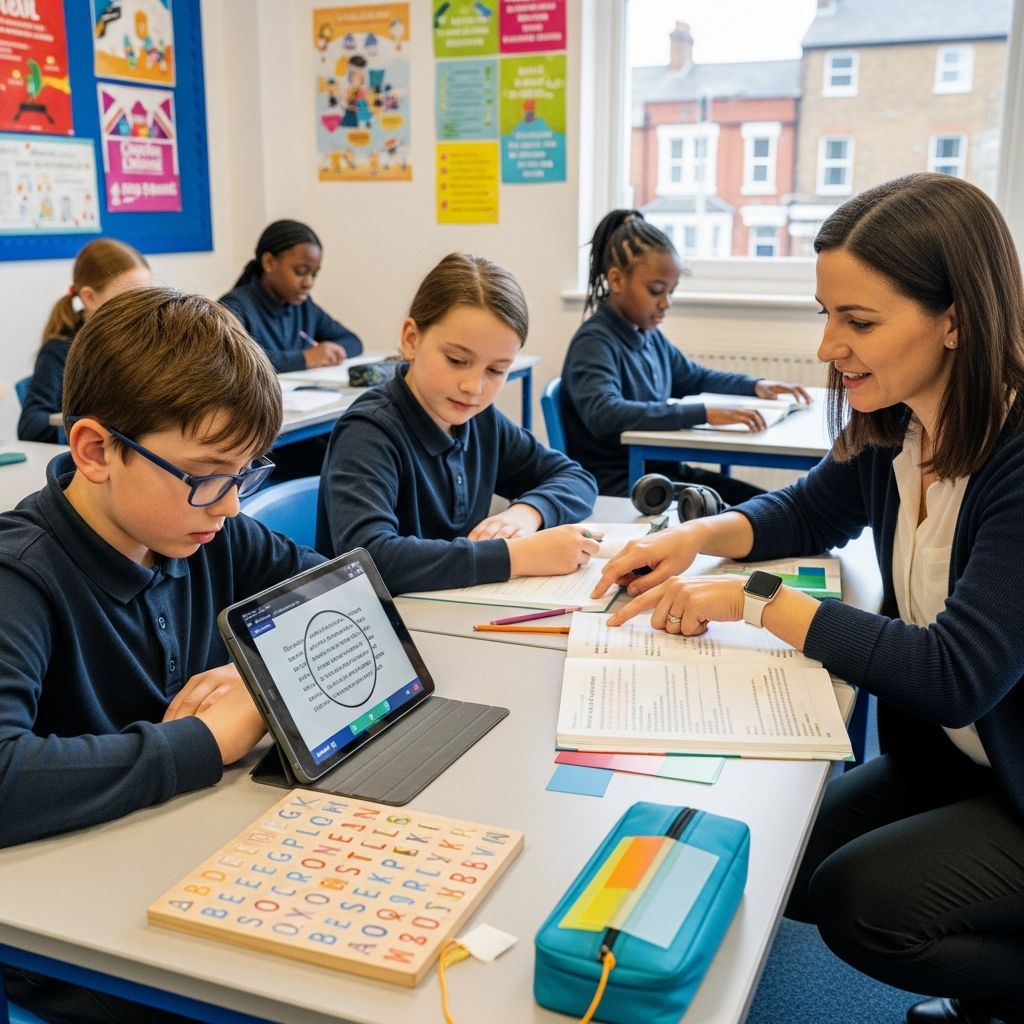
Dyslexia affects approximately 10% of the UK population, presenting unique challenges in reading, writing, and spelling, yet it does not limit overall intelligence or potential. Recent advancements in education emphasize early detection, tailored teaching methods, and technological tools to help individuals flourish.
Defining Dyslexia and Its Impact
Dyslexia is a specific learning difference that primarily impacts literacy skills, making it harder to process language sounds and connect them to letters. Despite common misconceptions, it stems from neurological differences rather than laziness or poor vision. In the UK, this condition influences school performance but, with proper support, allows many to excel in creative, problem-solving, and entrepreneurial fields.
Children with dyslexia often struggle with phonological awareness, leading to difficulties in decoding words. However, they frequently demonstrate strengths in visual-spatial thinking and big-picture comprehension, which can be leveraged for success.
The Critical Role of Early Detection
Identifying dyslexia as early as possible transforms educational outcomes. UK schools increasingly implement routine screening from age 5-7, using tools like the Dyslexia Screening Test-Junior to spot risk factors before formal diagnosis at age 7. Early markers, such as delayed speech or family history, prompt specialist involvement for immediate support.
- Screening benefits: Builds foundational skills and prevents frustration buildup.
- Parental observation: Watch for reversals in letters (b/d) or inconsistent spelling.
- Specialist assessment: Educational psychologists provide formal diagnosis and recommendations.
Timely intervention correlates with improved literacy rates, as foundational phonics instruction prevents deeper skill gaps.
Classroom Strategies for Effective Support
Educators play a pivotal role in fostering inclusive environments. Structured literacy programs, such as the multisensory Orton-Gillingham method, teach phonemes explicitly through sight, sound, and touch.
| Strategy | Description | Benefits |
|---|---|---|
| Differentiated Instruction | Adapt lessons with visuals, audio, and hands-on activities | Matches individual learning styles |
| Structured Literacy | Systematic phonics via multisensory techniques | Strengthens decoding skills |
| Positive Reinforcement | Praise effort in small tasks like reading aloud | Boosts confidence and motivation |
| Visual Aids | Graphic organizers and color-coded notes | Enhances organization and retention |
Breaking tasks into steps, like outlining essays before writing, reduces overwhelm. Peer pairing for reading practice builds social confidence while reinforcing skills.
Individualized Support Plans
Personalized Education Plans (IEPs) are standard in UK schools, detailing accommodations like extra time on tests, audiobooks, or quiet workspaces. These plans evolve through collaboration among teachers, parents, and specialists.
Access to trained professionals ensures targeted help. Specialist teachers use evidence-based techniques, while ongoing reviews track progress and adjust strategies.
Harnessing Assistive Technology
Technology bridges literacy gaps effectively. Text-to-speech apps like ClaroRead convert text to audio, while speech-to-text tools such as Dragon NaturallySpeaking aid writing. Dyslexia-friendly fonts (e.g., OpenDyslexic) reduce visual stress.
- Mobile apps: Proloquo2Go for vocabulary building.
- Software: MindView for mind-mapping ideas.
- Hardware: Tablets with accessibility features for note-taking.
These tools promote independence, allowing focus on content over mechanics. UK initiatives integrate them into curricula, leveling the academic field.
Raising Awareness and Reducing Stigma
The British Dyslexia Association (BDA) leads efforts through annual Dyslexia Awareness Week, which has grown 400% in participation since 2008, hosting workshops and campaigns. Public understanding shifts from viewing dyslexia as a deficit to recognizing it as a different wiring that brings unique strengths.
School programs educate peers on neurodiversity, minimizing bullying and promoting empathy. Families access resources from organizations like Dyslexia Action and Helen Arkell Dyslexia Centre for assessments and training.
Parental and Family Involvement
Parents are key allies. Home strategies include daily reading aloud, phonics games, and organization routines. Collaborating with schools via regular meetings ensures consistency.
- Daily routines: Timed reading sessions with fun books.
- Tech at home: Audiobooks during commutes.
- Emotional support: Celebrate non-literacy wins like art or sports.
Initiatives like Parent Champions provide films and tips on memory and spelling.
Long-Term Outcomes and Adult Support
With support, dyslexic individuals achieve remarkable success. UK programs extend to adults via BDA tuition and workplace adjustments, like voice recognition software. Vocational training emphasizes strengths, leading to careers in design, engineering, and business.
Statistics show supported students match peers in qualifications when accommodations are in place, underscoring inclusive policies’ impact.
Frequently Asked Questions
What are the first signs of dyslexia in young children?
Signs include trouble rhyming, slow speech development, and difficulty learning letters. Early screening helps confirm.
How can teachers best support dyslexic pupils daily?
Use multisensory methods, provide structured tasks, and offer positive feedback to build skills and esteem.
Is dyslexia curable?
No, but targeted interventions manage symptoms effectively, enabling full potential realization.
What role does technology play in dyslexia management?
Tools like text-to-speech and adaptive fonts make reading and writing accessible, fostering independence.
Where can families find dyslexia resources in the UK?
BDA helpline, Dyslexia Action, and local specialist centers offer advice, assessments, and training.
Future Directions in Dyslexia Support
Emerging research focuses on neuroscience for personalized interventions, while policy pushes universal screening. Teacher training expands, ensuring all classrooms are dyslexia-friendly. Collaborative efforts promise even greater inclusivity.
References
- Leaping to Academic Success: Dyslexia Support in the UK — Greenhouse Learning. 2023. https://greenhouselearning.co.uk/unlocking-potential-understanding-and-supporting-dyslexia-in-the-uk/
- Supporting Children with Dyslexia in the Classroom — Dyslexia UK. 2024. https://www.dyslexiauk.co.uk/supporting-children-with-dyslexia-in-the-classroom/
- Understanding Dyslexia 7-11 — Dyslexia-SpLD Trust / WFDA. 2020-03. https://wfda.org.uk/wp-content/uploads/2020/03/UnderstandingDyslexia7-11.pdf
- The Dyslexia Association UK Services — Dyslexia UK.NET. 2025. https://www.dyslexia.uk.net
- How Can I Support My Child? — British Dyslexia Association. 2025. https://www.bdadyslexia.org.uk/advice/children/how-can-i-support-my-child
- Adult Dyslexia Support — British Dyslexia Association. 2025. https://www.bdadyslexia.org.uk/advice/adults
- Understanding UK Literacy Standards and Dyslexia — YouTube / Education Conferences UK. 2024. https://www.youtube.com/watch?v=0f8rdqRtXhk

Medha Deb is an editor with a master's degree in Applied Linguistics from the University of Hyderabad. She believes that her qualification has helped her develop a deep understanding of language and its application in various contexts. Medha specializes in the areas of beauty, health, sports, and wellness and is committed to ensuring that the content on the website is…