
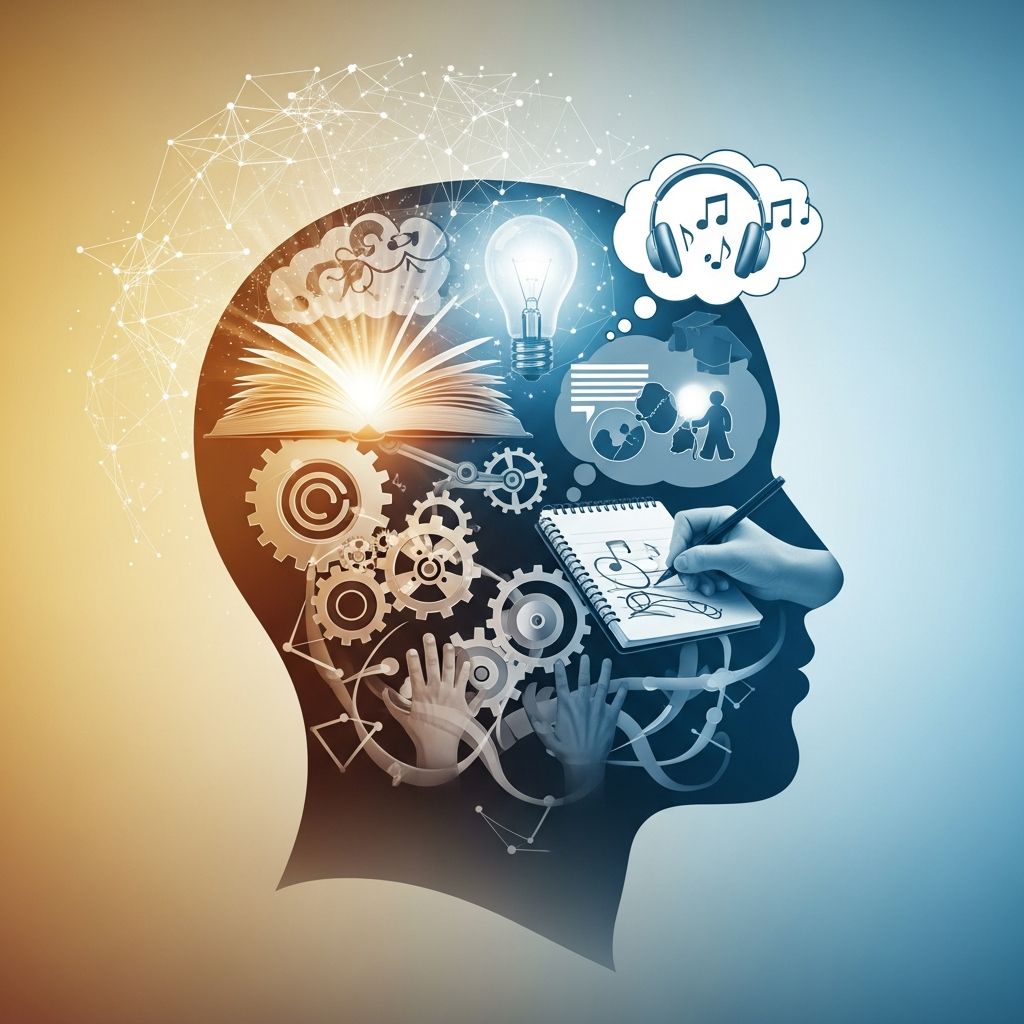
Understanding How You Learn Best
Every individual possesses a distinct approach to acquiring knowledge and mastering new skills. The way you absorb information, process concepts, and retain details varies significantly from your peers, colleagues, and family members. This fundamental recognition has led educators and psychologists to develop comprehensive frameworks that categorize different learning preferences. By identifying your dominant learning style, you can optimize your study habits, enhance retention rates, and achieve greater success in both academic and professional environments.
The journey toward self-awareness regarding your learning preferences begins with understanding that there is no universally superior way to learn. Instead, people gravitate toward methods that align with their cognitive strengths, sensory preferences, and personality traits. Recognizing these patterns empowers you to take control of your educational experience and adapt strategies that work specifically for your brain.
The Primary Learning Modalities
Educational research has identified several core learning modalities that represent how people naturally engage with new material. While individuals rarely fit into a single category exclusively, most people exhibit a dominant or preferred style that drives their learning success.
Visual and Spatial Processing
Visual learners excel when information is presented through graphic representations and spatial organization. These individuals think in pictures and mental images, naturally visualizing concepts rather than focusing on auditory or textual input. Visual learners benefit tremendously from charts, diagrams, infographics, maps, and color-coded notes. They often demonstrate strong organizational skills and possess an intuitive sense of direction and spatial relationships.
For visual learners, the presentation of data matters considerably. When studying, they instinctively create mental images and color-coded systems to organize information hierarchically. Many visual learners excel at note-taking and often use visual markers, highlighting, and symbolic representations to reinforce memory. Their minds naturally create detailed mental pictures of concepts, which sometimes gives others the incorrect impression that they are daydreaming when, in reality, they are actively engaging in deep visualization.
Auditory and Listening-Based Learning
Auditory learners process information most effectively through sound and spoken communication. These individuals learn best during lectures, discussions, and verbal explanations, often finding it easier to understand spoken instructions than written ones. Auditory learners tend to sort and organize their ideas after speaking about them aloud, using verbal articulation as a tool for understanding rather than relying on pre-planned mental preparation.
This learning style thrives in collaborative and interactive environments. Auditory learners benefit from group discussions, podcasts, recorded lectures, and opportunities to talk through concepts with others. They often find that reading information silently is less effective than hearing it explained, and they may struggle with purely text-based learning materials. Many auditory learners also respond positively to music, rhythmic patterns, and tonal variations in speech, which help cement concepts in memory.
Reading and Writing Engagement
Learners with a preference for reading and writing modalities engage most effectively with textual information. These individuals absorb knowledge through books, articles, written instructions, and written assignments. They excel when they can read material multiple times, annotate texts, and express their understanding through writing.
This group flourishes with traditional educational approaches such as textbooks, research papers, and written essays. They enjoy the process of reading information carefully, taking detailed written notes, and expressing their comprehension through written work. For these learners, the act of writing itself becomes a reinforcement mechanism that strengthens memory and deepens understanding. They often maintain journals, write summaries, and create written outlines to organize their learning.
Kinesthetic and Hands-On Engagement
Kinesthetic learners acquire knowledge through physical experience and hands-on interaction with material. These individuals learn most effectively when they can touch, manipulate, experiment with, and directly experience concepts. Kinesthetic learners typically dislike passive listening and prefer active participation, problem-solving, and practical application.
This learning style thrives in environments that permit experimentation, role-playing, simulations, and direct engagement with physical objects. Kinesthetic learners excel in laboratory settings, workshops, and practical training sessions. They retain information better when they have performed an action themselves rather than reading about it or hearing it described. Many kinesthetic learners also benefit from incorporating movement, gestures, and physical activity into their study routines.
Extended Learning Framework Categories
Beyond the primary modalities, several additional learning preferences provide deeper nuance and more precise personalization of educational strategies.
Analytical and Logical Problem-Solving
Analytical learners approach new information systematically and methodically, seeking to understand underlying patterns, causes, and connections. These individuals prefer logic-based learning and excel at mathematical reasoning, problem-solving, and systematic analysis. Analytical learners want to understand not just what something is, but why it works that way.
This learning style benefits from frameworks that encourage questioning, pattern recognition, and evidence-based reasoning. Analytical learners thrive when presented with data, statistics, and logical sequences. They naturally organize information into systems and groups, and they appreciate when instructors pose thought-provoking questions that require interpretation and analytical thinking. These learners often excel in STEM fields and careers requiring detailed technical understanding.
Social and Collaborative Learning
Social learners gain optimal understanding through group interaction, peer discussion, and collaborative engagement. These individuals benefit from working with others, participating in group projects, and learning through social communication. Social learners value the dual benefit of both social connection and intellectual development that collaborative learning provides.
This learning style flourishes in environments featuring group discussions, peer teaching, role-playing activities, and team-based problem-solving. Social learners excel when they can explain concepts to others, debate ideas, and learn from diverse perspectives within a group setting. They often develop stronger understanding through dialogue and the necessity of articulating their knowledge to peers.
Solitary and Independent Learning
Solitary learners prefer working independently and thinking through concepts on their own. Being a solitary learner does not necessarily indicate social difficulty; rather, these individuals simply achieve stronger results through self-directed study and private reflection. Solitary learners are often self-directed, internally motivated, and skilled at independent problem-solving.
This learning style thrives with self-paced learning, personal research, individual projects, and private study time. Solitary learners benefit from journaling, maintaining personal learning records, and having substantial thinking time without external interruption. They often excel at developing deep expertise through focused independent study and research.
Cognitive Dimensions That Shape Learning Preferences
Learning styles involve more than sensory preferences; cognitive factors significantly influence how individuals process and retain information. Sequential learners thrive with step-by-step instruction presented in logical order, building progressively from foundational concepts to complex ideas. Global learners, conversely, prefer understanding the overall framework and big picture before examining detailed components.
Additional cognitive factors affecting learning include attention span, memory capacity, processing speed, and the ability to recognize patterns. Some individuals learn more effectively through rapid information delivery, while others require additional time to process and integrate new concepts. Understanding these cognitive dimensions helps explain why certain teaching methodologies resonate more effectively with particular individuals.
Comprehensive Comparison of Learning Styles
| Learning Style | Optimal Information Format | Strength Areas | Challenges | Effective Study Methods |
|---|---|---|---|---|
| Visual | Graphics, diagrams, charts, maps, slides | Organization, spatial reasoning, observation | May struggle with verbal instructions | Color-coded notes, mind maps, infographics |
| Auditory | Lectures, discussions, podcasts, recordings | Listening comprehension, verbal communication | Difficulty with silent reading | Group discussions, lecture recordings, verbal repetition |
| Reading/Writing | Textbooks, articles, written assignments | Textual comprehension, expression through writing | May be ineffective with purely oral material | Reading, note-taking, written summaries |
| Kinesthetic | Hands-on activities, practical experiences | Physical skills, practical application, experimentation | Limited by passive learning environments | Simulations, laboratory work, role-playing |
| Analytical | Logic-based systems, data, patterns | Problem-solving, pattern recognition, reasoning | May require extensive context | Problem-solving exercises, data analysis |
| Social | Group activities, peer interaction | Collaboration, communication, perspective-taking | Isolation reduces engagement | Study groups, peer teaching, discussions |
| Solitary | Individual projects, self-paced material | Independent thinking, focused attention, deep work | May struggle with forced collaboration | Personal research, journaling, independent projects |
Identifying Your Personal Learning Orientation
Discovering your dominant learning style requires honest self-assessment and observation of your own academic and professional history. Reflect on situations where you learned most effectively and identify common threads. Did success come through reading and research, or through hands-on experimentation? Were you most engaged during group projects or independent work? Your answers reveal patterns in your learning preferences.
Consider documenting your learning experiences across various contexts. Pay attention to the methods that reduced frustration and increased motivation. Notice when you felt most confident and engaged. These observations provide valuable clues about your natural learning orientation. Additionally, many online learning style assessments provide structured frameworks for identifying your preferences, though self-reflection remains the most reliable indicator.
Practical Application in Academic Contexts
Understanding your learning style empowers you to customize your study approach for maximum effectiveness. Visual learners should invest time in creating comprehensive graphic representations of material, utilizing color-coding systems, and transforming textual information into visual formats. Auditory learners benefit from forming study groups, recording themselves summarizing material, and teaching concepts aloud to peers. Reading and writing learners should emphasize comprehensive note-taking, written summaries, and creating study guides. Kinesthetic learners should seek opportunities for practical application, laboratory work, and experiential learning whenever possible.
The most effective learners often blend multiple modalities, recognizing that pure reliance on a single style may limit their capabilities. Combining visual representations with verbal discussion, or integrating hands-on experience with analytical reasoning, creates redundancy in memory encoding and strengthens retention. Developing flexibility across multiple learning modes increases adaptability when preferred methods are unavailable.
Professional Development and Career Advancement
Learning style awareness extends far beyond academic contexts into professional and career development. Understanding how you learn most effectively allows you to select appropriate professional development opportunities, training formats, and skill-building strategies. Some professionals thrive in traditional classroom training, while others excel with online self-paced learning or hands-on workshop experiences.
When pursuing new professional skills or certifications, consider whether available training formats align with your learning preferences. If your dominant style involves hands-on learning but only classroom instruction is available, seek supplementary practical opportunities. When your preferred learning method is unavailable, consciously develop backup strategies or advocate for training formats that accommodate your learning style.
Overcoming Learning Style Limitations
While identifying and leveraging your dominant learning style provides significant benefits, developing proficiency across multiple modalities increases your overall learning capacity and adaptability. Life and work environments frequently demand engagement with non-preferred learning formats. The professional who relies exclusively on hands-on learning may face challenges in a role requiring primarily reading-based research. The visual learner may need to navigate auditory-heavy meetings and presentations.
Building comfort and competence with non-preferred learning styles strengthens your overall cognitive flexibility. Challenge yourself periodically to engage with material using unfamiliar methods. This practice reinforces neural pathways associated with less-preferred learning modes and expands your capacity to learn effectively in diverse contexts.
Common Questions About Learning Preferences
Q: Can learning styles change over time?
A: Learning preferences may evolve as you gain experience and develop new skills. Some individuals find their style remains consistent throughout life, while others discover that their preferences shift as they encounter new contexts or develop expertise in different domains.
Q: Is it possible to have a mixed learning style?
A: Yes, most people exhibit characteristics of multiple learning styles simultaneously. Rather than fitting neatly into a single category, most individuals display a profile combining several modalities, with some styles being more dominant than others.
Q: How do learning styles affect career selection?
A: While learning styles influence how you acquire knowledge, career success depends on multiple factors beyond learning preferences, including interests, aptitudes, and work environment fit. Understanding your learning style helps you select training formats and professional development approaches but should not be the sole determinant of career decisions.
Q: Can educators accommodate multiple learning styles simultaneously?
A: Effective educators recognize diverse learning preferences and employ multimodal teaching strategies that incorporate visual elements, auditory components, reading materials, and hands-on activities. This approach ensures accessibility for learners with varying preferences.
Q: Should I limit myself to my dominant learning style?
A: While leveraging your preferred style enhances efficiency, deliberately practicing non-preferred learning methods develops cognitive flexibility and ensures you can learn effectively regardless of available formats or contexts.
References
- Characteristics of Learning Styles — Study.com. 2024. https://study.com/academy/lesson/characteristics-of-learning-styles.html
- 8 Types of Learning Styles | The Definitive Guide — Baylor University. 2024. https://bau.edu/blog/types-of-learning-styles/
- 7 Types of Learning Styles (+Examples) — Whatfix. 2024. https://whatfix.com/blog/learning-styles/
- Understanding Your Learning Style — Centre for Teaching Excellence, University of Waterloo. 2020. https://uwaterloo.ca/centre-for-teaching-excellence/catalogs/tip-sheets/understanding-your-learning-style
- Characteristics of Visual, Auditory, and Kinesthetic Learners — University of Arkansas. 2024. https://success.uark.edu/get-help/student-resources/learning-styles-characteristics.php

Medha Deb is an editor with a master's degree in Applied Linguistics from the University of Hyderabad. She believes that her qualification has helped her develop a deep understanding of language and its application in various contexts. Medha specializes in the areas of beauty, health, sports, and wellness and is committed to ensuring that the content on the website is…