
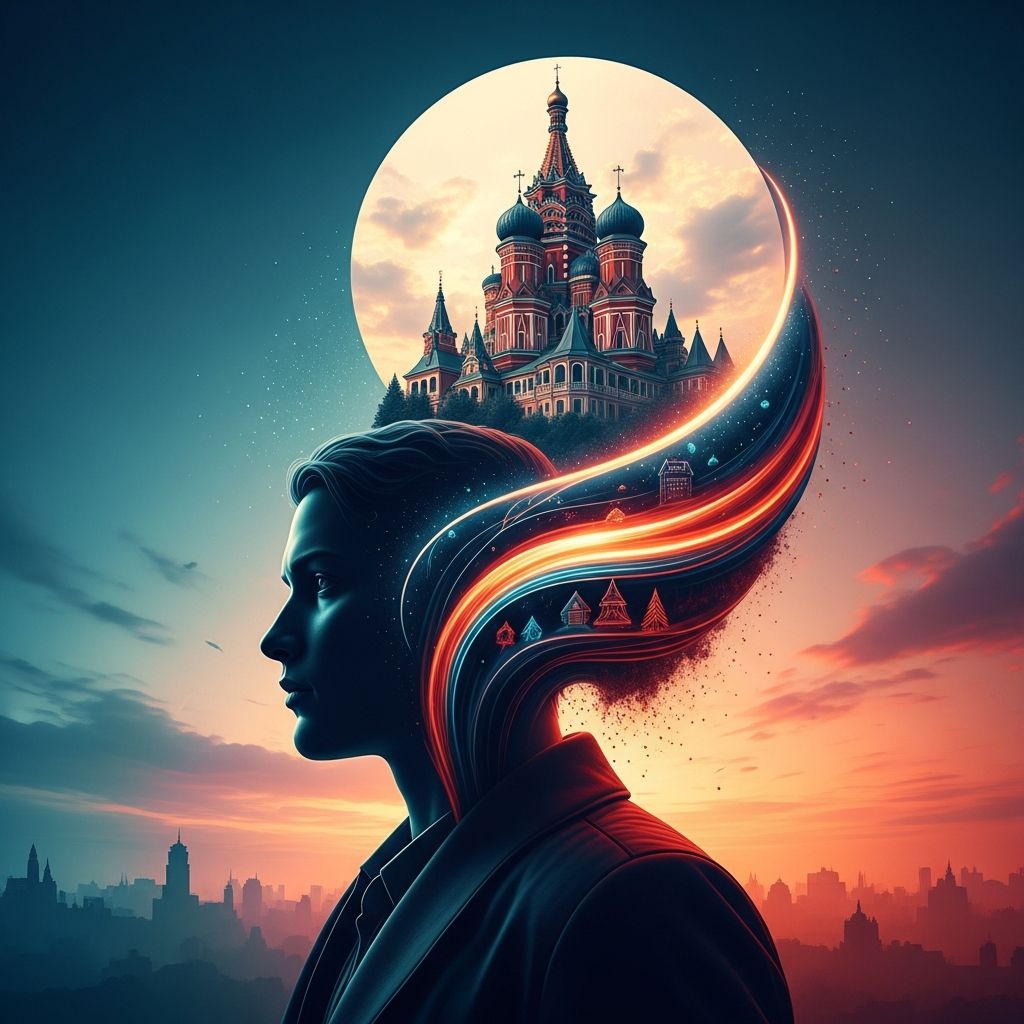
Russia is often described with sweeping words: vast, mysterious, resilient, intense. Yet behind the stereotypes lies a complex psychological landscape shaped by geography, history, and everyday experience. This article explores how these forces influence the typical ways people in Russia think, feel, and relate to one another today.
The Historical Roots of the Russian Mindset
Understanding contemporary Russian attitudes and behavior is difficult without considering the country’s dramatic past. Centuries of centralized rule, repeated wars, economic upheavals, and rapid social changes have left a deep psychological imprint on society.
- Vast territory and harsh climate encouraged tight communities and mutual dependence in many regions.
- Imperial and Soviet rule cultivated respect for authority but also a capacity for quiet resistance and improvisation.
- Frequent crises (wars, revolutions, economic shocks) normalized uncertainty and reinforced a “prepare for the worst” mentality.
These experiences helped cultivate traits such as endurance, suspicion of sudden change, strong family loyalty, and a preference for relying on trusted people over abstract institutions.
Core Cultural Values and Everyday Priorities
Modern Russia is highly urbanized, connected to global trends, and socially diverse. Yet certain enduring values still stand out in many people’s lives.
1. Collectivism with an Inner Circle
Russia is often described as more collectivist than Western Europe or North America. However, this collectivism usually centers on a close inner circle rather than society as a whole.
- Family and close friends form a primary support network for emotional, practical, and financial help.
- Trust builds slowly and is often reserved for long-term relationships.
- Once inside the circle, expectations of loyalty and mutual help are very strong.
2. Emotional Sincerity Over Politeness
People in Russia often prioritize authenticity over surface-level friendliness.
- Routine interactions may appear reserved or serious, especially with strangers.
- Within trusted circles, emotional expression can be very vivid—both warmth and criticism are often direct.
- Exaggerated cheerfulness may be perceived as shallow or insincere.
3. Pragmatism Grounded in Experience
After decades of rapid political and economic shifts, many Russians tend to rely on lived experience more than official promises.
- People may be skeptical toward new reforms or programs until they see tangible results.
- Resourcefulness—knowing “who to ask” or “how to navigate the system”—is highly valued.
- Plans often include a backup option, reflecting an expectation that things may not go smoothly.
Religion, Tradition, and Moral Outlook
Russian cultural identity blends Orthodox Christianity, pre-Christian folk customs, and Soviet-era secular influences.
| Influence | Key Features | Impact on Mindset |
|---|---|---|
| Orthodox Christianity | Rituals, fasting periods, Easter and Christmas, reverence for icons. | Emphasis on endurance, humility, and spiritual meaning in suffering. |
| Folk Traditions | Seasonal festivals like Maslenitsa and Ivan Kupala, folk tales, omens. | Respect for nature, belief in fate, and appreciation of symbolism and ritual. |
| Soviet Legacy | Secular education, collective ideals, mass organizations. | Combination of civic pride, skepticism toward ideology, and nostalgia for stability. |
Today, many people identify culturally with Orthodoxy even if they rarely attend church, viewing religious holidays as both spiritual and family occasions.
Communication Style and Social Etiquette
Communication norms in Russia can surprise visitors who come from more individualistic or informal cultures.
Directness with Nuance
- Spontaneous honesty: In close relationships, people often express opinions frankly, including criticism.
- High-context signals: Tone of voice, pauses, and body language carry much meaning, especially in delicate topics.
- Situational formality: Official settings usually call for titles, surnames, and respectful distance.
Public vs. Private Behavior
- In public, people may appear serious, avoid small talk with strangers, and focus on practical matters.
- In private homes, gatherings can be very warm, loud, and emotionally intense.
- Hosting guests often involves generous meals, long conversations, and toasts that blend humor, memory, and heartfelt wishes.
Family Life, Gender Expectations, and Generations
Family remains a central pillar of Russian life, though household structures and expectations have evolved significantly over the past decades.
Family as a Safety Net
- Grandparents frequently help with childcare and domestic tasks.
- Adult children may support parents financially or provide care in later life.
- Major holidays and life events are typically celebrated as multi-generational gatherings.
Shifting Gender Roles
Official and cultural narratives often emphasize traditional gender roles, but everyday practice is more varied.
- Women commonly participate in full-time work while also carrying significant domestic responsibilities.
- In many urban families, couples negotiate more balanced roles around parenting and income.
- Public discussions about careers, family planning, and gender expectations have become increasingly open among younger generations.
Generational Contrasts
Different age groups experienced very different childhood realities—from late Soviet stability to the turbulence of the 1990s and the digitally connected 21st century.
- Older generations may value stability, modest expectations, and frugality.
- Middle generations often balance Soviet-era memories with market-economy skills and global awareness.
- Young adults are typically more comfortable with mobility, online networks, and international influences, yet still rooted in family traditions.
Work, Ambition, and Attitudes Toward Authority
Work culture in Russia reflects a tension between hierarchical traditions and modern professional aspirations.
Hierarchy and Responsibility
- Organizations often retain a clear chain of command, and managers are expected to make key decisions.
- Employees may hesitate to contradict superiors publicly but share candid views in trusted circles.
- Respect is often given to expertise and experience rather than simply title alone.
Attitudes Toward Rules
- Formal rules are recognized, but practical problem-solving often relies on negotiation and personal connections.
- Success can depend on understanding both written regulations and unwritten customs.
- Flexibility is often seen as a necessary survival skill in dealing with bureaucracy or rapid change.
Ambition, Education, and Self-Development
Russia has a long tradition of valuing education, science, and the arts.
- Higher education remains a major goal for many families.
- Parents may invest heavily in tutoring, extracurricular activities, and cultural exposure.
- Young professionals increasingly seek international experience, language skills, and digital competencies.
Traditions, Holidays, and the Emotional Calendar
Holidays in Russia act as emotional anchors, shaping the rhythm of the year and reinforcing group identity.
Key Celebrations and Their Meaning
- New Year: The most widely celebrated holiday, associated with decorated trees, family feasts, and gifts.
- Orthodox Christmas and Easter: Blend religious observance with rich culinary traditions and family visits.
- Maslenitsa (Shrovetide): A farewell to winter filled with pancakes, outdoor festivities, and symbolic rituals.
- Victory Day (9 May): A solemn and proud remembrance of World War II, marked by parades and family stories of sacrifice.
These occasions often reveal a mix of joy and nostalgia, highlighting how collective memory shapes contemporary emotions.
Art, Storytelling, and the Inner World
Russian cultural life is renowned for its literature, music, theater, and visual arts. These traditions continue to influence how many people understand themselves and the world.
- Literature introduces themes of moral struggle, fate, and conscience that remain central in cultural conversations.
- Music and dance—from classical ballet to folk songs—serve as vehicles for emotional expression and national imagery.
- Storytelling at the table, often accompanied by tea or stronger drinks, helps transmit family history and values across generations.
For many, the arts provide a language for experiences that are difficult to articulate directly, reinforcing introspection and emotional depth.
Psychological Strengths and Everyday Challenges
The same historical pressures that brought hardship also nurtured notable psychological strengths.
Key Strengths Often Observed
- Resilience: Ability to endure uncertainty, adapt to new conditions, and keep going despite setbacks.
- Loyalty: Deep commitment to family and close friends, often extending to lifelong support.
- Creativity under constraints: Resourceful problem-solving with limited resources, whether at home or at work.
Common Tensions
- Balancing desire for stability with curiosity about global opportunities.
- Navigating expectations from older generations while forming new lifestyles and identities.
- Managing stress in contexts where public systems may be complex and changeable.
FAQs about Russian Personality and Culture
Q: Are Russians really as reserved as people say?
Many people in Russia appear serious or reserved in public, especially with strangers. This reflects cultural norms that prioritize sincerity and privacy over small talk. In close relationships, however, interactions are often very open, humorous, and emotionally expressive.
Q: How important is family in everyday Russian life?
Family is central for most people in Russia. Relatives often live nearby or stay in close contact, help with childcare, and support one another during economic or personal difficulties. Major holidays are typically celebrated in multi-generational gatherings.
Q: Is religion a major influence on personal values in Russia?
Many people identify with the Russian Orthodox tradition, at least culturally, even if they do not attend services regularly. Religious holidays, symbols, and narratives influence ideas about endurance, morality, and community, but everyday life also reflects secular and Soviet-era legacies.
Q: How do Russians typically view authority and rules?
Attitudes toward authority are complex. There is often formal respect for hierarchy, especially in workplaces and official settings, but also a strong tradition of informal problem-solving, negotiation, and reliance on personal networks to navigate rules and systems.
Q: What is the best way to build trust with Russian colleagues or friends?
Trust tends to grow slowly through repeated, consistent behavior: keeping promises, showing reliability, and demonstrating genuine interest. Shared meals, meaningful conversations, and small acts of support are often more powerful than formal politeness or quick displays of enthusiasm.
References
- Russia: Cultural life — Encyclopaedia Britannica. 2024-01-19. https://www.britannica.com/place/Russia/Cultural-life
- Russian Traditions — Advantour. 2023-06-01. https://www.advantour.com/russia/traditions.htm
- A guide to: Russian Traditions, Culture, Customs & Etiquette — 56th Parallel. 2022-09-15. https://www.56thparallel.com/russian-traditions/
- Russian Culture: Facts, Customs & Traditions — Live Science. 2014-02-19. https://www.livescience.com/44154-russian-culture.html
- Russia Guide: Language, Culture, Customs and Etiquette — Commisceo Global. 2023-03-10. https://commisceo-global.com/country-guides/russia-guide/
- Being Russian: Traditions and Genealogy — MyHeritage Blog. 2025-07-01. https://blog.myheritage.com/2025/07/being-russian-traditions-and-genealogy/
- Russian Culture — Consulate General of Russia in Mumbai. 2021-05-12. https://mumbai.mid.ru/en/russia/russian_culture/

- Integrated M.A. in Applied Linguistics, University of Hyderabad
- 5+ years in editorial, instructional, SEO, and research-based writing
Sneha is a relationships and lifestyle writer with a strong foundation in applied linguistics and certified training in relationship coaching. She brings over five years of writing experience to theskillvault, crafting thoughtful, research-driven content that empowers readers to build healthier relationships, boost emotional well-being, and embrace holistic living. Her writing and insights reflect the belief that beauty, happiness, and wellness…