
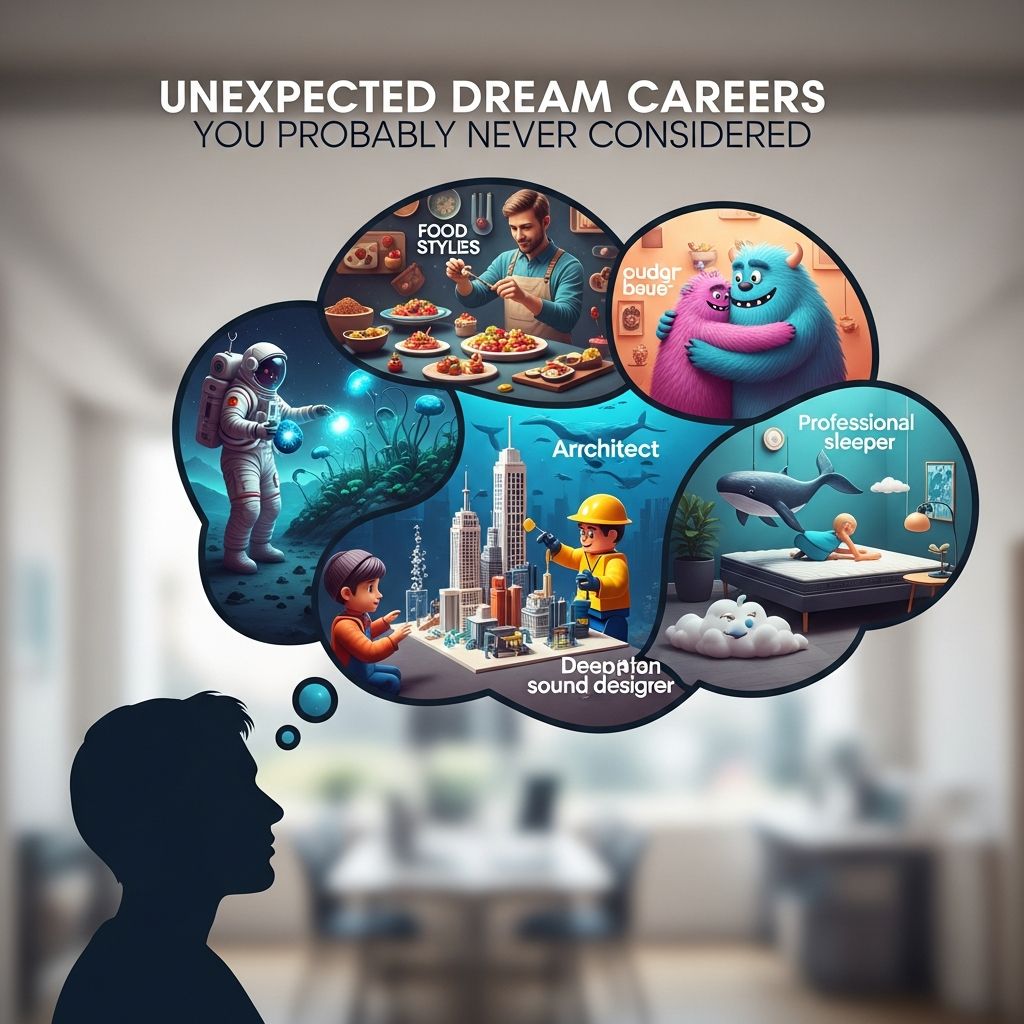
When people hear the phrase dream job, they often picture a narrow list: surgeon, tech founder, movie star, or CEO. In reality, the modern job market is full of unusual, meaningful, and surprisingly well-paid roles that rarely appear in school career guides but can offer an incredible quality of life.
This article introduces a range of lesser-known dream careers, explains what the work is really like, and shows how to start exploring unconventional paths without burning down your current life.
What Makes a Job a “Dream Job”?
Before diving into specific roles, it helps to clarify what people usually mean by a dream job. Surveys and labor-market studies consistently show that people value factors like autonomy, a sense of purpose, learning opportunities, and work–life balance as highly as salary.
Common ingredients of a dream job include:
- Using your favorite skills most of the day (e.g., writing, building, analyzing, caring).
- Alignment with your values (helping others, protecting the planet, creating beauty, solving puzzles).
- Reasonable pay and stability relative to your financial needs.
- Healthy work–life balance and psychological safety.
- Room to grow through training, new responsibilities, or entrepreneurship.
Many unconventional jobs tick these boxes even if you have never heard of them.
Surprising Career Paths You Might Not Know Exist
The original inspiration article highlighted a variety of unusual roles. Below is a fresh, reorganized look at similar kinds of careers, grouped by the kind of satisfaction they provide rather than by industry.
1. Jobs Built Around Sensory Superpowers
Some careers exist purely because certain people have exceptional senses or sensitivity that organizations can rely on.
Professional Flavor or Fragrance Evaluator
Food companies and perfume houses employ specialized sensory analysts to evaluate flavors, textures, and scents during product development. These professionals are trained to detect subtle differences most people would miss, using structured tasting protocols and statistical methods.
Who tends to enjoy this?
- People who naturally notice tastes and smells others overlook.
- Individuals with patience for methodical, repetitive testing.
- Those who like mixing science with everyday experiences (like eating or smelling).
Key Skills & Pathways
- Strong sensory acuity (sometimes tested formally during hiring).
- Basic knowledge of statistics and research methods helps.
- Degrees in food science, chemistry, or related fields are common but not always mandatory.
2. Story-Driven and Imagination-Heavy Work
If you have always loved creating characters, building worlds, or crafting experiences that move people emotionally, there are more options than novelist or film director.
Character and Experience Designer
Theme parks, live events, and immersive attractions hire people to design story-driven experiences—from the layout of a haunted maze to the script of an interactive show. This work combines theater, psychology, and design thinking.
According to industry and labor reports, creative and cultural sectors contribute significantly to national economies and offer growing employment opportunities, especially where tourism is strong.
Who might thrive here?
- People who love theater, role-playing games, or escape rooms.
- Those who think in scenes and story arcs.
- Collaborative creatives comfortable with constraints like budgets and safety rules.
Fiction-Adjacent Jobs (Beyond Author)
- Scripted content editor for game studios or streaming platforms.
- Narrative designer for video games, designing dialogue and branching story paths.
- Copywriter of micro-stories for products like greeting cards or fortune-style messages.
3. Adventure and Field-Based Careers
Some dream jobs are appealing because they move you away from desks and into highly dynamic environments.
Disaster and Risk Specialist
Organizations ranging from governments to humanitarian NGOs need professionals who assess risks and coordinate responses to natural hazards. Roles include emergency management specialists, risk analysts, and field coordinators who plan for disasters and help communities recover.
Why some people love this work:
- High sense of purpose; decisions directly impact safety and survival.
- Mix of office-based planning and on-the-ground action.
- Interdisciplinary tasks involving logistics, communication, and community engagement.
Environmental Field Technician
For people who want to be outdoors but also employed, environmental careers can be extremely satisfying. Field technicians collect water, soil, or air samples, maintain monitoring equipment, and support scientists in measuring pollution and climate impacts.
4. Data, Listening, and Insight-Oriented Roles
Not all dream jobs are flashy. Some are quietly satisfying because they let you observe, listen, and decode what others miss.
Digital Listening and Insight Analyst
Companies increasingly hire professionals to monitor conversations across social and digital channels, then translate patterns into insights for product teams and executives. This work blends qualitative listening with quantitative analysis.
Demand for data-literate roles has grown as organizations recognize that understanding user behavior and public sentiment is crucial for decision-making.
Good fit for:
- Curious people who naturally wonder why trends spread.
- Those comfortable with dashboards and basic statistics.
- Strong communicators who can turn numbers into plain-language stories.
Ethics and Policy Consultant in Technology or Healthcare
New technologies and medical advances constantly raise ethical questions. Consultants in ethics work with hospitals, research groups, or tech firms, helping teams navigate dilemmas about privacy, risk, consent, and fairness. These roles often intersect philosophy, law, and public policy.
5. Hands-On Technical Roles You Rarely Hear About
There are many skilled trades and technical occupations that are in high demand, offer strong earnings, and never show up in typical school brochures.
Precision Industrial Technician
From maintaining medical imaging hardware to calibrating robotics in factories, precision technicians keep complex, high-value equipment running. These roles can be well-compensated and highly portable across industries.
Government and workforce data often highlight that many technical occupations require postsecondary training or apprenticeships but not necessarily a traditional four-year degree, while still offering solid wages and career stability.
Emerging AI and Automation Support Roles
As AI tools spread, new types of technical support roles appear: professionals who configure AI systems for specific workplaces, audit them for bias, and train colleagues to use them responsibly.
Comparing Conventional vs. Unconventional Dream Jobs
The table below contrasts typical assumptions about “classic” dream careers with many lesser-known paths.
| Aspect | Conventional Dream Jobs | Unexpected Dream Jobs |
|---|---|---|
| Visibility | Commonly portrayed in media; everyone knows the titles. | Rarely mentioned; often discovered by chance. |
| Education Path | Well-defined academic routes (e.g., medical school, law school). | Mixed paths: certificates, apprenticeships, portfolio-based. |
| Competition | High competition for limited, prestigious roles. | Less competition because fewer people are aware of them. |
| Flexibility | Often rigid; long hours, fixed locations. | Frequently more flexible in schedule, environment, or lifestyle. |
| Discovery | Easy to understand from childhood (doctor, pilot, teacher). | Usually discovered through networking, niche media, or chance. |
How to Know if a Hidden Dream Job is for You
Finding an unconventional path that fits you is less about chasing a trendy title and more about understanding your underlying preferences.
Step 1: Map Your Favorite Activities, Not Just Skills
Research in vocational psychology suggests that satisfaction is higher when work aligns with your interests and identity rather than just your capabilities.
Ask yourself:
- Which tasks make time fly by for you?
- Do you prefer working with ideas, people, things, or creative expressions?
- Do you gain energy from social interaction or from solitary deep work?
Step 2: Look for Roles, Not Just Industries
Instead of thinking “I must work in tech” or “I must work in healthcare,” look for functions that appeal to you (design, analysis, coordination, care) and then search for unusual roles where those functions appear. Many people discover that their dream job uses their strengths in an industry they never previously considered.
Step 3: Run Low-Risk Experiments
To test a potential dream career without major commitments, you can:
- Shadow someone for a day or do an informational interview.
- Take a short online course or workshop to sample the field.
- Try a small freelance or volunteer project related to the role.
- Join an online community where practitioners share real stories.
Practical Ways to Explore Unconventional Careers
Once you have an idea of the type of work that excites you, it helps to take deliberate steps.
Build a Portfolio of Evidence
Many unusual or creative roles care more about what you can show than about your job history. To stand out:
- Document relevant projects (even self-initiated).
- Keep concise case studies describing the problem, your approach, and results.
- Ask collaborators or clients for brief testimonials.
Leverage Informational Interviews
Catching someone in a niche career and asking thoughtful questions can reveal realities you will not find in job ads. When you reach out:
- Keep your message short and specific about why you are interested.
- Ask about a typical week, biggest challenges, and recommended first steps.
- Offer to keep the conversation brief (15–20 minutes) to respect their time.
Use Short-Term Education Options
Instead of jumping straight into another full degree, consider:
- Community college or vocational programs for technical roles.
- Targeted certificates on data, UX, sustainability, or communication.
- Workshops hosted by professional bodies or non-profits in your field of interest.
Labor-market guidance from workforce agencies often emphasizes that short, focused training can significantly improve access to in-demand roles without requiring long, expensive degrees.
FAQ: Unconventional Dream Jobs
Q1: Are these unusual dream jobs actually stable?
Stability varies widely by role, just as it does in traditional careers. Some niche jobs are part of large, established industries (like food manufacturing or environmental monitoring), which can be relatively stable. Others are linked to emerging technologies or entertainment trends and may be more volatile. Looking at long-term industry data, not just one job title, is the best way to judge stability.
Q2: Do I need a specific degree to get an unconventional job?
Sometimes yes, but often no. Many technical or regulated roles (like healthcare, engineering, or certain environmental positions) require accredited qualifications. However, a significant number of creative, analytical, and support roles are open to people who can demonstrate skill through portfolios, certifications, and project experience. Reading job descriptions across several employers in your target area is a practical way to understand real requirements.
Q3: How can I tell if a “dream job” article is realistic or just clickbait?
Look for:
- Whether salary or job outlook figures are backed by reputable data (such as government labor statistics or major research organizations).
- Clear explanations of day-to-day responsibilities, not just glamorous highlights.
- Honest mention of downsides—odd hours, emotional labor, or physical demands.
If an article focuses only on fun aspects and unusually high income without citing credible sources, treat it cautiously.
Q4: Is it too late to pivot into a hidden dream career midlife?
Career-change research indicates that shifts later in life are increasingly common, especially as people seek better alignment with their values and lifestyles. While practical constraints like family responsibilities and finances matter, many people successfully transition through part-time study, volunteering, or side projects that gradually become full-time work.
Q5: What if my dream job does not yet exist?
New roles emerge whenever technology, culture, or policy changes—some of today’s growing jobs did not exist a decade ago. If you sense a gap where your skills could meet an emerging need, you may be able to craft a role by combining existing skills (e.g., storytelling + data, or ethics + AI). Freelancing or intrapreneurship inside your current organization can be a testing ground for such hybrid roles.
References
- Food Processing Careers: Overview — U.S. Bureau of Labor Statistics. 2024-03-29. https://www.bls.gov/oes/current/naics3_311000.htm
- Creative Economy Outlook — United Nations Conference on Trade and Development (UNCTAD). 2018-10-01. https://unctad.org/publication/creative-economy-outlook
- Career Outlook and Occupational Outlook Handbook — U.S. Bureau of Labor Statistics. 2023-09-06. https://www.bls.gov/ooh/
- Job Quality and Worker Well-Being in the United States — Brookings Institution. 2022-05-24. https://www.brookings.edu/articles/job-quality-and-worker-well-being-in-the-united-states/
- The Future of Jobs Report 2023 — World Economic Forum. 2023-04-30. https://www.weforum.org/reports/the-future-of-jobs-report-2023/
- Nontraditional Occupations for Women and Men — U.S. Department of Labor, Women’s Bureau. 2022-08-01. https://www.dol.gov/agencies/wb/data/nontraditional-occupations
- Career Transitions and Midlife Work — American Psychological Association. 2020-09-01. https://www.apa.org/pi/lgbt/resources/career-transitions

Medha Deb is an editor with a master's degree in Applied Linguistics from the University of Hyderabad. She believes that her qualification has helped her develop a deep understanding of language and its application in various contexts. Medha specializes in the areas of beauty, health, sports, and wellness and is committed to ensuring that the content on the website is…