
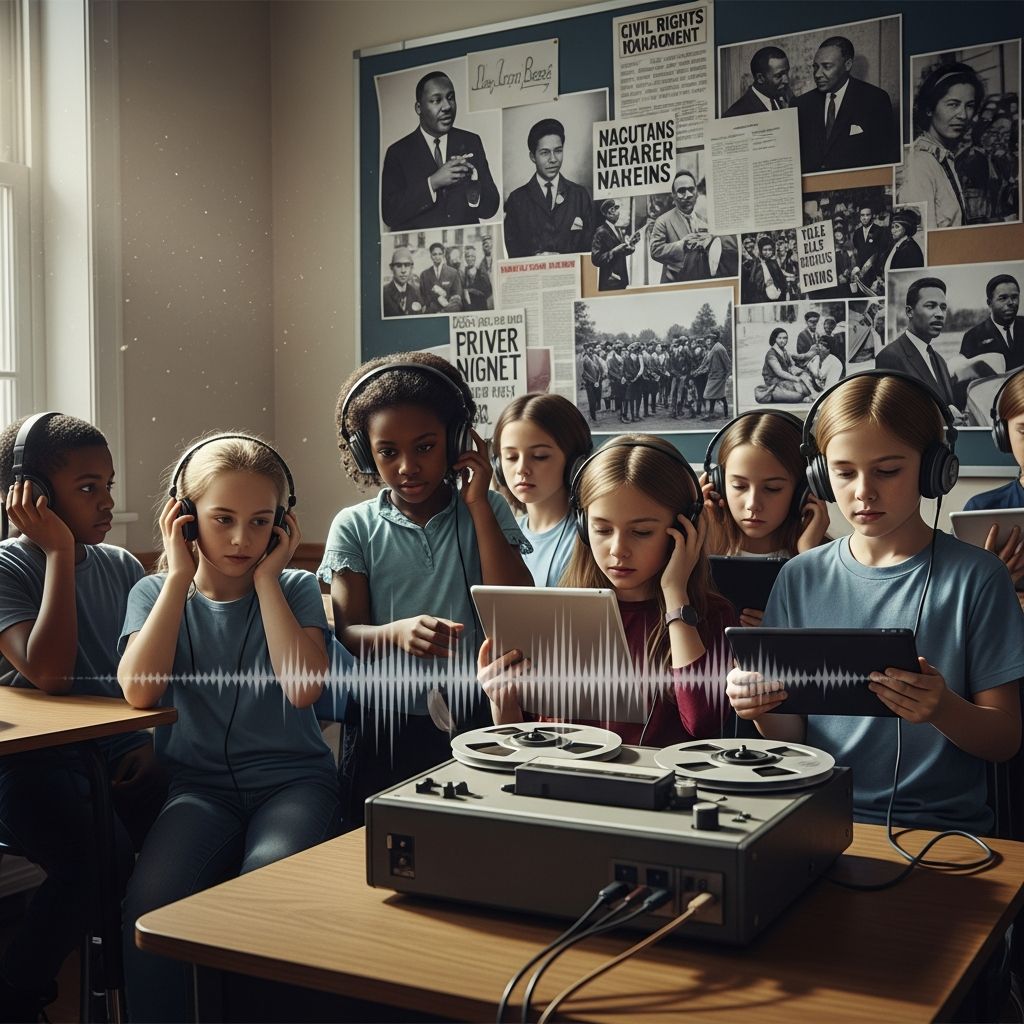
Transforming Civil Rights Instruction Through Audio-Based Learning Materials
The Civil Rights Movement represents one of the most transformative periods in American history, yet traditional classroom instruction often presents this era through a limited lens, focusing on a handful of well-known figures and landmark events while overlooking the diverse voices, complex motivations, and interconnected struggles that defined the movement. Audio-based resources offer educators a powerful alternative approach to teaching this material, enabling students to encounter primary source materials, historical testimonies, and culturally significant music in formats that foster deeper engagement and critical thinking. By incorporating curated audio collections into the curriculum, teachers can help students move beyond surface-level understanding to develop a more nuanced appreciation for the movement’s breadth, duration, and lasting impact on contemporary American society.
The Role of Audio in Deepening Historical Comprehension
Audio resources provide unique pedagogical advantages that distinguish them from traditional textbook-based or video-centered approaches. When students listen to historical interviews, speeches, or archival recordings, they develop a more immediate and emotionally resonant connection to the subject matter. The human voice carries inflection, emotion, and authenticity that can transform abstract historical concepts into tangible human experiences. Students who hear the actual words of civil rights activists, recorded in their own voices, often report heightened empathy and motivation to learn more deeply about the individuals and movements they represent.
Furthermore, audio resources accommodate diverse learning styles within any given classroom. While visual learners may benefit from supplementary materials like transcripts or accompanying images, auditory learners can engage most effectively with pure audio content, and kinesthetic learners can combine listening with note-taking or other activities. This flexibility makes audio-based curricula inherently more inclusive, ensuring that a broader range of students can access and benefit from quality instructional materials.
Building a Comprehensive Audio Curriculum Framework
Educators seeking to integrate audio resources into civil rights instruction should consider developing a structured framework that organizes materials by era, theme, or primary figure. One effective approach involves creating thematic units that explore interconnected aspects of the movement, such as voting rights campaigns, educational segregation and integration efforts, labor activism, or women’s leadership within the movement. Within each unit, educators can sequence audio materials in a logical progression, beginning with foundational speeches or interviews that establish historical context, progressing to more detailed primary source materials, and concluding with reflective or analytical content that encourages students to synthesize their learning.
When selecting audio materials for curriculum integration, educators should prioritize sources that represent diverse geographical locations, demographic backgrounds, and forms of activism. The Civil Rights Movement was not a monolithic event centered exclusively on Southern segregation or limited to African American participants. Audio collections that include voices from urban Northern activists, Latino and Asian American civil rights advocates, indigenous peoples’ movements for sovereignty and self-determination, and white Americans who actively supported civil rights causes present a more historically accurate and intellectually rich picture for students.
Leveraging Primary Source Audio Materials and Historical Recordings
Primary source audio materials—including speeches, interviews, protest songs, radio broadcasts, and oral histories recorded during or immediately after the Civil Rights Movement—constitute invaluable teaching resources. These materials allow students to encounter history through firsthand accounts rather than through secondary interpretations or summaries. When students listen to a speech delivered by a civil rights leader at a critical historical moment, they gain insight not only into the content of the message but also into the rhetorical strategies, emotional appeals, and contextual circumstances that shaped that moment.
Educational institutions and digital archives now provide unprecedented access to these primary source audio materials. Students can listen to interviews conducted with grassroots organizers, recordings of mass meetings where communities gathered to strategize and support one another, and testimonies of individuals who experienced discrimination firsthand. Many of these materials come with accompanying transcripts and contextual information, enabling educators to design lessons that combine careful listening with textual analysis and historical research.
The Significance of Music and Freedom Songs in Civil Rights Pedagogy
Music played an indispensable role throughout the Civil Rights Movement, serving simultaneously as a source of spiritual renewal, a vehicle for unified messaging, and a form of resistance against systemic oppression. Freedom songs emerged from African American religious traditions, work songs, and popular music styles, adapted and reimagined to express the aspirations and determination of the movement. These compositions—including classics such as “We Shall Overcome,” “Keep Your Eyes on the Prize,” and “Ain’t Gonna Let Nobody Turn Me Around”—transmitted core values of the movement while enabling participants to maintain courage and solidarity during dangerous and emotionally taxing campaigns.
Incorporating freedom songs into classroom instruction offers multiple pedagogical benefits. Students can analyze lyrical content to identify thematic messages, trace the origins of individual songs across different musical traditions, and explore how musical form and style contributed to the songs’ memorability and emotional impact. Listening to recordings of freedom songs performed by the Freedom Singers and other ensembles during actual movement events helps students understand music not as abstract artistic expression but as a functional element of social activism and community mobilization. Teachers might ask students to compare different recordings or versions of the same song, considering how variations in performance might have influenced audiences during different phases of the movement.
Exploring Lesser-Known Narratives and Community-Based Activism
Conventional civil rights education often emphasizes the activities and achievements of nationally recognized leaders, inadvertently marginalizing the countless grassroots organizers, local activists, and community members whose work formed the movement’s foundation. Audio resources can help correct this imbalance by featuring voices and perspectives that rarely appear in mainstream historical narratives. Stories of Citizenship Schools, voter registration campaigns in small towns, community organizing efforts in industrial cities, and neighborhood-based resistance to segregation in local public accommodations provide students with a more comprehensive understanding of how the movement actually functioned at the community level.
By highlighting these diverse narratives, educators help students recognize that significant historical change results from the sustained efforts of ordinary people working collectively toward common goals, not simply from the actions of charismatic leaders. This understanding has important implications for students’ own civic engagement and sense of agency in addressing contemporary social issues.
Structuring Listening Activities for Maximum Educational Impact
Simply playing audio content for students does not guarantee meaningful learning. Teachers should frame listening activities with clear objectives and accompanying supports that guide student attention and encourage active engagement. Before students listen to audio material, educators might provide brief contextual information about the speaker, the historical circumstances surrounding the recording, and specific elements for students to notice during listening. During listening, students might complete guided note-taking templates that prompt them to identify key arguments, recognize emotional appeals, or trace thematic development. After listening, follow-up discussions, writing assignments, and comparative analysis activities help students consolidate understanding and connect new information to previously learned content.
Structured listening guides can take various forms depending on learning objectives. Some guides might ask students to identify the main claim or purpose of a speech, track how a speaker builds arguments over time, or note the emotional tone and rhetorical strategies employed. For music-based listening activities, guides might ask students to identify lyrical themes, describe the musical style and instrumentation, consider the song’s historical context, and reflect on why this particular song might have resonated with movement participants. These scaffolds transform passive listening into active learning, ensuring that audio content contributes meaningfully to students’ developing understanding.
Connecting Historical Audio Content to Contemporary Issues
A significant benefit of audio-based civil rights instruction lies in its capacity to create bridges between historical content and contemporary social issues. Students often struggle to recognize connections between events studied in history class and issues they encounter in their daily lives and communities. By thoughtfully juxtaposing historical audio materials with current events, news coverage, and contemporary activist voices, educators help students recognize continuities between past struggles and ongoing efforts to achieve social justice.
Teachers might, for instance, follow a lesson featuring audio recordings of voting rights activists from the 1960s with current news coverage of voting access debates, creating space for students to identify similarities and differences between historical and contemporary challenges. This approach demonstrates that the Civil Rights Movement represents not a discrete historical episode with definite endpoints but rather an ongoing struggle with shifting manifestations across different eras and contexts.
Practical Implementation Strategies for Classroom Integration
Successful integration of audio resources requires practical planning and classroom management considerations. Teachers should ensure that their classroom technology infrastructure supports clear, audible playback of audio materials, whether through speakers, headphones, or a combination of audio delivery methods. For classes where students access materials individually or in small groups, headphone distribution systems or learning center setups might be appropriate. Teachers should also consider the length and pacing of listening activities, recognizing that student attention and comprehension may decline during extended listening periods without breaks or interactive elements.
Creating a curated collection of audio materials tailored to specific learning objectives ensures that classroom time is used efficiently and that students access high-quality, educationally appropriate content. Digital platforms, educational repositories, and library resources provide abundant audio materials, but teachers should preview and evaluate these resources carefully, considering factors such as historical accuracy, representativeness, age-appropriateness, and alignment with curriculum standards.
Assessment Approaches for Audio-Based Learning Units
Evaluating student learning within audio-centered units requires assessment methods that capture the full range of competencies students develop through this work. Traditional multiple-choice or short-answer assessments may not adequately measure students’ ability to analyze audio content, recognize diverse perspectives, or synthesize information from multiple sources. Instead, teachers might employ performance-based assessments, such as having students create their own audio presentations or podcast segments in which they present civil rights content to their peers. Students might be asked to write analytical essays comparing different audio sources, to develop their own oral histories by interviewing community members about contemporary social justice efforts, or to create annotated audio playlists in which they explain their selections and analysis.
Formative assessment throughout audio-based units helps teachers gauge student understanding and adjust instruction accordingly. Exit tickets asking students to identify key takeaways from listening activities, classroom discussions that allow students to voice emerging questions and insights, and collaborative note-taking activities all provide valuable information about how students are processing and integrating new information.
Addressing Sensitive Content and Creating Safe Learning Environments
The Civil Rights Movement encompasses profound stories of injustice, violence, and human suffering. Audio materials documenting these experiences can evoke powerful emotional responses in students. Teachers should prepare students for potentially disturbing content, provide opportunities to process emotional reactions, and create classroom norms that support respectful discussion of difficult topics. Having tissues available, allowing students to step out if needed, and following intense audio content with reflective discussion or writing time demonstrates care for students’ emotional well-being while honoring the gravity of historical events.
Frequently Asked Questions
Q: Where can educators find quality audio resources for civil rights instruction?
A: Educational platforms like PBS Learning Media, TeachRock, and academic archives housed at universities provide extensive collections of primary source audio materials, interviews, and freedom songs. Many public libraries offer digital access to historical audio collections, and organizations dedicated to civil rights history maintain online repositories of materials.
Q: How long should individual audio listening activities last?
A: Duration depends on grade level and learning objectives. Elementary students typically benefit from shorter segments (5-10 minutes), while secondary students can engage with longer materials (15-30 minutes). Breaking longer materials into chunks with discussion or activity interludes maintains engagement and comprehension.
Q: Can audio resources replace traditional textbook instruction?
A: Audio resources work most effectively as supplements to comprehensive instruction that integrates multiple modalities. Combining audio with written materials, visual resources, and interactive activities creates a more robust learning experience than any single approach alone.
Q: How do I help students with hearing impairments access audio-based content?
A: Providing transcripts alongside audio materials ensures accessibility for deaf and hard-of-hearing students. Some audio platforms include automated or human-created captions and transcripts. Teachers should verify transcript accuracy and review materials in advance to ensure appropriate accessibility features are available.
References
- The Civil Rights Movement: Moving Beyond the Familiar Story — GBH Education. Accessed 2026. https://www.youtube.com/watch?v=1O4IpzWVvTk
- Music of the Civil Rights Movement — Teach Rock. Accessed 2026. https://teachrock.org/
- Best Instructional Videos: The American Civil Rights Movement — Education World. Accessed 2026. https://www.educationworld.com/
- The Underground Schools that Built the Civil Rights Movement — EastTNHistory. Accessed 2026. https://www.youtube.com/watch?v=gqvbEr_gvt4
- The Civil Rights Movement Virtual Learning Journey — PBS Learning Media. Accessed 2026. https://www.pbslearningmedia.org/

- Integrated M.A. in Applied Linguistics, University of Hyderabad
- 5+ years in editorial, instructional, SEO, and research-based writing
Sneha is a relationships and lifestyle writer with a strong foundation in applied linguistics and certified training in relationship coaching. She brings over five years of writing experience to theskillvault, crafting thoughtful, research-driven content that empowers readers to build healthier relationships, boost emotional well-being, and embrace holistic living. Her writing and insights reflect the belief that beauty, happiness, and wellness…