
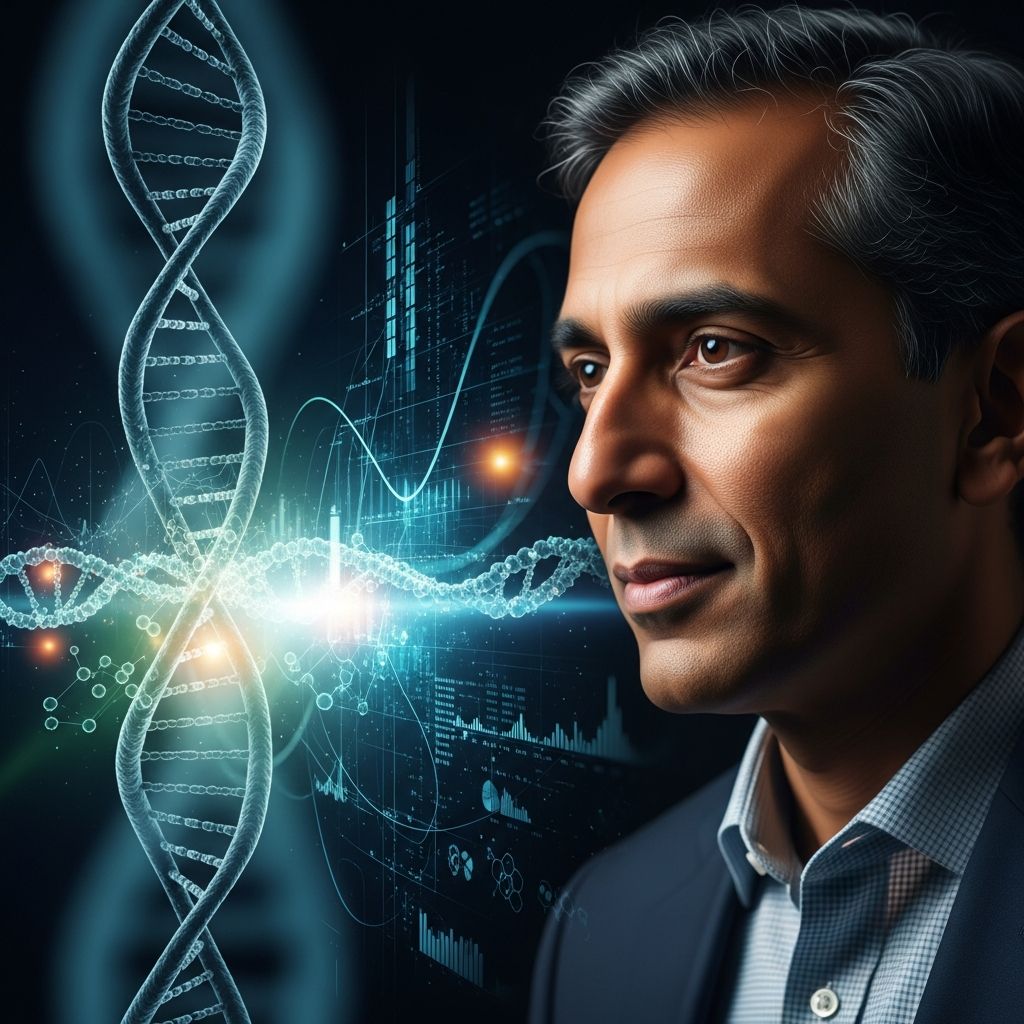
Nobel Prize–winning biologist Venki Ramakrishnan has become one of the most prominent scientific voices explaining what we truly know about ageing, what the realistic prospects for life extension are, and how longer lives could reshape society.
Drawing on molecular biology, evolutionary theory, and public health, he argues that the urgent question is not whether we can live forever, but whether we can extend the number of years lived in good health while navigating serious ethical and social risks.
The Biology of Ageing: Why Our Bodies Eventually Fail
Ageing is not caused by a single “ageing gene”; it arises from a web of processes that gradually erode the body’s ability to maintain and repair itself. Ramakrishnan highlights several core mechanisms under active investigation:
- Accumulated molecular damage to DNA, proteins, and lipids, driven by everyday metabolism, environmental stress, and imperfect repair systems.
- Cellular senescence – cells that stop dividing but remain metabolically active, secreting inflammatory factors that impair tissues.
- Stem cell exhaustion, which limits our capacity to regenerate muscle, blood, and other tissues.
- Mitochondrial dysfunction, reducing cellular energy production and increasing reactive oxygen species.
- Changes in nutrient-sensing pathways (such as mTOR, insulin/IGF-1, and AMPK) that affect growth, repair, and stress resistance.
Collectively, these processes increase the risk of age-related diseases such as cardiovascular disease, cancer, and dementia, which remain leading causes of death worldwide.
Evolution and Mortality: Why We Are Not Built to Last
From an evolutionary viewpoint, human bodies were not “designed” for indefinite survival. As Ramakrishnan stresses, natural selection optimizes fitness, not longevity.
Key ideas from evolutionary biology help explain why ageing exists:
- Selection for early-life success: Traits that boost survival and reproduction early in life can be favored even if they cause harm later, once most individuals have already reproduced.
- Predation and environmental risk: Species facing high external mortality (for example from predators) gain little from investing in long-term maintenance. Mice, for instance, tend to reproduce quickly and rarely reach old age in the wild.
- Longevity diversity across species: Some organisms, such as hydra or certain jellyfish, show negligible signs of biological ageing, while Greenland sharks can live for centuries – demonstrating that biology does not impose a single hard limit on lifespan.
Ramakrishnan argues that this diversity implies no fundamental physical law fixes human lifespan. Biology permits longer lives, but evolution has not pushed humans to such extremes because it mainly “cares” about reproduction, not retirement.
Healthspan vs Lifespan: What Should We Be Trying to Extend?
Public discussion around longevity often focuses on how many years we might add to life. Ramakrishnan emphasizes a different metric: healthspan – the period of life spent in reasonably good health, free of major disability or disease.
Several points shape his view:
- Most people do not want extra decades of frailty; they want more years of meaningful, independent life.
- Simply curing a single disease (such as cancer) may add relatively few extra years, because other age-related conditions still emerge.
- Focusing on the underlying biology of ageing could delay the onset of multiple diseases at once, potentially yielding larger gains in healthy years than targeting each condition separately.
Analyses of mortality patterns suggest that even eliminating a major cause of death such as heart disease or cancer would typically add on the order of a decade to average life expectancy, not transform human lifespan into centuries.[10]
Promising Scientific Pathways to Longer Healthy Lives
Ramakrishnan is cautiously optimistic about several lines of research that might meaningfully extend healthspan, while warning that most remain unproven in humans and carry unknown risks.
1. Caloric Restriction and Nutrient-Sensing Pathways
Caloric restriction – reducing calorie intake without malnutrition – has reliably extended lifespan and delayed age-related diseases in multiple animal species, from worms to mice and nonhuman primates.
Current work focuses less on blanket calorie cuts and more on the molecular pathways they influence, including:
- mTOR (mechanistic target of rapamycin), which coordinates cell growth and metabolism.
- Insulin and IGF-1 signaling, regulating growth and nutrient use.
- AMPK and sirtuins, which respond to energy status and stress.
Drugs that modulate these pathways, such as rapamycin (which inhibits mTOR), have extended lifespan in mice and are under study for effects on human ageing. However, rapamycin is also an immunosuppressant, so long-term use in healthy people raises serious safety questions.
2. Senolytics: Clearing Damaged Cells
Senescent cells accumulate with age and secrete inflammatory molecules that may contribute to frailty, metabolic disease, and degenerative conditions. Experimental “senolytic” drugs aim to selectively destroy these cells.
In mouse models, removing senescent cells can:
- Improve physical function and organ health.
- Delay the onset of age-related disorders.
- Extend lifespan in some studies.
Early human trials are in progress, but optimal dosing, long-term effects, and potential trade-offs (for example, in wound healing or tumor suppression) remain uncertain.
3. Cellular Reprogramming and Yamanaka Factors
Cellular reprogramming, pioneered by Shinya Yamanaka, can reset mature cells into induced pluripotent stem cells by expressing a small set of transcription factors. Partial reprogramming – briefly activating such factors – may rejuvenate tissues without fully erasing cell identity.
In animal models, partial reprogramming has shown:
- Improved tissue regeneration and function.
- Reversal of some molecular markers of ageing.
- Extension of lifespan in certain progeroid (premature ageing) models.
Ramakrishnan views this as one of the most technically exciting but also risk-laden areas, with concerns about cancer, loss of cell identity, and unforeseen effects.
4. What the “Immortal” and Long-Lived Species Can Teach Us
Scientists are increasingly studying species with exceptional or unusual lifespans:
- Hydra and some jellyfish, which show negligible senescence and can effectively renew themselves indefinitely.
- Greenland sharks, which may live over 400 years, and certain whales and clams that also reach centuries of age.
- Long-lived mammals like naked mole-rats, which show resistance to cancer and maintain function well into advanced age.
Ramakrishnan notes that comparing the genetics, repair systems, and immune responses of these organisms with humans could reveal strategies for better maintenance and resilience.
Incremental Gains or Radical Life Extension? A Realistic Outlook
Despite speculative visions of people living for many centuries, Ramakrishnan stresses that current evidence supports modest, not radical, near-term gains in human longevity.
| Scenario | Likely Impact This Century (Expert View) |
|---|---|
| Eliminating a major disease (e.g., heart disease or cancer) | Average lifespan increase of roughly 10–15 years, with limited effect on maximum human lifespan.[10] |
| Broad success in targeting ageing biology | Potential shift of multiple diseases to later ages, adding more healthy years but still short of “immortality.” |
| Hypothetical radical life extension therapies | Currently speculative, with major scientific and safety obstacles and no human data showing multi-century lifespans. |
He argues that hype about near-term immortality distracts from more grounded opportunities: reducing midlife mortality, compressing years of disability, and closing health gaps between social groups.
Equity, Power, and the Social Consequences of Longer Lives
Ramakrishnan is particularly concerned about how life-extension technologies might intersect with existing inequalities. Life expectancy already differs dramatically by income and neighborhood in many countries.
He highlights several potential risks:
- Widening health gaps: If expensive interventions reach only the wealthy, the difference in lifespan between rich and poor could grow by decades.
- Compounding wealth concentration: Longer-lived elites would have more time to accumulate assets and influence, and to pass them on to descendants, entrenching advantage over generations.
- Intergenerational tension: A society with many very old, powerful individuals could slow social mobility and political renewal, affecting younger people’s opportunities.
Public health data already show that social determinants – income, education, housing, and access to care – strongly shape longevity. Ramakrishnan therefore argues that any serious discussion of radical life extension must also grapple with fairness and governance.
Ageing Societies: Work, Retirement, and Demography
Even without breakthrough anti-ageing drugs, many countries are ageing rapidly due to lower fertility and improved survival. Extending healthspan could help societies adapt, but would require structural change:
- Longer working lives: If people remain healthy into their 70s or 80s, retirement ages and career trajectories may need to shift.
- Education across the lifespan: Multi-stage careers could necessitate recurring periods of training and retraining.
- Pensions and healthcare: Financial systems would need to fund longer retirements and potentially higher cumulative care costs, even if disability is delayed.
Ramakrishnan notes that life expectancy has already roughly doubled over the last two centuries in many countries, and almost no one would choose to return to the shorter, more disease-filled lives of the past. The challenge is to design institutions that can absorb further gains without creating new forms of exclusion.
The Longevity Industry: Science, Hype, and Regulation
The commercial market for longevity products—supplements, clinics, and experimental therapies—has ballooned into a multibillion-dollar industry. Ramakrishnan views this with a mixture of interest and skepticism.
Key concerns include:
- Overhyped claims that outpace evidence from rigorous clinical trials.
- Off-label or unregulated uses of drugs like rapamycin in healthy individuals, despite limited long-term safety data.
- Marketing targeting fear of ageing more than demonstrated health benefits.
He argues that therapies intended for healthy people to gain extra decades of life must meet especially high standards of safety and evidence, since such individuals may otherwise live long lives without intervention.
What We Can Do Now: Evidence-Based Ways to Age Better
While high-tech interventions are still emerging, Ramakrishnan and many public health experts emphasize that simple, well-studied measures can already add healthy years of life.
Research consistently supports:
- Regular physical activity – at least 150 minutes of moderate aerobic activity per week, plus strength training, lowers risk of premature death and many chronic diseases.
- Balanced, mostly plant-forward diets, such as Mediterranean-style eating patterns, associated with reduced cardiovascular and overall mortality.
- Adequate sleep, typically 7–9 hours per night for most adults, linked to lower cardiometabolic risk.
- Not smoking and moderating alcohol, both among the most impactful modifiable risk factors for longevity.
- Social connection and purpose, which correlate with lower mortality and better mental health, particularly in older age.
Ramakrishnan underscores that these foundations of healthy living likely offer more reliable gains today than most costly, unproven longevity treatments.
Frequently Asked Questions
Q: Could humans realistically live 150–200 years this century?
Based on current evidence, Ramakrishnan and many other scientists regard such extreme extensions as speculative. Targeting ageing biology might add meaningful healthy years, but data do not yet support multi-century lifespans in humans.
Q: Is there a maximum human lifespan?
Records suggest a practical upper bound around 120 years so far, but biology does not appear to impose an absolute, inviolable limit. Instead, risk of death rises steeply with age, and no intervention has yet been shown to flatten this curve dramatically in humans.
Q: Are anti-ageing drugs like rapamycin safe to take now if I’m healthy?
Rapamycin and similar compounds are approved for specific medical uses, such as preventing organ transplant rejection, but their long-term safety as general anti-ageing agents in healthy people is unproven. Ramakrishnan stresses that high-quality clinical trials and regulatory oversight are essential before widespread preventive use.
Q: What matters more: genes or lifestyle?
Genetics clearly influence how long and how healthily people live, but studies indicate that lifestyle and social factors – including diet, exercise, smoking, alcohol use, and socioeconomic conditions – make a very large contribution to differences in life expectancy within and between populations.
Q: If radical life extension becomes possible, can societies simply choose to ban it?
Ramakrishnan doubts that effective life-extension interventions could be fully suppressed if they demonstrably prolong healthy life. Instead, he argues, the priority should be governance: ensuring safe, evidence-based use and preventing extreme inequality in access and outcomes.
References
- Ramakrishnan V. The New Science of Aging. — Ground Truths (Eric Topol). 2024-03-03. https://erictopol.substack.com/p/venki-ramakrishnan-the-new-science
- Nobel laureate Venki Ramakrishnan talks aging, mortality, and scientific innovation in APEX lecture. — Vanderbilt University School of Medicine. 2024-11-14. https://medschool.vanderbilt.edu/basic-sciences/2024/11/14/nobel-laureate-venki-ramakrishnan-talks-aging-mortality-and-scientific-innovation-in-apex-lecture/
- 202 – The cutting edge of anti-ageing science (Venki Ramakrishnan). — 80,000 Hours Podcast. 2023-10-30. https://80000hours.org/podcast/episodes/venki-ramakrishnan-ageing-life-extension/
- We’re Not Programmed to Die: What Longevity Science Shows. — American Academy of Anti-Aging Medicine (A4M). 2024-01-18. https://blog.a4m.com/were-not-programmed-to-die-so-whats-really-driving-aging-longevity-science/
- Venki Ramakrishnan: Why We Die: The New Science of Aging and the Quest for Immortality. — New York Academy of Sciences. 2024-02-21. https://www.nyas.org/shaping-science/events/venki-ramakrishnan-why-we-die-the-new-science-of-aging-and-the-quest-for-immortality/
- Why we die—and how we can live longer, with Nobel laureate Venki Ramakrishnan (Ep. 134). — University of Chicago News. 2024-04-18. https://news.uchicago.edu/why-we-die-and-how-we-can-live-longer-nobel-laureate-venki-ramakrishnan-ep-134
- What Science Says About Longevity and How to Add Years to Your Life. — Columbia University Mailman School of Public Health. 2024-05-08. https://www.publichealth.columbia.edu/news/what-science-says-about-longevity-how-add-years-your-life
- Science is making anti-aging progress. But do we want to live forever? — Harvard Gazette. 2024-05-21. https://news.harvard.edu/gazette/story/2024/05/science-is-making-anti-aging-progress-but-do-we-want-to-live-forever/

- Integrated M.A. in Applied Linguistics, University of Hyderabad
- 5+ years in editorial, instructional, SEO, and research-based writing
Sneha is a relationships and lifestyle writer with a strong foundation in applied linguistics and certified training in relationship coaching. She brings over five years of writing experience to theskillvault, crafting thoughtful, research-driven content that empowers readers to build healthier relationships, boost emotional well-being, and embrace holistic living. Her writing and insights reflect the belief that beauty, happiness, and wellness…